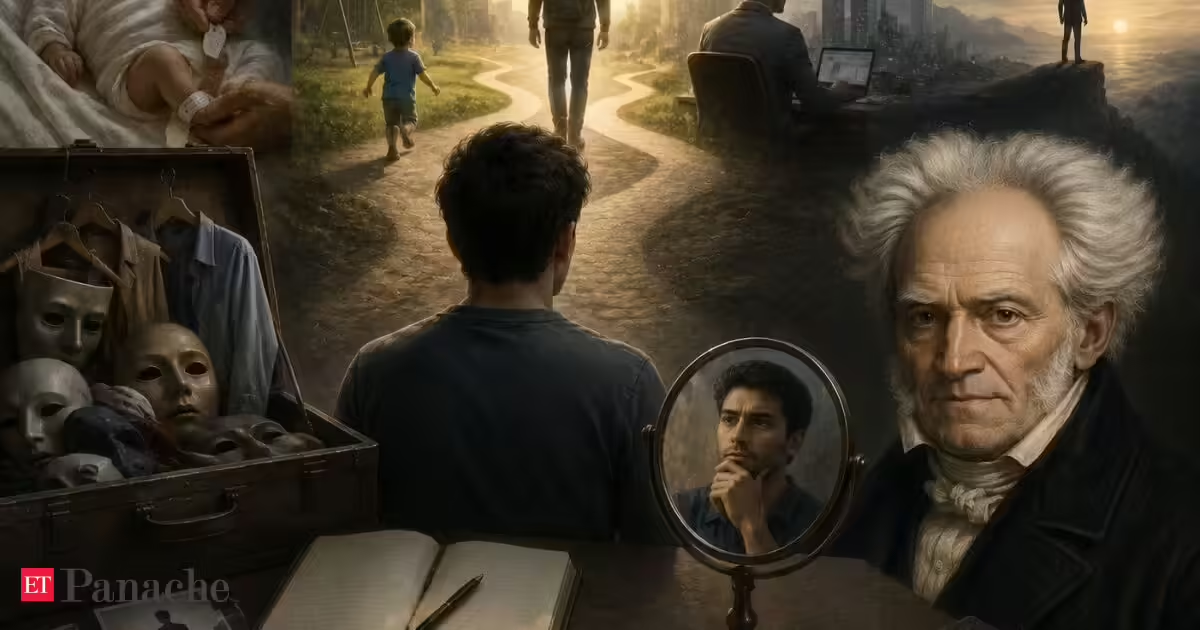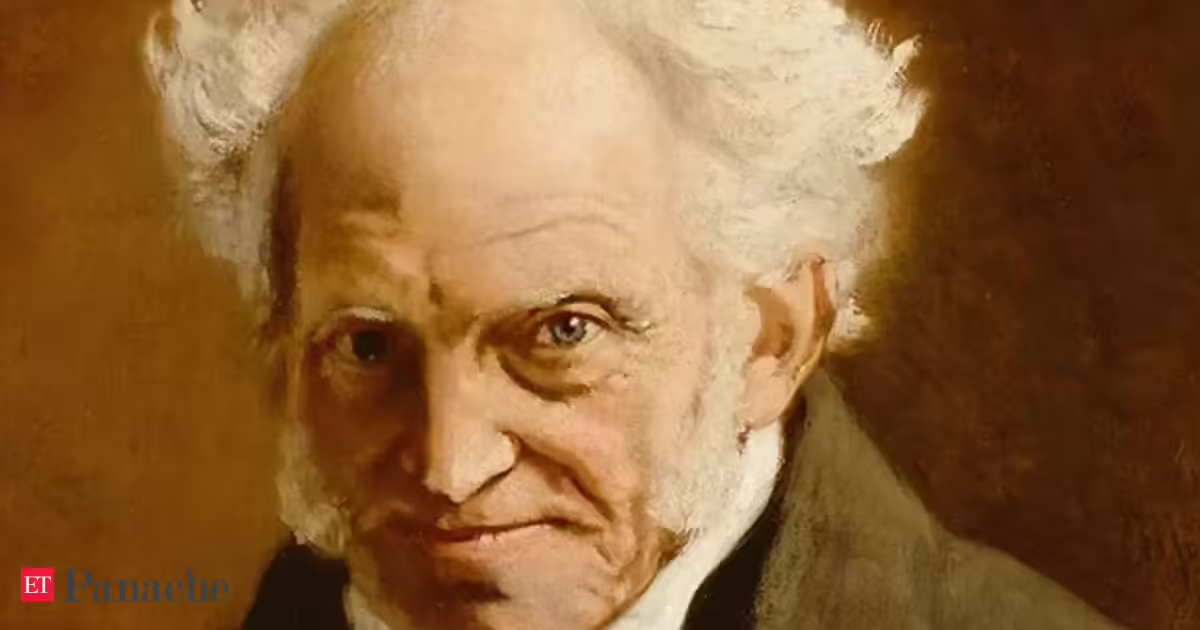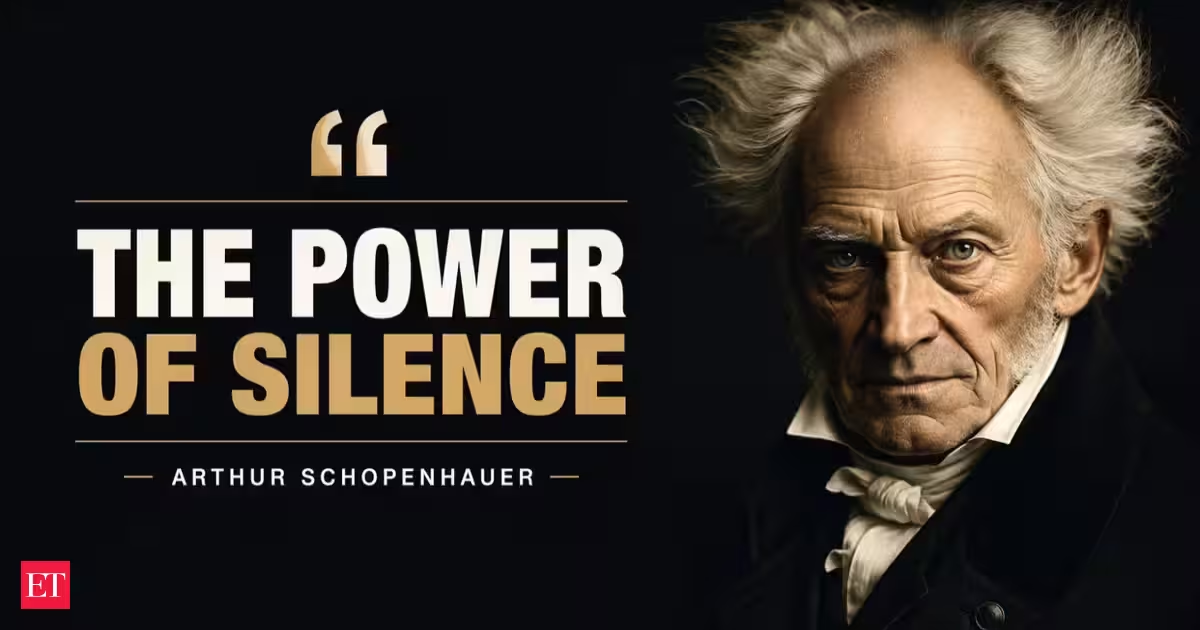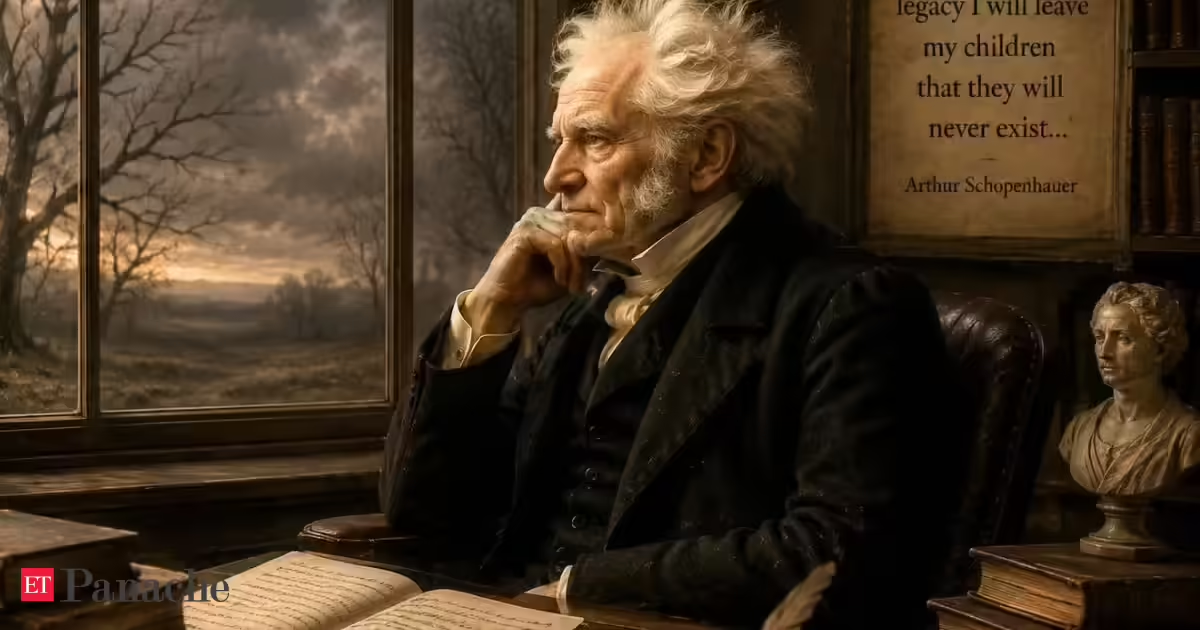
Arthur Schopenhauer remains one of the most discussed philosophers when it comes to ideas about pessimism, suffering, and the meaning of existence. The quote of the day is often linked to him, so let's understand what it really means in the context of his thinking. Schopenhauer, a 19th-century German philosopher, built a worldview that focused heavily on human suffering and desire, and even today his ideas spark debate and reflection.“The greatest legacy I will leave my children is that they will never exist”The line above is commonly attributed to the German philosopher Arthur Schopenhauer and is often shared in discussions about pessimism and antinatalism in philosophy.This quote is usually interpreted as a reflection on existence being more harmful than beneficial. The idea suggests that the “greatest legacy” is not wealth, memory, or achievement, but instead the absence of life itself. In simple words, it implies that by not bringing children into the world, one avoids exposing them to suffering, pain, and disappointment that life may bring.The thought behind it connects directly to a pessimistic view of existence. It assumes that life is not a neutral experience but something filled with struggle from beginning to end. So, in that sense, non-existence is treated as a kind of protection. If a person never exists, they also never suffer, never experience loss, and never face the constant pressure of unmet desires.What the idea is trying to expressAt a deeper level, the quote reflects the belief that life is not just difficult at times, but structurally unsatisfying. According to this way of thinking, even when people achieve goals or experience happiness, it does not last long. New desires quickly replace old ones, and satisfaction never fully settles in.This is why the quote is often linked to philosophical pessimism. It is not just about sadness or negativity in a casual sense. It is about a worldview where suffering is seen as a constant background condition of life. The suggestion that “never existing” is a kind of legacy may sound extreme, but it is meant to highlight how strongly this philosophy prioritizes the avoidance of suffering over the pursuit of pleasure.It is also important to note that this exact sentence is not found word-for-word in Schopenhauer’s published works. It is more of a modern paraphrase that captures the spirit of his thinking rather than a direct quotation. Still, it fits closely with the ideas he developed throughout his philosophy.Philosophy behind the quoteSchopenhauer’s philosophy is built around the idea that life is driven by what he called “will”. This will is not rational or peaceful. Instead, it is a constant force of desire that pushes living beings to want, chase, and continue striving without real rest.In his view, human beings are trapped in this cycle. When one desire is fulfilled, another appears immediately. If desires are not fulfilled, there is suffering. If they are fulfilled, boredom appears. This creates what he saw as an unavoidable cycle of dissatisfaction.Because of this, Schopenhauer argued that pleasure is always temporary, while suffering is more persistent. That is why he often leaned toward the idea that reducing existence itself would also reduce suffering. The quote we are discussing is often read as an extreme reflection of this line of thought.Arthur Schopenhauer and his worldviewArthur Schopenhauer was born in 1788 in Danzig and was originally expected to follow his family into business. However, after his father’s death, he eventually turned toward academic life and philosophy. He studied at universities in Göttingen and Berlin and was influenced by thinkers like Kant and Plato, though he also developed his own very distinct system of thought.His most famous work, The World as Will and Representation, did not receive much attention when it was first published. For many years, he lived in relative isolation, overshadowed by other philosophers of his time, especially Hegel, whose optimistic philosophy of history was almost the opposite of Schopenhauer’s thinking.Schopenhauer believed that the world we experience is not the true reality, but a representation shaped by our minds. Behind this appearance lies the “will”, a blind and endless force that drives everything in nature. For him, this will has no ultimate goal and no final satisfaction.This belief shaped his deeply pessimistic view of life. He often argued that human existence is marked by suffering, and that happiness is only a temporary relief between periods of discomfort or boredom. Unlike many philosophers who emphasized reason or progress, Schopenhauer focused on limitation, struggle, and emotional pain as central to human life.Influence and legacy of his thoughtEven though Schopenhauer was not widely recognized during the early part of his life, his ideas later gained strong influence. Writers, artists, and philosophers found his work powerful, especially because of its direct and unfiltered approach to human suffering. Thinkers such as Nietzsche, Freud, and several major literary figures were influenced in different ways by his ideas.His philosophy also contributed to discussions around compassion. Despite his pessimism, he believed that recognizing shared suffering among all living beings could lead to greater empathy. This is one of the more human-centered aspects of his thinking, where understanding pain becomes the basis for moral awareness.Over time, Schopenhauer’s work became a major reference point for discussions on pessimism, desire, and the limits of happiness.
Quote of the day by Arthur Schopenhauer: 'The greatest legacy I will leave my children is that they will never exist...' The German philosopher questions the purpose of bringing new life into this world
Arthur Schopenhauer is remembered as one of history's most influential pessimistic philosophers. The quote, “The greatest legacy I will leave my children that they will never exist,” reflects his belief that life is filled with unavoidable suffering and endless desire. While not considered a direct quote from his writings, it closely mirrors his philosophy explored in The World as Will and Representation. Examine the meaning behind the statement, Schopenhauer's life, major ideas, and his lasting influence on thinkers, writers and artists around the world.
872 words~4 min read