See more Daily Mail on Google - save us as a Preferred SourceBy MARK NICOL, DEFENCE EDITOR Published: 00:45 BST, 17 June 2026 | Updated: 00:47 BST, 17 June 2026
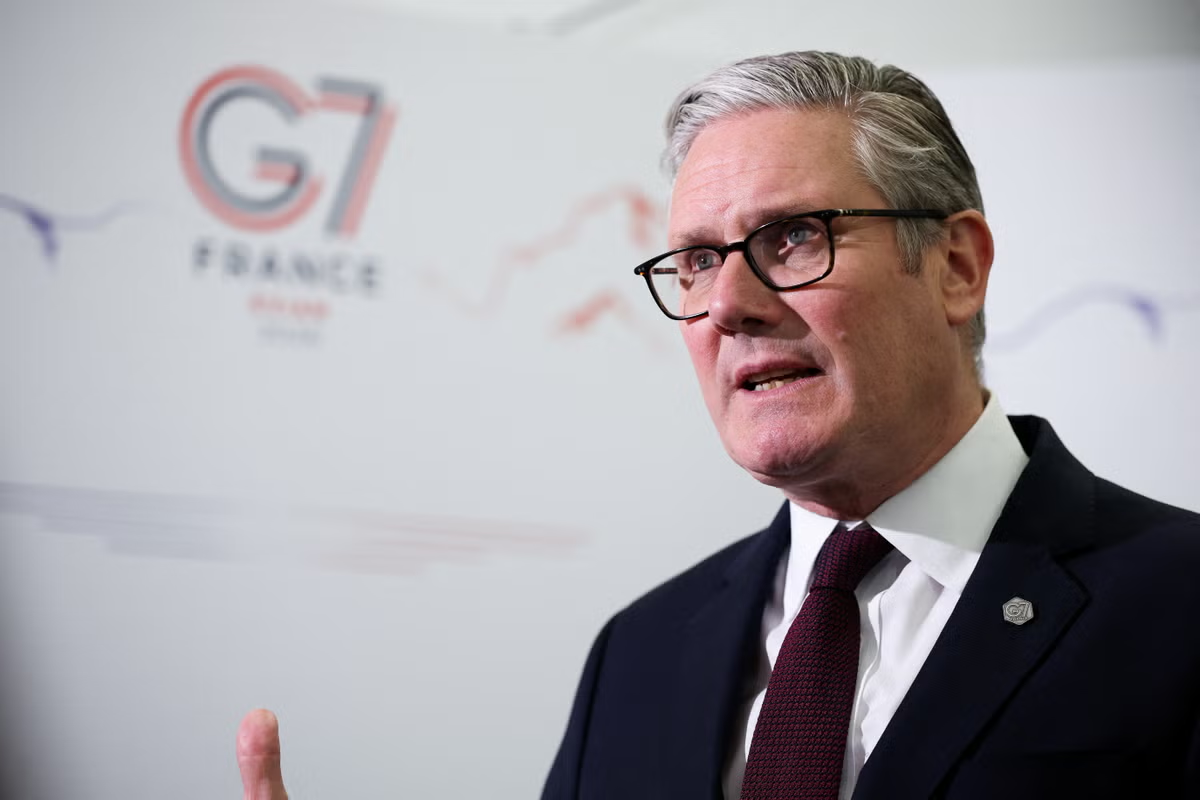
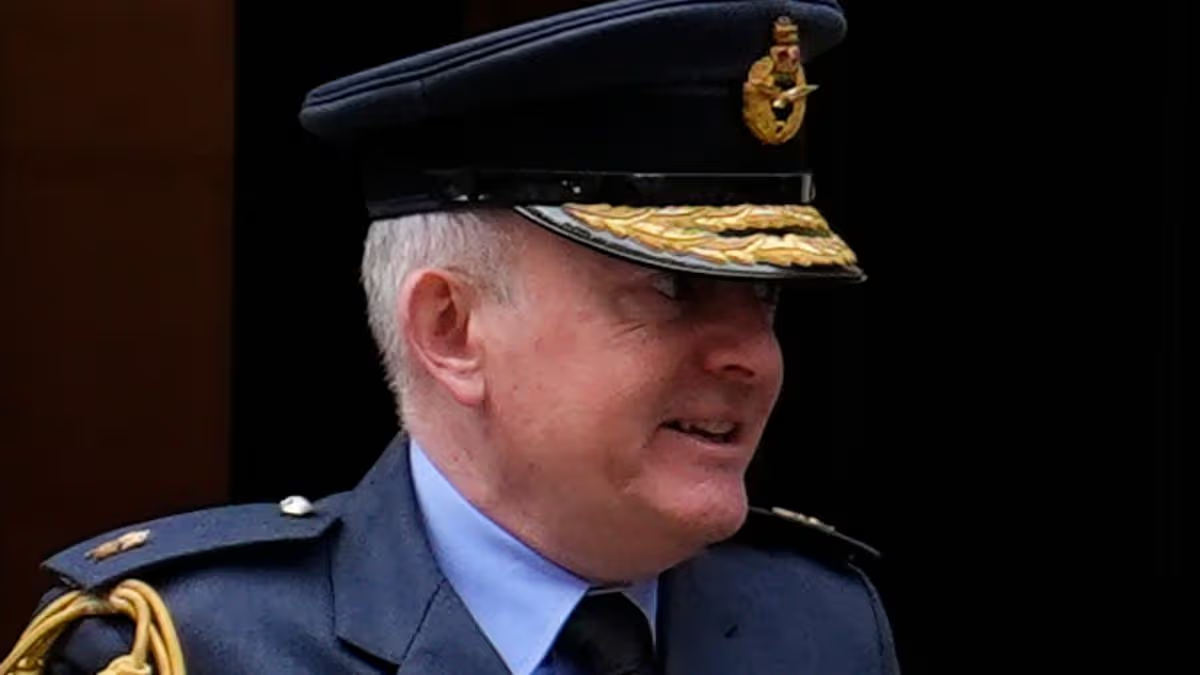
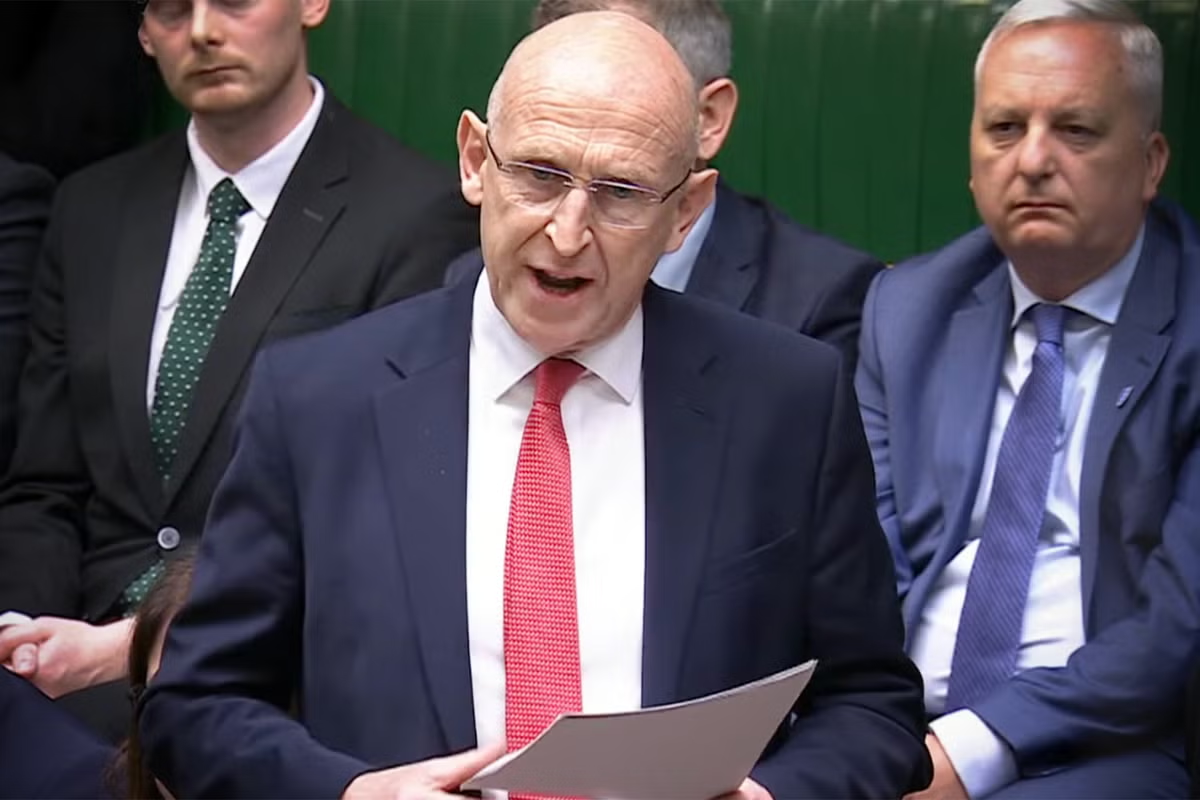
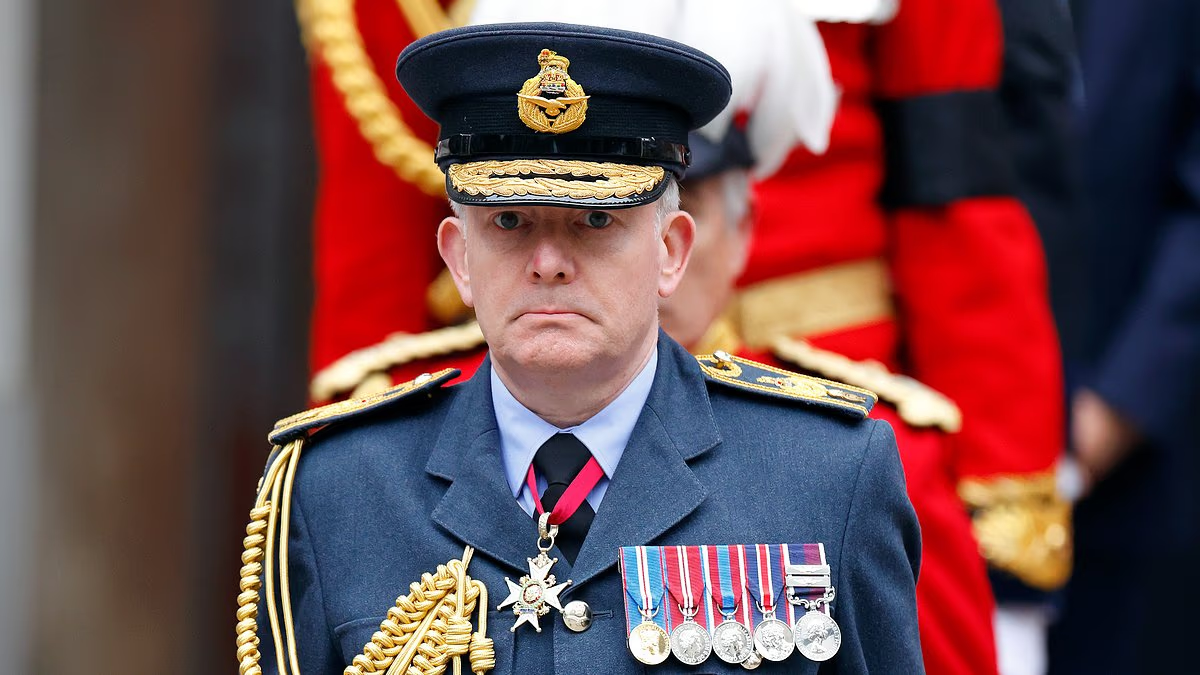
The head of the UK’s Armed Forces has laid bare the reality of Sir Keir Starmer’s defence policy – that current spending projections will result in fewer military operations and exercises.In a measured but damning assessment, Air Chief Marshal Sir Richard Knighton backed former Defence Secretary John Healey’s criticism of the Prime Minister’s failure to fund national security.Healey quit last week and revealed how the Prime Minister’s stance is increasing the threat to UK service personnel and making the country less safe.Ahead of Healey’s much anticipated resignation speech in the House of Commons this afternoon, the senior RAF officer admitted this country cannot afford to maintain its current level of military activity.That reality contrasts with the Prime Minister’s rhetoric on Labour’s commitment to defence. Air Chief Marshal Sir Richard Knighton admitted the UK cannot sustain present levels of military activity without funding over and above what Sir Keir Starmer has offered. Following the resignations of Defence Secretary John Healey and Armed Forces Minister Al Carns, Prime Minister Sir Keir Starmer is under immense pressure to increase the government's investment in the military.Healey and Armed Forces Minister Al Carns left to ffice after Starmer stood by the Treasury’s offer of an additional £10 billion in fresh finance over the next four years - £13.5 billion overall.This morning, Sir Richard said: ‘We will have to dial back our level of exercise and operational activities if the level of resourcing does not increase. That is still to be debated and decided.‘Clearly we would prioritise around what the government cared about most. But it would be disingenuous of me to suggest there was not going to be any impact as a cost of the settlement. There is a mismatch between the budget and the plan.’Appearing before the House of Lords’ Defence and International Security Committee, Sir Richard explained how previous increases in defence spending had concentrated on capital expenditure, essentially purchasing new equipment.However, the pressure on Ministry of Defence spending remains on its running costs, due to increases such as an 88 per cent rise in aviation fuel over the previous year – hence the inevitability of fewer operations and exercises in coming years unless investment is increased.In his resignation letter, Healey said he was being forced to make decisions that would ‘reduce the readiness of our Forces and increase the risk to personnel on operations that could make the country less safe’.Following the resignations of Healey and Carns, Sir Keir defended Labour’s record on military spending.On Friday of last week the PM said: ‘I have taken the difficult decisions to make sure that we are safe as a country, because that is my number one priority.‘It is very important that when I make commitments on something as important as defence that I’m able to point to what the funding is. I’ve tackled it head on and I have taken the decision to reallocate from other departments. That is not easy.‘We have another spending review coming up and before the end of this Parliament and defence will be a number one priority in that space.’Sir Keir faced further questions this morning at the G7 summit in France where he confirmed: 'The position on investment in defence is firstly that we increased last year, defence spending from 2.3 to 2.6 percent [of GDP]. We have invested in public services and stabilised the economy.'The Mail has campaigned for the government to not leave Britain ‘defenceless’. Currently the UK is heading towards spending 2.6 per cent of GDP on the armed forces by 2027 – that falls far short of NATO requirements.Sir Richard added: ‘Our NATO allies agree spending 3.5 per cent of GDP is necessary to deliver NATO capabilities and the vision we set out in the UK’s Strategic Defence Review.‘The key question is what is the trajectory towards that 3.5 per cent? We cannot overturn 30 years of spending the peace dividend overnight. We are falling down the rankings in terms of percentages of GDP expenditure.‘Ultimately these are decisions for ministers to take. My job is to give clear, honest and robust advice as to what the implications are of any resources that ministers allocate to defence.‘The trend of the threat to the UK is upwards. Russia is learning and developing capabilities. The NATO assessment is that the threat from Russia is growing. It peaks around 2030, subject to variables such as the outcome of the conflict in Ukraine.’