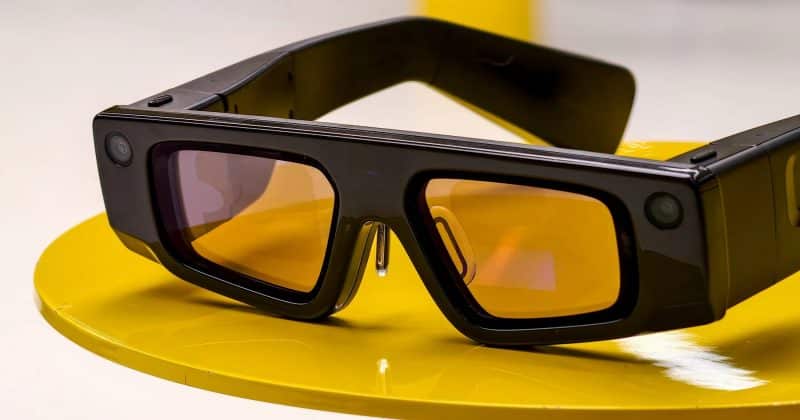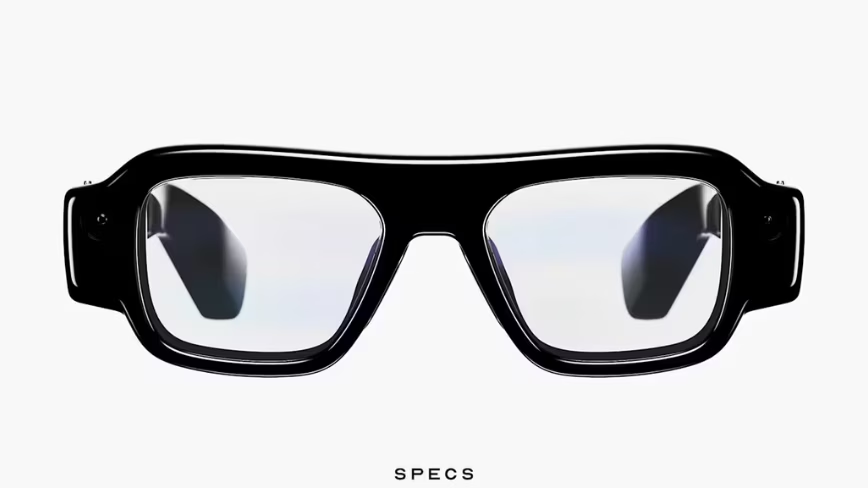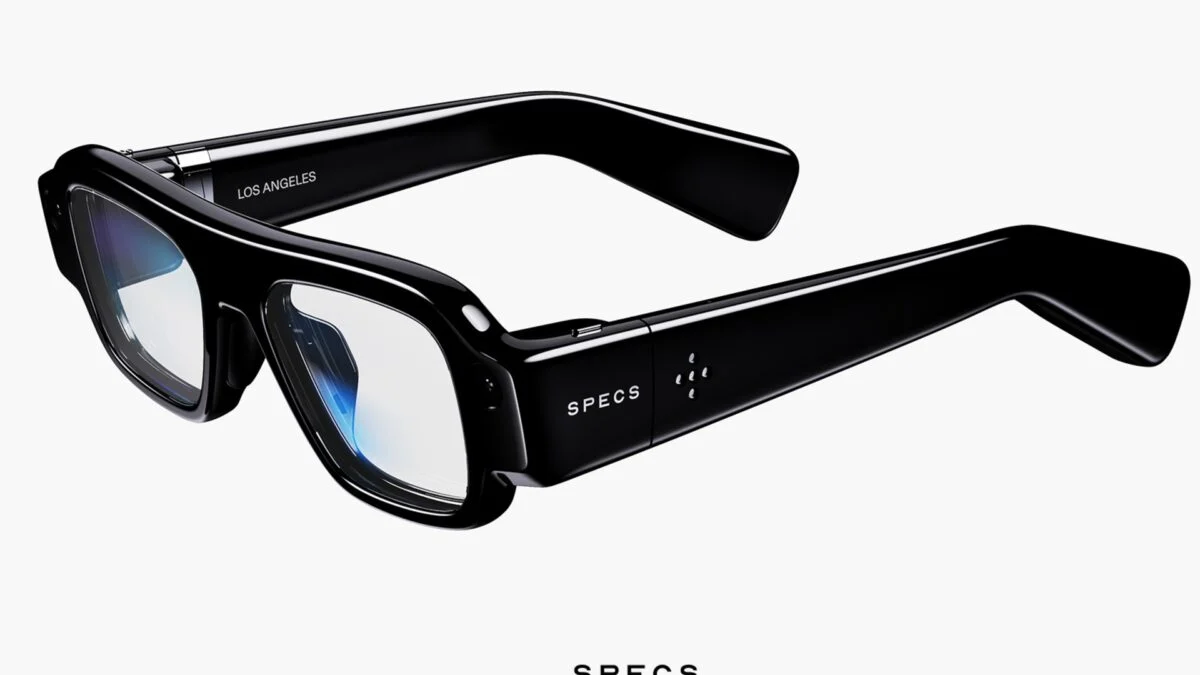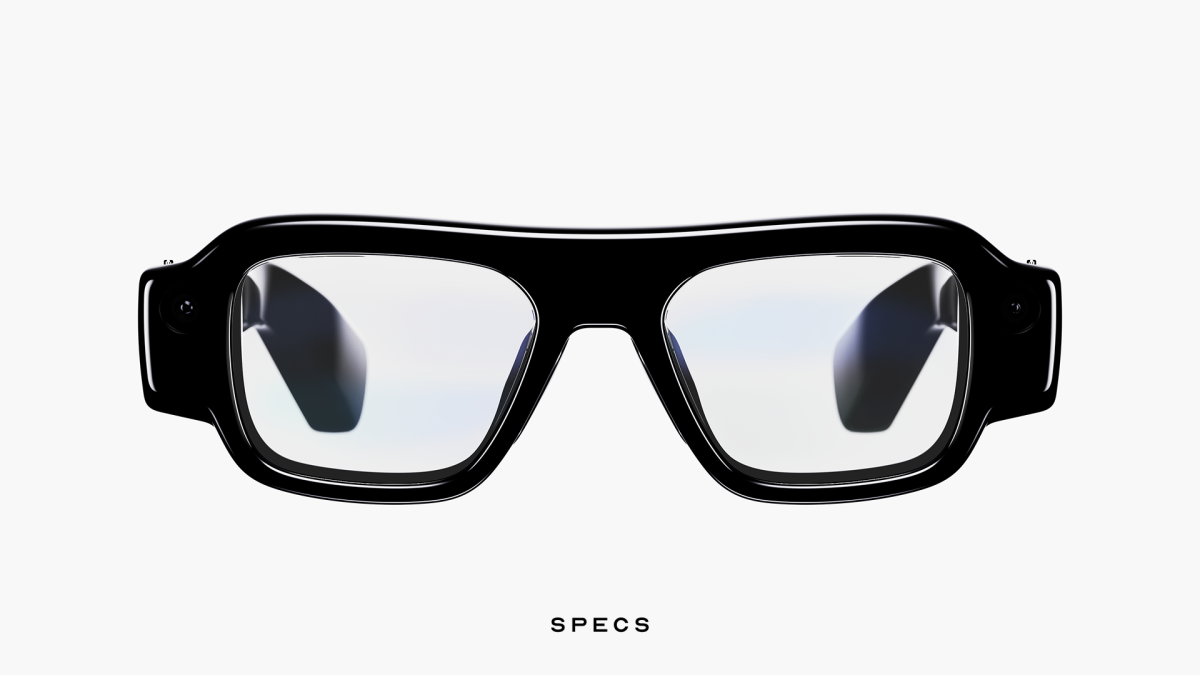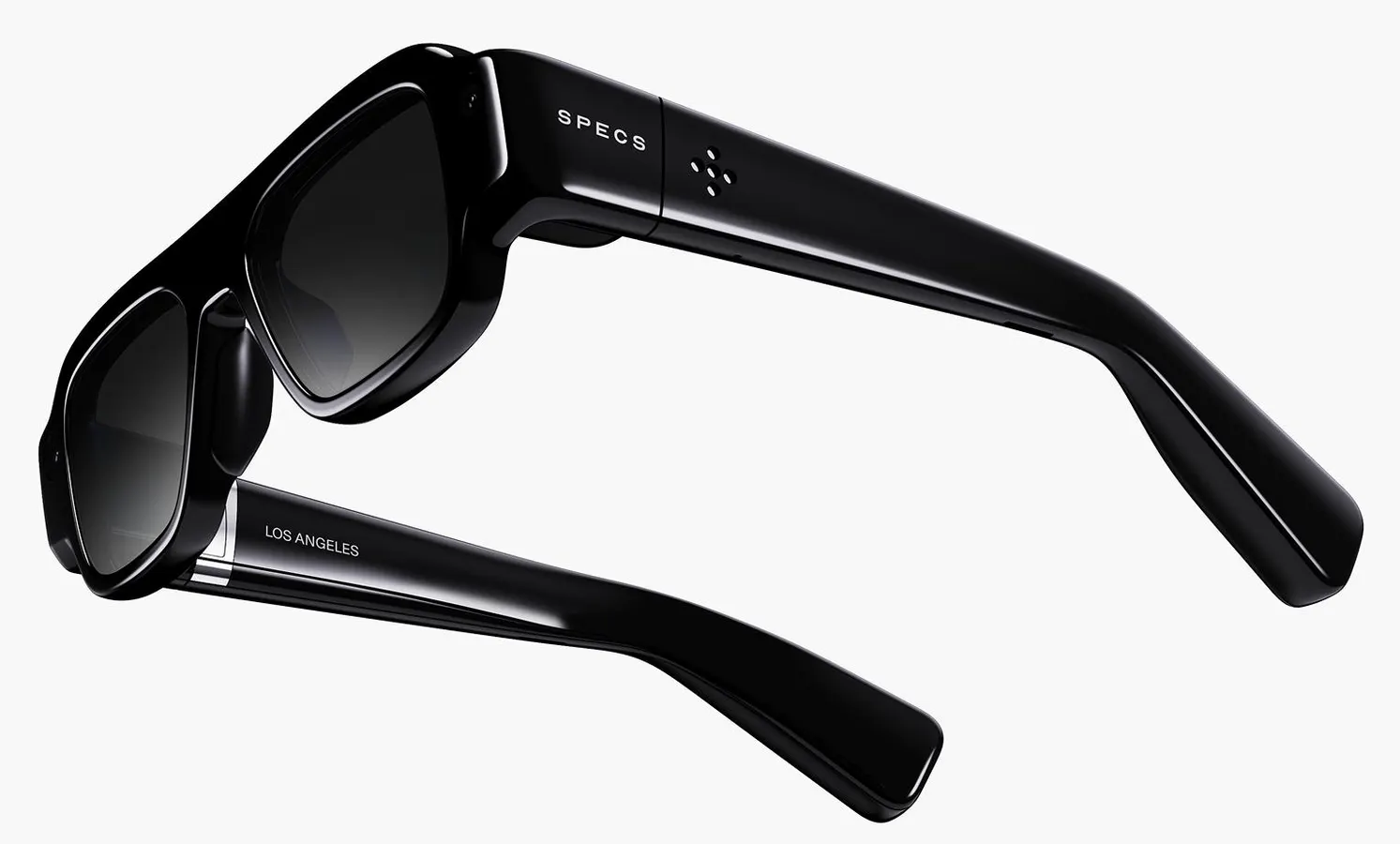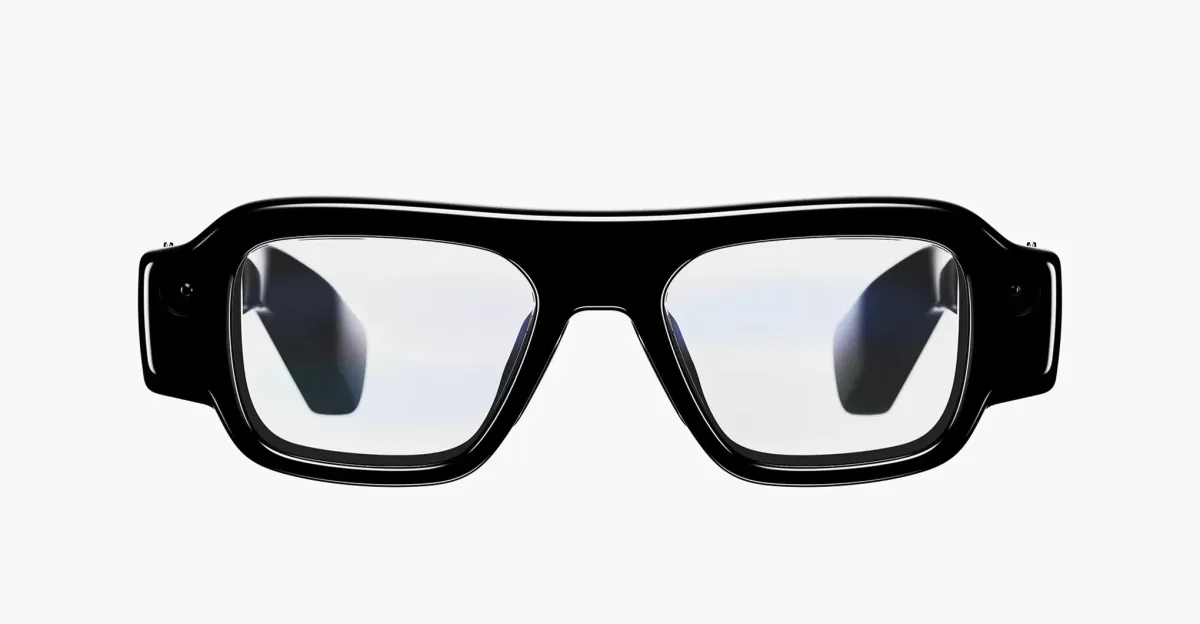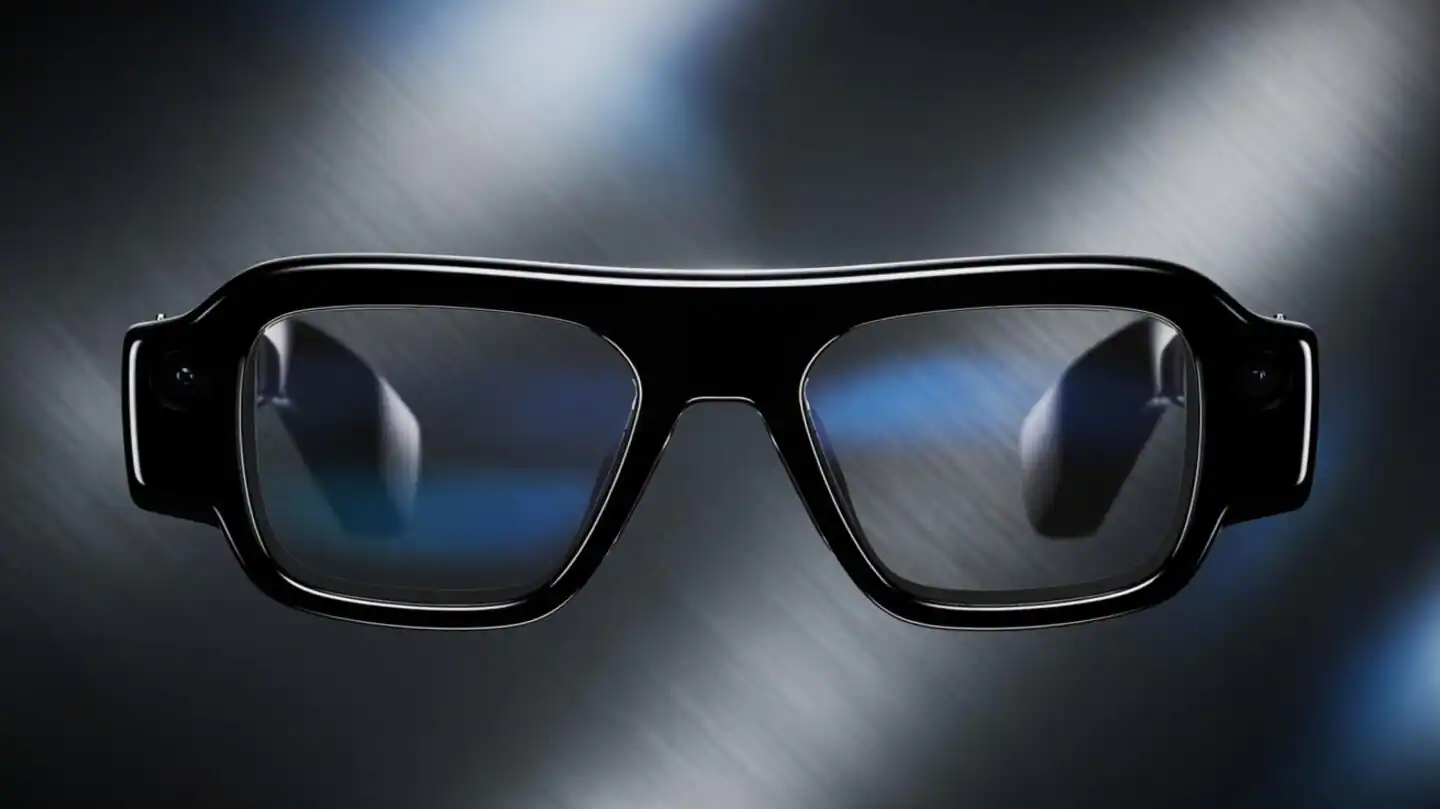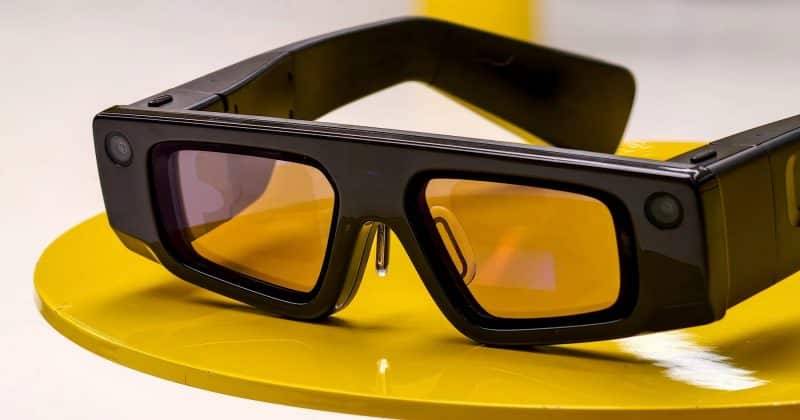
Snap Specs are standalone augmented-reality glasses, priced at $2,195 with a $200 refundable deposit, open for pre-order from 16 June 2026 and shipping this autumn in the United States, United Kingdom and France. Evan Spiegel unveiled them at Augmented World Expo in Long Beach and put them on shelves ahead of Meta, Google and Apple — three giants that each want this exact object on sale, and each of which arrived behind him.He paid for the lead in grams. Standalone means the phone and the tether leave the design, and the weight they carried lands on your face: 132 grams on the smaller frame, roughly twice a pair of Ray-Ban Meta Display glasses. Spiegel took the idol the way Indiana Jones does in the temple — fast, first, with a boulder already rolling behind him. The rest of this story is the boulder.Key TakeawaysSnap Specs are standalone see-through AR glasses at $2,195 plus a $200 refundable deposit, open for pre-order from 16 June 2026 and shipping this autumn in the US, UK and France.Specs reach buyers ahead of Meta, Google and Apple's true-AR products, making Snap the first to sell standalone spatial AR glasses to the public.The price runs more than three times a pair of Ray-Ban Meta glasses, and lands on Snapchat's young base — an audience that mostly sits below that budget.Snap posted a $460 million net loss in 2025 on $5.93 billion revenue, and houses Specs inside a separate subsidiary, Specs Inc, with Spiegel signalling an outside capital raise.Battery runs about four hours of mixed use; the charging case adds four refills for roughly 20 hours total.The weight had to go somewhereA standalone headset carries its own organs. Two Snapdragon processors sit inside the frames, one reading the room through computer vision, the other running Lenses. Snap quotes 7-millisecond motion-to-photon latency — the gap between your head turning and the image catching up — and at that figure digital objects stay glued where they belong. The display runs liquid crystal on silicon: 51 degrees of field of view, 16 million colours, sized in your vision like a 24-inch monitor at a desk or a 115-inch cinema screen about three metres out.Picture packaging an engine. A mid-engined car puts its mass low and central so the thing turns cleanly, and every component fights for millimetres behind the seats. Specs face the same packaging war, except the cabin is the bridge of your nose and the tolerance is whatever a human neck accepts for a few hours. Swiss TR90 polymer holds the kerb weight to 132 grams on the 47 mm frame and 136 grams on the 52 mm. Removable inserts take a prescription. The lenses shift from clear to dark in about 10 seconds using the electrochromic tech Boeing fits to 787 windows.Four hours of mixed use is where the packaging bites back. Four hours is an evening — a long film and a walk home with navigation running. The charging case is the jerry can: four more fills, about 20 hours of stop-start use before you reach a wall socket. A magnetic cable feeds the glasses while they sit on your face, which tells you Snap already knows four hours is the number people will grumble about.SpecSnap SpecsRay-Ban Meta (Gen 2)Apple Vision ProTypeStandalone see-through ARCamera + audio, display-lightMixed-reality headsetPrice$2,195from ~$379from $3,499Weight132 g / 136 g~50 g~600 g+DisplayLCoS, 51° FOV, 16M coloursaudio/camera onlydual micro-OLEDCompute2× Snapdragon, onboardonboard, phone-pairedM-series, onboardBattery~4 hrs (20 hrs with case)~4 hrs~2 hrs (tethered pack)AvailabilityAutumn 2026, US/UK/Franceon saleon saleWho actually pays $2,195 for glasses?Early adopters, developers, and the slice of the wealthy who buy first-generation everything. That is the honest answer, and it sits at an awkward angle to Snap's brand.Jitesh Ubrani, a research manager at IDC, called this "the worst time for any company to be launching any kind of premium product," adding that Snap's audience skews young and typically holds a thin budget. The market agreed inside a day: Snap shares slid more than 5 per cent.Here is the contradiction worth sitting with. Snap's cultural equity lives with teenagers and people in their early twenties — the Snapchat base, more than 940 million monthly actives as of the third quarter of 2025, who treat the app as a reflex. Specs ask more than three times a pair of Ray-Ban Meta glasses, plus a deposit most of that base would weigh hard. The price is rational for the physics: true AR optics, dual silicon and standalone compute carry a bill of materials that laughs at $300. The price is brutal for the brand, because the people who love Snap mostly sit below it, and the people who can clear it mostly live on Meta's and Apple's platforms already.Spiegel's defence is value, stated plainly — he wants a device ten times better than the smartphone, and prices to that value rather than to the floor. Set against Apple's $3,499 Vision Pro, Specs even read as the restrained option. My read: the price is correct for what Snap built and wrong for who Snap is, and closing that gap is the single hardest job the company faces before this becomes a business rather than a demonstration.Meta owns the room Snap just walked intoStrip the launch romance away and one fact organises everything: Meta already sells the glasses people actually buy. Ray-Ban Meta has moved more than two million units since October 2023, sales tripled year-on-year in the second quarter of 2025, and Meta has weighed lifting annual capacity past 20 million units by late 2026. Those glasses skip the display entirely — a camera, speakers, a voice assistant, a frame that passes for ordinary eyewear. Cheap enough to gift.Snap built the opposite product for a segment that barely exists yet. True see-through AR — the kind that pins a 3D object to your kitchen counter — ships in volumes you can almost count by hand.YearAI / smart glasses shipments (Omdia estimate)2025~5.1 million202610 million+2030~35 million (≈47 per cent CAGR, 2025–2030)Most of that volume is the display-light kind Meta dominates, rather than the spatial kind Snap is selling.The boulder behind Snap wears a Google logo. Samsung and Google showed Android XR glasses in Warby Parker and Gentle Monster frames — an audio-first pair due this autumn around $379 to $499, with a display version pencilled for 2027. Xreal's Project Aura, an Android XR display pair, sits in the late-2026 column. Meta's true-AR Orion successor reads 2027 to 2028. Apple reportedly slid its lighter device toward 2028 and turned inward to its own glasses. So Snap holds a clean lead on standalone true AR, measured in months to a couple of years — a lead it earned, and a lead the entire weight of Android exists to erase. An open OS, Gemini built in, Qualcomm silicon and two fashion houses for distribution beat one proprietary stack on every axis except time-to-market.Apple's empty chairThe loudest voice at Snap's launch belonged to the company that stayed home. Apple defines new computing categories — the iPod years into MP3 players, the iPhone into a market that already had smartphones, the Watch after Pebble and Fitbit drew the map. Glasses are the first category in two decades where Apple watched someone else cut the ribbon.Vision Pro explains the silence. At $3,499 and roughly 600 grams, it sold to developers and the curious, then settled into a niche. Apple reportedly shifted weight off a cheaper Vision model and toward glasses of its own, with the lighter device sliding toward 2028. Apple yields the first chapter to Snap and means to write the last one.Its weapon, when it arrives, is the asset Snap most lacks: more than a billion iPhones already on the faces of people who own AirPods, wear a Watch, and carry a decade of muscle memory for Apple's way of doing things. Snap's lead is measured in months. Apple's is measured in install base. The honest read sits between the two — Apple has turned late, unfashionable entries into total wins before, and Snap's whole task is to bank enough patents, developers and platform habit to still matter the morning Apple's gravity switches on.A subsidiary is a tellSnap rang Specs off into its own company, Specs Inc, and that piece of corporate housekeeping says more than the keynote did.Look at the parent's 2025 numbers. Revenue of $5.93 billion, up 11 per cent. A net loss of $460 million — an improvement on 2024's $698 million hole, yet a loss all the same, the shape Snap has filed every full year since its IPO. Cash and marketable securities of about $2.9 billion. Effective cost per thousand ad impressions fell 8 per cent across the year. This is a company funding a hardware moonshot from an advertising business under real strain.Spiegel has been candid that "there may be opportunities to raise additional capital" for the glasses effort, while weighing outside money against his own ownership and dilution. Read the subsidiary and the capital line together and the message resolves: the core business would buckle under Specs alone, so Snap fenced the cost and the risk, then went looking for partners to split the bill. That is prudent. It is also a confession — you ring-fence the thing whose bill outruns your wallet.What the launch-day coverage skated pastFour things, mostly missing from the morning's write-ups.The refundable deposit is doing quiet work. A $200 deposit a buyer can claw back lets Snap measure true demand before it commits a single production line — and Snap carries a scar here. The 2016 Spectacles, those $130 camera-only sunglasses sold from yellow vending machines, over-produced into a warehouse Snap later wrote down by tens of millions of dollars. The deposit is the lesson from that warehouse, dressed as a launch moment.Standalone is sold as triumph and reads partly as confession. Meta and Samsung lean their glasses on a phone because a phone is a battery and a brain the buyer already carries. Snap went standalone partly by force: a tethered design needs a phone platform to host it, and a phone platform is the one asset Snap sits outside of. The weight and the heat on your face are the price of that independence.The 7,000 patents and the owned operating system point at a different business than the headlines describe. A company chasing unit sales against Meta would be deranged to price at $2,195. A company building licensable AR infrastructure — optics, an OS, a developer engine — prices to seed a platform and banks the patents. Snap's win condition probably looks less like out-selling Ray-Ban and more like outlasting the doubt, owning enough of the stack to become the layer others build on or pay into. Spiegel has gone as far as tying Snap's whole mission to these glasses.The pitch quietly moved from optics to AI. Listen to how Spiegel sells it now — glasses that see what you see, an assistant that reads the room. If the durable value is contextual AI, a display-light pair at a fifth of the price delivers most of it, which hangs a question mark over the very optical moat Snap spent a decade and 7,000 patents digging. The bet beneath the bet is that people will pay for the display, not only the assistant.For an Indian reader the launch lands at arm's length. Specs ship to three Western markets this autumn, with India outside that first list, and Snap has yet to name an India date. The nearer hook for Delhi and Bengaluru is the developer side: Lens Studio now takes agentic help through Claude Code, Codex and Cursor, so a small studio here can build for Specs today and worry about owning a pair later. Whenever the glasses do arrive, $2,195 will translate into a number that lands far heavier against local buying power than it does in California.Indy outran the boulder and lost the idol to Belloq in the very next scene — to a rival with more men and a waiting plane. Snap has the idol. It cleared the temple door first, with a real product, a ship date, and 450,000-plus developers who already speak its language. The men with the planes — Google's open platform, Meta's two million frames and counting, Apple's patience — are climbing the steps now, holding the map Snap just drew for them. First through the door buys a story and a head start. Whether it buys a decade is this autumn's open question.FAQWhen do Snap Specs ship, and where?Snap opened pre-orders on 16 June 2026 at $2,195 with a $200 refundable deposit. Units ship this autumn in the United States, United Kingdom and France, with other markets to follow at a later, unconfirmed date.Do Snap Specs need a phone to work?Specs run on their own. Two Snapdragon processors sit in the frames and handle computer vision and Lenses, so the phone can stay in your pocket. A USB-C link lets the glasses double as a display for a computer, phone or games console when you want it.How are Specs different from Ray-Ban Meta glasses?Ray-Ban Meta centres on a camera, speakers and a voice assistant, with the mass-market models display-light. Specs add see-through AR optics that pin digital objects into real space with hand tracking. That extra capability explains the roughly threefold price gap.What can you actually do with Snap Specs?Walk a city with directions laid over the street, open a virtual monitor or a 115-inch cinema screen, sketch on a shared whiteboard, run any of Snap's existing Lenses, and call on an AI assistant that reads your surroundings. Developers have already published hundreds of Lenses for the device.How long does the battery last?About four hours of mixed use — audio, video, Lenses, AI and notifications combined. The charging case holds four more refills for roughly 20 hours total, and a magnetic cable charges the glasses while you wear them.Will Snap Specs come to India?The first wave covers the US, UK and France this autumn, with India sitting outside that list and an India date still to be named. Developers in India can build for Specs today through Lens Studio, including the new agentic tooling.end of article
Snap Specs At $2,195 Are Evan Spiegel's Whole-Company Gamble On AR
Snap shipped standalone AR glasses ahead of Meta, Google and Apple. The physics impress. The maths punish. Snap shipped standalone AR glasses ahead of Meta, Google and Apple. The physics impress. The maths punish. Snap shipped standalone AR glasses ahead of Meta, Google and Apple. The physics impress. The maths punish.
2,353 words~11 min read