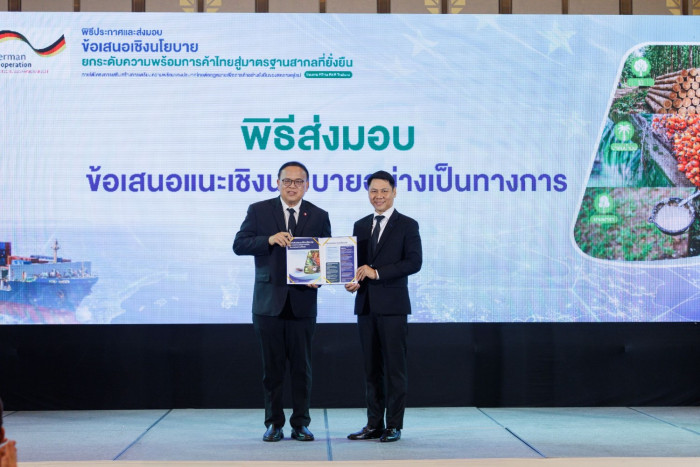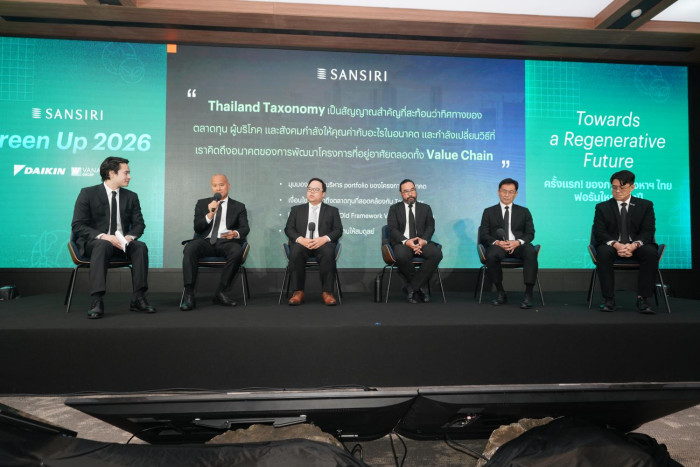
From second left, Mr Samatcha, Mr Warut, ML Dispanadda, Mr Wachirachai and Mr Natthakorn take part in a discussion on aligning business with the Thailand Taxonomy.
As Thailand approaches the halfway mark of its national climate commitments, businesses are increasingly viewing sustainability not merely as protection against environmental and regulatory risks, but as a pathway to growth amid climate disruption, resource insecurity and energy volatility.The expansion of Thailand Taxonomy Phase 2 to cover agriculture, construction and real estate, manufacturing and waste management marks another step in the country's transition towards a low-carbon economy.
Business leaders are increasingly treating the framework as a practical tool for identifying investment opportunities, accessing sustainable finance and preparing for tighter regulations.
At the Sansiri Green Up 2026 forum, executives from the property, energy and manufacturing sectors agreed that sustainability is no longer an optional corporate initiative, but an increasingly important driver of long-term competitiveness.
For many businesses, the question is no longer whether to transition, but how quickly.