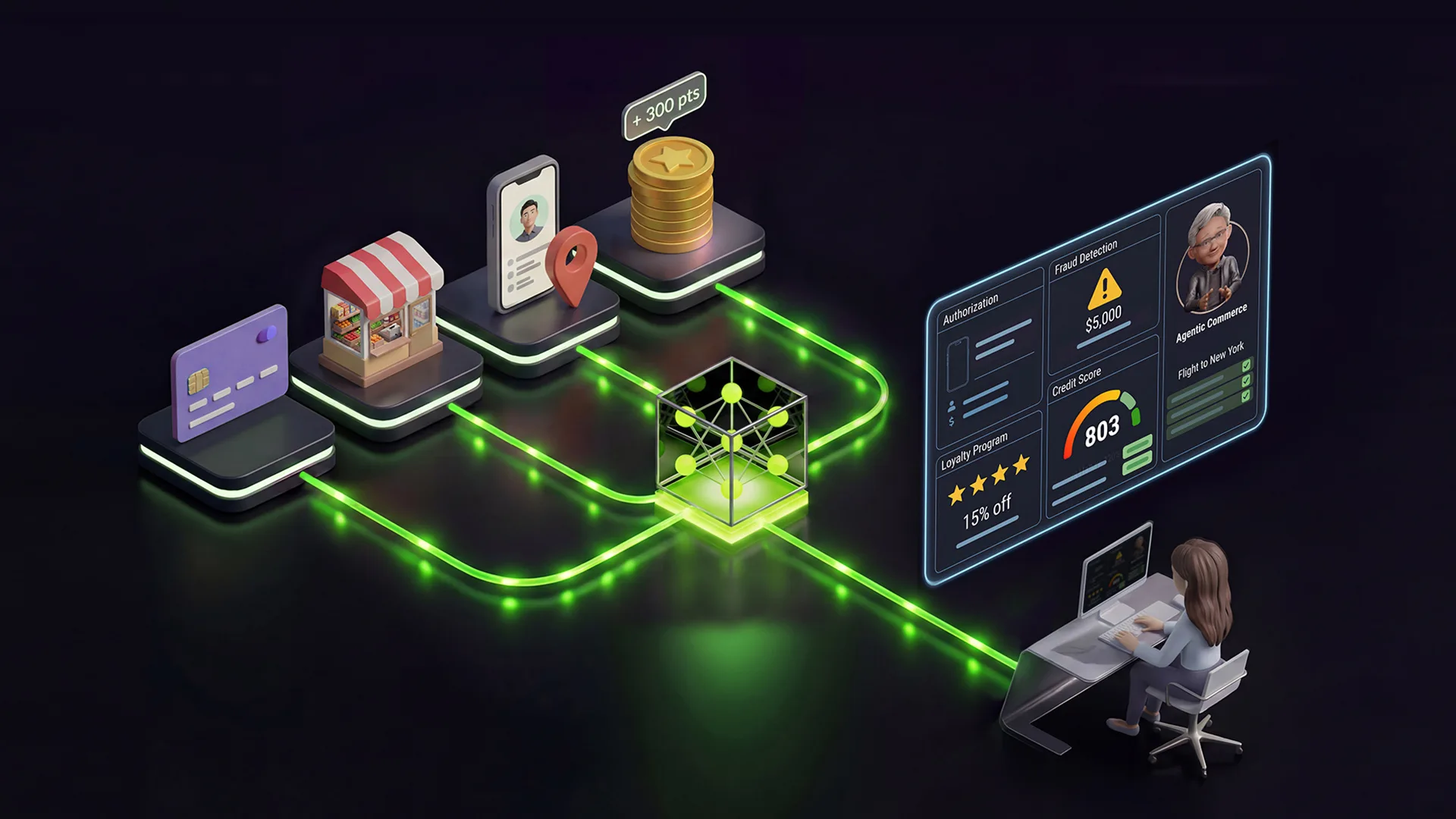
Every swipe, transfer, and payment on a modern financial network encodes a pattern of human behavior. Transaction data is one of the richest signals an enterprise owns. Yet most production use cases for such tabular data still depend on hand-engineered features and rule sets that are brittle, expensive to maintain, and blind to the sequential structure inside a customer history.
Foundation models, pre-trained on large volumes of unlabeled transaction sequences, change this equation by producing general-purpose representations of financial behavior that transfer across a wide array of downstream tasks. A single backbone covers fraud detection, credit scoring, lifetime value prediction, segmentation, personalized recommendations, recurrent-transaction detection, and more.
The industry signal is strong and accelerating. Innovative financial firms are training transformer-based models on billions of transactions, reporting double-digit relative lifts on production-scale tasks while simultaneously streamlining operations. See Stripe’s payments foundation model, Nubank’s NuFormer, Visa’s TransactionGPT, Mastercard’s large tabular model, Revolut’s PRAGMA, Plaid’s transaction foundation model, and more.