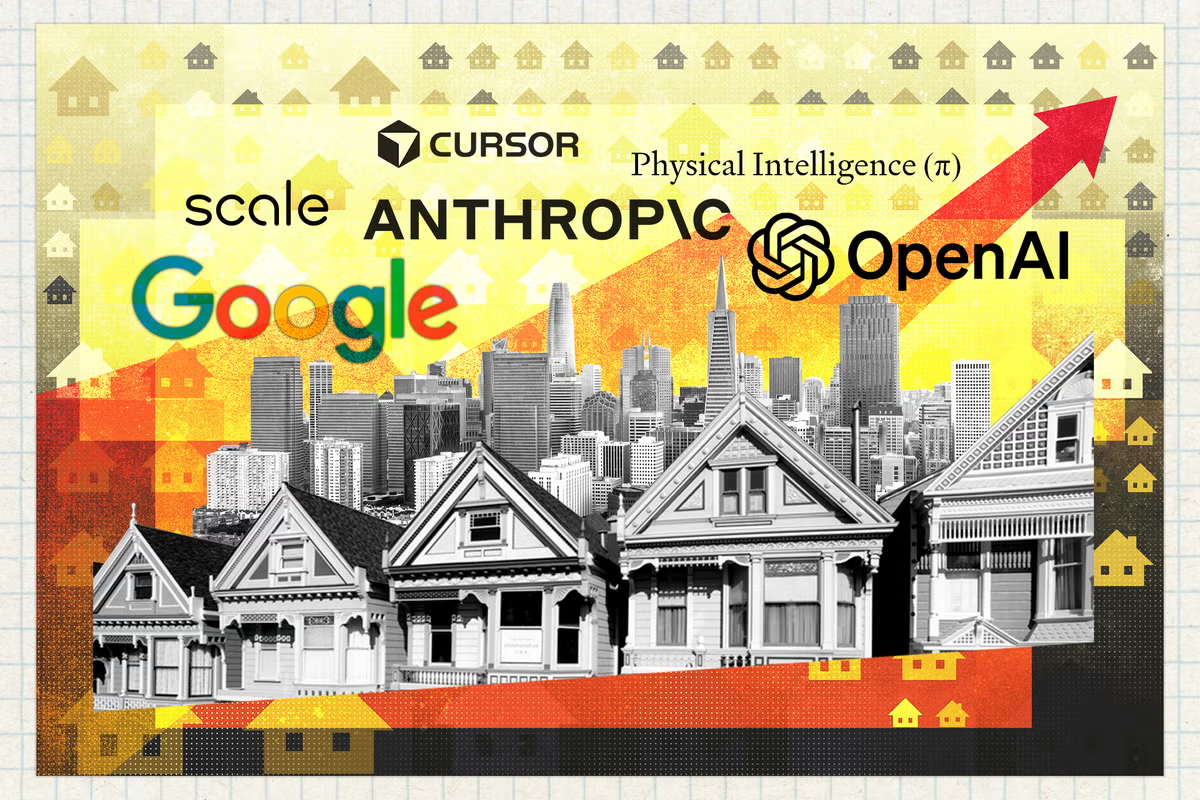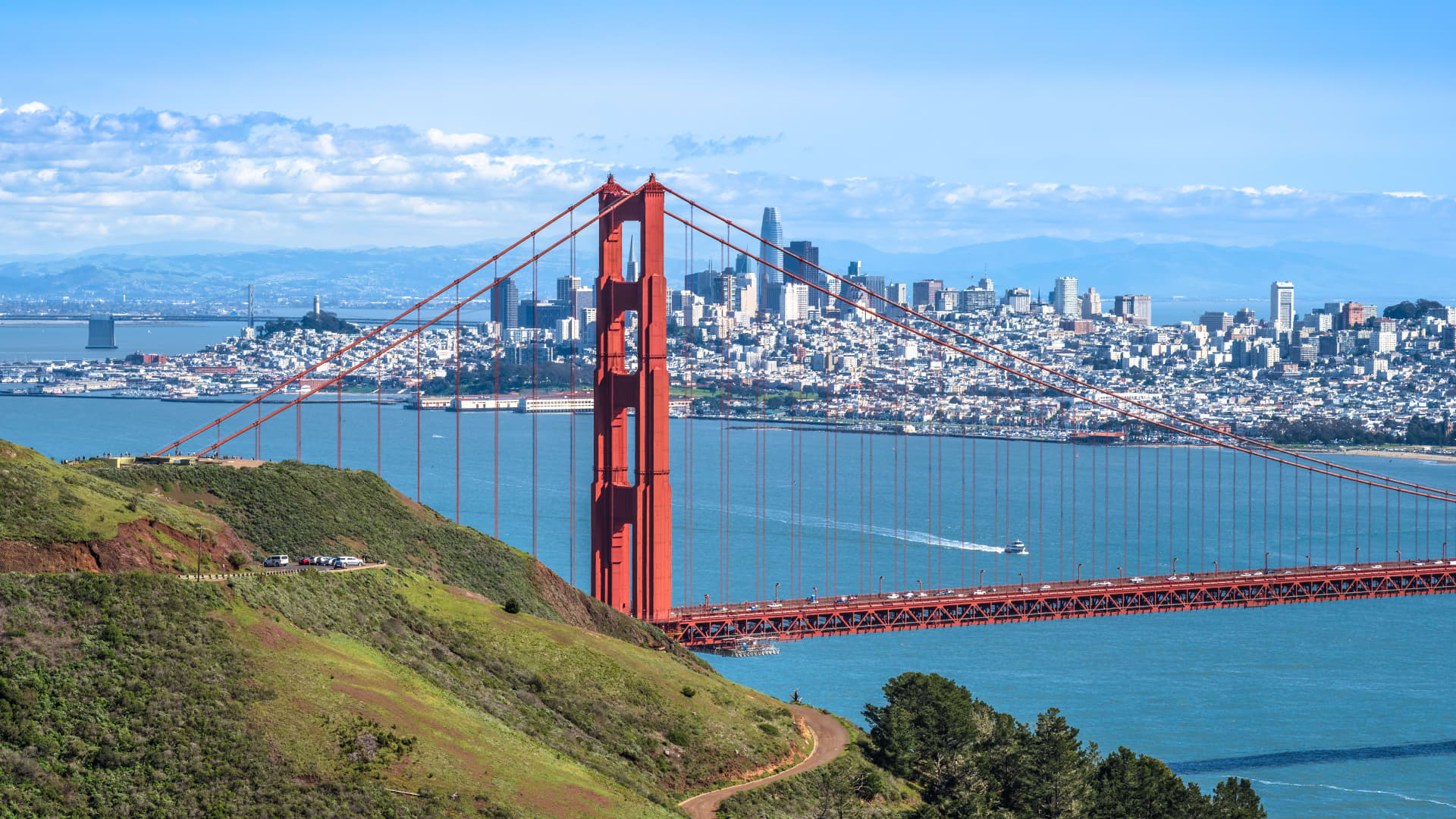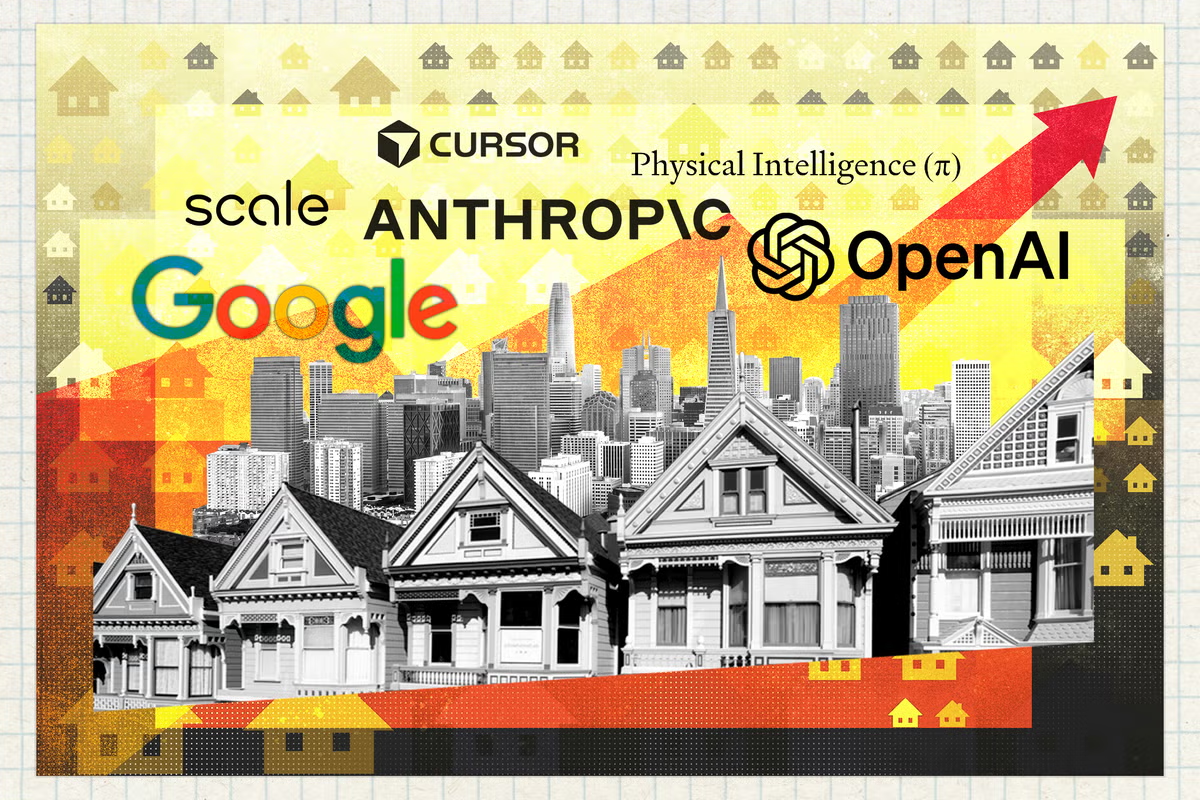
Anthropic and OpenAI are both preparing to go public, each pushing a valuation of $1 trillion as of their latest funding rounds. Even before these mega-IPOs send a tsunami of cash through San Francisco, you don’t have to look hard to find signs of extreme wealth, with no sign flashing brighter than the real estate market. The city has the highest and the fastest-rising home prices in the country, according to data from Redfin. For the three months ending in May, median home prices were up almost 15% over last year.There’s perhaps no better illustration of how AI equity has become the currency of the housing market than the listing at 160 Noe St.The turnkey Edwardian home, fresh off a two year luxury renovation, hit the market last month for just under $3 million. It’s located on a quiet tree-lined street in Duboce Triangle, adjacent to Cerebral Valley, the neighborhood known for its concentration of AI startups and workers.It has unique features like a motorized stairway to the attic that folds into the ceiling, an oversized marble kitchen island that seats six and custom nine-foot doorways.But perhaps the most distinctive thing about this listing is one of the forms of payment accepted: shares in OpenAI or Anthropic.“We have had at our open houses a lot of folks come in and be like, ‘Oh my gosh, I wish I wish this was six months from now,’” said realtor Kristal Pollack with Swann Group. “And so the seller said, ‘Well, yeah, I would just take their stock for it.’”Employees and other shareholders have also had opportunities to cash out billions of dollars of stock before the IPOs by selling shares back to the company during funding rounds, or on the booming (though not always legitimate) secondary market.The surge of wealth is driving a frenzy of bidding wars. While underpricing properties to spur interest has been a norm in certain markets of San Francisco, the number of offers over asking price has exploded across the city, with the fiercest competition at the high end.“There’s a mansion deficit,” said real estate advisor Alexander Lurie, who also happens to be Mayor Daniel Lurie’s brother.He recently represented the seller of a Pacific Heights home that was listed for just under $4 million, and sold for $7 million. In the ultra-luxury segment, Lurie said there’s roughly a three-year backlog of supply. There are about 50 buyers shopping for $20 million homes, but typically fewer than 10 such properties go up for sale in the city in an entire year. Thus people are offering many millions of dollars above asking price or making generous deals before a house ever gets listed. He said about 70% of the sales he works on are “off market” deals that never list on public databases.“We are in unprecedented times because of the access to liquidity, the access to wealth,” he said.San Francisco is the perpetual gold rush town. The city’s historic mansions were built with the fortunes of mining and railroads, before they were claimed by the barons of silicon and software. Ted Egan, the city and county chief economist, has seen his share of booms in his two decades in San Francisco, “but nothing on this scale,” he said.The amounts invested in AI companies are orders of magnitude bigger than in previous tech waves, but the wealth is accruing to a concentrated group as the rest of the industry contracts. Egan said the city lost about 40,000 jobs in the last three years, mostly in the technology sector.“It's really a tug of war between something that's in decline and something that's growing rapidly,” said Egan.That dueling reality is taking a psychological toll on the city, said Deedy Das, a former engineer who’s now a partner at a Menlo Ventures, a venture capital firm that’s a major investor in Anthropic.“To see it up close and personal, it's very stark,” he said. “I mean overnight I have friends who are worth billions of dollars and sometimes even they don't know how to process that.”He has other friends shaken by a newfound sense of precarity, even with enviable Big Tech salaries.“People are like, ‘I felt like I did everything right in my life. I went to, I don't know, Stanford and MIT. I was top of my class, I took the right job, I did everything right. But I don't know if my job even has value anymore,’” Das said.The term “permanent underclass” gets thrown around a lot in tech circles unironically. It’s the idea that if you miss this wave of wealth there may never be another. A fear of missing out is also palpable in the real estate market, said real estate agent Kelly Bennett, who’s working on that Duboce Triangle listing.“You know, once these companies IPO, what's going to happen to the home prices then?” she said. “We might look back on this time and think, ‘Oh shoot, I wish I'd gotten in in spring 2026.’”
AI wealth is already sending San Francisco real estate soaring
A new class of overnight millionaires and billionaires are bidding up San Francisco housing at the fastest rate in the country. And that’s before Anthropic and OpenAI have even gone public.
825 words~4 min read