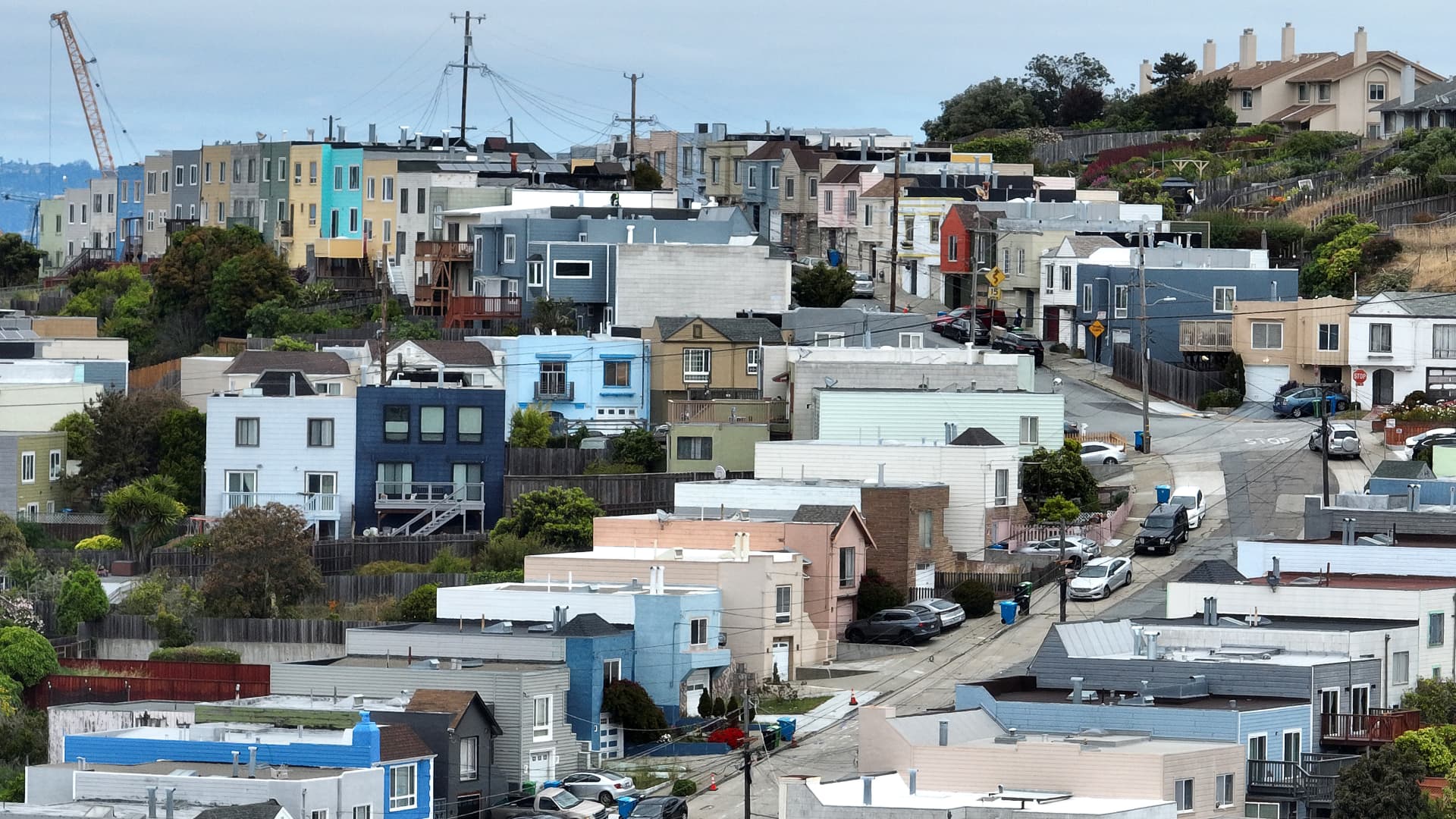
Skip to Content News Archives Economy Energy Oil & Gas Renewables Electric Vehicles Mining Commodities Agriculture Real Estate Mortgages Mortgage Rates Finance Banking Insurance Fintech Cryptocurrency Work Wealth Smart Money Wealth Management Investor Personal Finance Family Finance Retirement Taxes High Net Worth FP Comment Executive Women Puzzmo Newsletters Financial Times Business Essentials More Innovation Information Technology FP500 Podcasts Small Business Lives Told Tails Told Shopping Financial Post Store Obituaries Place a Notice Advertising Advertising With Us Advertising Solutions Postmedia Ad Manager Sponsorship Requests Classifieds Place a Classifieds ad Working Profile Settings My Subscriptions Saved Articles My Offers Newsletters Customer Service FAQ News Economy Energy Mining Real Estate Finance Work Wealth Investor FP Comment Executive Women Puzzmo Newsletters Financial Times Business Essentials HomeReal EstateRent spikes in San Francisco are topping all other U.S. cities on AI boomThe surge is sharpening divides in a city defined by its extremes and long been mired in deep inequalityAuthor of the article: You can save this article by registering for free here. Or sign-in if you have an account.With supply scarce and competition fierce, renters and sellers are getting creative — betting that the same AI boom driving up real estate prices can also unlock new ways to pay for homes. Photo by Justin Sullivan/Getty ImagesIn San Francisco’s latest real estate boom, renters are paying cash up front, multimillion-dollar houses are selling auction-style and AI company stock can buy a sprawling hilltop estate.Subscribe now to read the latest news in your city and across Canada.Exclusive articles from Barbara Shecter, Joe O'Connor, Gabriel Friedman, and others.Daily content from Financial Times, the world's leading global business publication.Unlimited online access to read articles from Financial Post, National Post and 15 news sites across Canada with one account.National Post ePaper, an electronic replica of the print edition to view on any device, share and comment on.Daily puzzles, including the New York Times Crossword.Subscribe now to read the latest news in your city and across Canada.Exclusive articles from Barbara Shecter, Joe O'Connor, Gabriel Friedman and others.Daily content from Financial Times, the world's leading global business publication.Unlimited online access to read articles from Financial Post, National Post and 15 news sites across Canada with one account.National Post ePaper, an electronic replica of the print edition to view on any device, share and comment on.Daily puzzles, including the New York Times Crossword.Create an account or sign in to continue with your reading experience.Access articles from across Canada with one account.Share your thoughts and join the conversation in the comments.Enjoy additional articles per month.Get email updates from your favourite authors.Create an account or sign in to continue with your reading experience.Access articles from across Canada with one accountShare your thoughts and join the conversation in the commentsEnjoy additional articles per monthGet email updates from your favourite authorsSign In or Create an AccountorIt’s a reflection of the new wave of wealth from the artificial intelligence industry, leaving even well-paid newcomers scrambling for a place to live.For Jenni Lee, a Chicago tech worker seeking to join her boyfriend in the Bay Area, finding an apartment has at times felt more difficult than getting a job. She has spent six months searching for a San Francisco rental, flying in for tours and repeatedly losing out on offers, even after the couple almost doubled their budget to US$6,500 a month for a two-bedroom. In Illinois, her friends were living in desirable places for less than half that.At one point she showed up to what she thought was a private appointment just to wait in line and later find out someone had already signed a lease. One US$7,000-a-month home didn’t have a washer-dryer — though the touring agent assured her there was a laundromat down the street. Lee recently applied for a place she liked, only to get a text an hour later saying someone else was willing to pay a full year’s worth of rent upfront in cash.Get the latest headlines, breaking news and columns.By signing up you consent to receive the above newsletter from Postmedia Network Inc.A welcome email is on its way. If you don't see it, please check your junk folder.The next issue of Top Stories will soon be in your inbox.We encountered an issue signing you up. Please try again“My Chicago brain couldn’t compute that,” she said.San Francisco’s new tech frenzy is reigniting home bidding wars and sending prices soaring in a city that just a few years ago was mired in post-pandemic malaise. With the AI industry paying hefty compensation to attract talent — and hometown startups OpenAI and Anthropic PBC commanding valuations approaching US$1 trillion — the wealth effects are warping the entire residential market. And upcoming initial public offerings from the likes of SpaceX are set to unleash even more money into the market from early investors.The city leads the United States in annual rent growth, according to apartment-listing firm Zumper. Prices for two-bedrooms are now tied with New York for the most expensive in the country, with a median monthly rent of US$5,500, the company said in a report this week. The median rent for a one-bedroom crossed US$4,000 for the first time ever. Homebuyers also are facing soaring costs: The median price for a San Francisco house recently hit a record US$2.15 million.The surge is sharpening divides in a city defined by its extremes. San Francisco has long been mired in deep inequality, a place where a homeless encampment can be on the next block from houses owned by tech millionaires. Now, the real estate frenzy is colliding with broader wealth tensions across the state: Californians are facing a potential ballot measure to levy a tax on billionaires, while housing is a central issue in this year’s governor’s race.And while the real estate market has been accelerating, the labour market tells a different story — suggesting the boom is concentrated among those benefiting from the AI fervour. While overall employment in the Bay Area is recovering after the pandemic, job creation has been modest. The San Francisco-Oakland-Fremont metropolitan area has added roughly 10,000 to 15,000 jobs over the past year, according to Bureau of Labor Statistics data.“One of the big mysteries in San Francisco is how can you have such a hot housing market when you have such a cold labour market,” said Ted Egan, chief economist for the city and county of San Francisco. “If you have some people moving in and nobody moving out and you don’t have any new supply, that can create a spike.”For sellers, the frenzy has translated into windfalls. When real estate agent Butch Haze listed a four-bedroom home in the Marina neighbourhood in March, he figured it would fetch around US$4 million, netting the owner a profit from the US$3.4 million they paid two years ago. Within days, the house drew five all-cash offers.Instead of choosing one, Haze turned the process into an impromptu auction, asking buyers to bid against each other in US$100,000 increments. The home ultimately sold for US$4.9 million.The competition has only intensified. Haze said a recent listing in the Central Richmond neighbourhood drew seven showing requests almost immediately and an offer within an hour. The buyers of the four-bedroom, five-bath house paid US$4.95 million, plus covered the broker commission for the sellers, pushing the total value of the sale to more than US$1 million over asking.The market has gotten so tight that many buyers are simply dropping out. Haze said he started the year working with about 20 clients; now less than five are still actively searching. His response when asked about the available inventory: “What inventory?”With supply scarce and competition fierce, some sellers are getting creative — betting that the same AI boom driving up real estate prices can also unlock new ways to pay for homes. Storm Duncan, the founder and managing partner at a tech investment bank called Ignatious, is offering his roughly 13-acre estate in Marin County’s Mill Valley north of San Francisco in exchange for hard-to-get shares of Anthropic.The four-bed, five-bath home, featuring an infinity pool, a putting green and a fruit orchard, is worth around US$8 million, said Duncan, who was part of the wave of tech workers who moved to Miami during the pandemic. And although Duncan said he has never heard of anyone who has done such a transaction, he sees this as an opportunity to grow his investments in AI.“I was sitting there thinking, how do I get invested here?,” he said. “And then I thought, maybe there’s someone else that has the opposite problem I have, which is they’re already invested, they started working there very early or they coincidentally got some seed shares or early shares as a VC and now they’re worth hundreds of millions of dollars, but it’s all illiquid.”Duncan said he’s already fielded interest from potential buyers, such as a foreign investor looking to diversify out of concentrated tech holdings. Others have asked about replicating the structure with shares in companies like SpaceX, he said.The turnabout in the market has been swift for prospective buyers. When Sedric Bailey and Michael Clery started looking for a home almost a year ago, they thought they had the upper hand. Bailey, a lawyer at a tech firm who has lived in San Francisco for seven years, already owned a condo in the Mission Dolores area, so the couple wasn’t in a rush. They were looking for a bigger home ahead of the birth of their first child — ideally a three- or four-bedroom that would also accommodate their German shepherd and French bulldog.“We felt like we were basically in control,” Bailey said. “We would go see a property and say, ‘Look we’re only going to pay this amount,’ and if they take it, great, if they don’t it’s not for us. And that strategy has had to change starting this year.”Several bids they made faced about 10 competing offers, Bailey said, including some in all cash. Some homes they tracked were selling for as much as double the asking price. After losing out several times, the couple eventually secured a home by viewing it before it officially hit the market and putting in an offer 25 per cent over asking that same day.“We saw a rapid big boom starting September and October and it caught everybody off guard,” said Frank Nolan, the president of Vanguard Properties. “There’s a house that somebody bought for around US$4 million this fall that is probably worth US$5 million right now.”The demand is creating ripple effects: Many would-be buyers are turning to the rental market to secure a place while they find their home, driving apartment prices further up, said Rachel Swann, an agent at Coldwell Banker Realty.Swann recently listed a two-bedroom home at the Four Seasons Private Residences for US$15,000 a month and immediately had multiple people who were interested. She’s seen rentals that are 600 square feet with no parking go for US$6,500 a month. With the sales market heated, one client who was “basically a billionaire” preferred to rent.“For these people these payments are nothing,” Swann said.—With assistance from John Gittelsohn. Join the Conversation This website uses cookies to personalize your content (including ads), and allows us to analyze our traffic. Read more about cookies here. By continuing to use our site, you agree to our Terms of Use and Privacy Policy.
Rent spikes in San Francisco are topping all other U.S. cities on AI boom
In San Francisco’s new real estate boom, renters are paying cash up front and AI company stock can buy a sprawling hilltop estate. Read on
1,884 words~9 min read