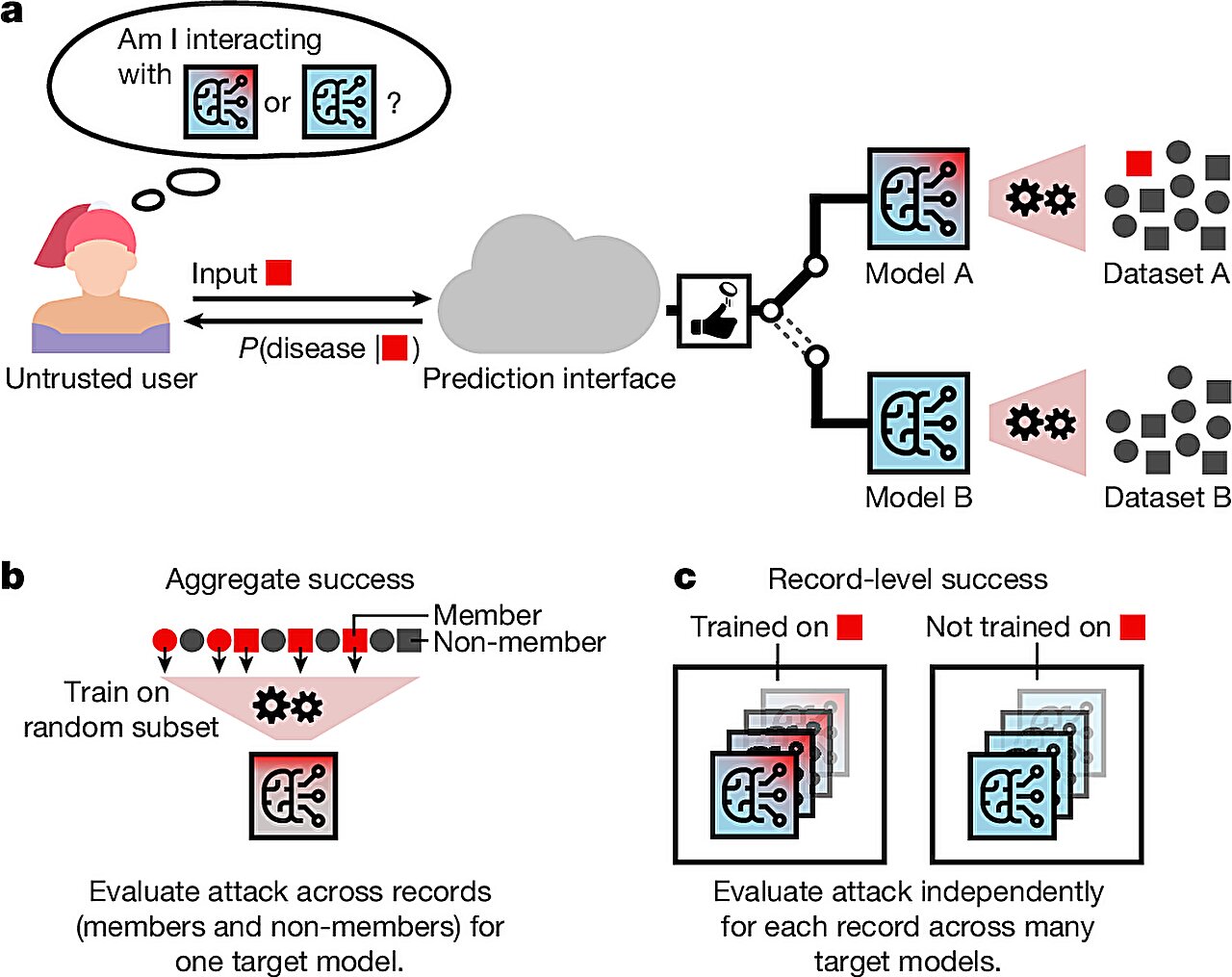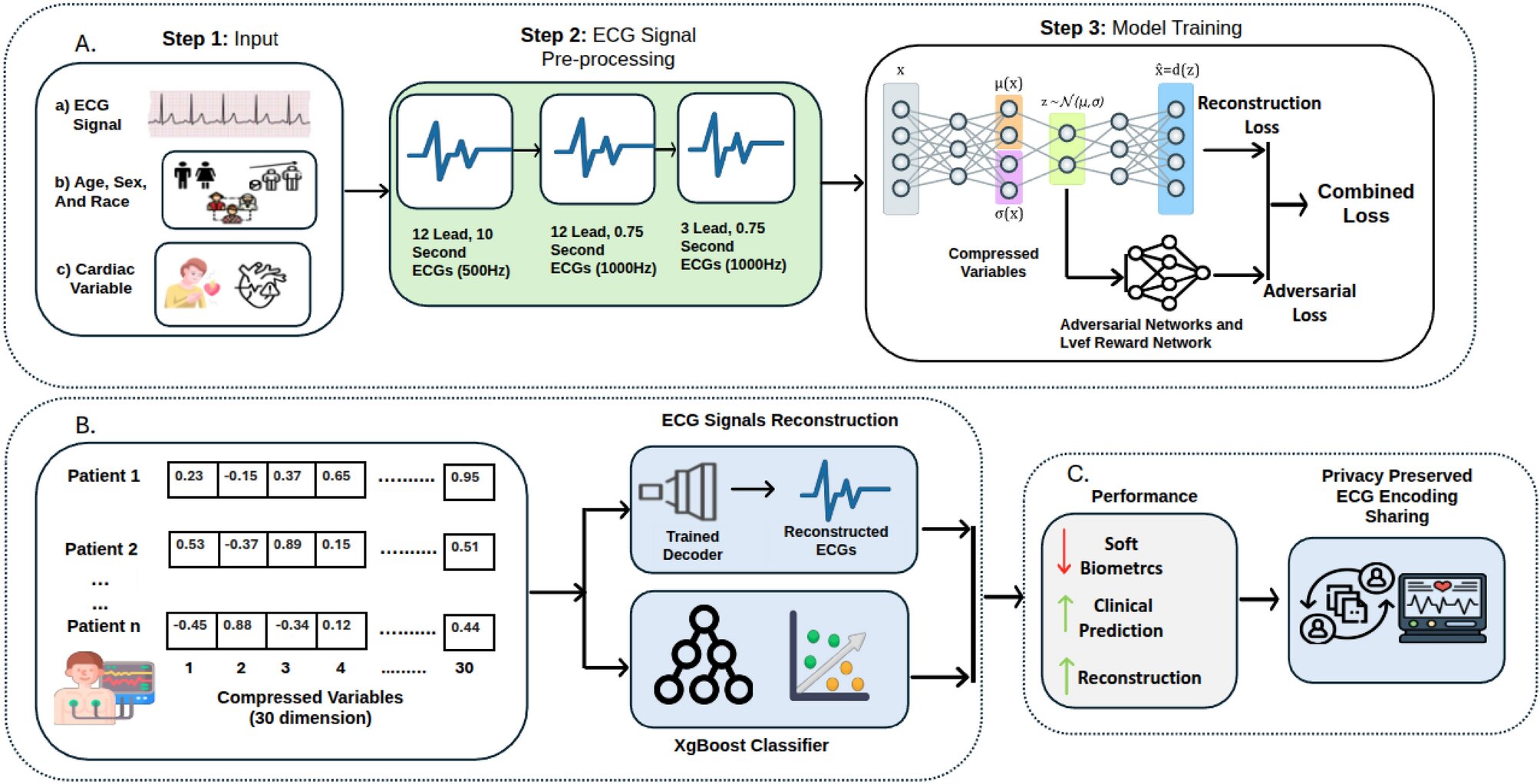
Overall architecture of the proposed framework. (A) Model development using VAE with adversarial training to remove demographic attributes from ECGs. (B) Performance analysis for downstream tasks. (C) Applications of the privacy-preserving ECG embeddings in clinical outcome prediction and secure data sharing. Credit: Scientific Reports (2026). DOI: 10.1038/s41598-026-47665-6
It is a common misperception that electrocardiograms (ECGs) simply contain data about heart activity. However, modern ECGs enhanced with artificial intelligence (AI) can contain data about a patient's sex, age, race and even exact identity derived from ECG signals, raising fresh privacy concerns. To address these worries, researchers from the University of Kansas have developed a privacy-preserving AI model called (PP-VAE) to protect personally sensitive data.
"Modern AI systems may infer sensitive traits from ECG signals, including approximate age ranges and other personal soft biometrics from the signals," said Fairuz Shadmani Shishir, a doctoral student in electrical engineering and computer science at KU who led the study. "Our goal was to develop a method that preserves clinically useful information in ECGs while reducing the exposure of sensitive personal attributes such as age, sex and demographic details."