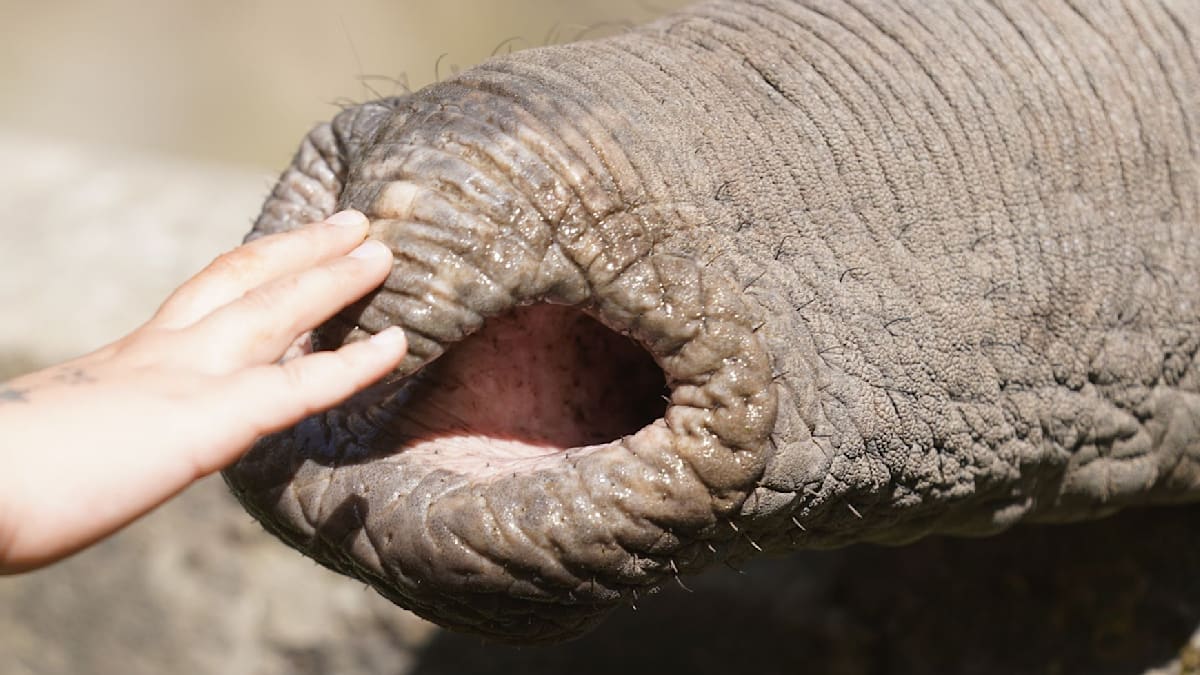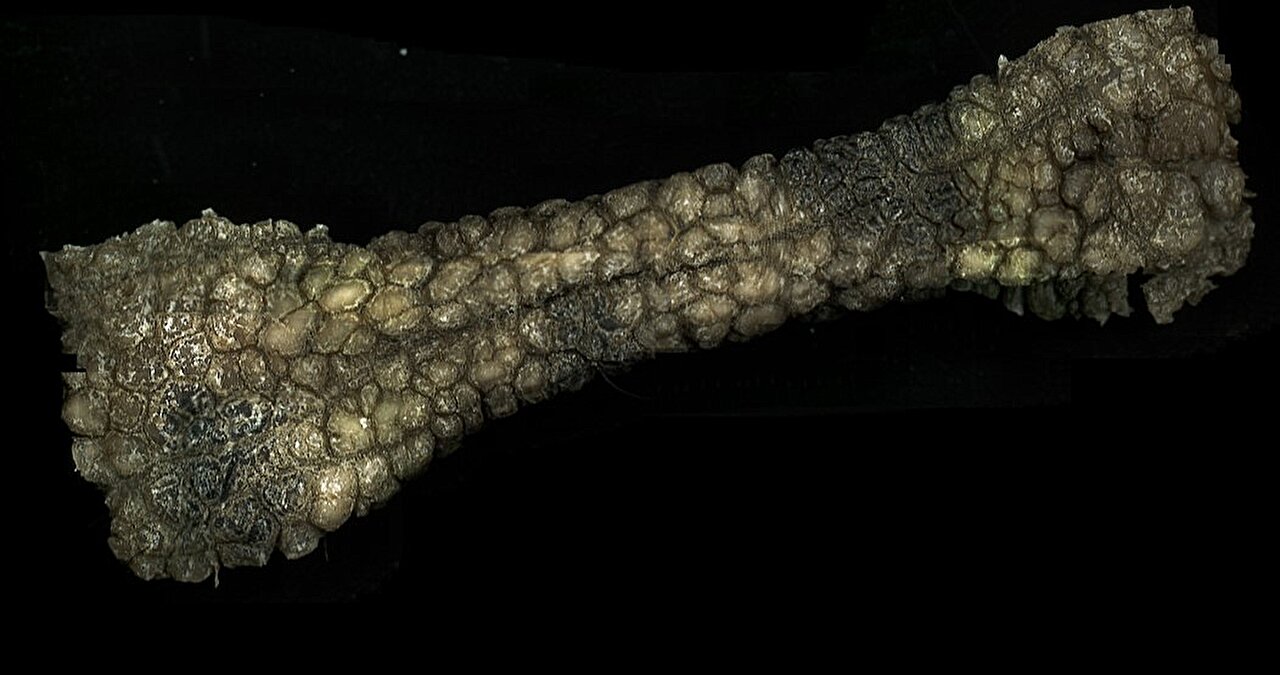
Digital microscope image of a small sample of an Asian elephant trunk dorsal skin showing the specific microstructure. Credit: Soft BioRobotics Perception Lab, Istituto Italiano di Tecnologia
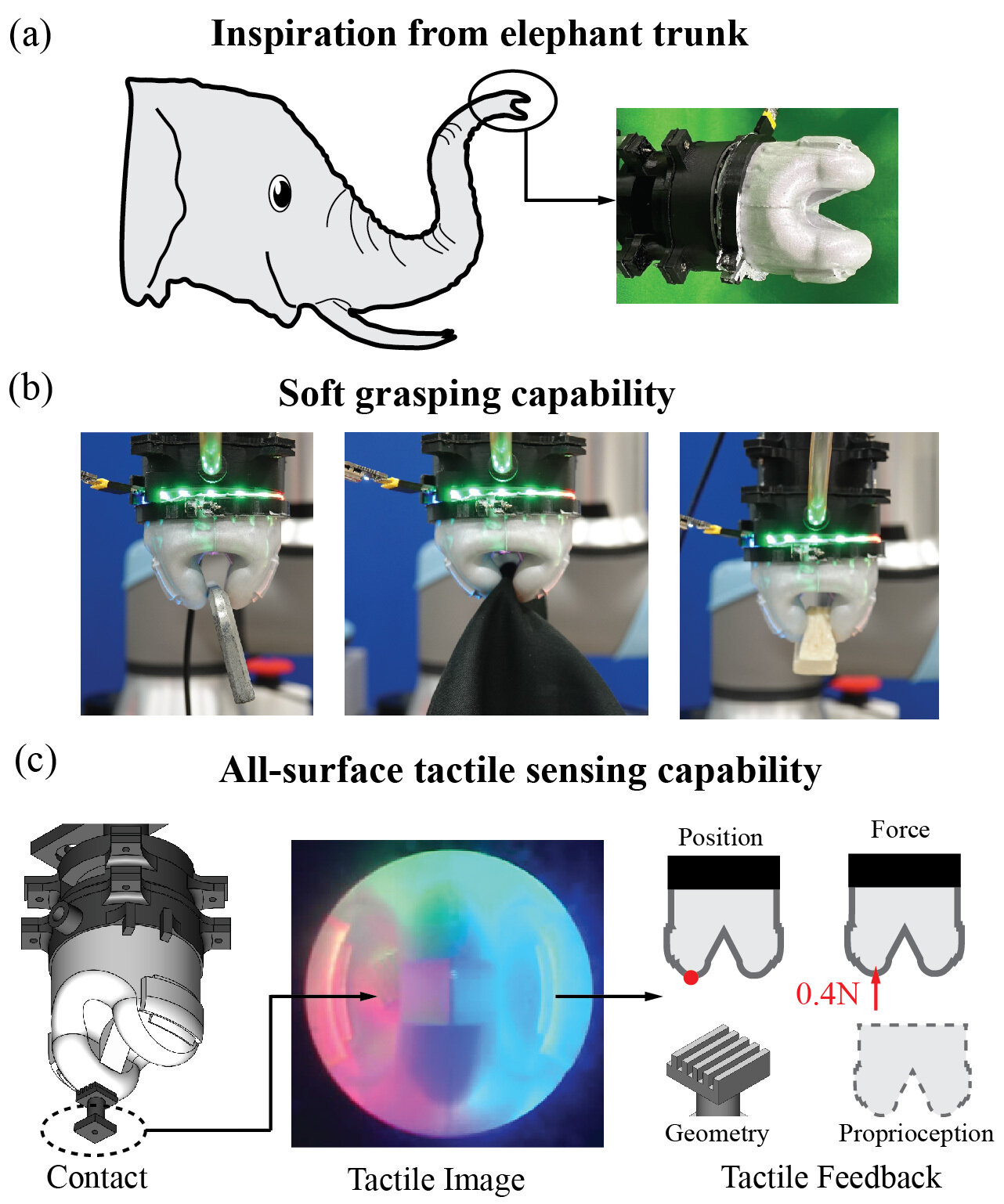
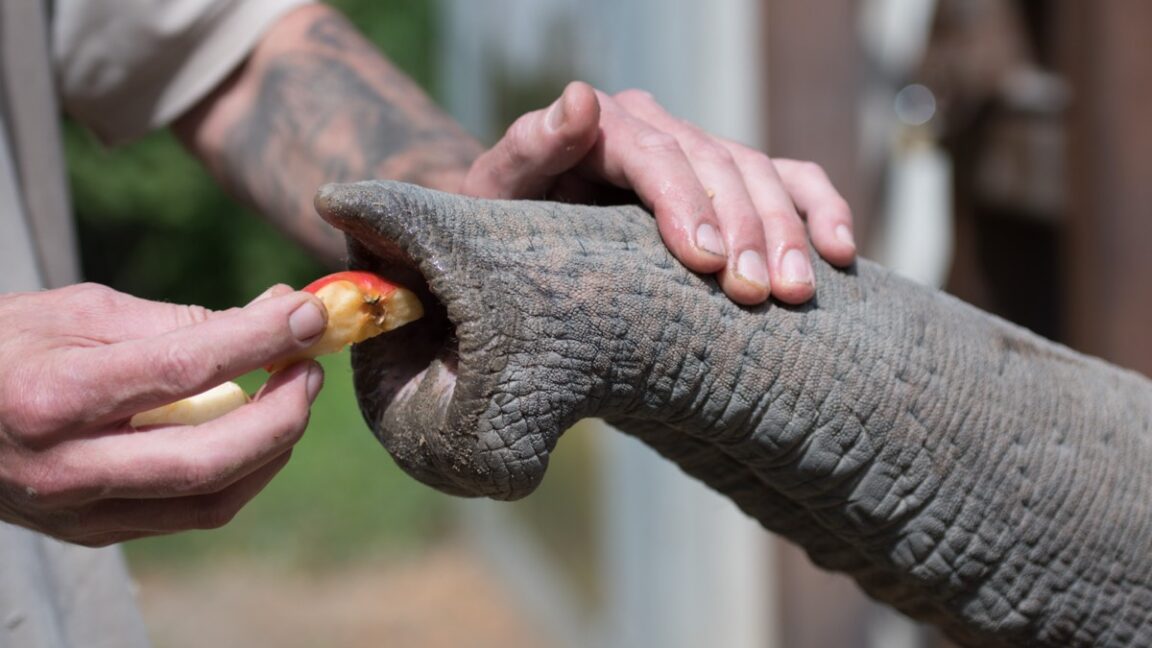
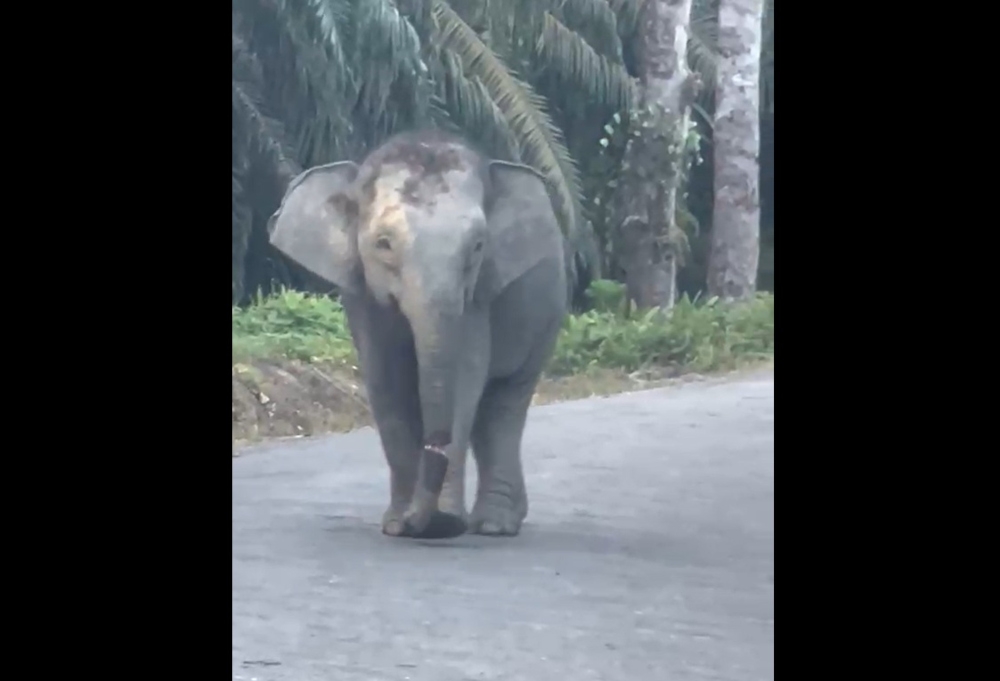
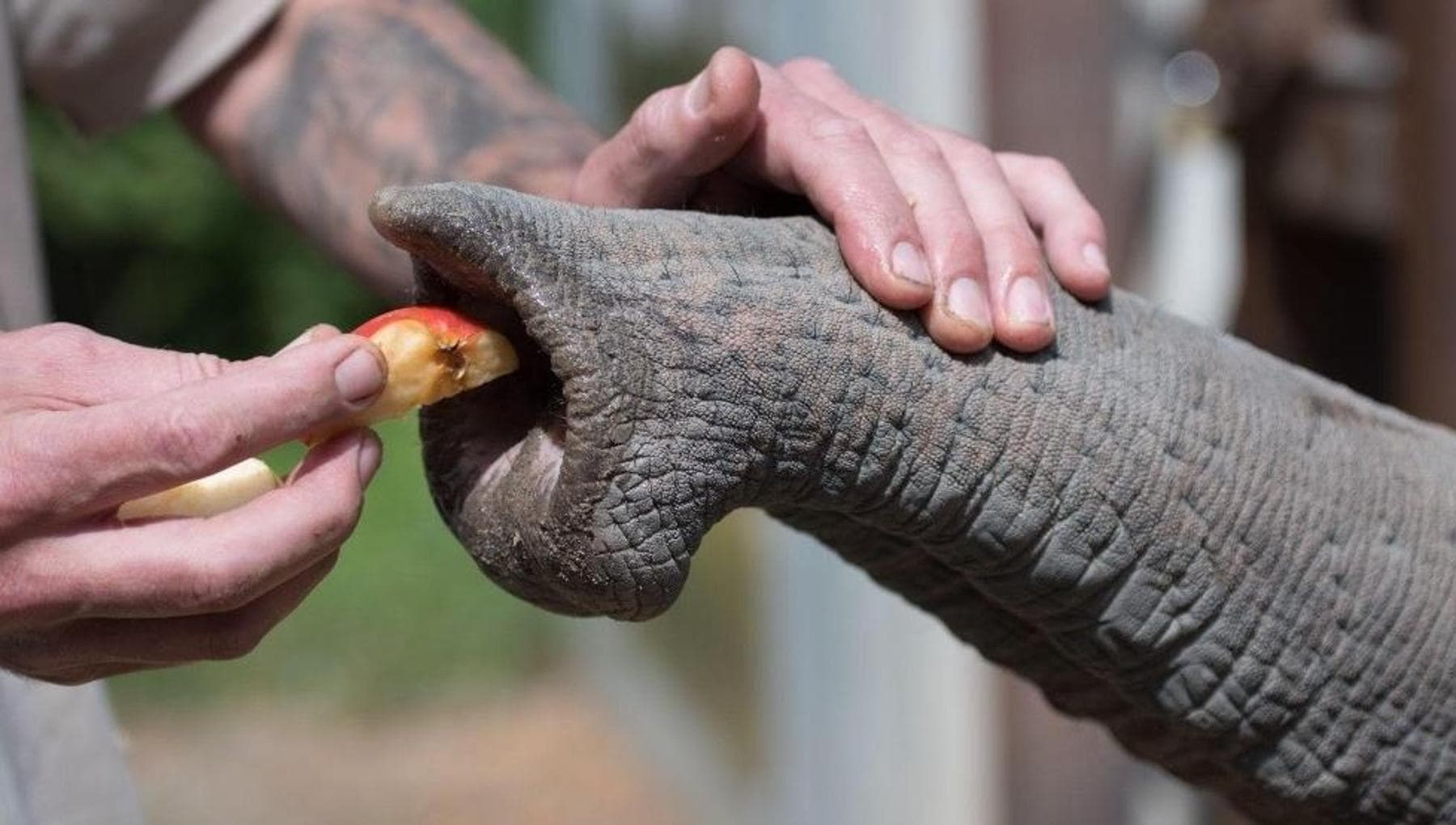
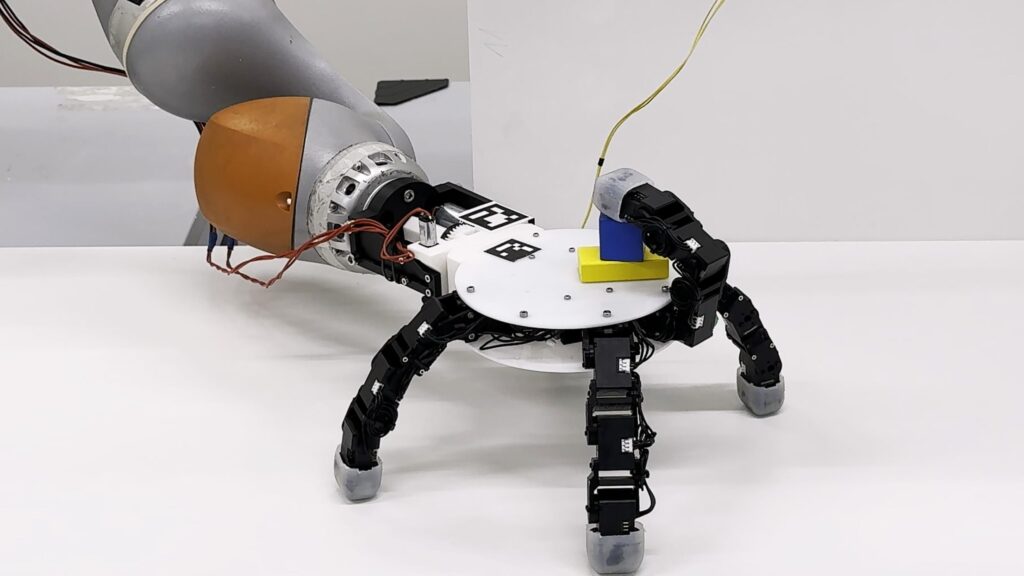
An elephant's trunk is both strong and capable of extremely fine motor movements. With this muscular, boneless structure, an elephant can carry heavy logs—or deftly peel a banana. Lucia Beccai and colleagues studied the skin of the trunk, hoping to understand its properties and derive lessons for the next generation of advanced soft robotics. The authors obtained a trunk from a single adult Asian elephant (Elephas maximus) that died of natural causes at Zurich Zoo, Switzerland, in 2020.
Publishing in PNAS Nexus, the authors evaluated 35 samples across the specimen using biomechanical testing, histology and a suite of imaging techniques, along with computational modeling. The trunk's skin is not homogeneous, but exhibits a stark upper-lower dichotomy. The upper skin operates like a tough yet sensitive, armor-like shield, 3.14 times stiffer than the underside. The underside, by contrast, is a highly flexible, sensitive surface for grasping.
The low stiffness of the underside allows it to conform to objects, maximizing contact area and forming a steady grip. Beneath the surface of the trunk's underside skin are dome-shaped dermal papillae. Finite element modeling shows that these structures act like a subsurface mechanical lens, concentrating and amplifying mechanical stress where sensory nerves are located.