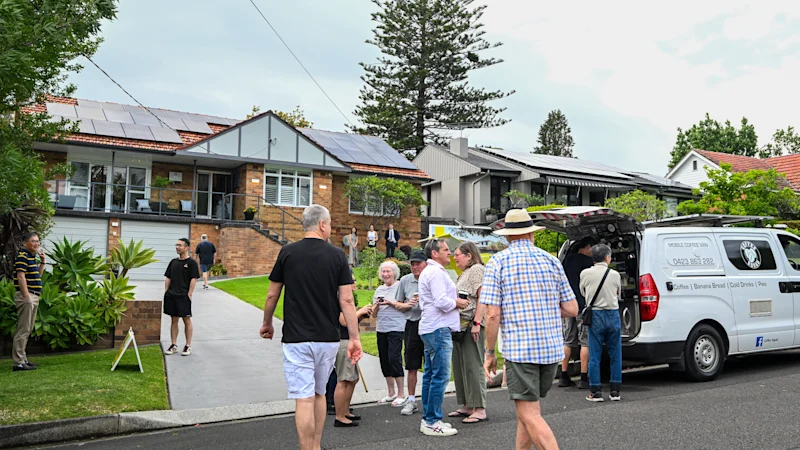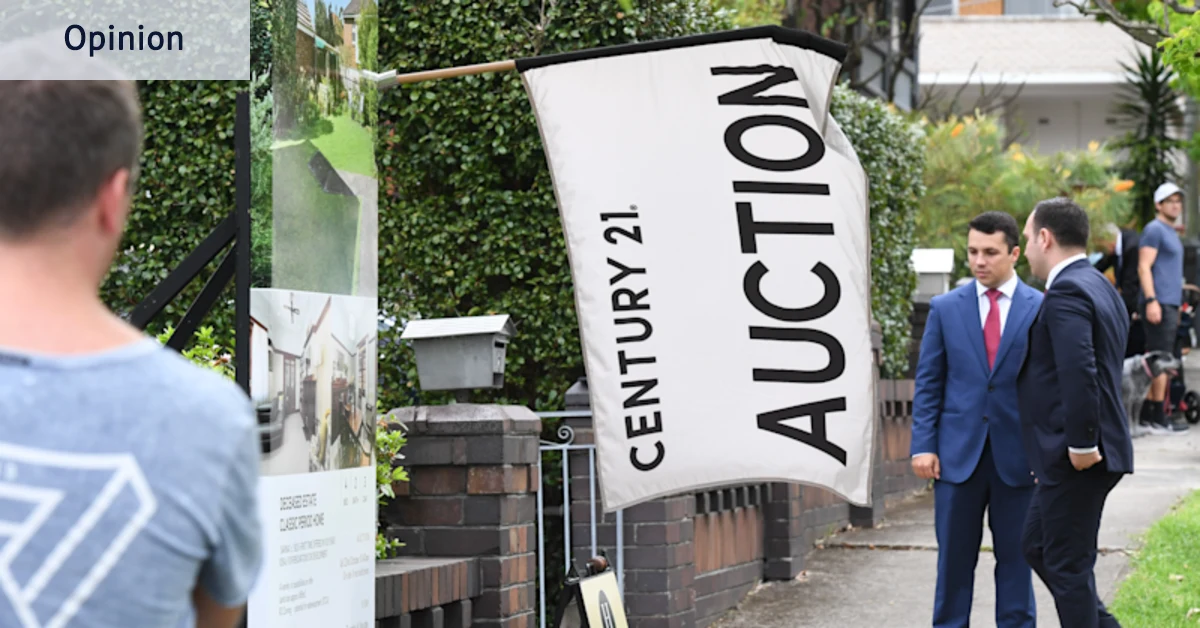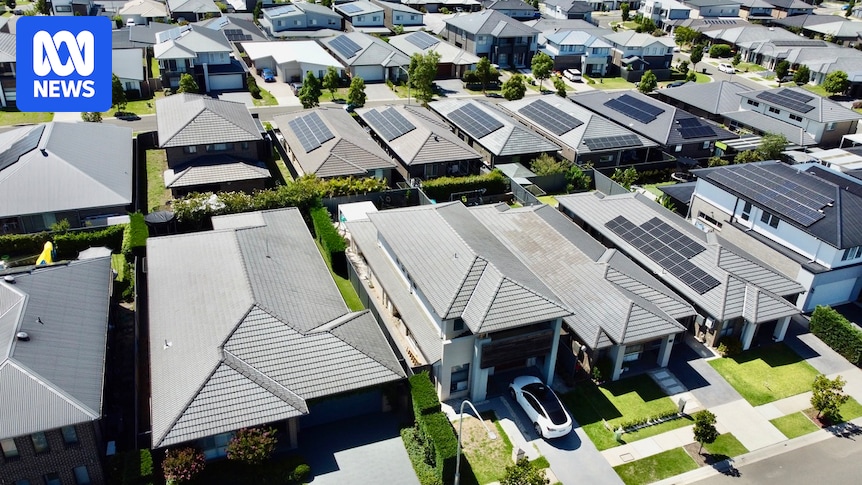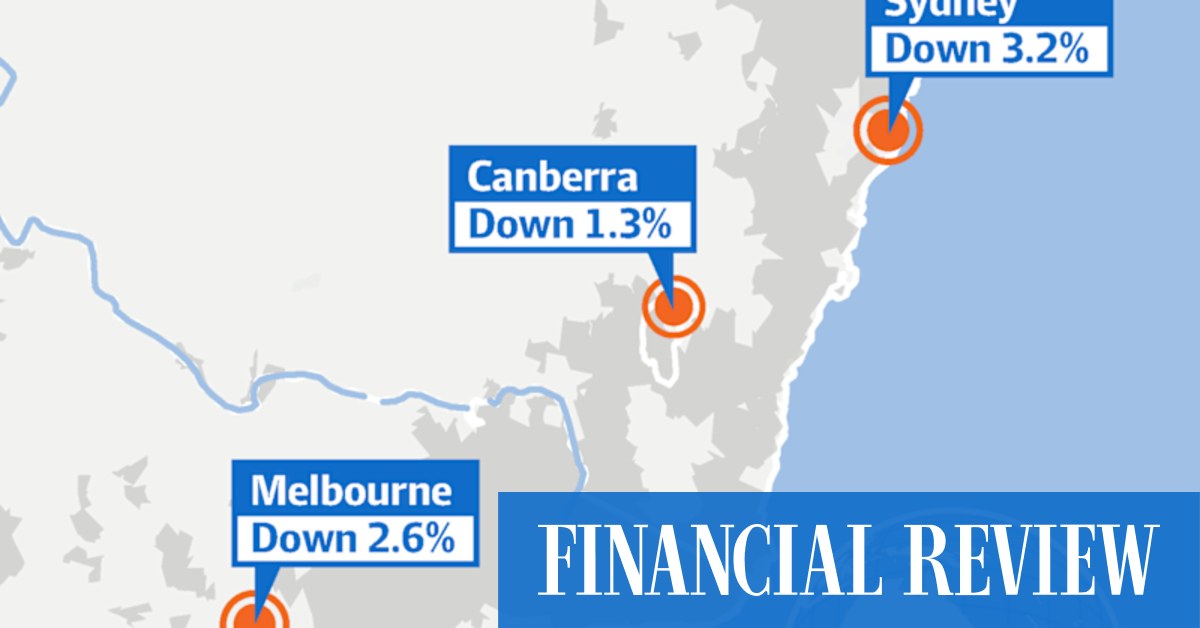
June 17, 2026 — 5:00amHouse values have fallen across almost all price points in Melbourne and Sydney over recent months, with the biggest losses for sellers concentrated in the top end of the market.While Sydney had a very modest 0.2 per cent growth in the bottom quartile, values have fallen across the two capitals, Cotality data shows, as rate hikes, global uncertainty due to conflict in the Middle East and the impact of policy announcements in the federal budget leave buyers cautious.The Reserve Bank on Tuesday kept the cash rate steady at 4.35 per cent following three consecutive rate rises this year, which have added to the cost of mortgage repaymentsThe upper quartile – also known as the family home market – of properties has been hit hardest, falling about four per cent in both Melbourne and Sydney over the three months to the end of May.This contrasts with gains in the smaller capitals, which have continued to rocket up, with Perth seeing an almost four per cent gain in the top quartile and an over six per cent gain in its bottom quarter.Cotality head of research for Australia, Gerard Burg, said it wasn’t surprising that the top end of the market in the two most expensive capitals was seeing falls.“There’s a higher buy-in cost, and that limits demand at times like this,” he said. “We’re talking about the top echelon of properties – this is a pool of homes that are harder to access for many people in terms of affordability and borrowing capacity.”Burg said factors like the federal government’s five per cent deposit scheme were helping to keep competition in the bottom quartile, but that first home buyers would also be more sensitive to further rate hikes.He thought affordability and borrowing pressures might be forcing buyers who were previously looking to the middle band to bid on cheaper homes, increasing competition.“Until recently, investors were probably focused on that part of the market too,” he said. “But obviously, they will be affected by the announced policy changes around the capital gains discount and negative gearing.”Property values have declined in both Sydney and Melbourne, particularly in the top end of the market.Luis Enrique AscuiWestpac senior economist Matthew Hassan said it wasn’t unusual for the top quartile to feel the brunt of a downturn.“It runs hotter during upward swings, and gets hit harder during corrections,” he said.“What’s unusual is the milder price corrections in the bottom and middle tiers. The lower tiers are really out-performing.”But Hassan thought there were early signs that a correction would flow through to the wider market.“We had three rate hikes in the three months to May alone, and it’s beginning to weigh down on those lower segments too,” he said, noting that the government’s proposed changes to capital gains tax and grandfathering of negative gearing would slow investment and disincentivise those with existing homes from selling.Sydney-based buyer’s agent Michelle May said the impact at the bottom end of the market was obscured by government incentives, but she had noticed investors pulling back.“Obviously, if you offer people free money, prices are going to go up,” she said.“But it has cooled … I’m seeing a lot of properties being passed-in, some taken off the market and more off-market activity.”She cautioned home owners – particularly those who’d bought recently – against following the ups and downs of property values too closely.“It’s only going to be a loss or gain when you actually sell,” she said.Burg warned Sydney in particular could experience a more significant fall in house values.“We’re starting to see the decline in Sydney pick up pace and, because of the accumulated value over time, it has further to fall than Melbourne or the other capitals,” he said.In contrast, he thought Melbourne prices could rise in the medium term.Spring will be a test for the property market, one expert says.A growing population and the slowdown of the construction boom Melbourne led from 2020 through to the end of last year – during which Victoria built a third of the country’s new homes – may result in a supply crunch.Property Home Base director Julie DeBondt-Barker said for Melbourne first home buyers “it might be as good as it gets”, with many investors “hitting pause” until the impact of the government’s announced policies became clear.“I would be absolutely jumping on this,” she said. “It is a really good time for first home buyers because there are fewer investors competing against them.”Both Burg and Hassan noted the continued rise of the Perth, Adelaide and Brisbane markets, but said all three had considerably less supply than the larger capitals, which had been driving growth.“We’re seeing a loss of momentum in those capitals too,” Burg said. “Perth in particular has come down quite a bit compared to late last year.”Hassan thought it would take around 12 months for the “dust to settle” on a market “in flux”, but that there would be signals to look for in coming months.“An important indicator is usually how the market performs in spring,” he said. “That will be a significant test of whether the market is really softening.”More:Property marketProperty investmentProperty pricesAffordable housingSydney house pricesMelbourne house pricesFirst-home buyersProperty downsizingProperty upsizingHousing affordabilityHousing crisisProperty listingsFrom our partners
The type of home that is getting ‘hit harder’ as house values fall
House values have fallen across almost all price points in Australia’s two largest cities, with the biggest losses for sellers concentrated in one part of the market.
867 words~4 min read