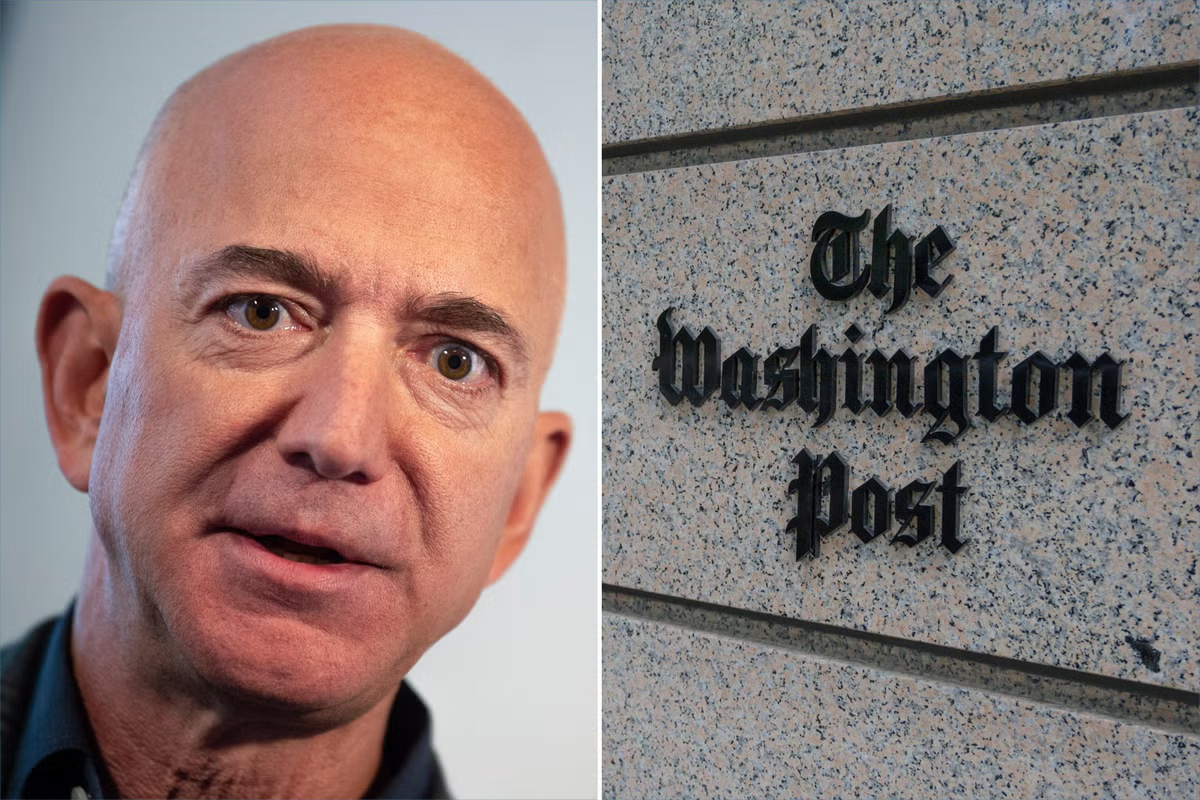
The Washington Post recently published two op-eds by Scott Greer, a far-right writer who contributed a series of racist and anti-Semitic items to Richard Spencer’s Radix Journal, Politico reported yesterday. For context: Greer was fired from the Daily Caller in 2018 after it was revealed he’d written for Radix under a pseudonym. This is an easily searchable fact and it is no way a secret in 2026. Right after Politico reached out for comment, WaPo removed the articles.That move might come across as a squirrelly act of insecurity in the middle of a turbulent time for Post Opinions. After all, WaPo has been widely criticized for editorial decisions downstream of Jeff Bezos’s new vision for the paper – including his declaration that Opinions would henceforth only publish writing that was in defense of “personal freedoms and free markets” – two values he deemed central to America’s success and underrepresented in American media.Another core aspect of the Post’s rebrand was its new goal of reaching “all of America.” Supposedly in service of this goal, a mysterious new section lives on the Washington Post’s website called “Ripple.” The page appears to be syndicating articles from various websites. Just under the word “Ripple” reads “Opinions from across America.” However, there is no clear evidence that Ripple is under the control of Post Opinions because it lives at the top of the general website in a list of sections, separate from Opinions, between “WP Intelligence” and “Games.”In June 2025, the New York Times’s Benjamin Mullin wrote that the Post was planning to expand its lineup to include “many published opinion articles from other newspapers across America, writers on Substack and eventually nonprofessional writers, according to four people familiar with the plan.”Mullin wrote that the Post had just hired an editor to oversee the program, referred to as Ripple. The program was set to include a “final phase, allowing nonprofessionals to submit columns with help from an A.I. writing coach called Ember” beginning in the fall of 2026. “Human editors would review submissions before publication.”Greer has a sizable following on X and Substack, where he publishes pieces of cultural criticism that veer into race science and esoteric musings on “real America” and what real America wants. (In real life, Greer is a bit of a puppy. But you wouldn’t know based on his writing).It would, in fact, be a shock that a Post editor would choose to publish someone with his track record, even under the current masthead. It is also, however, very possible that an automated syndication program partially powered by AI, responding primarily to algorithms, would select an article by him for publication. The program seems to have been pushed by Jeff Bezos himself and lives somewhat separately from the rest of editorial. This would help to explain the immediate removal of Greer’s articles after the slightest acknowledgment of their presence on the website. Politico, it seems, may not have been the only outlet surprised by the news.
When is a Post Opinion not a Post Opinion?
A mysterious new section lives on the Washington Post’s website called “Ripple.” The page appears to be syndicating articles
1,298 words~6 min read