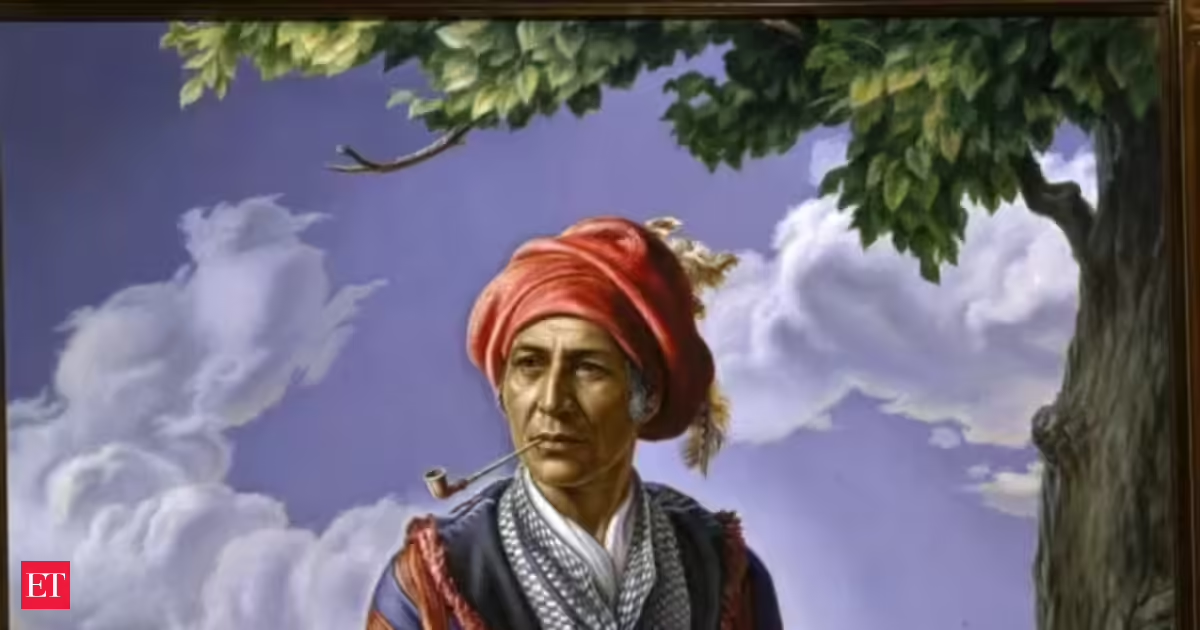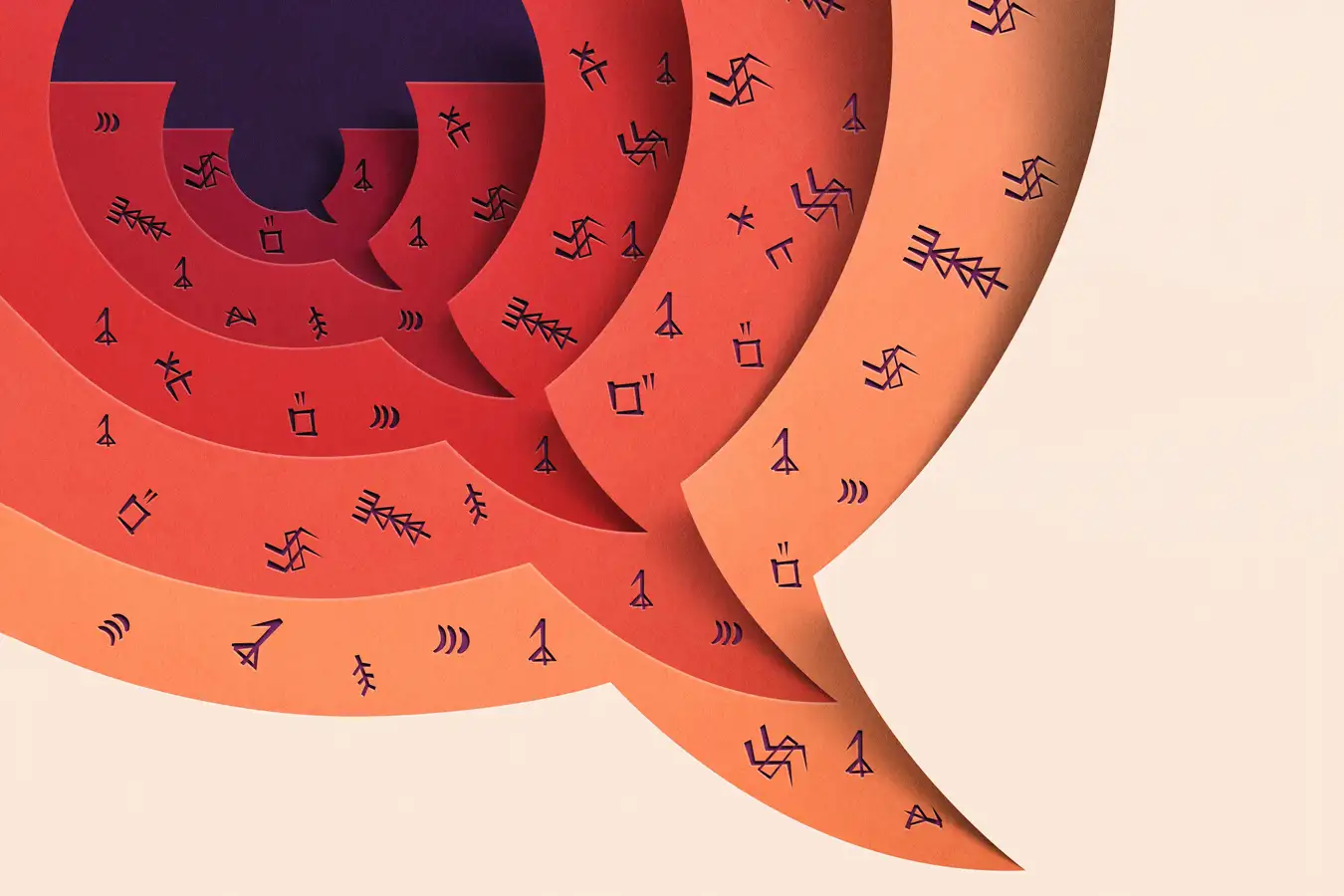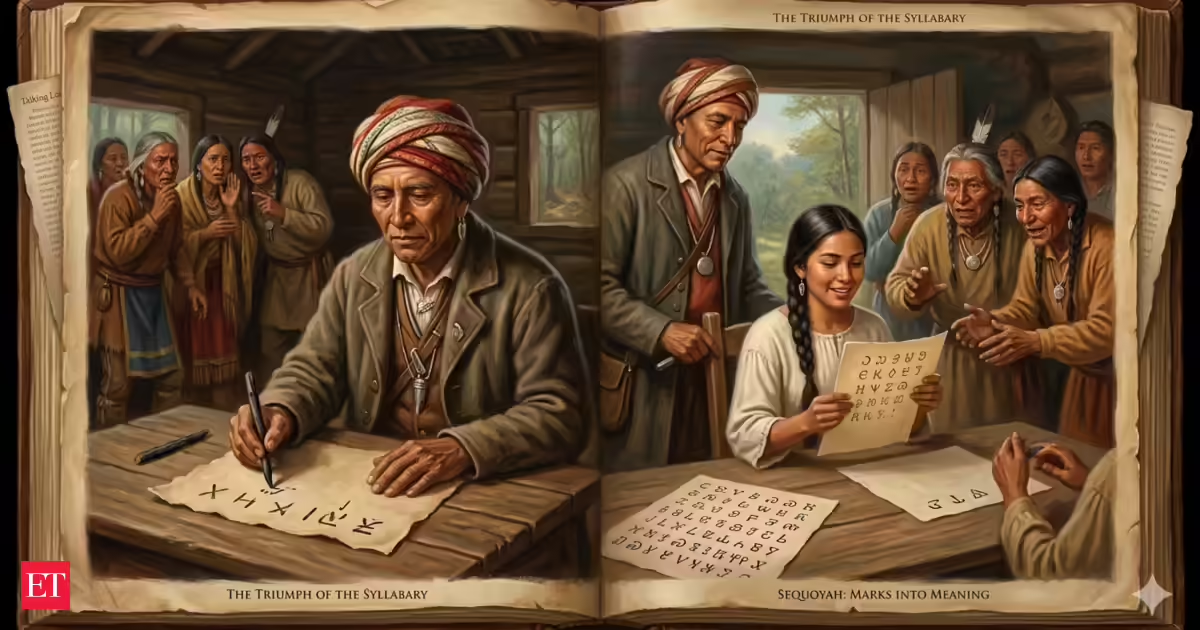
Sequoyah's Cherokee writing system: Before anyone understood what he was doing, Sequoyah was just a man making marks on paper, marks that looked meaningless to everyone around him. To others, it seemed strange, even unsettling. So strange that in 1821, his own people accused him of witchcraft and brought him before a trial, believing his work might be black magic, as per a report.But what they were witnessing wasn’t superstition. It was the early form of something that would completely change how a language could live on paper.A Father, a Daughter, and a Test That Shifted Doubt into BeliefTo prove his system was real, Cherokee elders arranged a test.Sequoyah’s daughter, Ayoka, was placed in a separate room. Father and daughter were each asked to write messages using his symbols, as per Smithsonian Magazine. When the papers were exchanged, each was able to read the other’s writing aloud correctly.The tension in the room shifted immediately. What had been suspicion turned into recognition. The elders who once doubted him now wanted to learn the system themselves.You Might Also Like:A Writing System That Spread Faster Than ExpectedOnce taught, Sequoyah’s method spread quickly.Within about six months, roughly one in four Cherokee people could read and write using it. In a short time, the Cherokee, also called Tsalagi, reached literacy levels higher than the non-Native population in the United States, as per the Smithsonian Magazine report.It was built by a man born in the 1770s in Tennessee to a Cherokee mother and a white father. His name, meaning “pig’s foot,” may have referred to a physical limp.He had never learned to read or write English himself.You Might Also Like:From “Talking Leaves” to 85 SymbolsDuring the War of 1812, Sequoyah served alongside American soldiers under the name George Guess. There, he encountered written English, which he referred to as “talking leaves.”After the war, he moved to Alabama and began trying to create a written form of Cherokee.At first, he attempted a system where each word had its own symbol, but it became too complex. He abandoned that idea and developed something simpler: a syllabary of 86 symbols, later reduced to 85, each representing a spoken sound. The symbols were influenced by Greek, Hebrew, and English writing systems, as per the Smithsonian Magazine report.This wasn’t just an experiment anymore, it was a full written structure for a spoken language.You Might Also Like:Writing a Culture Into RecordOnce adopted, Sequoyah’s system quickly transformed daily life.By 1827, the Cherokee had a written constitution. Knowledge that had once been passed orally—hunting practices, sacred chants, and traditions, could now be written down.In 1828, the Cherokee Phoenix, the first Native newspaper in the United States, was printed using his syllabary. More publications followed.A US Treasury secretary and linguist, Albert Gallatin, noted in 1836 that children could learn it in weeks, far faster than English literacy, as per the Smithsonian Magazine report.But even this achievement did not stop the pressure on Cherokee lands across the southeastern United States. Soon after, the Cherokee were forced west along the Trail of Tears to what is now Oklahoma.A System That Survived Displacement and Traveled FurtherEven after forced relocation, the syllabary remained with the Cherokee people.It continued to be used in their new territory and, through migration and contact, is believed to have influenced writing systems beyond North America. In Liberia, a Cherokee named Austin Curtis, who married into the Vai community, is said to have helped develop a script for the Vai people in West Africa, as per the Smithsonian Magazine report.Sequoyah himself later moved to Mexico, where he died in 1843.A Writing System Still UsedToday, only a few thousand Cherokee speakers remain fluent, but Sequoyah’s syllabary is still actively used.It appears in children’s books, modern messages between teenagers, public road signs, and official documents. It continues to serve as a tool for preserving language and identity, as per the Smithsonian Magazine report.FAQsWho was Sequoyah?A Cherokee silversmith who created a writing system for the Cherokee language, as per the Smithsonian Magazine report.Where did the writing system go afterwards?It spread within Cherokee communities and influenced writing in West Africa.
The man accused of black magic created a writing system Cherokee could learn - here's the story about Sequoyah
Sequoyah's Cherokee writing system: Discover the remarkable story of Sequoyah, the Cherokee silversmith who created a revolutionary writing system, turning suspicion into recognition and transforming Cherokee culture forever.
681 words~3 min read