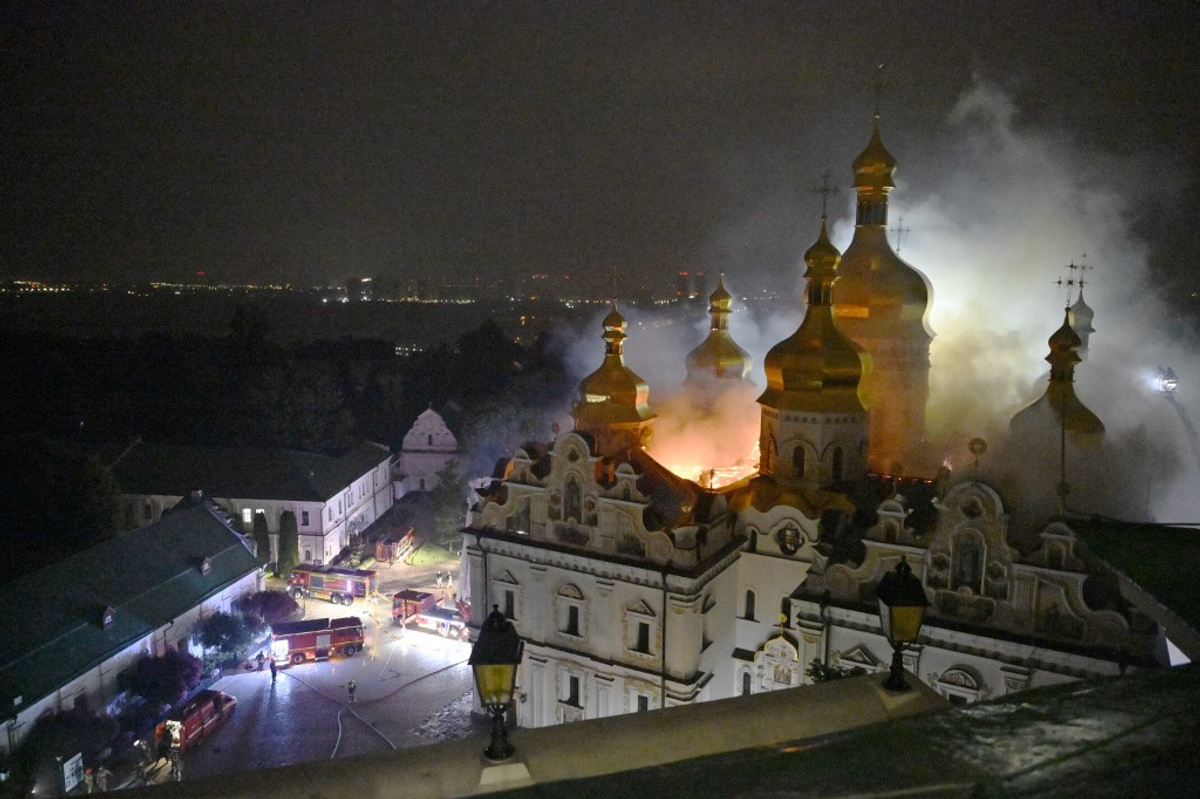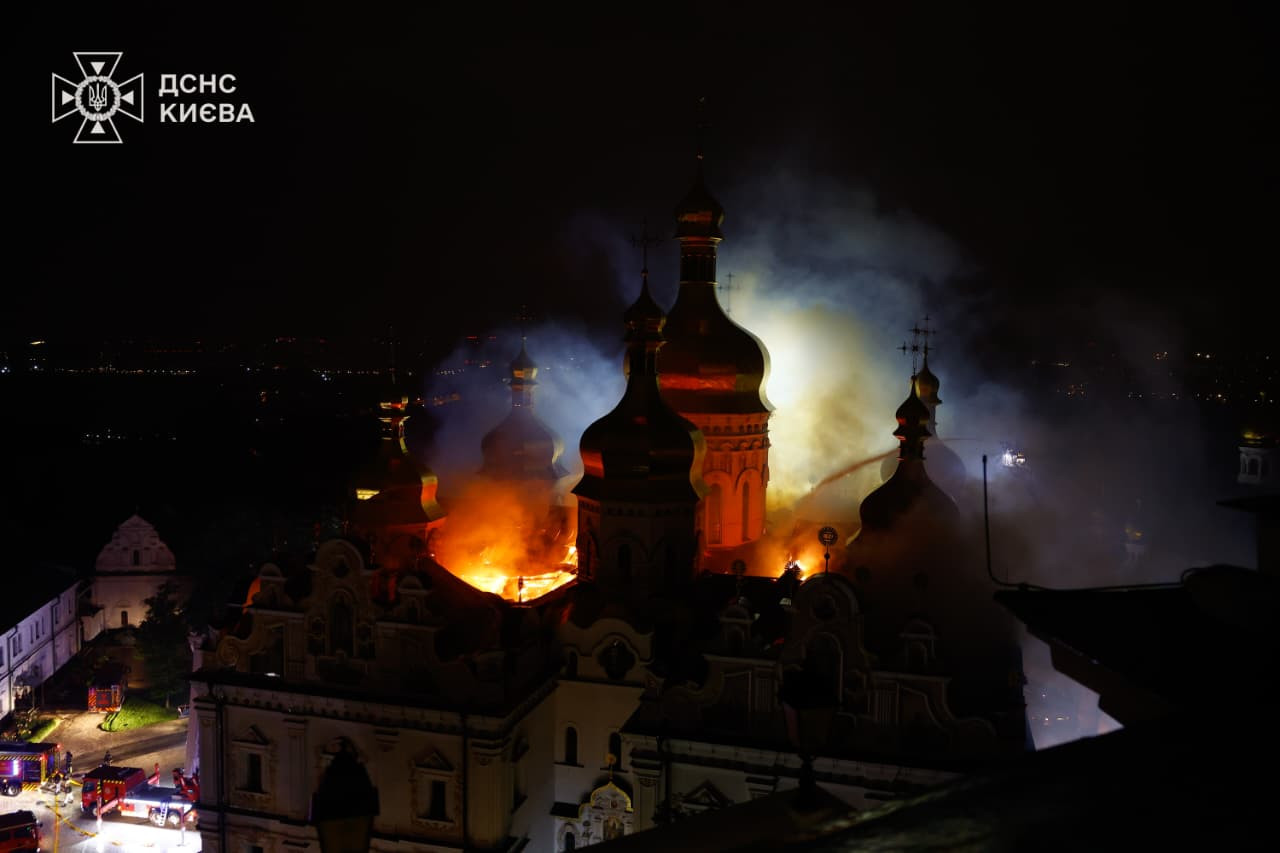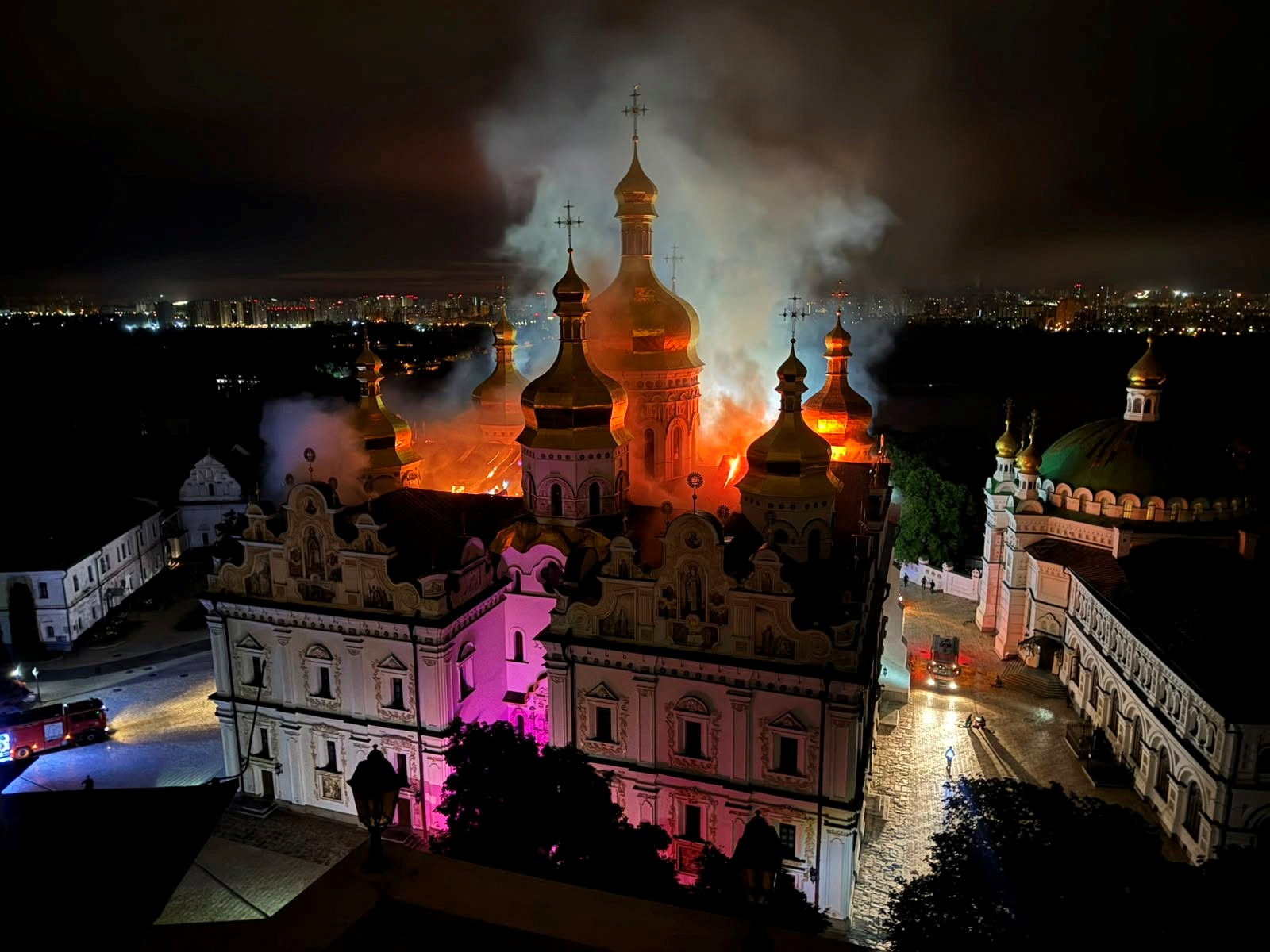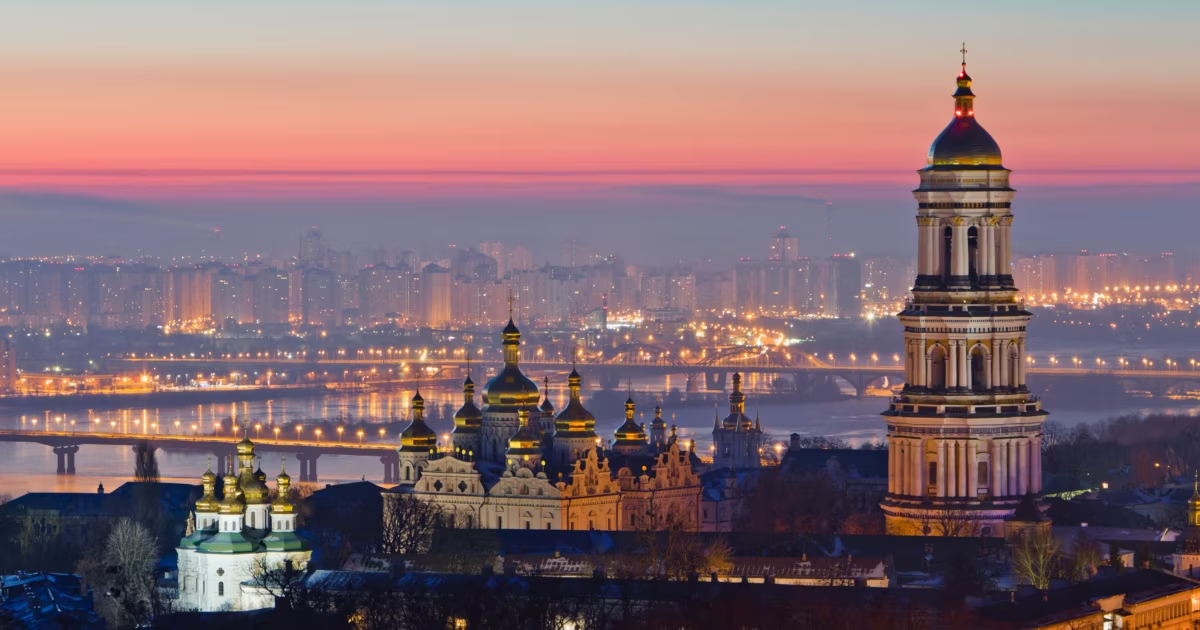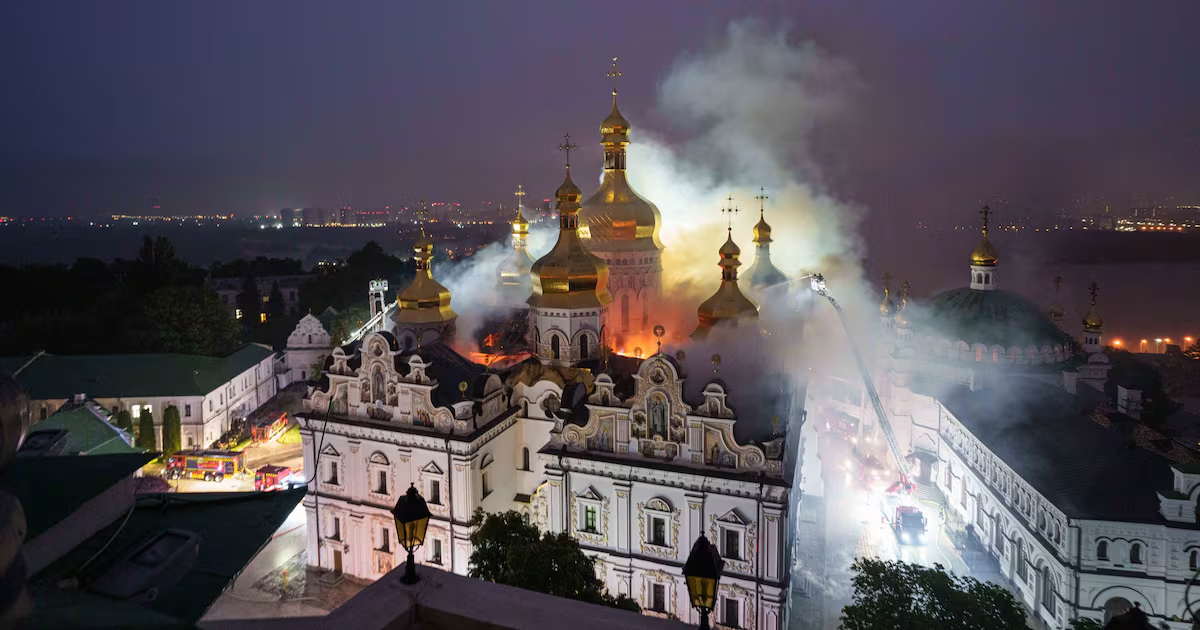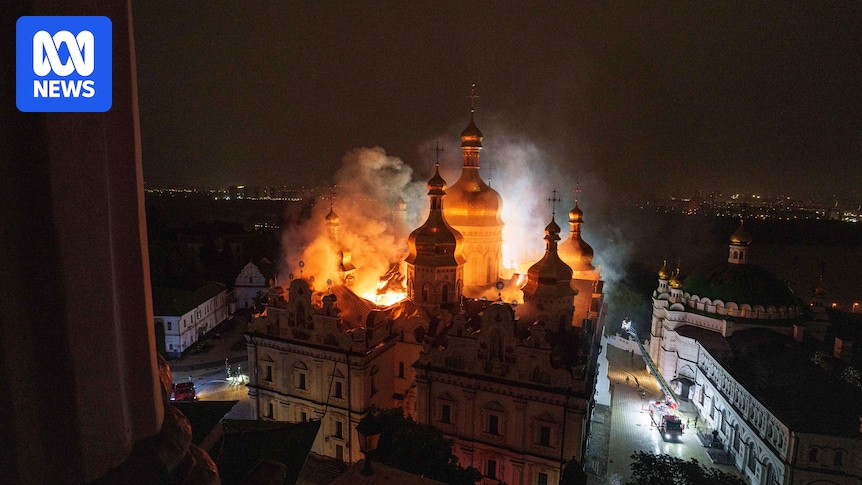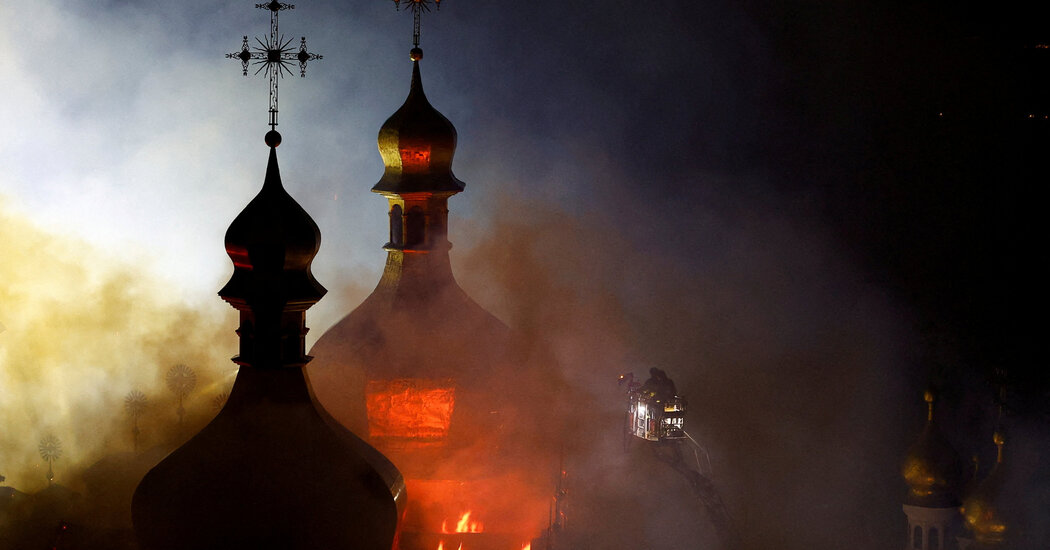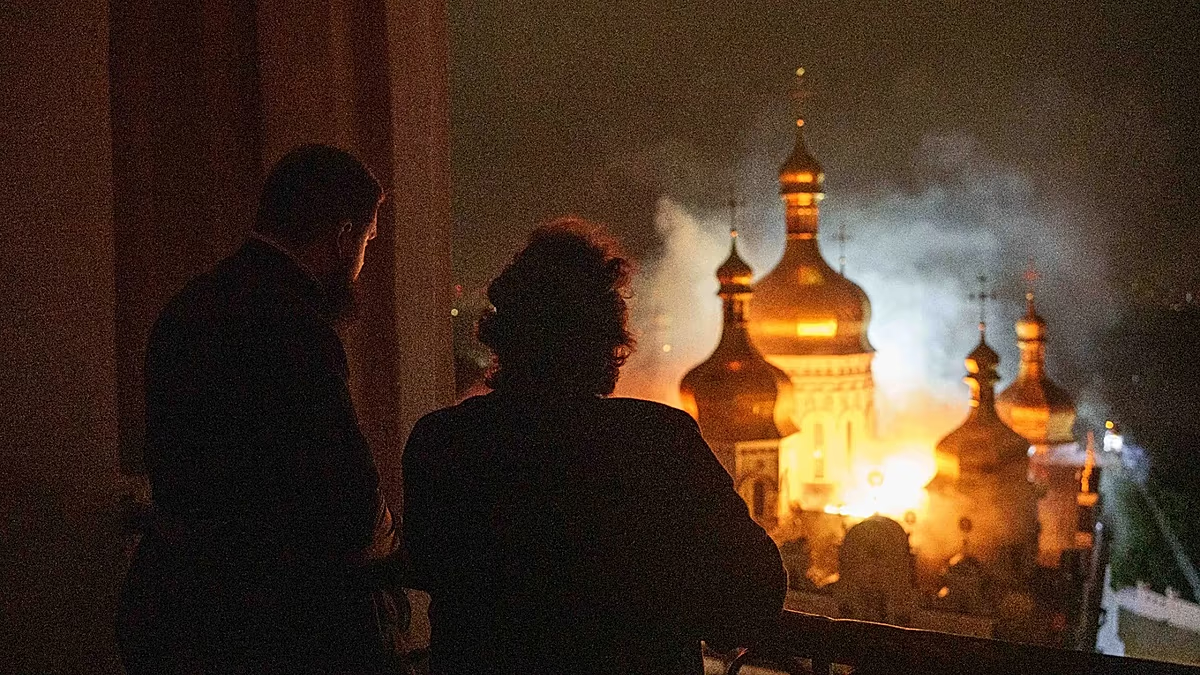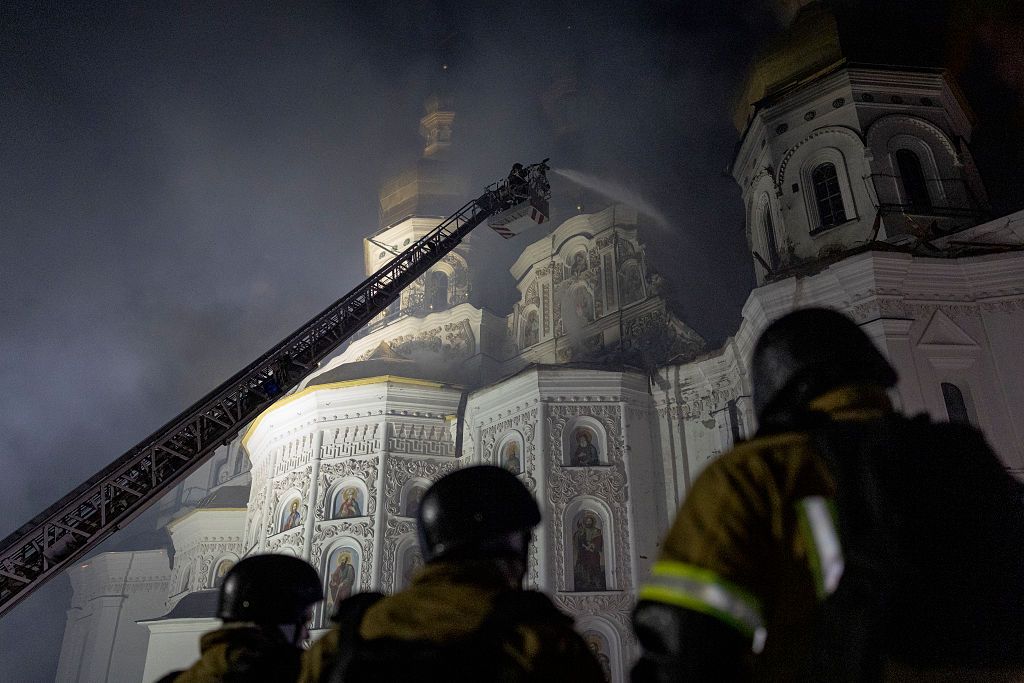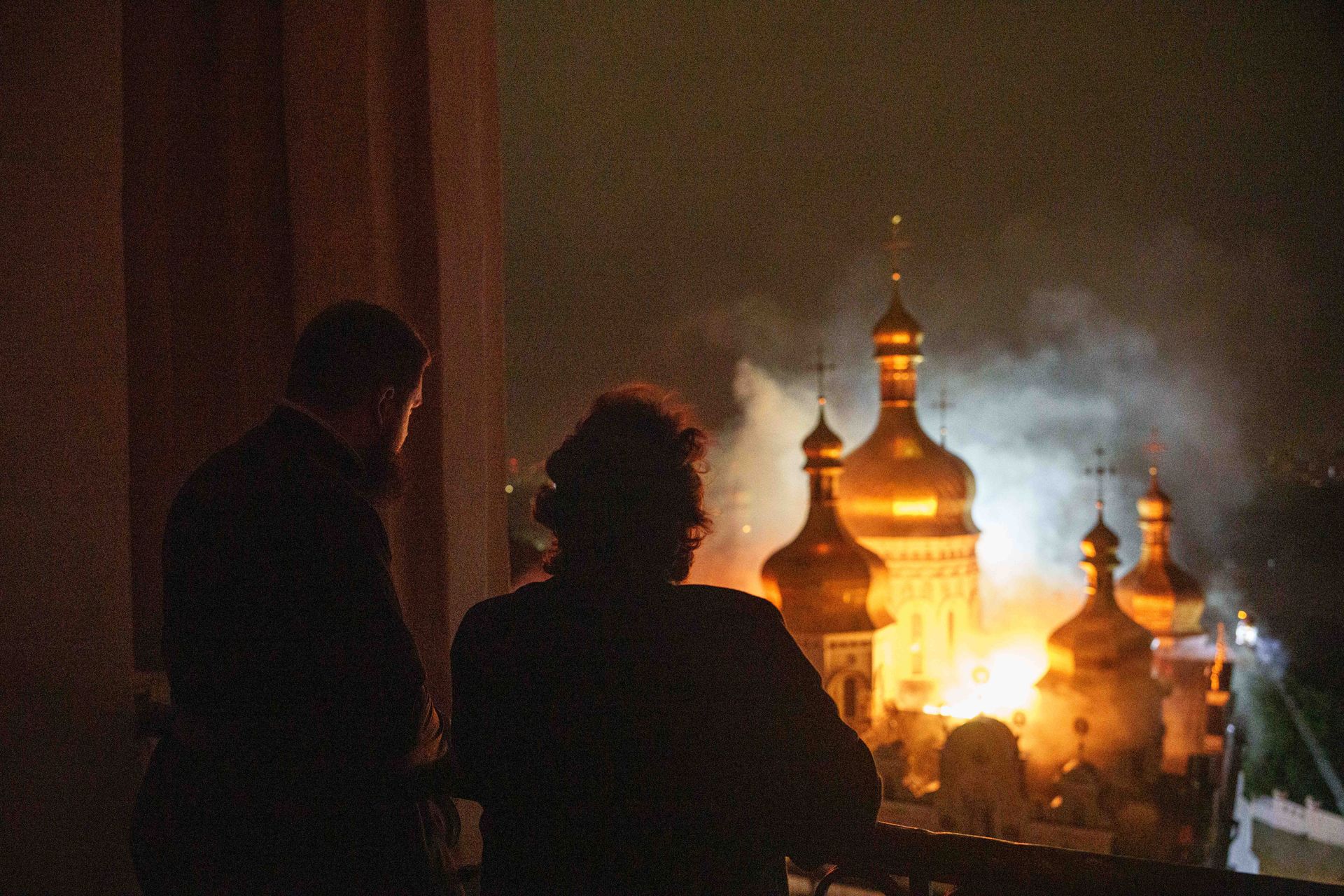
Bishop Avraamiy of the Kyiv Pechersk Lavra of the Orthodox Church of Ukraine looks at the burning Dormition Cathedral during a Russian strike on Kyiv, Ukraine, on June 15, 2026. (Evgeniy Maloletka / AP)Kate TurskaChair of the Ukrainian Association of New ZealandEvery empire eventually becomes trapped by its own mythology. Russia happens to be built on a peculiar combination of holy relics, imperial nostalgia, and endless lectures about "traditional values." The problem is that reality keeps interrupting the performance.In 2022, Margarita Simonyan (the Kremlin's propagandist) declared that Russia would never bomb Kyiv because "our shrine is there." The implication being: unlike everyone else, Russia supposedly possesses some special reverence for faith, history, and sacred places.Four years later, though, Russia strikes the Kyiv Pechersk Lavra, an iconic 11th-century monastery, which is one of the major Christian sites in the world. And the photographs coming from Kyiv on the early morning of June 15 tell you an entirely different story.The damaged roof of the Lavra tells the story of modern Russia better than a thousand speeches about faith, civilization, or "spiritual values" ever could.The thing about Russian propaganda is that it is often not merely dishonest but confessional. It tells you exactly what Russia wishes the world to believe, because the reality is usually the opposite.For years, the Kremlin has attempted to frame its war against Ukraine as a defense of Christianity itself. Russian officials, propagandists, and church leaders have repeatedly portrayed Ukraine as hostile to Orthodoxy, hostile to believers, even hostile to God.Yet wherever Russian occupation takes hold, the Christianity it claims to defend is nowhere to be found.Ukrainian priests are interrogated, detained, or forced to flee. Religious communities that refuse to submit to Russian control face intimidation and persecution. Churches become instruments of occupation.This has always been the defining feature of authoritarian systems, especially in Russia. The only religion they believe in is the one where God answers to the state.In modern Russia, Orthodoxy is a political tool, an instrument of legitimacy, or another branch of state power wrapped in sacred language.What matters is not the preservation of holy places but the preservation of control. Russia lectures the world about Christianity while bombing churches. It speaks of "protecting Orthodoxy" while persecuting Ukrainian priests in occupied territories.It accuses Ukraine of waging war on faith while turning monasteries, cathedrals, and places of worship into targets or instruments of occupation. It wraps itself in icons and incense while sending missiles into cities where people are sleeping. Perhaps that is why the mythology has proven so durable.For years, we have been told about the "mysterious Russian soul," about its "unique spirituality," its "devotion to tradition," its famous "skrepy" — those supposedly sacred bonds of faith, family, and civilization that distinguish Russia from the "decadent West."The idea of a uniquely spiritual Russia has long enjoyed remarkable appeal abroad. Western academics romanticized it, while journalists repeated it and politicians indulged it. Generations were taught to see Russia not merely as a country but as a civilization possessed of some deeper wisdom unavailable to ordinary nations.As a result, many in the West fell prey to a peculiar double standard.Actions that would be recognized elsewhere as imperialism became "security concerns." Acts of aggression became "historical grievances." Open threats became evidence of wounded pride. Again and again, the mythology softened realities that should have been obvious.A view of the historic Kyiv Pechersk Lavra following a massive overnight Russian missile and drone attack on Kyiv, Ukraine, on June 15, 2026. (Andriy Dubchak/Frontliner/Getty Images)People shelter in a metro station during a Russian missile strike on Kyiv, Ukraine, on June 15, 2026. (Serhii Okunev / AFP / Getty Images)Ukraine has paid, and continues to pay, the price for those illusions.Every empire eventually reaches the point where it can no longer sustain the distance between its mythology and its conduct. The longer this war continues, the more difficult it becomes to reconcile Russia's self-image with the evidence accumulating across Ukraine.In truth, every year of this war (and long before it, for those willing to see) has revealed those "skrepy" to be little more than decorative packaging around imperial violence.A civilization confident in its values does not need to erase another nation's culture.A people secure in their faith do not need to destroy churches, persecute clergy, or invent myths of religious persecution to justify invasion.And a state that genuinely believes a place is holy does not eventually bomb it.The damage to the Pechersk Lavra is a collapse of Russia's own narrative. The world should stop taking Russia's sermons seriously. The evidence has been falling from the sky for years.Editor's note: The opinions expressed in the op-ed section are those of the authors and do not purport to reflect the views of the Kyiv Independent.
Attack on Kyiv Pechersk Lavra exposes the truth behind Russia's Christianity
Every empire eventually becomes trapped by its own mythology. Russia happens to be built on a peculiar combination of holy relics, imperial nostalgia, and endless lectures about "traditional values." The problem is that reality keeps interrupting the performance. In 2022, Margarita Simonyan (the Kremlin's propagandist) declared that Russia would never bomb Kyiv because "our shrine is there." The implication being: unlike everyone else, Russia supposedly possesses some special reverence for fait
790 words~4 min read