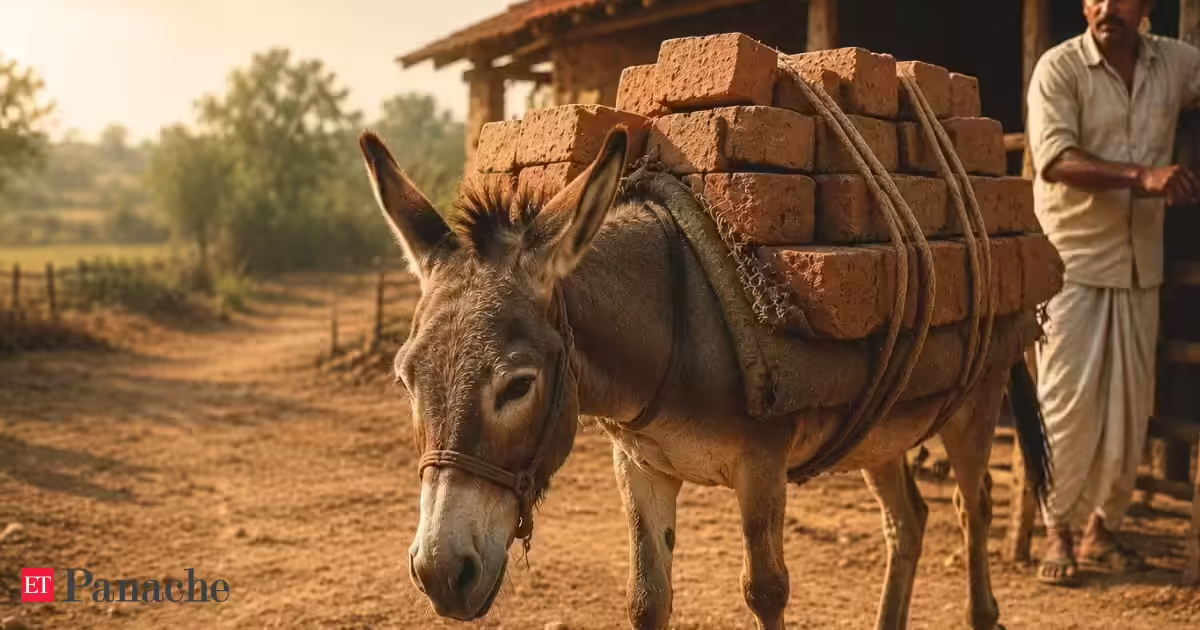
Proverbs often survive for generations because they express complicated truths in a few simple words. Many traditional sayings challenge common beliefs and encourage people to look at life from a different perspective. One such proverb is, "If hard work led to success the donkey would own the farm."At first glance, the saying may sound humorous. A donkey is commonly associated with carrying heavy loads and performing physical labor for long hours. Yet despite its constant work, the animal does not own the land it works on. The proverb uses this image to question a popular assumption that hard work by itself automatically leads to wealth, success, or recognition.In many societies, people are taught that putting in more hours and working harder will eventually bring rewards. While effort remains important, real-life experiences often show that success depends on many other factors as well. Opportunity, timing, knowledge, planning, resources, and decision-making can all influence outcomes.The proverb has no single confirmed author and is generally considered a traditional folk saying. Similar versions have appeared in different cultures over the years. Variations such as "If effort alone made you successful, donkeys would run the world" and the French proverb "If working hard made you rich, donkeys would be covered in gold" express the same underlying idea.Proverb of the Day — Why working harder is not always the same as moving forward"If hard work led to success the donkey would own the farm"The proverb challenges the belief that effort alone guarantees success. It does not suggest that hard work is useless. Instead, it points out that labor without direction, planning, or opportunity may not produce the desired results.The image of the donkey is central to understanding the saying. The animal works tirelessly, often carrying burdens and performing repetitive tasks. However, despite all that effort, it does not gain ownership, wealth, or control. The rewards of that labor usually belong to someone else.The proverb also highlights the difference between being busy and being productive. A person may spend long hours working but still struggle to achieve progress if their efforts are not connected to clear goals or effective strategies. In many cases, working smarter becomes just as important as working harder.Taken together, the saying reminds people that success is usually the result of multiple factors working together. Persistence matters, but so do planning, learning, adaptability, and the ability to recognize opportunities when they appear.Why Hard Work Alone Doesn't Always Create SuccessMany people know someone who works incredibly hard yet continues to face financial or professional struggles. At the same time, others seem to achieve greater results with fewer hours of effort. This difference often leads to discussions about what truly creates success.Hard work is undoubtedly valuable because it builds skills, discipline, and experience. However, effort alone cannot control every outcome. Economic conditions, education, access to resources, professional networks, and even luck can influence a person's journey.This is one reason the proverb continues to resonate with modern audiences. It encourages people to think beyond the simple idea that more work automatically equals better results. Sometimes the key is not increasing effort but changing direction, improving strategy, or identifying new opportunities.Life Lessons from the ProverbThe proverb offers several practical lessons that remain relevant in everyday life.Hard work needs directionEffort produces better results when it is connected to a clear goal. Working endlessly without a plan can lead to frustration rather than progress.Strategy mattersSuccess often comes from making thoughtful decisions. Knowing where and how to apply effort can be just as important as the effort itself.Opportunity plays a rolePeople do not all begin from the same starting point. Access to education, resources, and support can influence outcomes alongside personal effort.Learning should never stopThose who continue to adapt and develop new skills often create more opportunities for themselves over time.The message behind this proverb remains especially relevant in today's world. Conversations about careers, business, entrepreneurship, and personal development frequently focus on the importance of hard work. Yet many people are increasingly recognizing that effort is only one part of a much larger picture.The rise of technology, changing job markets, and new economic realities have made strategic thinking more important than ever. People who understand how to use their skills effectively often achieve better results than those who simply work longer hours.The proverb also appears regularly in online discussions. On platforms such as Reddit and Quora, users often share the saying while debating topics related to meritocracy, workplace culture, and economic success. Many commenters interpret it as a reminder that systems, opportunities, and access to resources can affect outcomes just as much as personal effort.Rather than dismissing hard work, the proverb encourages a more balanced view. It suggests that determination should be combined with planning, learning, and awareness of the environment in which people operate.English Equivalent and Related ExpressionsSeveral English sayings express similar ideas:"Work smarter, not harder.""Being busy is not the same as being productive.""Effort without direction leads nowhere.""It's not what you do, but how you do it.""The harder you work, the luckier you get" — often used to acknowledge effort while recognizing the role of opportunity.Each of these expressions explores the relationship between effort and results, emphasizing that success usually depends on more than one factor.The proverb is widely regarded as a traditional rural folk saying rather than a quote attributed to a specific individual. Similar versions have circulated across cultures for many years.
Proverb of the day: 'If hard work led to success the donkey would own the farm...' A powerful lesson on why success requires more than just long hours
The proverb, "If hard work led to success the donkey would own the farm," challenges the belief that effort alone guarantees achievement. While hard work remains important, the saying highlights that success often depends on a combination of strategy, opportunity, knowledge, timing, and decision-making. This traditional folk proverb continues to resonate today as a reminder that working smarter, adapting to circumstances, and recognizing opportunities can be just as important as working hard.
894 words~4 min read