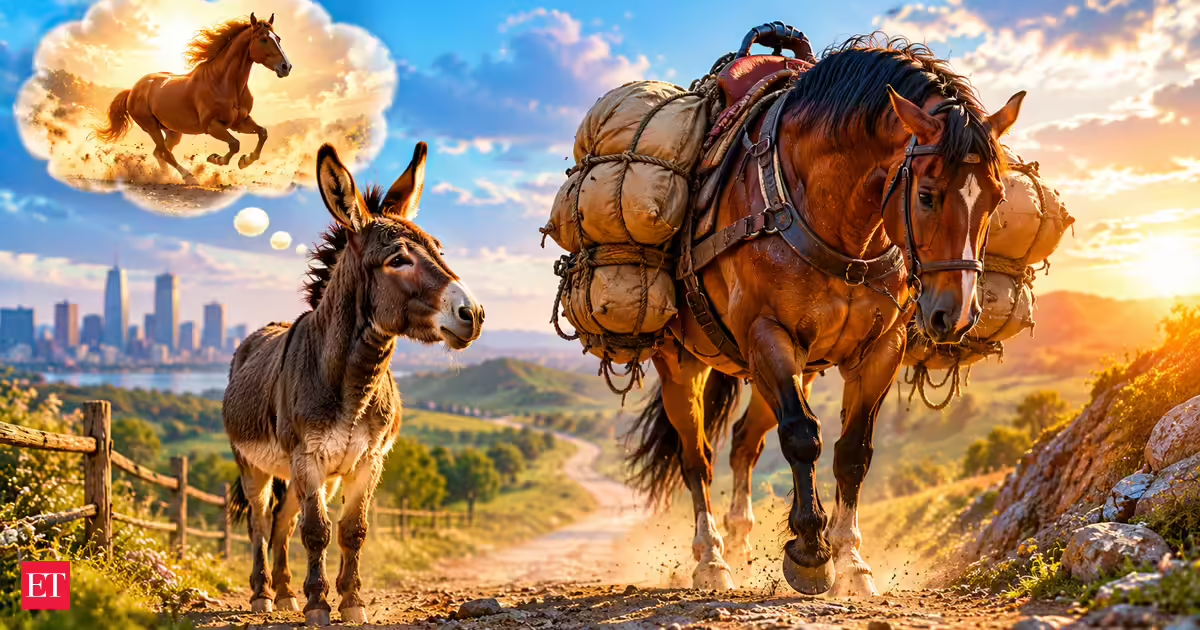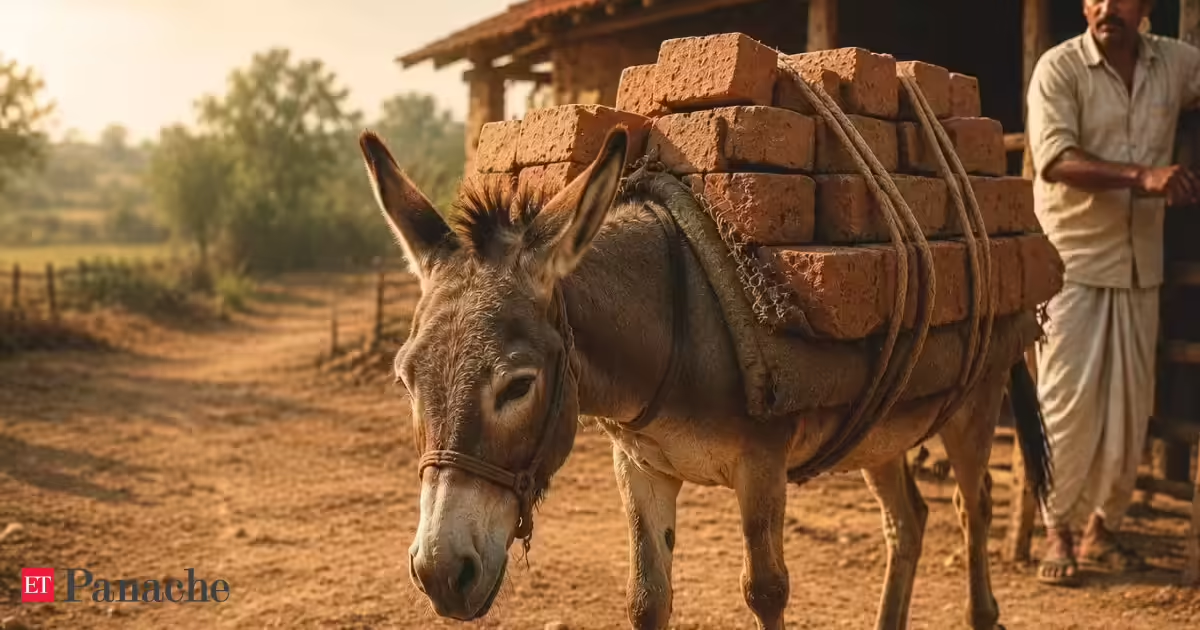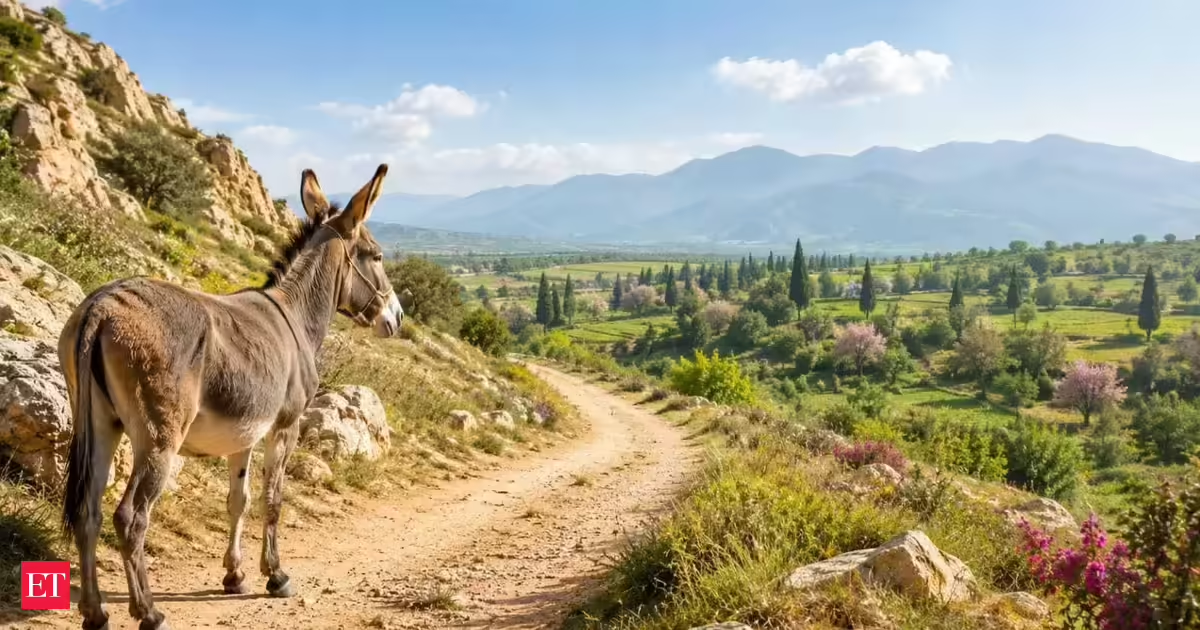
Success is often portrayed as a destination reserved for the exceptionally talented, the unusually lucky, or the perfectly prepared. Yet when we look closely at the lives of remarkable people, a different pattern emerges. Their journeys are rarely defined by ideal conditions. More often, they are marked by uncertainty, setbacks, criticism, and moments when giving up would have seemed perfectly reasonable. The difference is that they continued moving while others remained still. Ancient cultures understood this truth long before motivational books, social media influencers, and self-help seminars existed. They distilled their observations into proverbs, short, memorable sayings packed with generations of wisdom. Iranian culture, with its rich literary heritage and deep appreciation for poetry and storytelling, has produced many such gems. Some are humorous, some philosophical, and some deliver their lessons with a smile that quickly turns into reflection. Today's proverb belongs to that category. It uses a simple image from everyday life to reveal a surprisingly modern truth about ambition, comfort, and achievement. At first, it may sound amusing. By the end, it may feel uncomfortably familiar.“The donkey that feared the dust of the road spent its life admiring distant gardens.”Translated from traditional Persian wisdom into English, this proverb paints a vivid and slightly satirical picture.You Might Also Like:Imagine a donkey standing at the edge of a road. Beyond the horizon lie beautiful gardens filled with shade, fruit, and fresh water. The path is not particularly dangerous, but it is dusty. The donkey dislikes the inconvenience. It worries about getting dirty. It hesitates, delays, and waits for a cleaner route to appear.The cleaner route never comes.Years pass. The gardens remain beautiful, but they remain distant. The donkey becomes an expert in admiration rather than achievement. The image is humorous, yet the lesson is profound.What Does the Proverb Mean?At its heart, the proverb teaches that success often requires accepting temporary discomfort. The dusty road represents effort, uncertainty, criticism, mistakes, and all the inconveniences that accompany meaningful progress.The gardens symbolize goals, dreams, opportunities, and rewards. The donkey represents the part of human nature that seeks comfort above all else.You Might Also Like:Most people do not fail because they lack potential. They fail because they dislike the dust.They want the rewards without the inconvenience, the results without the struggle, and the destination without the journey.The proverb reminds us that every worthwhile achievement comes with a price. Usually, that price is not talent or intelligence. It is the willingness to tolerate discomfort for a period of time.The Satire Hidden Inside the SayingThe genius of this proverb lies in its gentle mockery. The donkey is not portrayed as lazy. In fact, one can imagine it spending hours discussing the gardens. It might study maps, compare routes, analyze conditions, and explain why today is not the ideal day to travel.All of this sounds surprisingly familiar.Many people spend years preparing to start a business. Others endlessly discuss fitness plans without exercising. Some dream of writing a book while never writing a page. They are busy, thoughtful, and full of intentions.Yet they remain standing beside the road.The proverb humorously suggests that excessive caution can become a form of self-sabotage. What appears to be wisdom is sometimes simply fear wearing a clever disguise.Why the Proverb Feels So Relevant TodayModern society has become remarkably good at helping people stay comfortable.Food arrives at the push of a button. Entertainment is available instantly. Answers appear within seconds of a search. Convenience surrounds us.While these advances improve life, they can also create an illusion that meaningful goals should be equally convenient.When a challenge becomes difficult, many assume something has gone wrong. The proverb argues the opposite.The dust is not evidence that you are on the wrong road. The dust is evidence that you are traveling.Every entrepreneur encounters setbacks. Every athlete experiences exhaustion. Every student faces difficult lessons. Every creative person struggles with doubt.The road becomes dusty for everyone. The successful simply continue walking.Applying the Wisdom to Everyday LifeOne reason this proverb has endured is its universal relevance.A young professional seeking advancement may need to learn unfamiliar skills. A student pursuing academic success may need to sacrifice leisure time. Someone improving their health may need to endure temporary discomfort before seeing results.In each case, the dust takes a different form. Sometimes it is hard work. Sometimes it is rejection. Sometimes it is uncertainty.Yet those willing to accept these temporary challenges often discover that the gardens are closer than they imagined.The proverb encourages action over perfection and persistence over comfort. It reminds us that progress rarely feels glamorous while it is happening.The Life Lesson Worth RememberingPerhaps the greatest insight within this Iranian proverb is that comfort and growth rarely travel together for long.There is nothing wrong with enjoying comfort. The problem arises when comfort becomes the highest priority.Dreams require movement. Goals require effort. Success requires a willingness to get a little dusty. That is why today's proverb remains so memorable:“The donkey that feared the dust of the road spent its life admiring distant gardens.”The road may be imperfect. The journey may be messy.But the gardens are reached only by those willing to leave their footprints in the dust. And that simple truth has inspired successful people for generations.
Iranian Proverb of the Day: ‘The donkey that feared the dust of the road spent its life admiring…’ The biggest obstacle to success may not be failure but this ignored reason
Iranian Proverb of the Day: Today's proverb falls into the humorous category, using an ordinary, relatable image to uncover a surprisingly relevant lesson about ambition, comfort and success. At first glance, it may seem lighthearted and playful. Look a little closer, however, and its message begins to feel strikingly familiar, and perhaps a bit uncomfortably true.
TL;DRAI
An ancient Persian proverb teaches that comfort-seeking, not talent, blocks success; progress requires tolerating discomfort and uncertainty. For tech leaders, this mirrors innovation adoption: breakthrough results demand accepting risk, failure, and continuous change.
864 words~4 min read