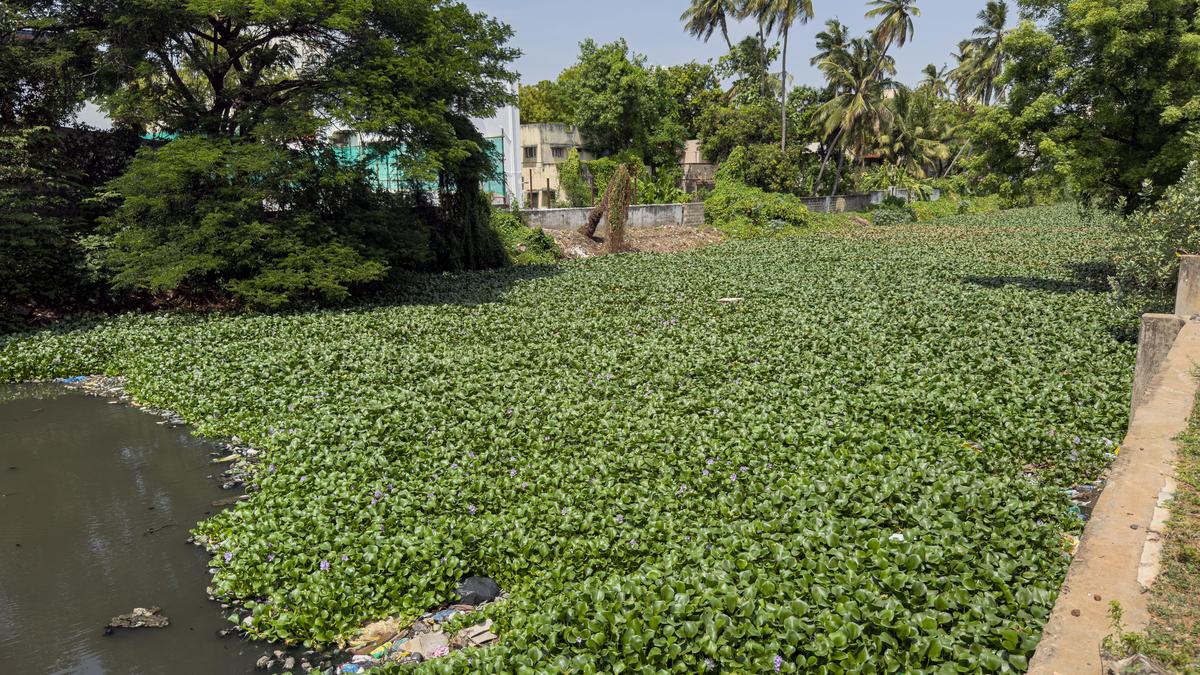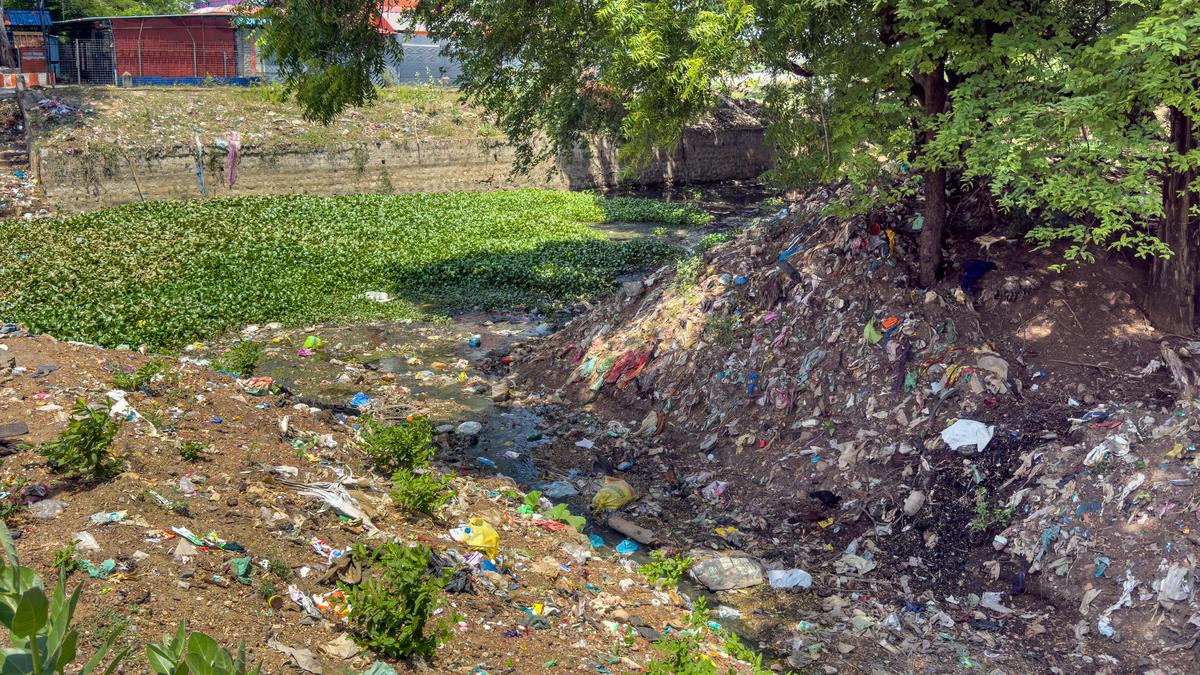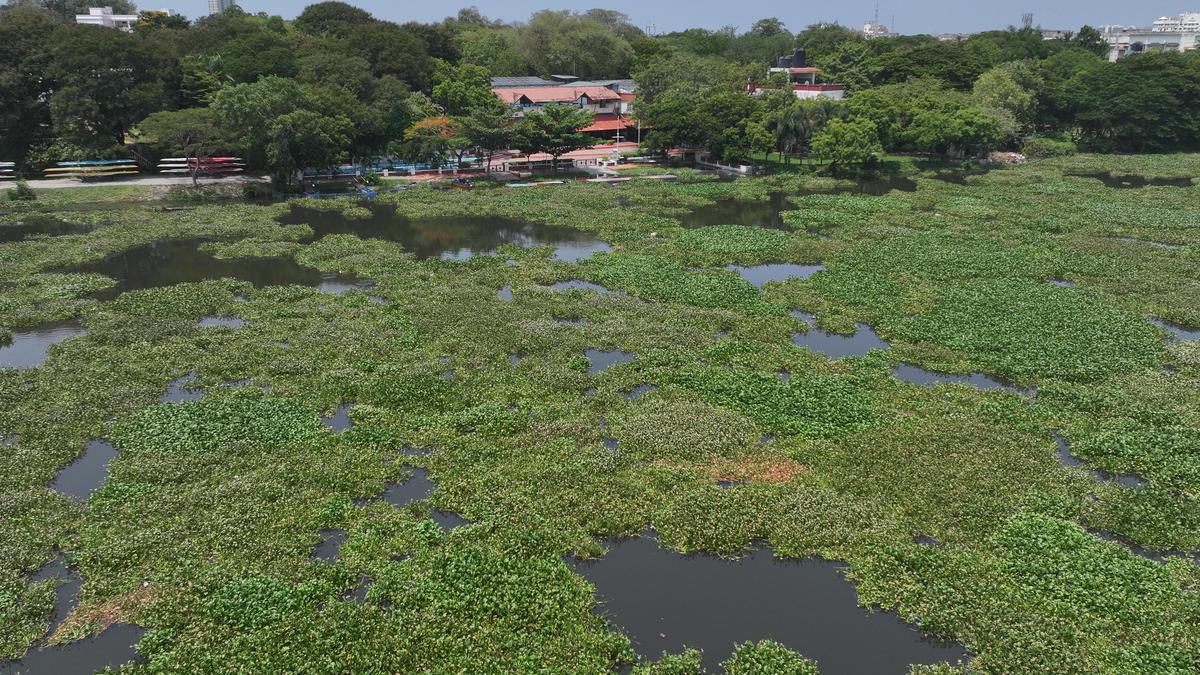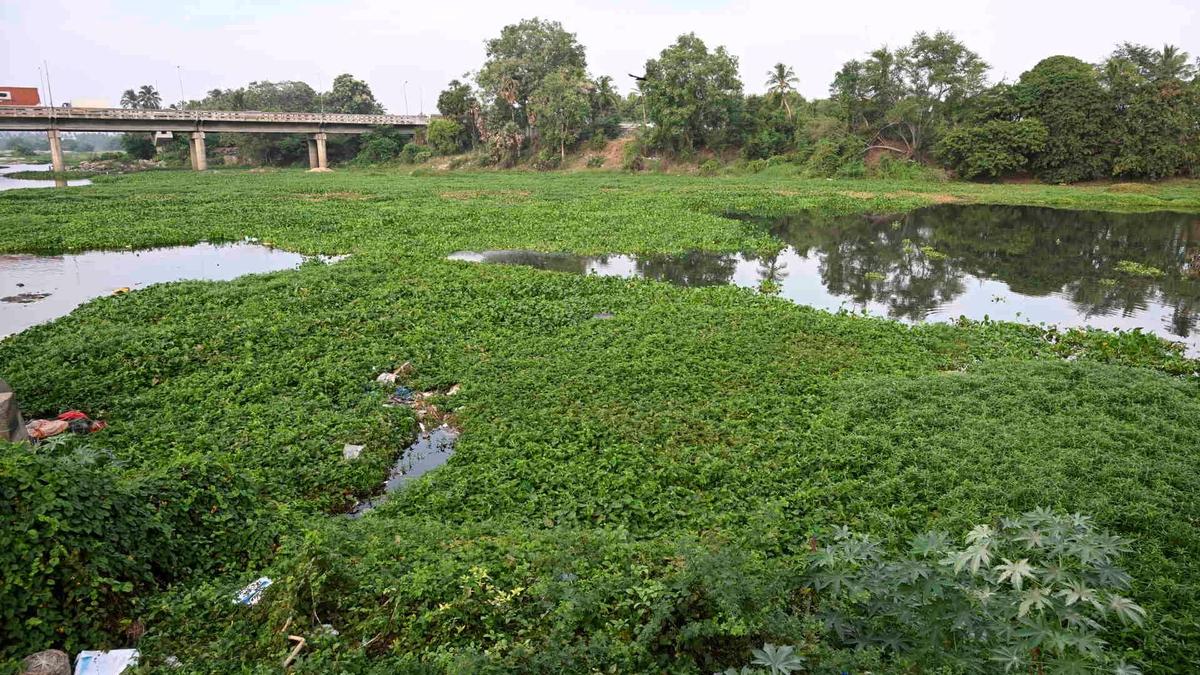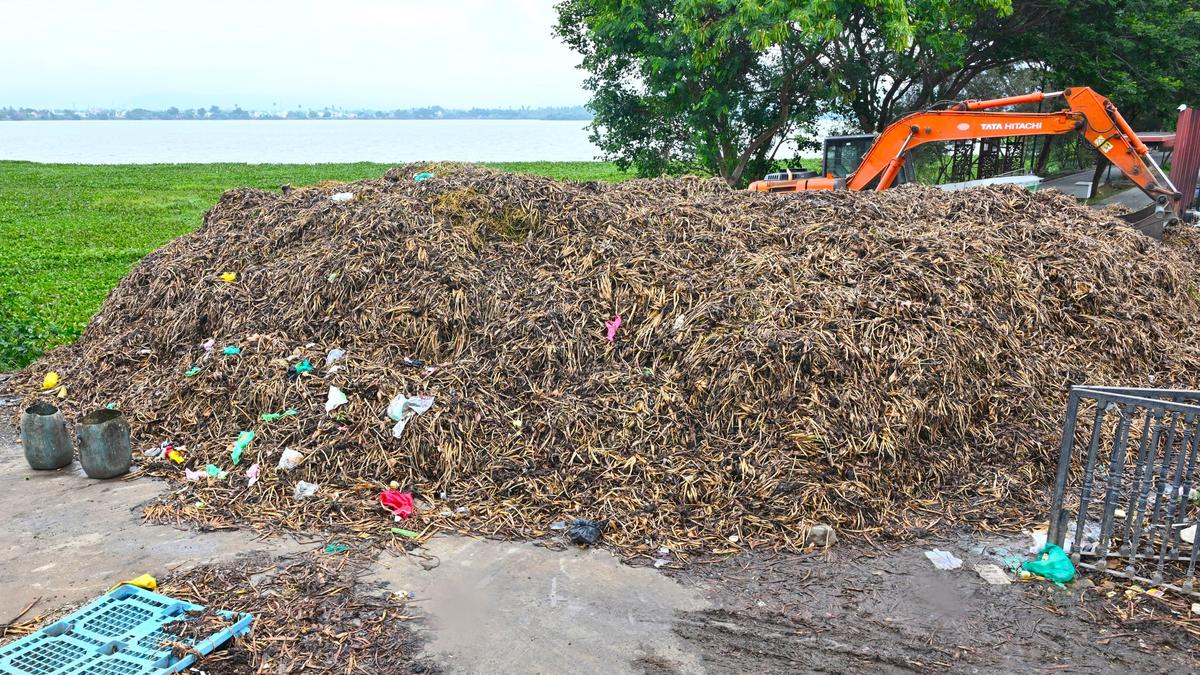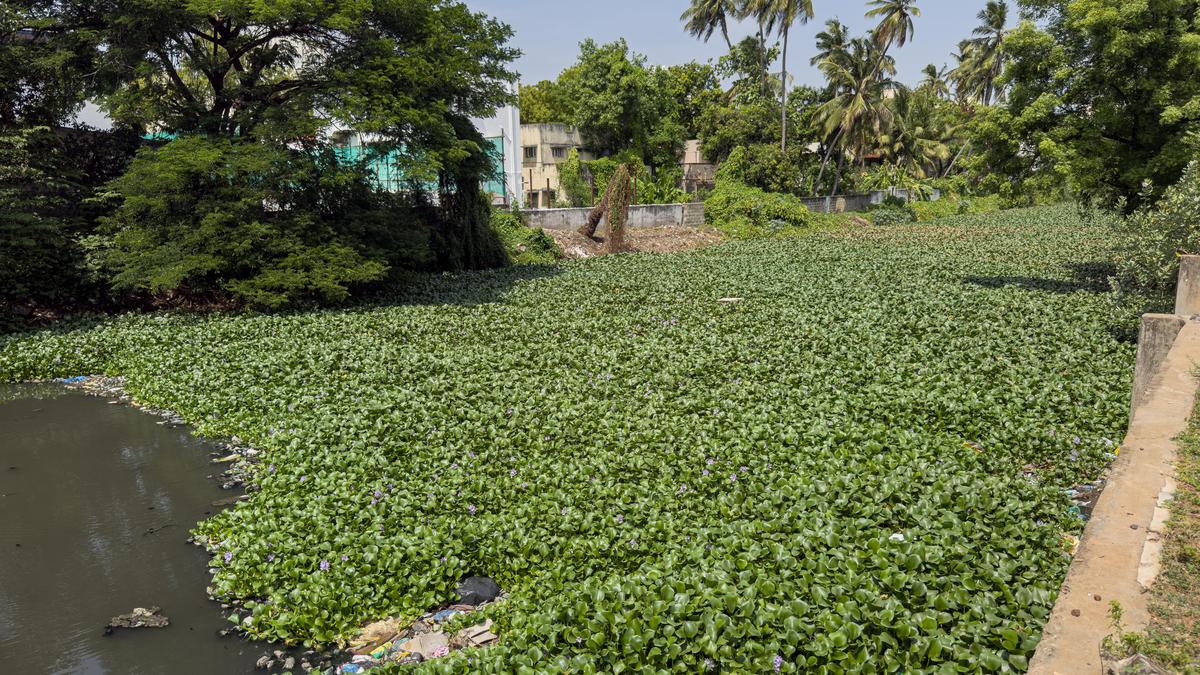
The Uyyakondan canal covered with a thick blanket of water hyacinth in Tiruchi.
| Photo Credit: R. VENGADESH
Residents and activists have expressed dismay over the rapid growth of water hyacinth that covers the Uyyakondan canal in Tiruchi.The canal traverses about 71 km between Pettavaithalai and Vazhavanthankottai before entering Thanjavur district. It has been a source of irrigation for farmers. It was primarily built to irrigate fields in Tiruchi and Thanjavur districts. It feeds 36 tanks and has an ayacut of 32,000 acres. It runs for about seven km from Kuzhumayi Amman temple (Puthur Weir) to Ariyamangalam in Tiruchi.It traverses through the city’s main thoroughfares with hundreds of houses and commercial establishments situated on both the sides of the canal. It is supposed to enhance the aesthetics and offer a good environment to the people residing along the canal. But the excessive growth of water hyacinth has caused the canal to degenerate into a drain.Undeclared drainThe entire stretch of the city stretch, right from Puthur Weir to Ariyamangalam is encroached by the invasive aquatic plant species that grows in stagnant water. Domestic sewage is let out into the canal at various places, making it the ideal ground for water hyacinth to grow in abundance.The canal is in full flow whenever water is released from the Mettur dam in the Cauvery for irrigation. The canal does not have flow of water currently. Only a small quantity of water is flowing. However, the canal is full of stagnant water and the entire stretch is covered by water hyacinth, making it a perfect breeding ground for mosquitoes, causing inconvenience to people living along the canal.“The canal is literally acting as an open drainage. It is hardly noticeable when the canal carries water for irrigation. But, it is clearly noticeable that it is like an open drainage now as there is no water. Water hyacinth grows rapidly on stagnant water. It eventually acts as a breeding ground for mosquitoes, thereby making life difficult for the people living along the canal,” says K. Janardhanan, a civic activist, who resides in Bheema Nagar.K.C. Neelamegam, another civic activist, said the Water Resources Department removed the invasive species whenever the residents expressed concern.Discharge of sewage from houses, hospitals, and commercial establishments was the main reason for the growth of water hyacinth. Besides removing the species, the department and the Tiruchi Corporation should take steps to prevent the discharge of untreated sewage into the canal. Published - June 16, 2026 08:20 pm IST