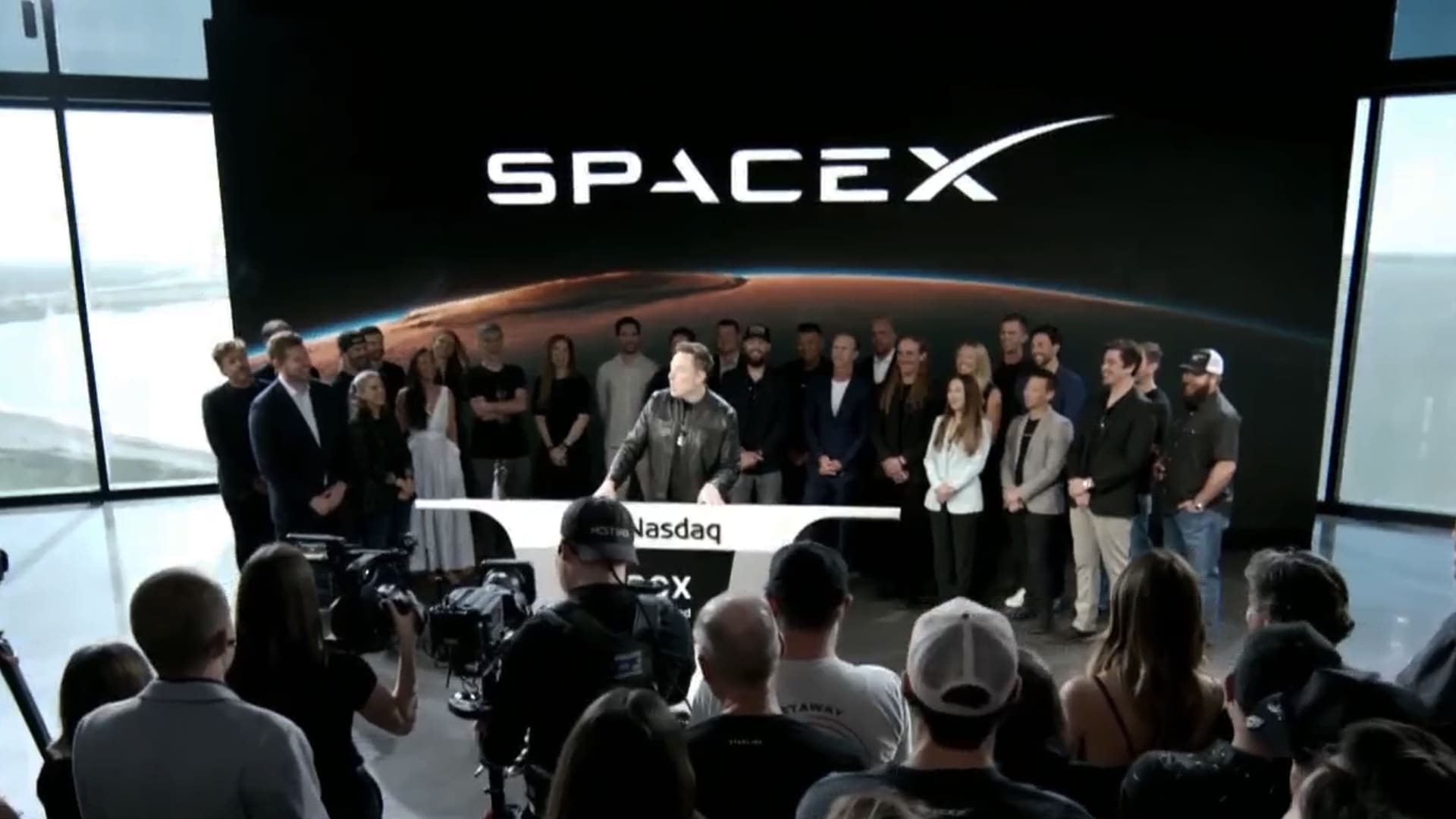
Elon Musk's SpaceX has agreed to buy Cursor AI parent Anysphere for $60 billion, and the timing says as much as the price tag. The all-stock deal lands just days after SpaceX's own Nasdaq debut valued the rockets-to-AI company north of $2 trillion, and it instantly hands xAI's Grok a foothold it never had on its own. For developers, investors, and anyone tracking where AI coding tools are headed next, this is the clearest signal yet that owning a model is no longer enough. You also need the product millions of engineers already open every morning.SpaceX Cursor AI Deal: Why the $60 Billion Acquisition Changes the AI Coding RaceThe structure is simple even though the number is enormous. SpaceX will absorb Anysphere through an all-stock merger, converting every share of Cursor's common and preferred stock into SpaceX Class A shares at closing. The exchange ratio depends on SpaceX's volume-weighted average price over the seven trading days before the deal finalizes, so the exact share count stays a moving target until then. SpaceX expects the transaction to close in the third quarter of 2026, pending the usual regulatory approvals that accompany a deal this size.This wasn't a sudden courtship. Back in April, SpaceX disclosed it had already locked in an option on Cursor, giving it the right to either acquire the company outright for $60 billion or pay $10 billion for a looser partnership arrangement. Choosing the larger path tells you SpaceX wanted full control, not a licensing deal. Notably, Microsoft had reportedly examined buying Cursor before SpaceX's arrangement took shape, and OpenAI made two separate approaches that Cursor's leadership turned down, preferring to stay independent until SpaceX came calling with both compute and capital.Cursor itself is not some scrappy underdog padding its valuation. Founded in 2022 by four MIT students, Michael Truell, Sualeh Asif, Arvid Lunnemark, and Aman Sanger, the company forked VS Code and rebuilt it as an AI-native editor rather than bolting AI onto an existing tool. That decision paid off at a pace enterprise software has never seen.Cursor's annualized revenue went from $100 million in January 2025 to $500 million by June, crossed $1 billion by November, and reached roughly $2 billion by February 2026, outrunning the growth curves of Slack, Zoom, and even Snowflake. Internal projections reportedly put Cursor on track for more than $6 billion in annualized revenue by the end of this year, which is the kind of trajectory that makes a $60 billion price tag look almost conservative rather than reckless.Why Does Cursor Matter So Much To xAI And Grok?Because compute without a workflow is just an expensive idle asset, and Grok has been missing the workflow. SpaceX already controls enormous computing capacity through its Colossus infrastructure, and xAI already has a capable model in Grok. What neither had was a daily habit loop, the kind where developers open the tool first thing, write code inside it, accept or reject suggestions, and keep coming back tomorrow. Cursor brings exactly that, plus a customer base that already includes engineers at Nvidia, Adobe, Stripe, Uber, and OpenAI itself, which is a notable irony given OpenAI's own coding ambitions.There's also a research angle that gets less attention than the price tag deserves. SpaceX confirmed its AI arm has been jointly training a model with Cursor for months already, drawing on Colossus's supercomputing scale, with that model expected to ship inside both Cursor and Grok Build before long. That suggests the acquisition formalizes a relationship that was already shaping product decisions, rather than starting one from a blank page. For xAI, which has trailed Anthropic and OpenAI in coding-specific tools despite Grok's broader ambitions, this is the fastest route to relevance that money could buy.Will SpaceX's $60 Billion Bet On Cursor Actually Pay Off?That depends almost entirely on whether Cursor keeps its independence in the eyes of developers. Cursor's appeal has always rested partly on being model-agnostic, letting engineers route requests to whichever AI model fits the task rather than locking them into one vendor's ecosystem. If SpaceX nudges Cursor toward becoming a Grok-only front end, the risk is that enterprise customers quietly migrate toward Claude Code, GitHub Copilot, or OpenAI's Codex instead, taking their subscriptions with them.The financial case still looks compelling on paper. SpaceX posted $18.7 billion in 2025 revenue, and Cursor's revenue alone could eventually represent a meaningful slice of that, while the acquisition price sits at a small fraction of SpaceX's overall valuation following its IPO.Unlike much of SpaceX's capital-intensive space and AI infrastructure spending, Cursor's enterprise subscription business already runs at positive gross margins, even if Anysphere as a whole hasn't reached overall profitability. The next few quarters of retention data, Grok coding benchmarks, and revenue growth will tell investors whether this was a masterstroke or an expensive vanity purchase dressed up as strategy.
Can Elon Musk's xAI challenge Anthropic after SpaceX's $60 billion Cursor AI acquisition from Anysphere?
SpaceX has agreed to acquire Cursor AI parent Anysphere for $60 billion in an all-stock deal, days after SpaceX's blockbuster Nasdaq debut. The acquisition hands xAI's Grok a foothold in AI coding tools, tapping Cursor's $2 billion annualized revenue and rapid enterprise adoption. Closing is expected in Q3 2026. Now the bigger question is whether Cursor AI can help xAI challenge Anthropic's lead in enterprise AI coding.
802 words~4 min read