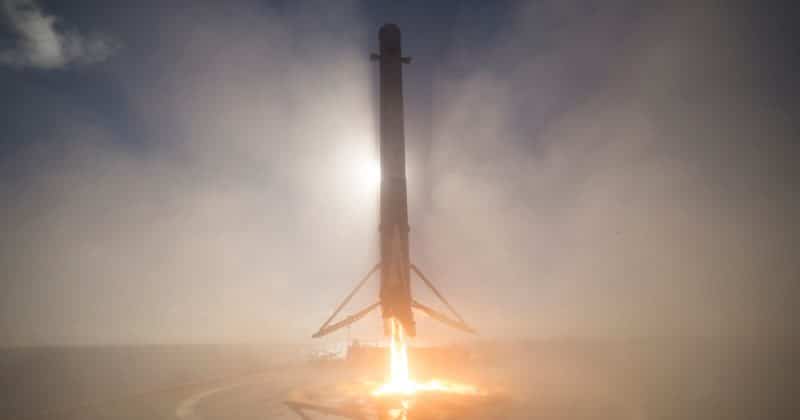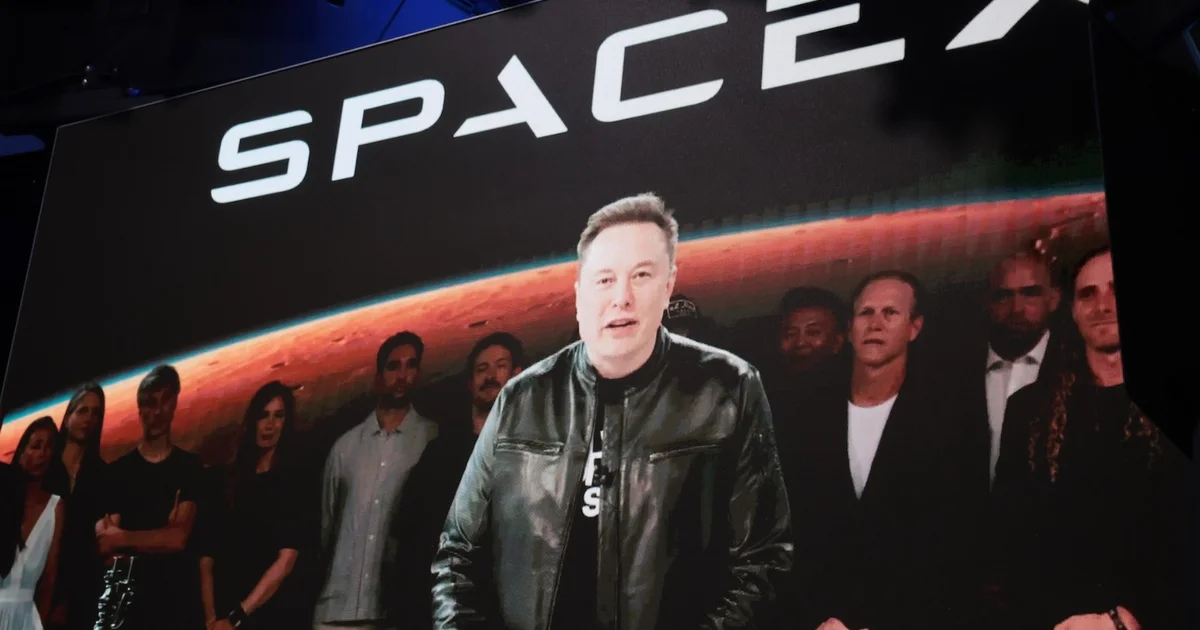
Four days after the largest stock-market debut in history, SpaceX spent its fresh public currency on something with no fuel tanks and no obvious berth on a rocket company's books: an AI code editor. The $60 billion all-stock purchase of Anysphere, the company behind Cursor, reads on the surface as a victory lap for Elon Musk. A stranger fact sits at its centre. Cursor's worth rests almost entirely on its freedom to run the models of Anthropic and OpenAI, the two firms Musk's own xAI was built to beat. He has paid $60 billion for a shopfront whose best-selling goods are made by his competitors.That tension is the whole story, and most of the coverage has waved at the price and moved on.Key TakeawaysSpaceX (Nasdaq: SPCX) agreed on 16 June 2026 to buy Anysphere, maker of the AI coding tool Cursor, for $60 billion in an all-stock deal, filed as an SEC 8-K and expected to close in the third quarter of 2026 pending regulatory approval.The deal arrived four days after SpaceX's record IPO, which priced at $135 a share, raised roughly $75 billion, and valued the company near $1.75 trillion — the largest listing ever.It hands xAI, the Grok maker SpaceX absorbed in February 2026, the enterprise application layer it had been missing: Cursor brings 50,000 enterprise customers and about $2.6 billion in recurring revenue.Cursor sold from a position of pressure, with its market share down from 41 per cent in June 2025 to roughly 26 per cent by May 2026 as Anthropic's Claude Code took half the category.The risk lives in the cap table and the model menu: Cursor's value depends on running rival models that Musk has every financial reason to push aside for Grok.What exactly did SpaceX agree to buy, and for how much?It agreed to buy Anysphere, Cursor's maker, for $60 billion in SpaceX stock. The structure, set out in the 8-K, routes a wholly owned SpaceX subsidiary called X67 into Cursor; Cursor survives as a SpaceX subsidiary, and its shareholders receive SpaceX Class A common stock. The exchange ratio floats, pinned to SpaceX's volume-weighted average closing price over the seven trading days before the deal completes, which Bloomberg reported is expected in the third quarter, subject to regulatory clearance. Cursor's backers — Accel, Thrive Capital, Andreessen Horowitz, Coatue, DST Global, Nvidia and Google among them — convert their holdings into stock of a company that, a week ago, had yet to trade.The currency is days old. SpaceX priced its IPO at $135 a share, skipping the usual range-and-bookbuilding routine to go straight to a fixed number, raised around $75 billion at roughly $1.75 trillion, and on its 12 June debut closed at $161, up 19 per cent. By the time the Cursor news hit, the stock had pushed SpaceX's market value beyond $2.8 trillion. An amended IPO filing had told investors the company might issue "significant equity" for future deals. Cursor is the first cheque written against that line.DateEventFeb 2026SpaceX absorbs xAI — Grok models, X, and the Colossus data centres — at a reported $1.25 trillion valuation19 Apr 2026SpaceX takes an exclusive $60 billion call option on Cursor, alongside an undisclosed Compute Agreement12 Jun 2026SpaceX lists on Nasdaq as SPCX at $135, raising ~$75 billion at ~$1.75 trillion16 Jun 2026SpaceX signs the $60 billion all-stock merger; 8-K filedQ3 2026Expected close, pending regulatory approvalThe decisive move came in April, not JuneTuesday's filing finished a move SpaceX had set up two months earlier. The merger document records that Anysphere granted SpaceX an exclusive call option on 19 April, and that SpaceX exercised it before the agreement was signed — so the real decision predates the announcement by nearly two months. Benzinga read the filing closely and found the detail most reports skated past: a separate Compute Agreement, struck the same April day, whose terms stay sealed.Pair those two and the opening becomes legible. A grandmaster rarely captures on impulse; the capture is the visible end of a line worked out several moves back, with quiet positional gains laid down first. SpaceX put the option and the compute deal on the board together, then held its position through the noise of the IPO roadshow before completing. The April structure also gave Musk a cheaper line if the full board ever turned against him: pay roughly $10 billion to work with Cursor through a partnership, rather than $60 billion to own it outright. He chose the capture. The tell worth holding is that the compute and the ownership were wired together from the first move, which means this was never a clean acquisition of a willing seller at a clearing price. It was a position built deliberately, then cashed.Why a rocket company suddenly needed a code editorBecause SpaceX is an AI company now, whatever the name on the rocket says. February's absorption of xAI brought in the Grok models, the social network X, and the Colossus supercomputer in Memphis, and lifted the combined valuation to a reported $1.25 trillion. The trouble it also brought in: xAI lost $6.35 billion last year and has yet to win real share in any AI category that pays. Its first dedicated coding model, Grok Build 0.1, shipped in May into public beta with no enterprise footing. xAI had the models and the silicon and the power; it lacked the one thing that turns those into revenue, which is a product developers already open every morning.Cursor is that product. Over a million paying users, 50,000 enterprise accounts, more than half the Fortune 500, about $2.6 billion in recurring revenue, and a forecast above $6 billion by year-end. Gwynne Shotwell, SpaceX's president, told CNBC the partnership "makes a huge amount of sense", and on the cold logic of vertical integration she is right — AI needs compute, energy and connectivity, and SpaceX owns all three.The seller's reasons are sharper, and they complicate the triumphal framing. Cursor scaled from $100 million in annualised revenue in January 2025 to $2 billion by February 2026, the fastest any business-software company has ever reached that mark. Then its own supplier turned on it. Anthropic, which had powered much of Cursor through its Claude models, launched Claude Code and took it to the top of the category; Ramp's spending data tracked Cursor's share sliding from 41 per cent in June 2025 to about 26 per cent by May 2026, with Anthropic claiming half the market. Cursor was also, in its own April words, held back by a shortage of compute it needed for training. Selling to SpaceX answered both pressures at once — Colossus for the compute, Grok for a model it part-owns — at a $60 billion price that beat the roughly $50 billion it had been raising at weeks earlier. A company growing this fast does not sell at the top unless the people running it can see the ceiling.A bar that pours every rival's brewPicture Cursor as a bar that built its whole reputation on the range behind the counter. Anthropic's Claude on one tap, OpenAI's GPT on the next, Google's Gemini beside them, Cursor's own Composer at the end, fifteen-plus labels in all, and the regulars come precisely because they can pour Claude for a long refactor and GPT for quick autocomplete in the same session. A very large share of the real work, by every account, flows through the Claude and GPT taps. That range is the product. It is the reason engineers picked this bar over GitHub Copilot down the street.Musk just bought the bar, and he runs a brewery. xAI's Grok is the house lager nobody much orders, and every pint of a rival's beer that crosses this counter is money walking out to a competitor while xAI's own division bleeds $6.35 billion a year. The commercial pull toward making Grok the default — dimming the Claude and GPT taps, surfacing the house label first — is enormous. So is the danger. Pull the taps the regulars came for and they walk to Copilot, which Microsoft can pour inside every enterprise contract it already holds, or to Claude Code direct. Enterprise teams that chose Cursor partly to keep sensitive code on Claude's privacy record have the clearest reason to leave. The $60 billion rests on the range; the owner has every reason to narrow it. Squaring that is the genuine problem of this deal, and no filing has addressed it. For the large base of Indian developers who adopted Cursor on exactly this model-choice freedom, the answer to "which taps stay open" decides whether the tool stays worth paying for.The conflicts hiding in the cap tableRead the share register and the deal stops looking like an arm's-length purchase. Thrive Capital, Josh Kushner's firm, sits on both sides — a backer of Cursor and a holder of SpaceX, a combined position CNBC put above $10 billion. Google owns close to 4.9 per cent of SpaceX, a stake worth about $105 billion, while also being a Cursor investor and a direct competitor through Gemini. Tesla holds SpaceX stock through its earlier $2 billion bet on xAI. The same names recur on every side of a transaction controlled by one person, paid in that person's own freshly minted stock. Tesla's 2016 purchase of SolarCity, another Musk-adjacent, all-stock roll-up, drew years of shareholder litigation before he was cleared; the structural echo here is loud, even if the lawsuit has yet to be filed.Then there is the position SpaceX now occupies against Anthropic, which would be comic if the sums were smaller. SpaceX recently agreed to lease Anthropic and Google roughly $26 billion a year in cloud computing. So SpaceX is at once Anthropic's landlord, its competitor through Cursor and Claude Code, and the collector of Cursor revenue that flows to Anthropic on every Claude call. Three roles, opposing interests, one balance sheet.The valuation makes the all-stock structure heavier still. Morningstar puts SpaceX's fair value near $780 billion, less than half its IPO price, on the grounds that only Starlink turns a profit while SpaceX as a whole lost close to $5 billion in 2025. Cursor's founders and backers are taking that paper, not cash; their $60 billion converts at a share price set days before close, in a stock independent analysts already call twice over-priced. Whoever blinks first in the third quarter — a regulator at the FTC or in Brussels, a Cursor engineer among the roughly 300 who signed up for a San Francisco startup rather than a Musk subsidiary, or the SPCX price itself — decides whether $60 billion of paper is worth $60 billion when the ink dries.Frequently asked questionsIs the SpaceX–Cursor deal final?It is signed but open. SpaceX filed a definitive merger agreement on 16 June 2026 to buy Anysphere for $60 billion in stock, and expects to close in the third quarter of 2026, subject to regulatory approval. Until then, Cursor operates as an independent company.Will Cursor still support Claude and GPT after the acquisition?For now, yes. As of the announcement, Cursor continued to support Anthropic's Claude, OpenAI's GPT and its own Composer models, with the deal yet to close. The open question is what happens afterwards, since SpaceX-owned xAI has a financial motive to favour its own Grok models over rivals that cost it money on every call.Why did SpaceX buy an AI coding company?SpaceX became an AI company when it absorbed xAI in February 2026, gaining the Grok models and the Colossus supercomputer but lacking a mass-market product. Cursor supplies that: a million-plus developers, 50,000 enterprise customers and about $2.6 billion in recurring revenue, giving xAI an instant foothold in enterprise AI.How much did SpaceX pay for Cursor, and how?SpaceX agreed to pay $60 billion in an all-stock deal, with Cursor shareholders receiving SpaceX Class A stock. The price roughly doubles Cursor's $29.3 billion valuation from November 2025 and tops the $50 billion it had been raising at in May 2026. The deal followed an April option that let SpaceX either buy Cursor for $60 billion or pay $10 billion for a partnership.Who profits most from the deal?Cursor's four MIT founders, led by chief executive Michael Truell, become billionaires on paper, and early backers including Thrive Capital, Andreessen Horowitz, Nvidia and Google convert into SpaceX stock. The payout rests on where SPCX trades through closing, so the gains stay on paper until the deal completes and the stock holds.end of article
Why SpaceX Spent $60 Billion On An AI Coding Tool Losing Share
SpaceX is buying Cursor maker Anysphere for $60 billion in stock, handing xAI the enterprise product it lacked. Here is why the deal happened, why Cursor sold, and the cap-table and model conflicts hiding inside it.
2,063 words~9 min read