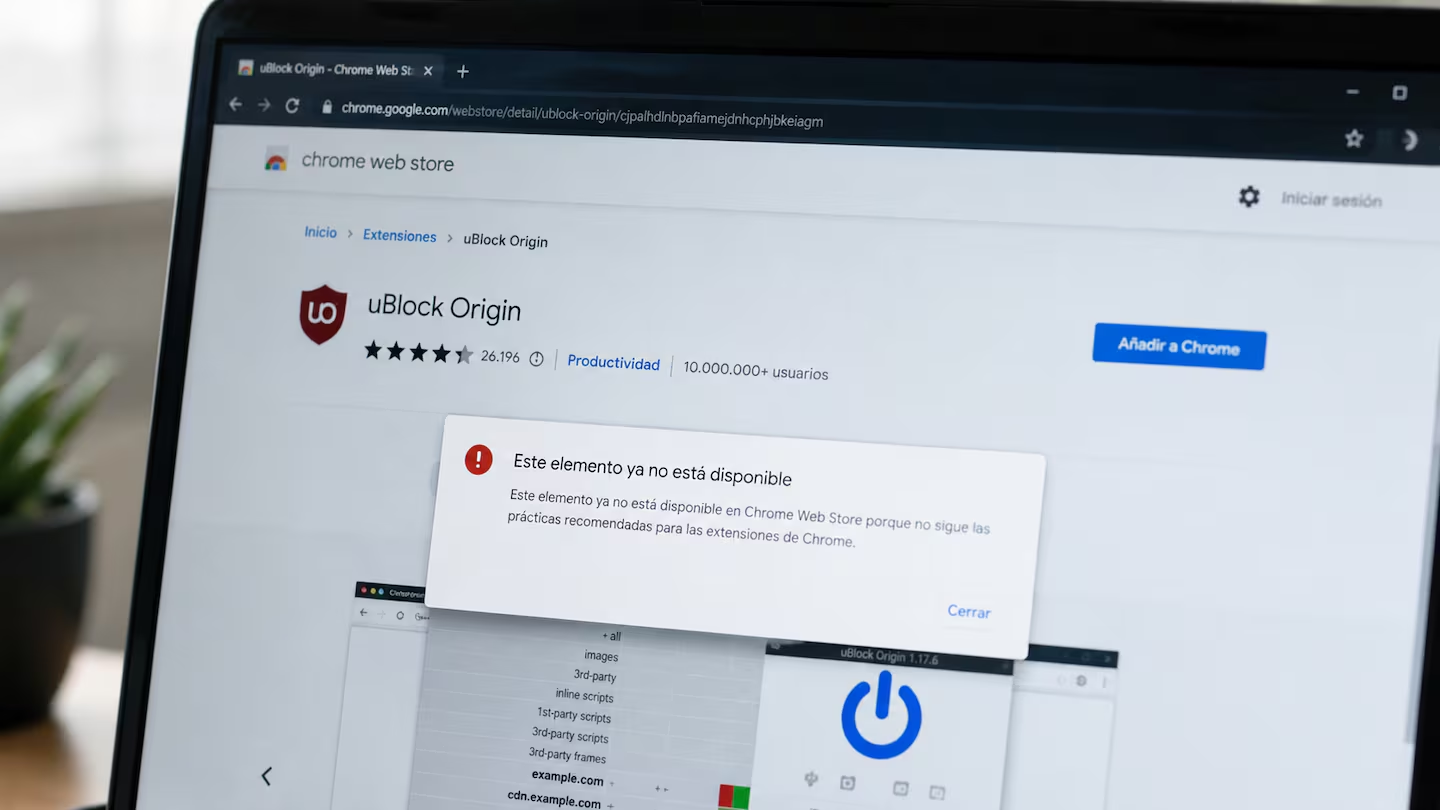
Google Chrome's next update could be the final nail in the coffin for some of the best ad blockers like uBlock Origin. As per a Cybernews report, Chrome is set to finally drop support for Manifest V2 extensions, which would mean the end of support for Chrome's ad blockers.Google began the shift over to Manifest V3 last year, but the report notes the next iterations of the browser — either version 150 or 151 — will remove the older framework completely.“MV2 extensions are no longer allowed in any supported version of Chrome, and we are removing support for them and the associated functionality," Google engineer Devlin Cronin wrote in a Chromium commit confirming the change."We won't be able to provide/maintain this functionality indefinitely due to the complexity and tech debt, as well as the security risks it entails."Shifting Chrome fully to Manifest V3 won't stop new ad blockers from being developed (in fact, some services like AdGuard, AdBlock, and Ghostery have been updated for V3), but it does impose restrictions. Manifest V3 will cap the number of filtering rules an extension can apply, which could theoretically foil ad blockers' attempts to respond to the latest ad-deployment technology.Of course, there are some benefits to this new system. Many Chrome extensions that seem legitimate are actually loaded with malicious code. Chrome's new, more rigid Manifest V3 system will be better equipped to put a stop to that.What does this mean for those that want to block ads?The simplest answer for those who want to continue blocking ads after the latest version of Chrome rolls out is to switch browsers. This change will likely affect other Chromium-based browsers like Opera, Edge, and Samsung Browser, albeit not for a while yet.Get instant access to breaking news, the hottest reviews, great deals and helpful tips.However, Mozilla's Firefox browser doesn't use Chromium and has no current plans to remove the MV2 framework extension, so switching over could be a viable option if people want to continue running uBlock Origin. Similarly, the privacy-focused Brave browser could be another way to keep your favorite extensions running.Finally, if you're determined not to see ads, you could investigate signing up for a desktop app that will block ads for you — rather than relying on a browser extension. This may be more costly, but it will also likely be more effective at catching those adverts that interrupt your browsing.
Google Chrome's next update could kill ad blockers for good — here's how
Google Chrome's next update will make ad blocking extensions obsolete.
514 words~2 min read