You have full access to this article via your institution.
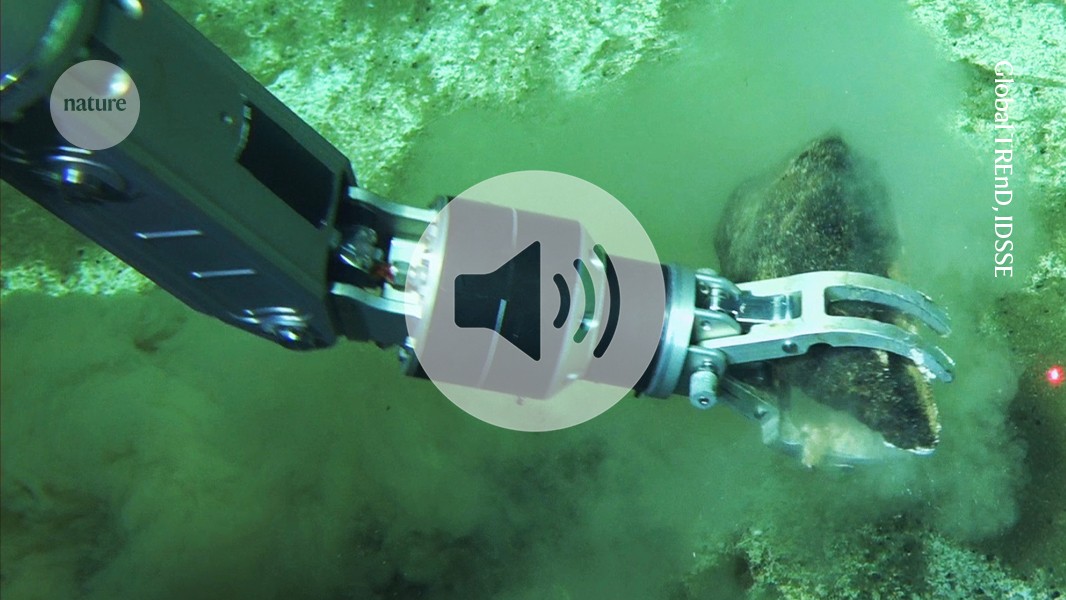
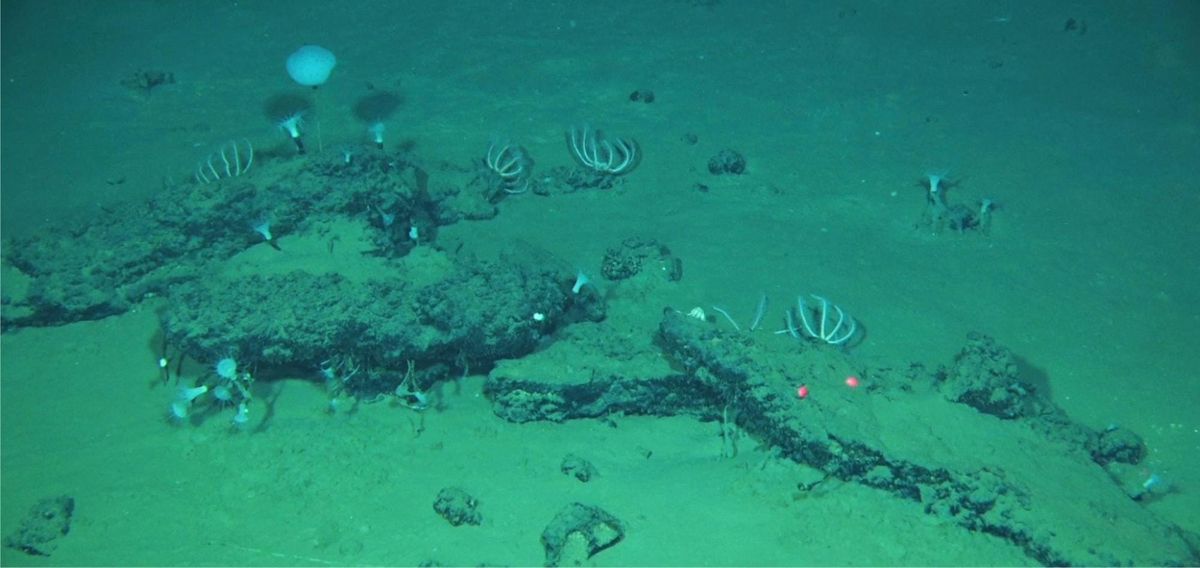
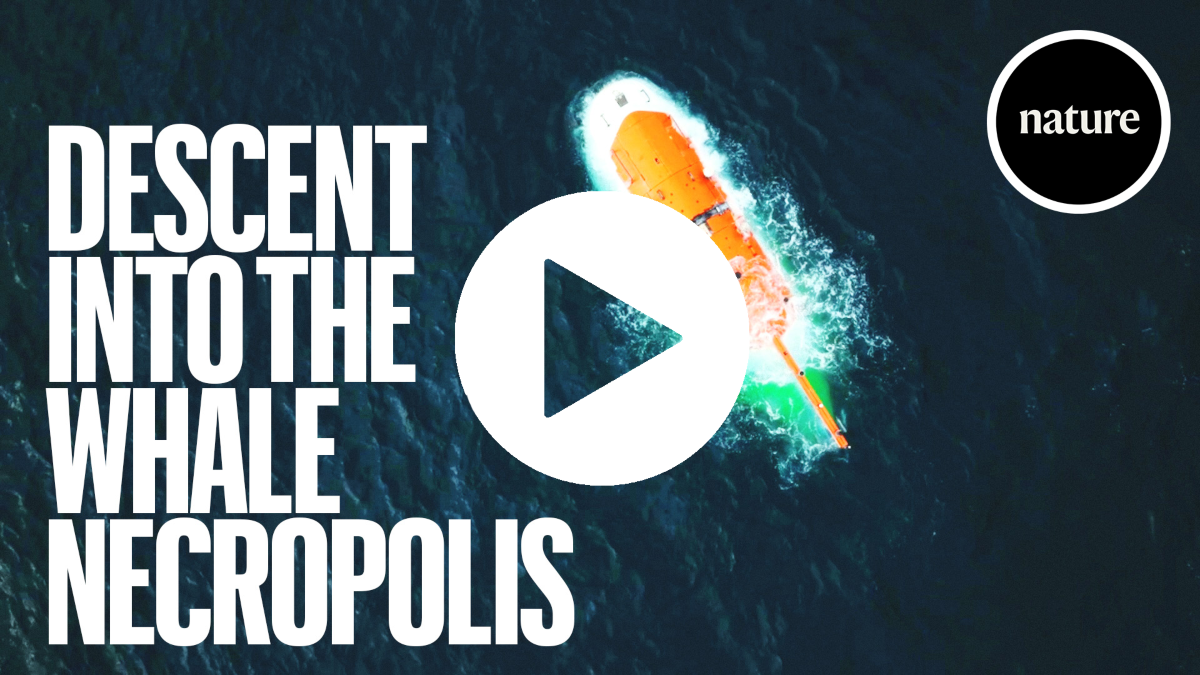
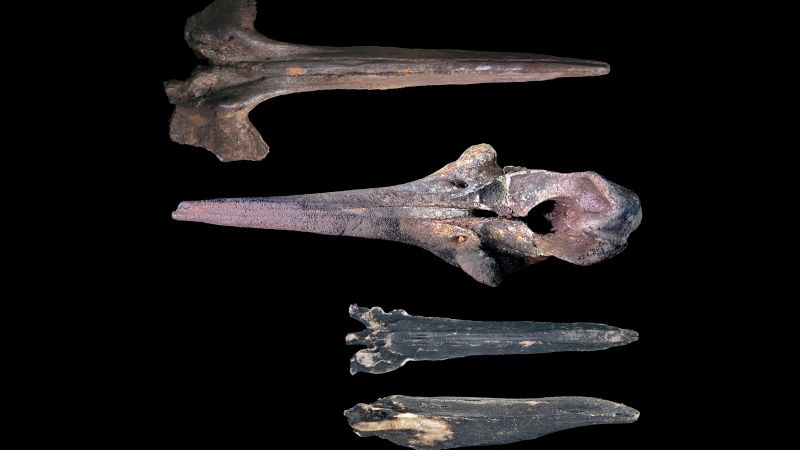
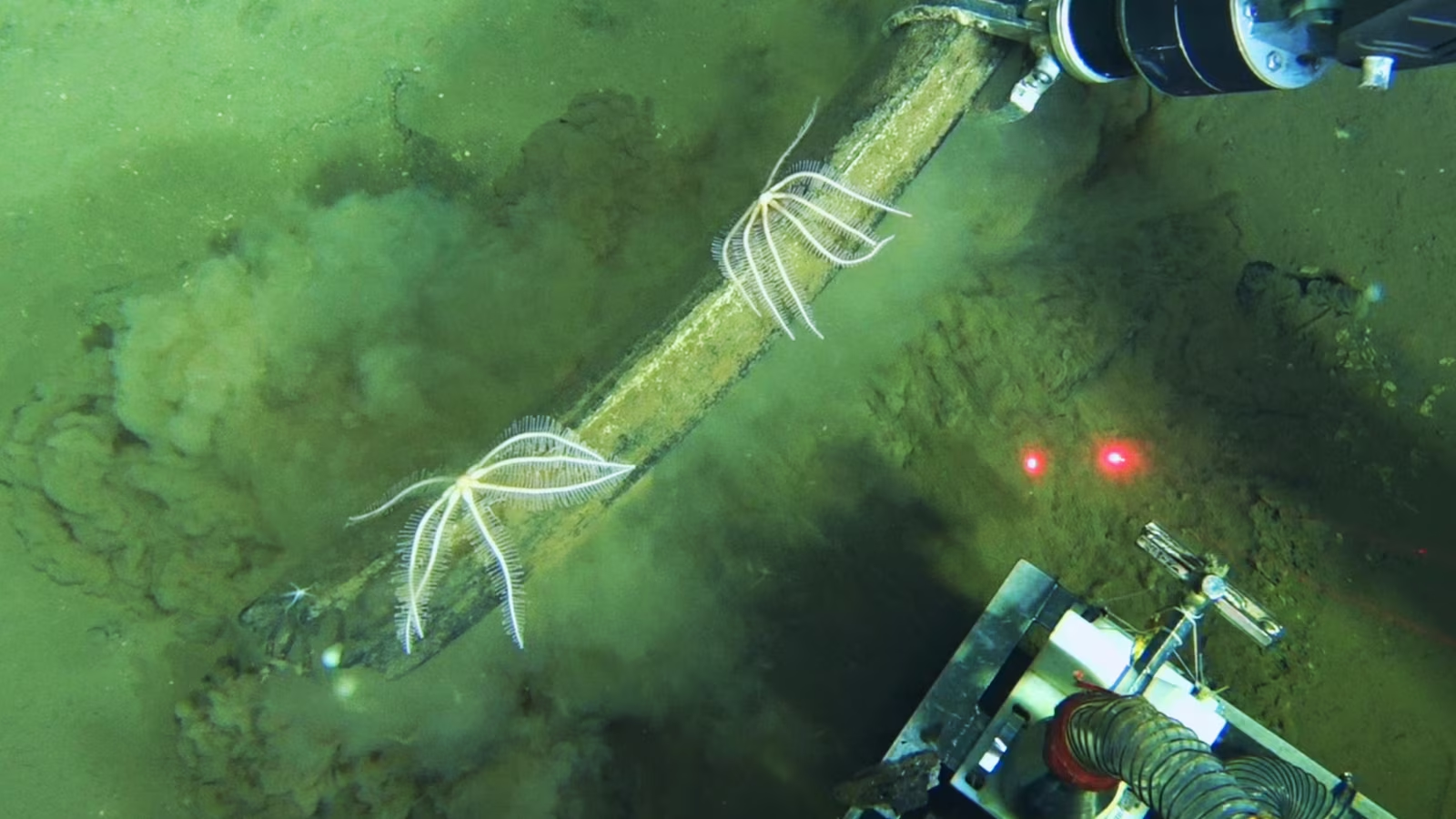
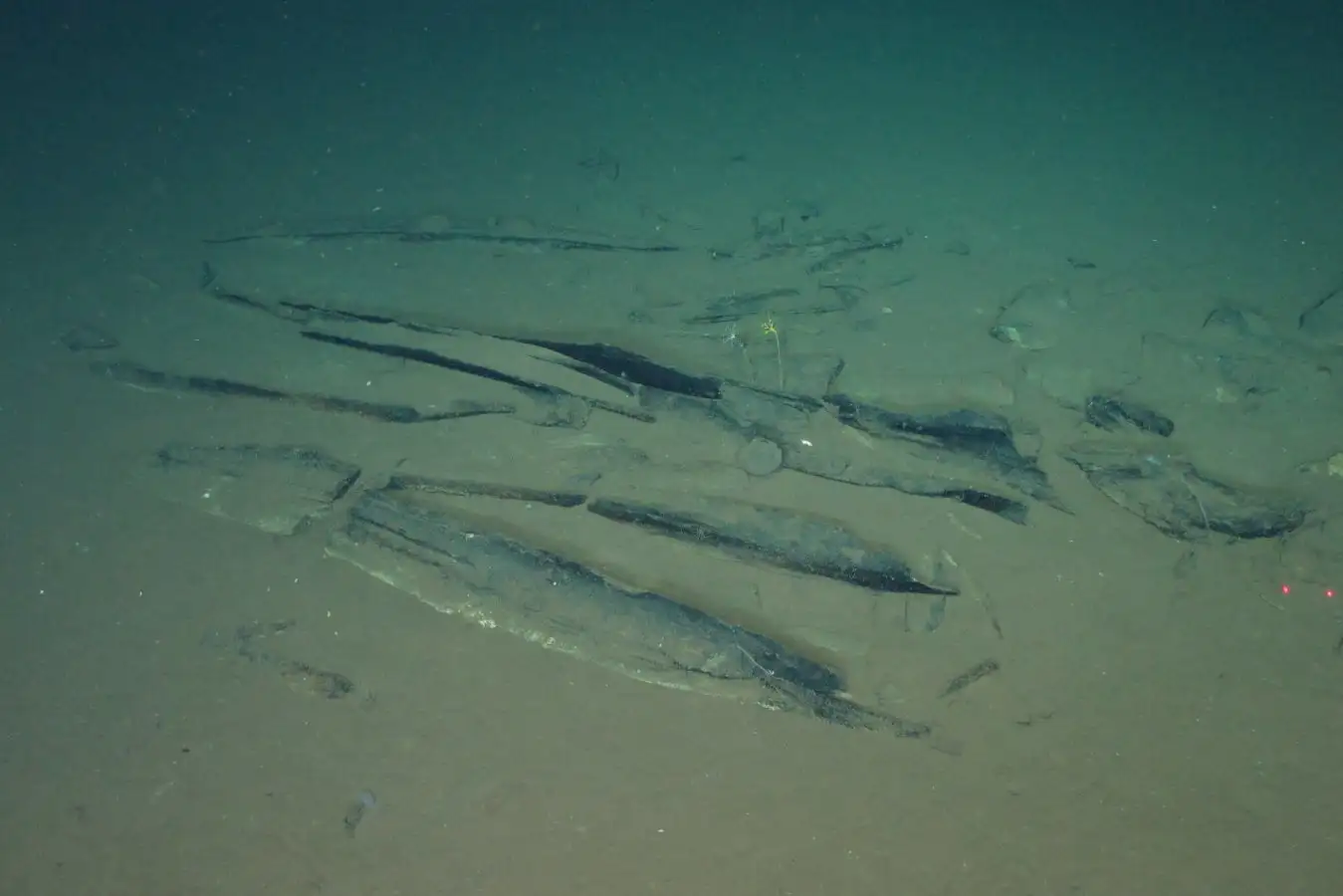
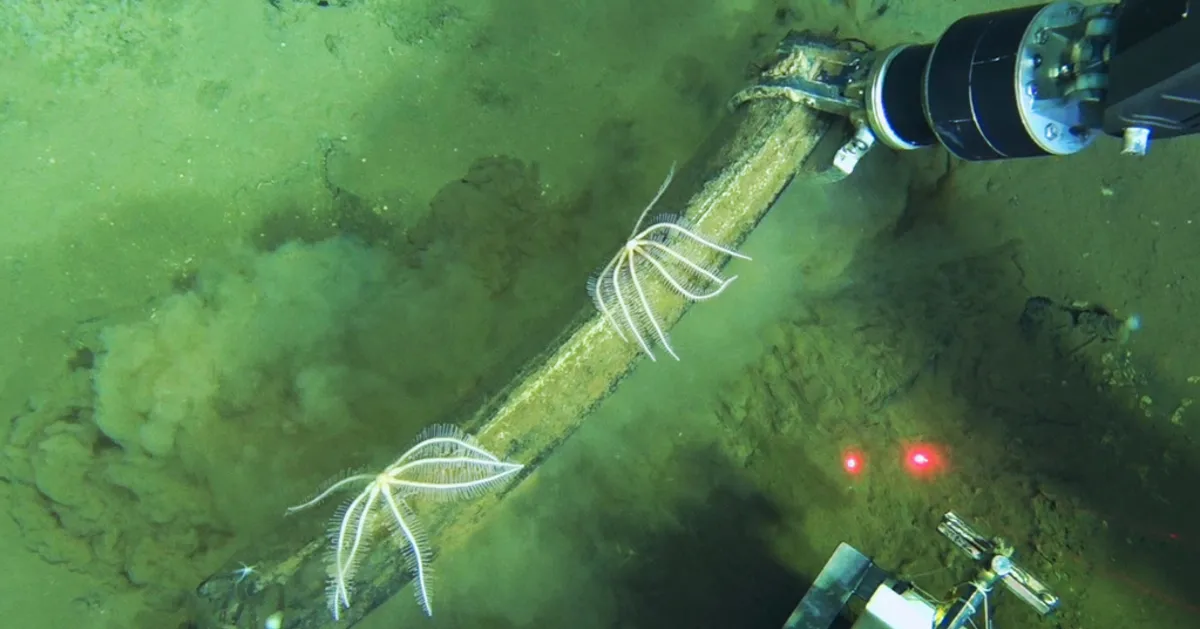
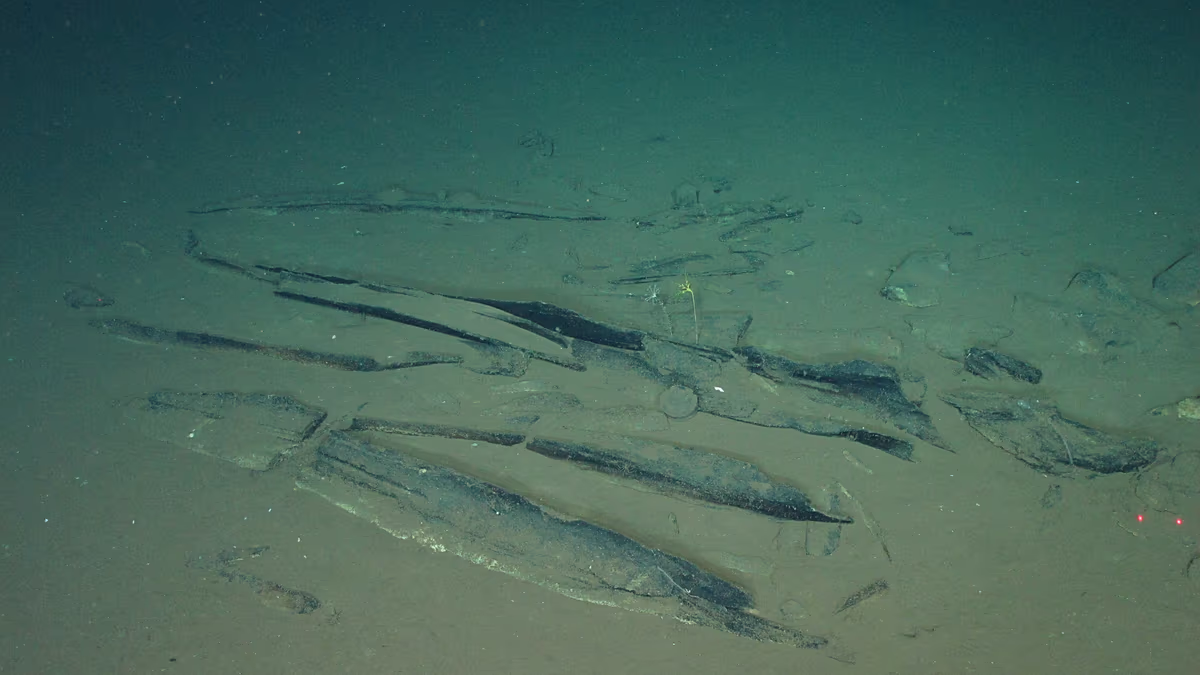
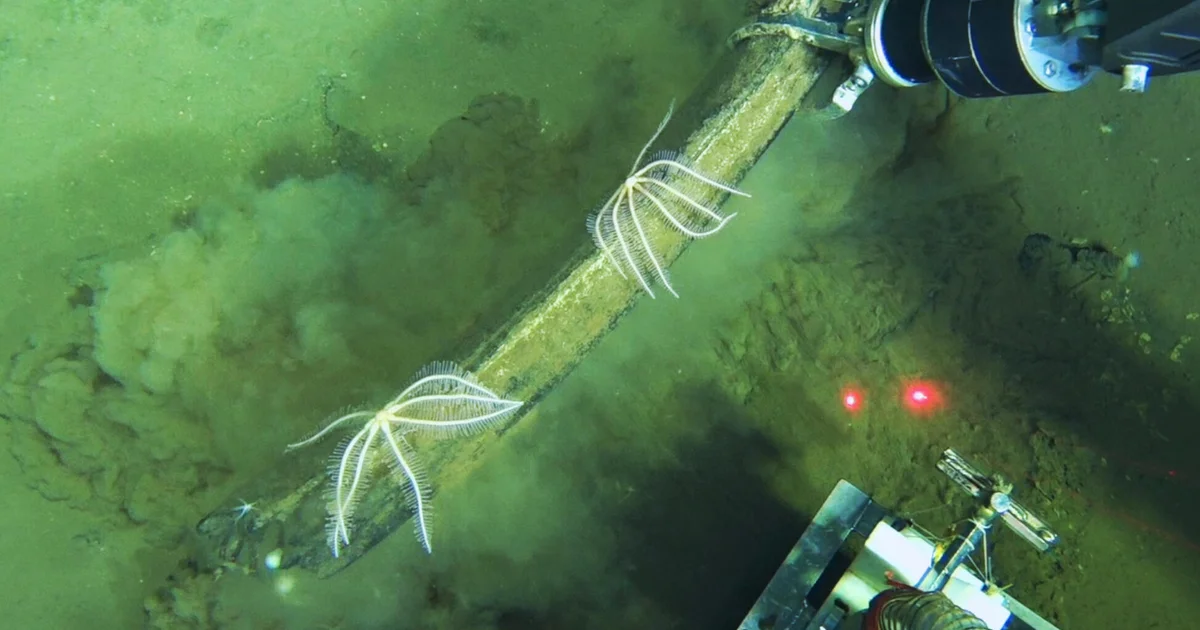
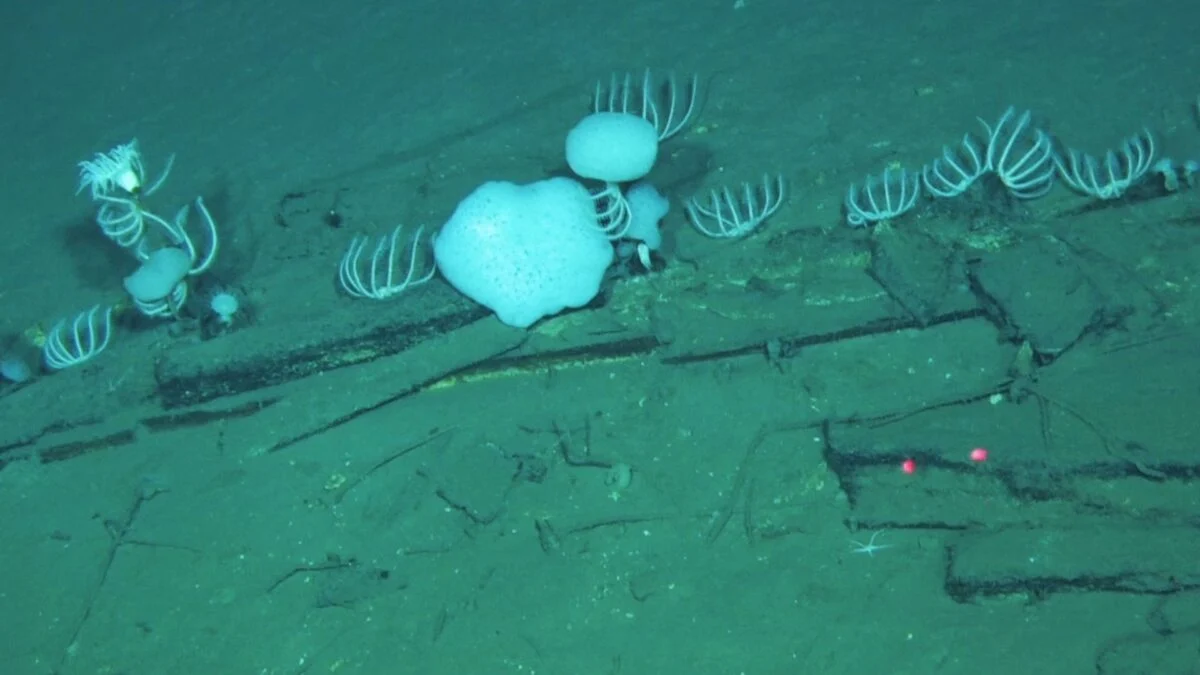
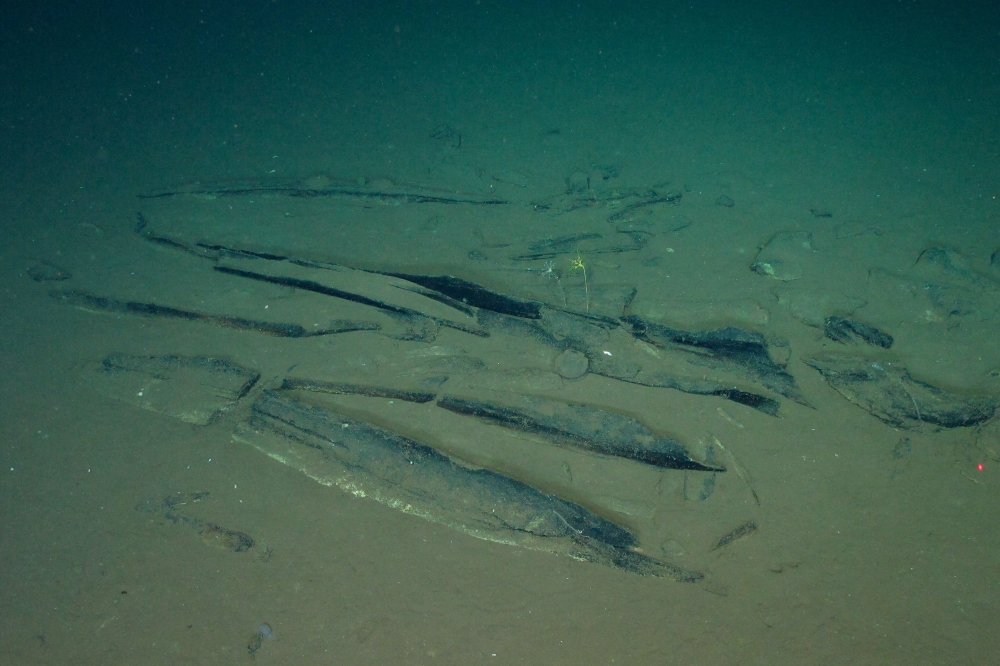
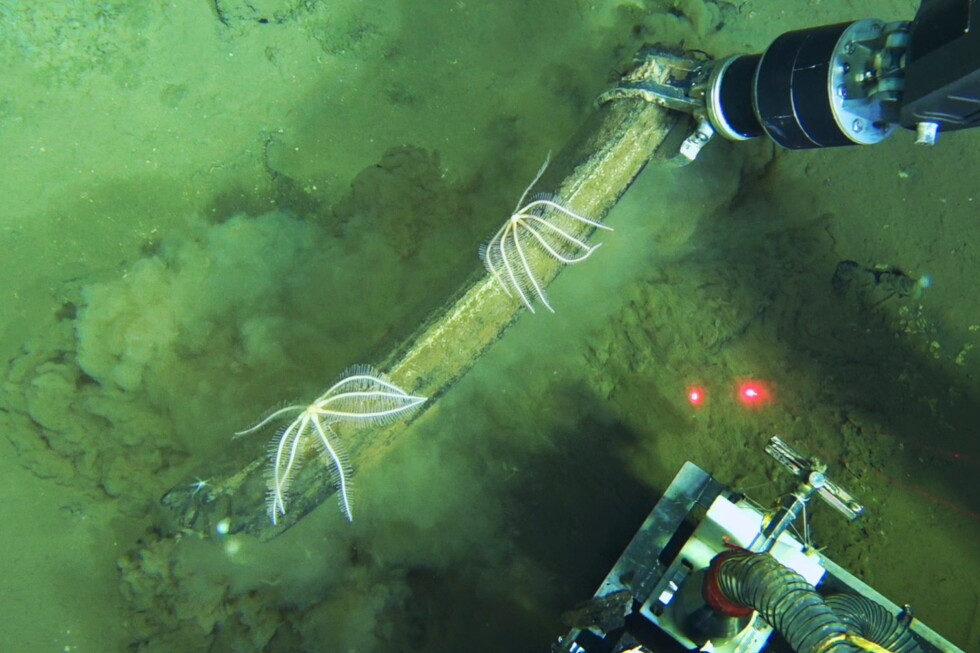
Hello Nature readers, would you like to get this Briefing in your inbox free every day? Sign up here.In this winning image, foster parent Helena Wehner and pilot Johannes Fritz guide northern bald ibises on a migration journey across Europe.Credit: Gunnar HartmannScientists at work, in picturesThis in-flight photo, taken by student Gunnar Hartmann, is the overall winner of Nature’s #ScientistAtWork photo competition. In 2024, Hartmann joined a 50-day research expedition to support the annual migration of the northern bald ibis (Geronticus eremita) from southeast Germany to southwest Spain. These birds were hand-raised, and so are more than happy to follow their foster parents, who guide them in an aircraft.See more of the winning entries, selected by Nature’s careers team.Nature | Leisurely scrollJUNO finds clues to neutrino-mass mysteryResearchers working on the Jiangmen Underground Neutrino Observatory (JUNO) experiment in Guangdong, China, have captured crucial details of how mysterious neutrino particles can switch between different types in flight. Neutrinos are so light that they were once thought to have no mass, and the standard model of particle physics doesn’t seem to explain why they do. Physicists use experiments such as JUNO to study how neutrinos ‘oscillate’, or change from one type to another, which is the first step in answering that question.Nature | 5 min readReference: Nature paperIceberg rocks create new seafloor habitatsRocks falling from melting icebergs are providing new homes for corals, sponges and other animals on the Arctic sea floor. Researchers found that glaciers in Greenland and Russia swept up the rocks and carried them to the coast. There, the glaciers spit out icebergs that drifted south, melted and dropped their load of rocks. These ‘dropstones’ sank to provide deepwater oases of biodiversity. “Climate change impacts our world in ways we never even thought of,” says marine biologist and study co-author Kirstin Meyer-Kaiser.Nature | 5 min readReference: Nature paperTool raises red flags on suspect journalsAn online tool that tracks publishing patterns in academic journals could warn researchers about potentially problematic journals before they submit their work to them. The platform, called Journal Trends, allows users to get a breakdown of a journal’s published papers by country and year, which can raise any red flags such as a sudden surge in publications. These indicators alone don’t prove a journal is untrustworthy, but might indicate that researchers should investigate a journal further, says the tool’s developer, research-integrity sleuth Achal Agrawal.Nature | 5 min readInfographic of the weekSource: Ref 1.New, highly-detailed maps of global migration reveal that the number of people moving around the world has increased from 13 million per year in 2000 to around 35 million in 2023. The study reveals the patterns of migration affected by drivers such as economic change, climate, conflict and policy reforms — for example, the largest single instance of people migrating occurred in 1994, with nearly 950,000 people moving from Rwanda to the Democratic Republic of the Congo following the Rwandan civil war. (Nature | 5 min read)Reference: Nature paperGo deeper with analysis in Nature News & Views (7 min read)Are you using Claude Fable 5?Calling all researchers: are you using Anthropic’s new Claude Fable 5 model in your work? If so, has the model wowed you, or left you wondering what all the fuss is about? Nature reporters want to hear about the most impressive things you’ve built with the model for your research projects, or your frustrations with its shortcomings. Let them know at briefing@nature.com.Features & opinionUse AI to curb publication rates“The best outcome of AI in science would be to let us publish less, not more,” argues theoretical physicist Gianfranco Bertone. AI tools can make resources such as codes and datasets accessible without the need for a paper to communicate their worth. They can also automate lab tasks so that scientists have more time to pursue more difficult research questions. “To publish less would not mean doing less science. It would mean recognizing more scientific contributions in their own right, rather than only after they have been converted into article form,” Bertone writes.Nature Astronomy | 8 min readLanguage loss is an environmental issueAn estimated one-third of the world’s approximately 7,000 Indigenous languages could be extinct by the end of this century. “If we lose language, we lose knowledge, and then there is a problem for environmental conservation,” says Alfred Kik, one of the researchers racing to document the ecological knowledge of Indigenous leaders in Papua New Guinea. Cataloguing and preserving these languages and conserving endangered ecosystems can go hand-in-hand, say experts. “But first we must first embrace the idea that the extinction of languages and cultures is an environmental issue,” writes conservation biologist Karen Masters.The Revelator | 8 min readVideo: whale necropolis under the seaResearchers have discovered a ‘whale graveyard’ at the bottom of a 7,000-metre-deep ocean chasm. Using the submersible vehicle Fendouzhe, the team recovered 476 fossilized bones belonging to a range of beaked whale species — one of which was dated to more than 5 million years ago. Why these bones collected in the canyon is unclear, but it’s by no means a thing of the past. The team also found the carcasses of recently-deceased whales, which are finding new life as food for a host of deep-sea creatures — many of which are thought to be unknown to science.Nature | 8 min videoReference: Nature paper