Every web application you've ever used has two sides: what you see (the frontend) and what powers it (the backend). The backend is responsible for business logic, data storage, authentication, third-party integrations, and everything else that happens behind the scenes.
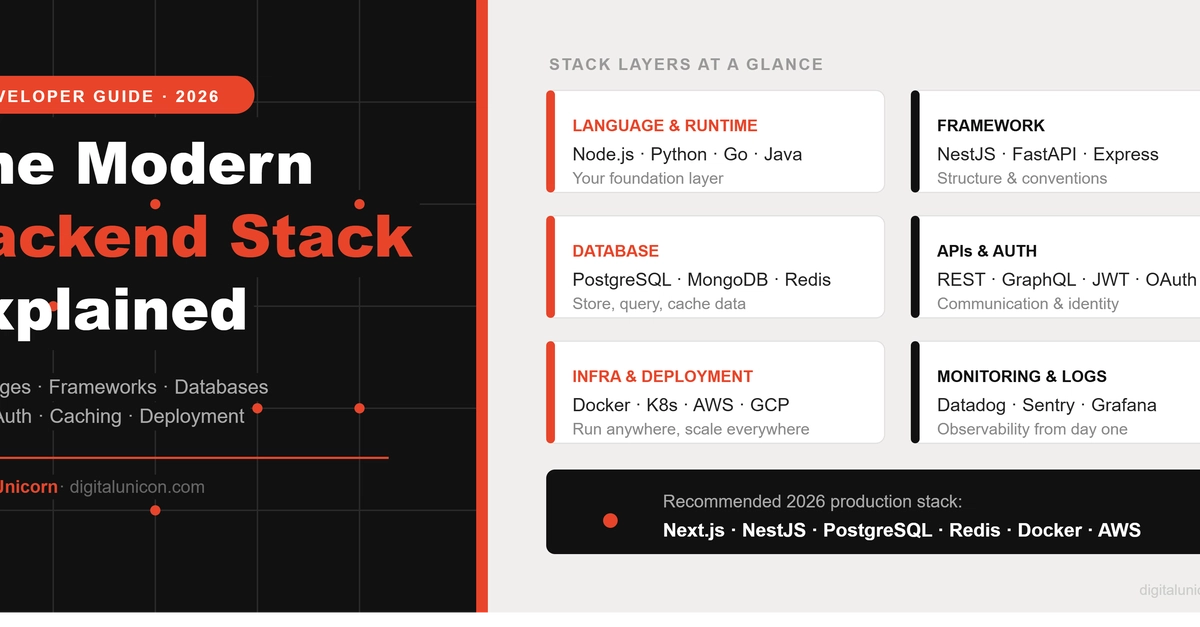
A backend stack is the collection of technologies — languages, frameworks, databases, and infrastructure tools — that work together to make all of that possible.
In 2026, the backend landscape is broader than ever. New frameworks emerge constantly, cloud providers keep adding services, and the line between "backend" and "infrastructure" keeps blurring. If you're a beginner or intermediate developer trying to make sense of it all, this guide is for you.
You don't need to master every tool listed here. But you do need to know what exists, what each piece does, and how they fit together.
Core Components of a Modern Backend Stack