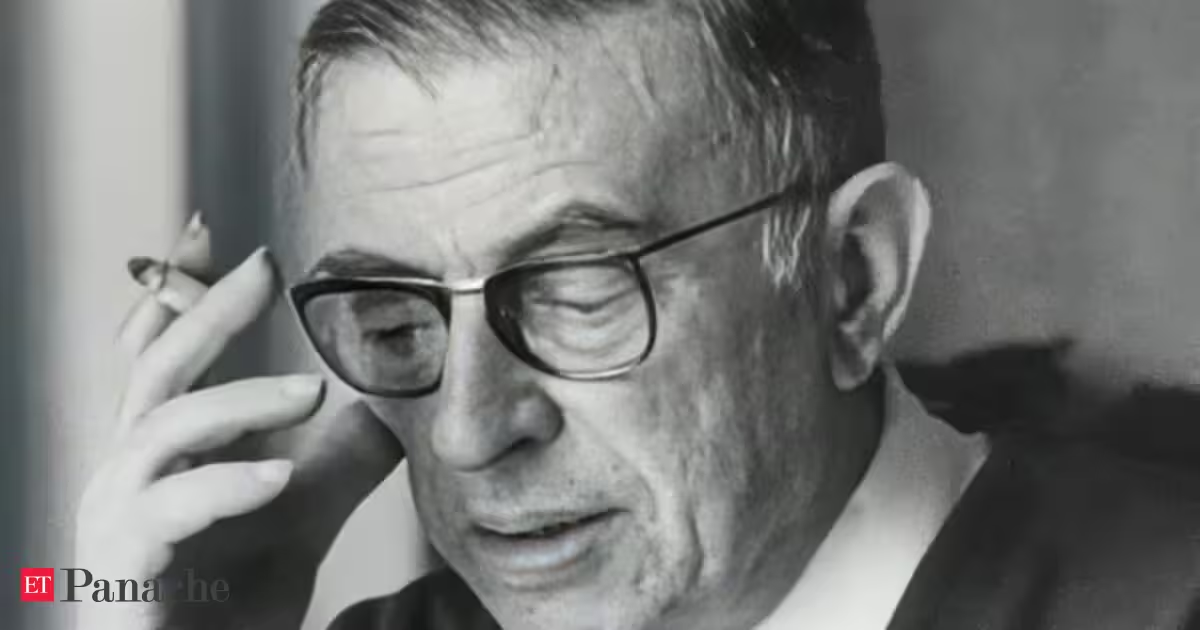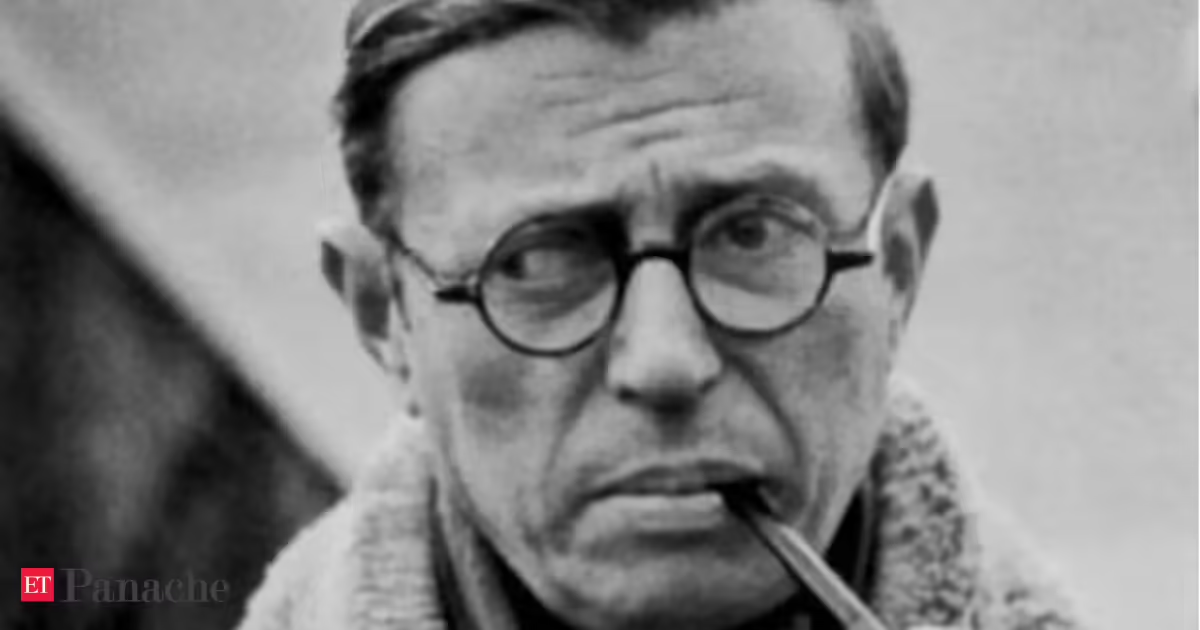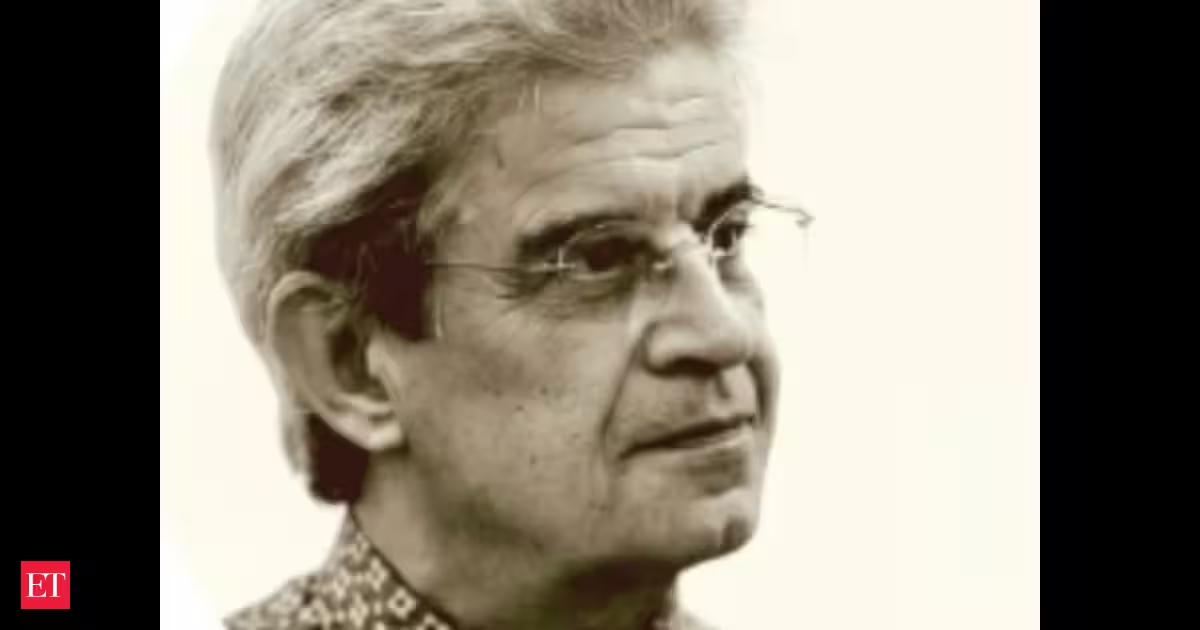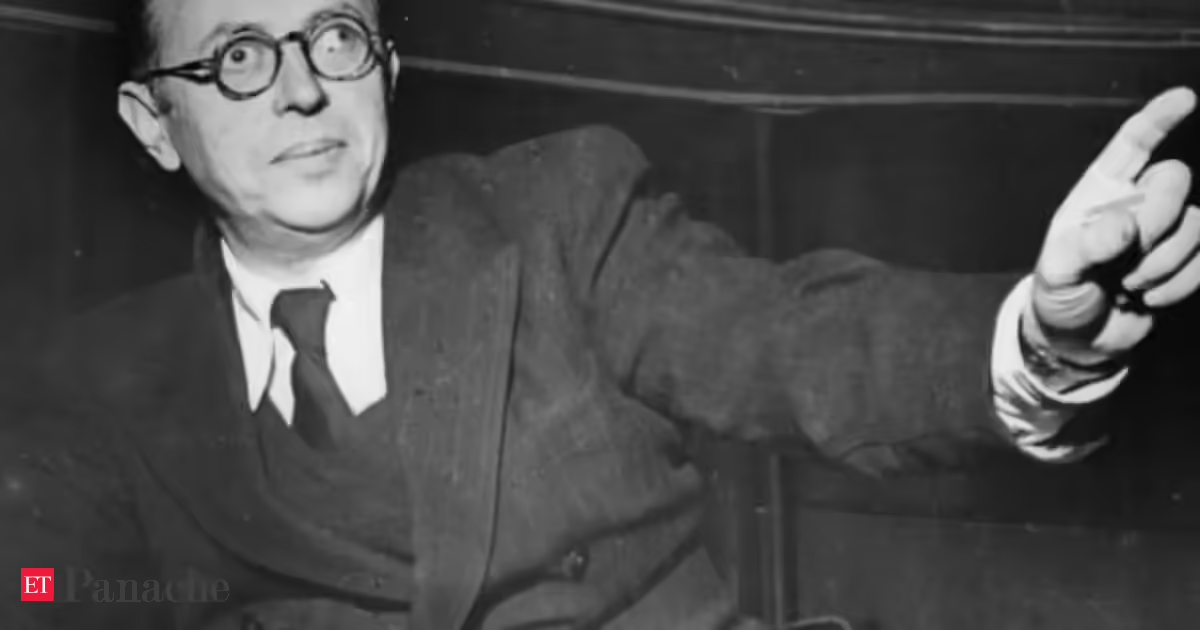
Quote of the day by Jean-Paul Sartre: ‘It is quite a task to start loving somebody. You have to have energy, generosity, and blindness’ - French philosopher on why love is a complex feelingSynopsisFrench philosopher Jean-Paul Sartre believed love demands energy, generosity, and blindness. His novel Nausea explored existential dread and the human condition. This idea, which has been used as today's quote of the day, remains relevant today, challenging modern dating's focus on risk avoidance. True intimacy requires faith and a choice to embrace the unpredictable human experience.Jean-Paul Sartre's quote of the day captures the beautiful, exhausting friction of loving someone. (Image - Getty Images)Falling headfirst into a deep, meaningful connection with someone is rarely a smooth, effortless journey. It is a thrilling yet terrifying leap into the unknown, demanding a profound emotional investment, a willingness to give without reservation, and a certain degree of deliberate vulnerability that defies strict logic. Navigating these raw human attachments requires us to occasionally quiet our rational minds and simply trust the freefall. French philosopher Jean-Paul Sartre once echoed a similar sentiment in his famous 1938 existentialist novel, Nausea, which we will talk about in today’s quote of the day.Jean-Paul Sartre’s quote of the day goes like this: ‘It is quite a task to start loving somebody. You have to have energy, generosity, and blindness’. It captures the beautiful, exhausting friction that defines what it truly takes to invite another soul into your world. Jean-Paul Sartre’s 1938 masterpiece Nausea delivers a raw, psychological excavation of human existence through the private journals of Antoine Roquentin, a solitary scholar living in the dreary, invented French port town of Bouville. Nominally there to research the life of an 18th-century aristocrat, the Marquis de Rollebon, Roquentin instead finds himself hijacked by a creeping, visceral dread, becoming hyper-aware of the sheer randomness of the physical world, realizing that everything around him—and including him—exists without rhyme, reason, or permission.This overwhelming realization manifests as a literal physical sensation. This persistent state of unease serves as a profound symbol of a soul waking up to its own isolation. As Roquentin drifts through his days, his friction with the world is highlighted by two distinct figures: his estranged former lover, Anny, whose presence emphasizes the bittersweet decay of past connections and the impossibility of freezing time, and the Self-Taught Man, an eccentric local socialist attempting to read every book in the library alphabetically, embodying the futile human desperation to impose artificial order onto chaos.Through these fractured interactions and solitary spirals, the text dives headfirst into foundational existential battlegrounds: the burden of total personal autonomy, the pain of alienation, and the dizzying void left behind when societal illusions shatter. It strips away the comforting myth that the universe owes us a purpose, leaving the reader staring directly into the blank canvas of reality. The book challenges us to stop looking for pre-packaged meaning and instead muster the courage to construct our own significance through deliberate, authentic action in an otherwise indifferent world.Quote of the day by Jean-Paul Sartre: Deeper meaning and modern relevance Jean-Paul Sartre’s assertion that love demands "energy, generosity, and blindness" dismantles the romantic myth of effortless romance. In its deeper meaning, the French philosopher frames love as a deliberate, radical project rather than a passive feeling. It requires the "energy" to sustain vulnerability, the "generosity" to prioritize another’s freedom, and a selective "blindness"—a conscious choice to overlook flaws and leap across the terrifying abyss of uncertainty.This perspective holds striking modern relevance in today's digital age. In a hyper-analytical culture dominated by dating apps, algorithms, and defensive "red flag" spotting, people often overthink connections to avoid risk. Sartre reminds us that love cannot be calculated or optimized. True intimacy requires an act of faith—a willingness to switch off our rigid logic and choose the messy, unpredictable human experience of genuinely choosing someone else.More about Jean-Paul SartreFrench philosopher, novelist and public intellectual Jean-Paul Sartre was born in Paris in 1905 and went on to become one of the most influential thinkers of the 20th century. Widely associated with existentialism, he explored themes of freedom, responsibility and the human condition through both philosophy and literature. His best-known philosophical works include Being and Nothingness and Existentialism Is a Humanism, while his literary legacy spans acclaimed novels such as Nausea and The Wall, along with celebrated plays including No Exit and Dirty Hands. In recognition of his contributions to literature, he was awarded the Nobel Prize in Literature in 1964, though he famously refused the honour. Sartre died in Paris on April 15, 1980, at the age of 74 due to pulmonary edema.Read More News on...morelessRead More News on...moreless
Quote of the day by Jean-Paul Sartre: ‘It is quite a task to start loving somebody. You have to have energy, generosity, and blindness’ - French philosopher on why love is a complex feeling
French philosopher Jean-Paul Sartre believed love demands energy, generosity, and blindness. His novel Nausea explored existential dread and the human condition. This idea, which has been used as today's quote of the day, remains relevant today, challenging modern dating's focus on risk avoidance. True intimacy requires faith and a choice to embrace the unpredictable human experience.
774 words~4 min read