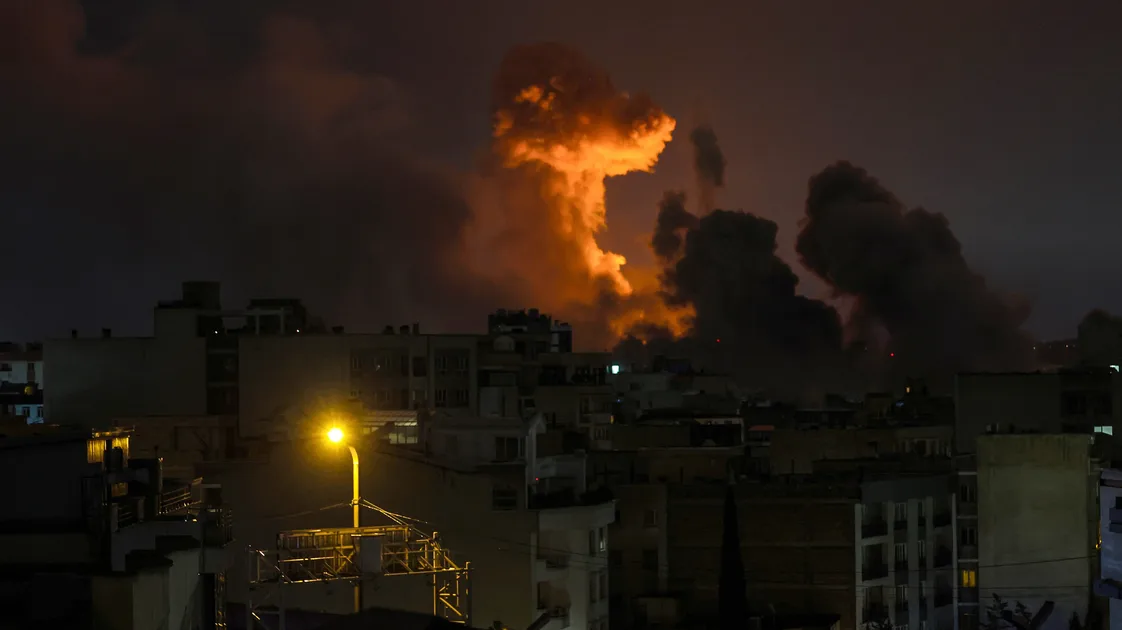
Donald Trump’s failure in the Strait of Hormuz has important lessons for America’s allies. They should be careful to learn the right ones.Lessons from HormuzThe neoconservative commentator Robert Kagan, who spent much of his career urging the United States on to war in the Middle East and beyond, warned last month of the calamitous consequences if Donald Trump’s adventure in Iran should end in failure. He argued that although the defeats suffered by the US in Vietnam and Afghanistan were costly, they did no lasting damage to Washington’s position, whereas failure in the present confrontation would bring irreparable harm.“Far from demonstrating American prowess, as supporters of the war have repeatedly claimed, the conflict has revealed an America that is unreliable and incapable of finishing what it started. That is going to set off a chain reaction around the world as friends and foes adjust to America’s failure,” he wrote in The Atlantic. “America’s allies in East Asia and Europe must wonder about American staying power in the event of future conflicts. The global adjustment to a post-American world is accelerating. America’s once-dominant position in the Gulf is just the first of many casualties.”The memorandum of understanding to be signed by the US and Iran in Geneva on Friday will open a 60-day window for negotiations on Tehran’s nuclear capability, the unfreezing of its assets and the unwinding of sanctions. The text has not been published but no reports have suggested that it addresses two of Washington’s other stated war aims: the disabling of Iran’s offensive missile capability and the disarming of its proxies in Hizbullah and Hamas.Tehran has agreed to reopen the Strait of Hormuz to shipping and the US will lift its naval blockade on the strait, although the two sides dispute whether the Iranians will be able to charge “fees” for passage through it in future. It doesn’t really matter strategically because Iran has demonstrated that it can close the strait when it chooses and the US has shown itself unwilling or unable to force it open.Within hours of the American and Israeli attacks on Iran at the end of February, Washington’s allies in the Gulf discovered that hosting US bases, far from keeping them safe, made them targets for attack from Tehran. Soon afterwards, they found out that the expensive missile defence systems they had bought from US arms manufacturers were often inadequate in the face of cheap Iranian drones and other missiles.Washington’s friends in East Asia watched as the US moved more than 2,000 marines from Japan to the Middle East and removed a number of THAAD advanced missile defence launchers from South Korea. The moves reinforced a growing sense in the region that the US security guarantee there was increasingly shaky and that America’s allies needed to become more self-reliant.Japan’s prime minister, Sanae Takaichi, has courted China’s anger in recent months by authorising a military build-up unprecedented since the second World War and changing the law to permit the export of weapons. Japan has agreed to sell warships to Australia and the Philippines and has started talks with Indonesia about a similar deal as it builds a regional network independently of Washington.The Trump administration is encouraging these developments and at the Shangri-La security conference in Singapore last month defence secretary Pete Hegseth praised the growing self-reliance of Washington’s Asian partners, contrasting them with its European allies. This is despite ballooning defence budgets in western Europe that are piling up debt and diverting resources from public services like health and education, and shifting investment away from more productive economic sectors.Washington ignored its allies’ interests as it pursued the war against Iran, bullying and threatening partners who refused to allow their territory to be used for an illegal campaign. As they become less dependent on the US for security, these allies are also likely to become more autonomous politically, economically and diplomatically.Kagan suggests that the Gulf Arab states will conclude that, with the US unable or unwilling to protect them, their best option for security lies in seeking a diplomatic accommodation with Tehran, something he laments. But their reasoning is the right one for Washington’s European and Asian allies too because it is only through an agreed security architecture that they will be able to reduce and manage conflict and create a stable peace.One of the lessons of the war in Iran is that overwhelming military power is not always enough to prevail in a world where the nature of global competition has changed. By targeting the energy flows and supply chains on which the global economy depends, Iran was able to resist the most advanced military power in the world and to enter negotiations in a stronger position than before the war began.Trump’s threat to annex Greenland was a wake-up call sufficiently deafening for most European leaders to conclude that they need to reduce their dependency on the US, and the course of the Iran war will reinforce that conviction. But by focusing solely on rearmament, they risk missing the bigger picture in which economic strength and bold diplomacy are just as crucial to regional security.Please let me know what you think and send your comments, thoughts or suggestions for topics you would like to see covered to denis.globalbriefing@irishtimes.com
America’s allies must learn lessons from Trump’s failure
Global Briefing: Washington ignored allies’ interests in its illegal Iran war, and they are now likely to become more independent from the United States
873 words~4 min read