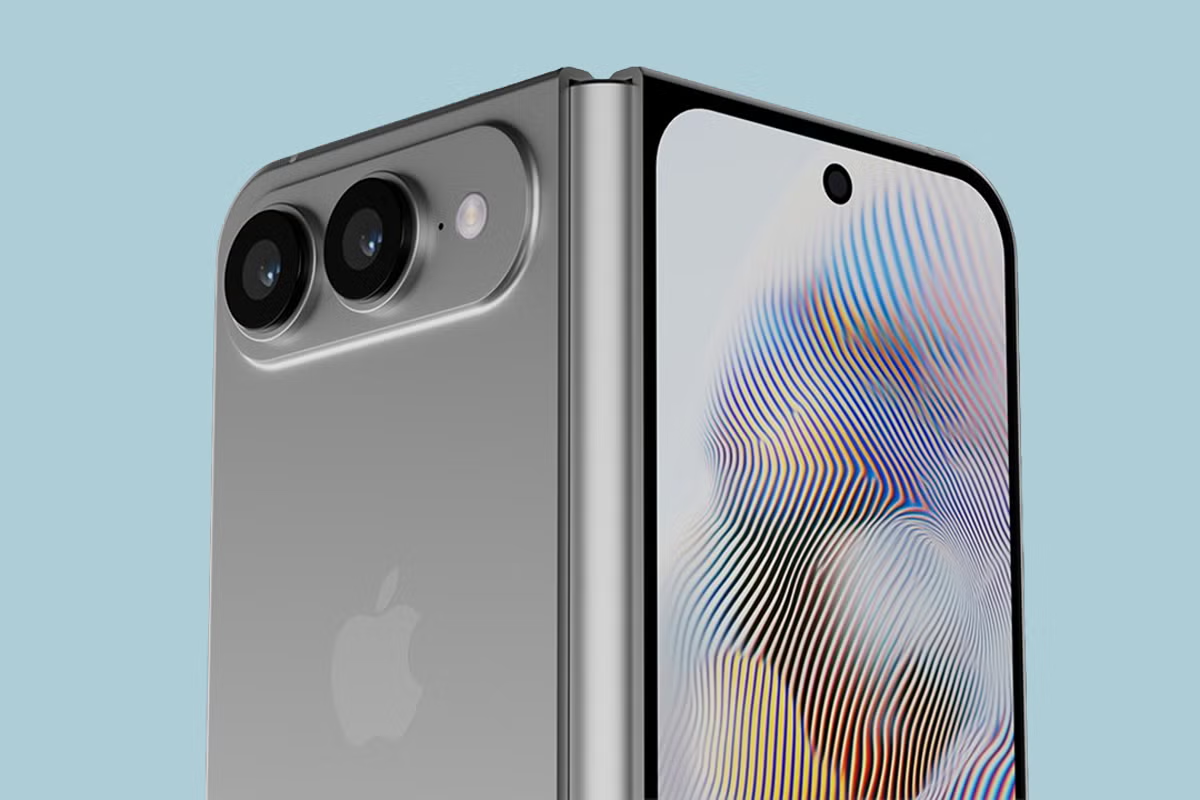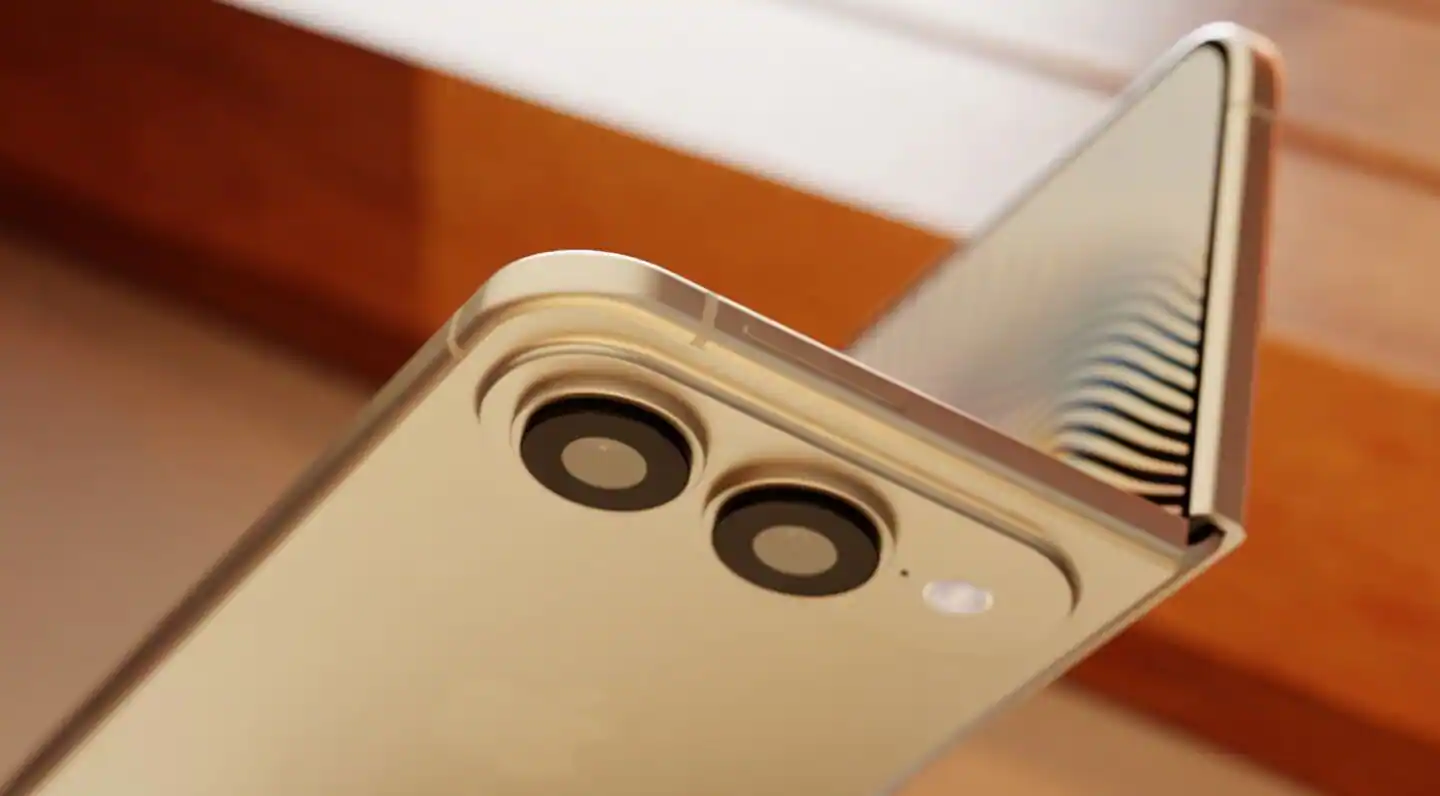
Apple has spent seven years turning its foldable into the most-rehearsed unreleased product in consumer technology. The newest wobble arrived from a lens maker in Taiwan, on an earnings call, in a sentence that left out the word iPhone entirely. Largan Precision's chief executive, Lin En-ping, told investors that the December quarter would run busier than usual on customer scheduling, with some new products shipping in the third quarter and others pushed to early next year. He named no client and no device. Analysts did the naming for him, and pinned the slipped item to Apple's first folding phone.That is the whole basis for the latest round of "the iPhone Fold is delayed to 2027" coverage. A component supplier's general remark, read through by people watching Apple's calendar. It belongs in the story. It also deserves the asterisk that most of the headlines drop, because the word delay is carrying two different dates at once, and the evidence splits cleanly along that seam.Key TakeawaysA Largan Precision earnings comment, not an Apple statement, sparked the newest iPhone Fold (also called the iPhone Ultra) 2027 talk. Largan named no product; analysts made the link.The strongest reporting splits on which date moves. Bloomberg's Mark Gurman holds to a fall-2026 reveal; Ming-Chi Kuo and supply-chain sources point to volume shipments slipping toward 2027.A reveal alongside the iPhone 18 Pro in September, followed by a thin, staggered on-sale into late 2026 or 2027, lets both camps be right.The device stays unannounced. Reported specs: a book-style foldable, roughly 7.8-inch inner screen, Apple A20 Pro chip, Touch ID in the power button, dual rear camera, and a price above $2,000 — the dearest iPhone yet.Samsung opens first. The Galaxy Z Fold 8 is lined up for July 2026, ahead of whatever Apple shows.What did Largan Precision actually say?Largan said almost nothing about Apple, which is the point. The company supplies camera lenses across the smartphone industry, and its CEO framed the comment as routine scheduling: a heavier fourth quarter, some launches in the third quarter, the rest carried into early next year. The leap from that to "the foldable iPhone is delayed" is an inference, and a reasonable one given Largan's place in the chain, yet it remains a reading rather than a confirmation. Treat it as one more data point in a long argument, not the verdict that ends it.The argument it joins has been running since late 2025, and it keeps the same shape. A supply-chain signal suggests trouble; Gurman, the reporter with the cleanest record on Apple's plans, pushes back; the date holds. Back in early April, Nikkei Asia reported engineering setbacks more tangled than expected and suppliers warned of possible slippage, and Apple component stocks sold off on the news. Two days later Gurman called that account off base in his newsletter, holding the foldable to a fall-2026 debut beside the iPhone 18 Pro. Both reports still stand. Neither side has folded.The word "delay" hides two different datesHere is the distinction the coverage keeps collapsing. A product reveal and the day a customer carries one out of a store are separate events, and for a first-generation foldable built on a new screen, a new hinge and a new assembly process, the gap between them can stretch. Think of a film that premieres to a packed house in September and reaches most cinemas months later: the marquee goes up long before the wide release. Apple has run exactly that play before, teasing hardware as a "coming soon" closer and shipping it on its own clock.Read through that lens, the camps stop contradicting each other. Gurman talks about the marquee — the September stage, the trailer, the moment John Ternus holds the thing up. Kuo talks about the wide release. His position has been consistent: Apple stays on course to announce in the back half of 2026, while smooth shipments may hold off until 2027, with supply tight through the end of this year even as demand runs hot. A reveal in autumn and a real on-sale that trickles into 2027 satisfies both forecasts at once. The "delay," in other words, is most likely a delay of availability, and the louder framing of a scrapped or year-shifted launch outruns what the supply chain has actually signalled.Six weeksThat is the buffer Apple is working with, and it is the tell. Supply-chain reporting has the foldable's mass production starting around August, against Apple's usual mid-to-late-September on-sale — roughly six to seven weeks to spin up a first-run line for the most mechanically complex phone the company has built. For a mature iPhone, that window is comfortable. For a debut foldable with a hinge tooled from scratch and yields still climbing, it is the automotive equivalent of rolling a clean-sheet engine off the line and into a showroom in the same quarter, hoping the tolerances hold at volume.The panel maths tightens it further. Samsung Display is reported to be preparing around 11 million foldable screens for Apple across 2026 — a real number, and a fraction of mainline iPhone runs. Kuo's own shipment estimate sits lower, at 3 to 5 million units in the first year, with a second generation possibly reaching 20 million in 2027. Put a thin production ramp next to constrained panel supply and a staggered release writes itself: the iPhone 18 Pro and 18 Pro Max in September, the foldable easing in behind them, pre-orders capped, shipping estimates long. The factory floor, more than any executive decision, sets the date you can buy one.Why has the iPhone Fold taken seven years?Two problems, the same two, year after year. The first is the crease. Every book-style foldable to date carries a visible valley where the screen bends, and Apple has treated a clean fold as the price of entry. Reporting through the spring suggested a trace of the crease survives even on Apple's panel, which matters because erasing it was half the reason for the long wait. The fix reads as a materials job rather than a hinge job: Kuo describes Apple chasing crease elimination regardless of cost, stacking a laser-drilled metal support plate from Samsung Display, stress-dispersing parts from the Korean supplier Fine M-Tec, and ultra-thin glass from Lens Technology over Corning material, with production targets reported near a crease depth under 0. 15mm and a fold angle under 2.5 degrees. One leaker went further, calling the result visually creaseless even after long use. That claim holds until reviewers torque the thing open a few thousand times themselves.The second problem is the joint. A hinge that creaks after a season of folding is the kind of detail Apple treats as a stop-ship, and reports through May had production stalling over exactly that, with newer leaks pointing to a liquid-metal hinge and a vapour chamber tucked into a chassis around 4. 5mm thin. Thermals and mechanics fighting for millimetres. Something gave on the spec sheet, too: Face ID steps aside for Touch ID in the power button, the same part Apple ships on the iPad Air and iPad mini, because the TrueDepth array runs out of room in the fold. For a daily iPhone Pro user, glancing to unlock gives way to a thumb on the side rail. That is a concession, plainly, and Apple made it to hit the thinness target.What two thousand dollars buysThe shape of the device is settled across sources, even with Apple silent. A book-style foldable in the Galaxy Z Fold mould, opening from a roughly 5.5-inch cover screen to a near-7.8-inch inner display at a squarish 4:3 ratio, run by the Apple A20 Pro on TSMC's 2nm process — the same chip generation as the iPhone 18 Pro — with about 12GB of memory.ElementReported spec (Apple has confirmed none)DesignBook-style foldable, Samsung Galaxy Z Fold rivalInner display~7.8 in, ~2,713 x 1,920, 4:3Outer display~5.5 in, ~2,088 x 1,422ChipApple A20 Pro, TSMC 2nm, ~12GB RAMBiometricsTouch ID in the power buttonRear cameras48MP wide + 12MP ultrawideThinness~4. 5mm unfoldedStorage256GB / 512GB / 1TBPrice (est. )Above $2,000; analyst range $1,800-$2,500The camera stops at two lenses. Gurman and Kuo agree, independently, on a 48-megapixel wide paired with a 12-megapixel ultrawide, and a telephoto sits this generation out for want of depth in the body. Pricing is the one number every analyst floats and none can pin: Kuo and Gurman both land in the $2,000-to-$2,500 band, UBS argues lower at $1,800-to-$2,000, Fubon higher near $2,400. Wherever it settles, it clears every iPhone Apple has ever sold.Samsung opens firstApple walks onto this stage seven years late, and the rival studio has already booked the earlier date. Samsung's Galaxy Z Fold 8 is set for July 2026, weeks ahead of anything Apple shows, and it arrives with a 200-megapixel main camera, seven generations of foldable software behind it, more than a thousand apps tuned for the larger canvas, and a lower entry price. Global foldable shipments reached 27.6 million units in 2025, up by a quarter on the year, and the category is tracking toward roughly $38.68 billion in 2026. Apple wanted a top-three slot in that field this year. On the current arithmetic, that hope reads early.The calendar bites Apple twice over. Hold the foldable back and the September 2026 show leans on the iPhone 18 Pro pair alone, with the standard iPhone 18, the next iPhone Air and the iPhone 18e carried into spring 2027 under Apple's split-launch plan — a thinner billing than Apple likes to open with. Push the foldable into 2027 and it crowds the slate Apple has been saving: the iPhone's twentieth year, where an iPhone 20 Pro is meant to carry the headline. Two debut acts on one marquee, each wanting the closing slot.Priced above every iPhone India sellsIndia gets the squeeze last and pays the most for it. No leaked rupee figure exists, and inventing one serves nobody, but the floor is easy to place: a foldable priced above $2,000 globally lands above the iPhone 17 Pro Max in India, which makes it the dearest iPhone the country has listed. Stack constrained first-year supply on top, and India sits well back in the allocation queue behind the United States, China and Apple's other priority markets — the pattern that has shaped every tight iPhone launch here. A September reveal an Indian buyer watches on a livestream, and a unit that reaches shelves in Mumbai weeks or months after, is the realistic shape of it.What the foldable does change in India is the ceiling. Samsung has had the premium fold segment here to itself, the Galaxy Z Fold selling in low numbers at high margins to a buyer who wants the format more than the price tag. An iPhone in that bracket gives that buyer a second name to consider, and it drags the whole conversation about what a phone can cost upward. The volume will stay small. The signal will travel far.Strip away the supplier whisper and the analyst telephone game, and the load-bearing fact is the one Apple has yet to say a word about: how many of these it can actually build before the September lights come up. Gurman's reveal date and Kuo's ship date are both probably right, describing different moments. The premiere looks close to locked. The wide release runs on a factory that is still finding its rhythm, and until Apple is on the stage with the thing in its hand, the date you can own one stays a forecast wearing the costume of a fact.Frequently asked questionsIs the iPhone Fold officially delayed to 2027?No official delay exists, because Apple has not announced the phone or any date. The 2027 talk traces to a Largan Precision earnings comment that named no product, read by analysts as the foldable. Bloomberg's Mark Gurman still reports a fall-2026 reveal, while Ming-Chi Kuo expects volume shipments to slip toward 2027.What is the difference between the iPhone Fold and the iPhone Ultra?They are the same unannounced device. Reporting has mostly settled on "iPhone Fold" as the working name, "iPhone Ultra" is the strong alternate some leakers prefer, and "iPhone Ultra Fold" appears in social posts. Apple has confirmed none of the names.How much will the foldable iPhone cost?Estimates cluster above $2,000, with analyst figures running from roughly $1,800 to $2,500 across 256GB, 512GB and 1TB tiers. That makes it the most expensive iPhone Apple has sold. An Indian price would sit above the iPhone 17 Pro Max, though no rupee figure has leaked.Does the iPhone Fold have Face ID?Reporting says Touch ID replaces Face ID, built into the power button in the same way as the iPad Air and iPad mini. The TrueDepth array needed for Face ID runs out of room inside the thin folding chassis. Both Mark Gurman and Ming-Chi Kuo back this independently.When will the iPhone Fold launch in India?Apple has set no date for any market. If a global reveal lands around September 2026, India usually follows after the priority markets, and constrained first-year supply would push Indian availability later still. A reveal in autumn with an Indian on-sale weeks or months behind is the realistic expectation.end of article
Apple May Reveal The iPhone Fold In September, Ship It In 2027
Rumors are swirling around Apple's highly anticipated foldable phone, the iPhone Fold, hinting at a potential launch delay to 2027. A recent statement from a component supplier has ignited debate on whether this impacts the unveiling or the sales timeline. Analysts predict a grand reveal in September 2026, with the device gradually hitting shelves into the following year.
2,182 words~10 min read