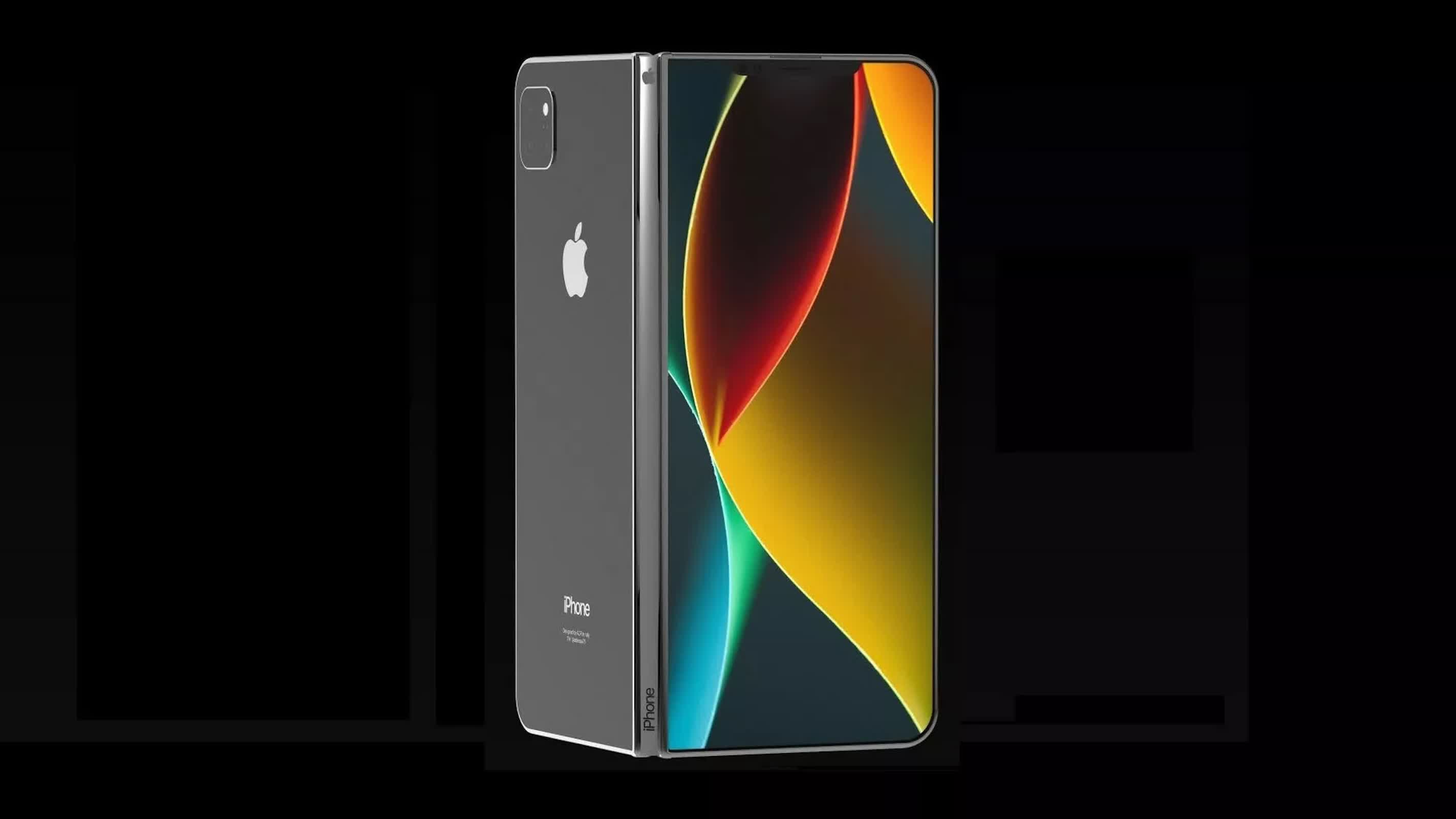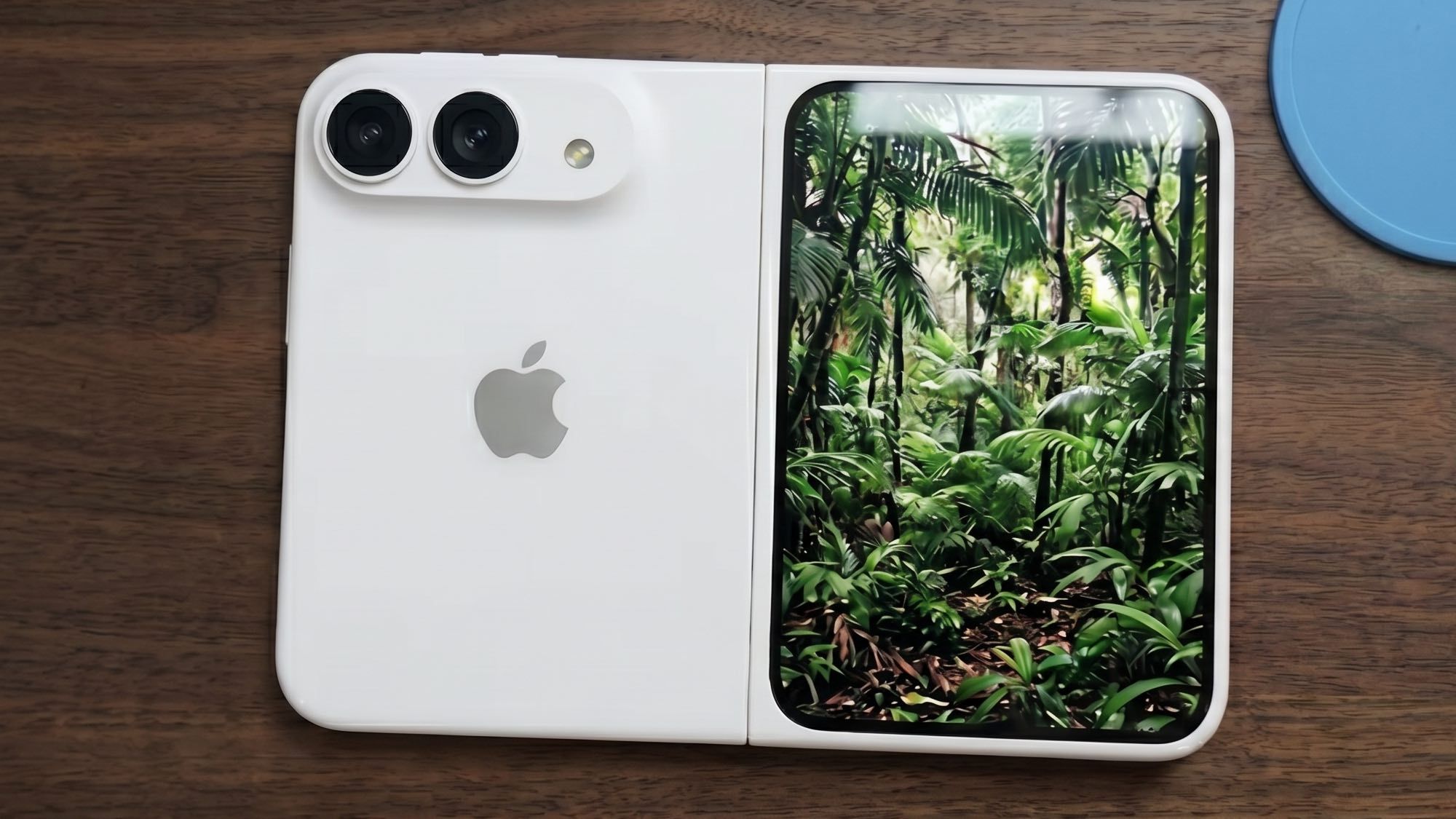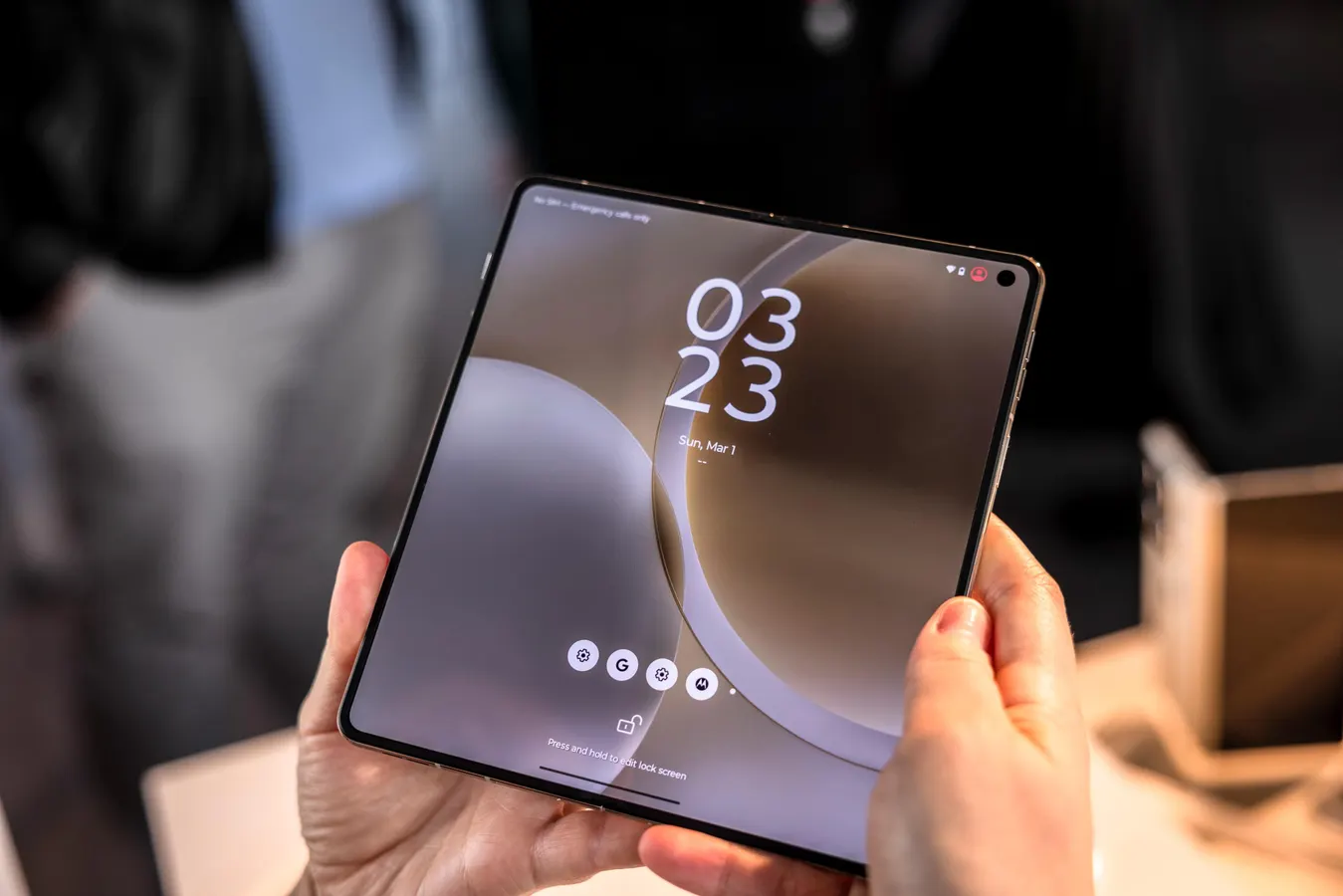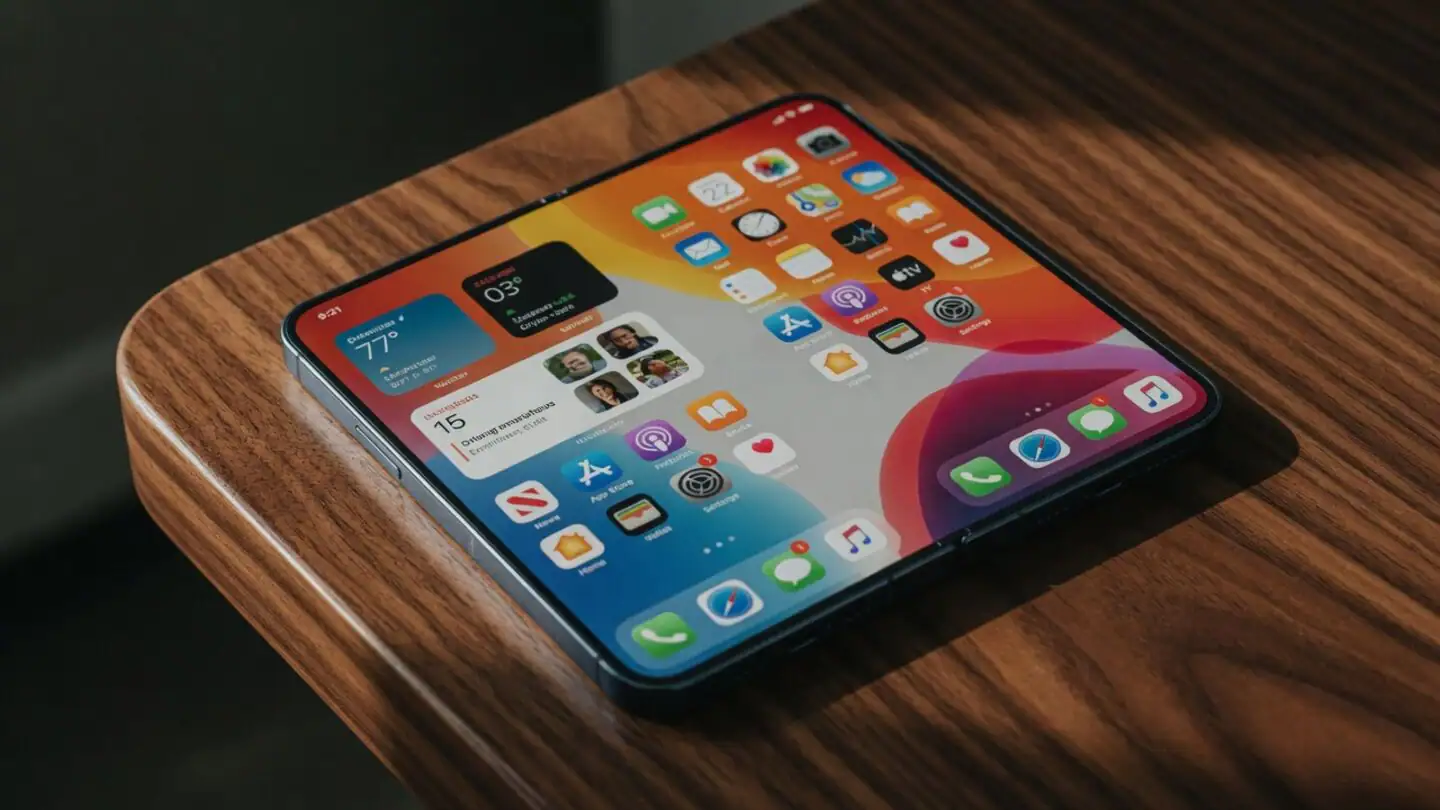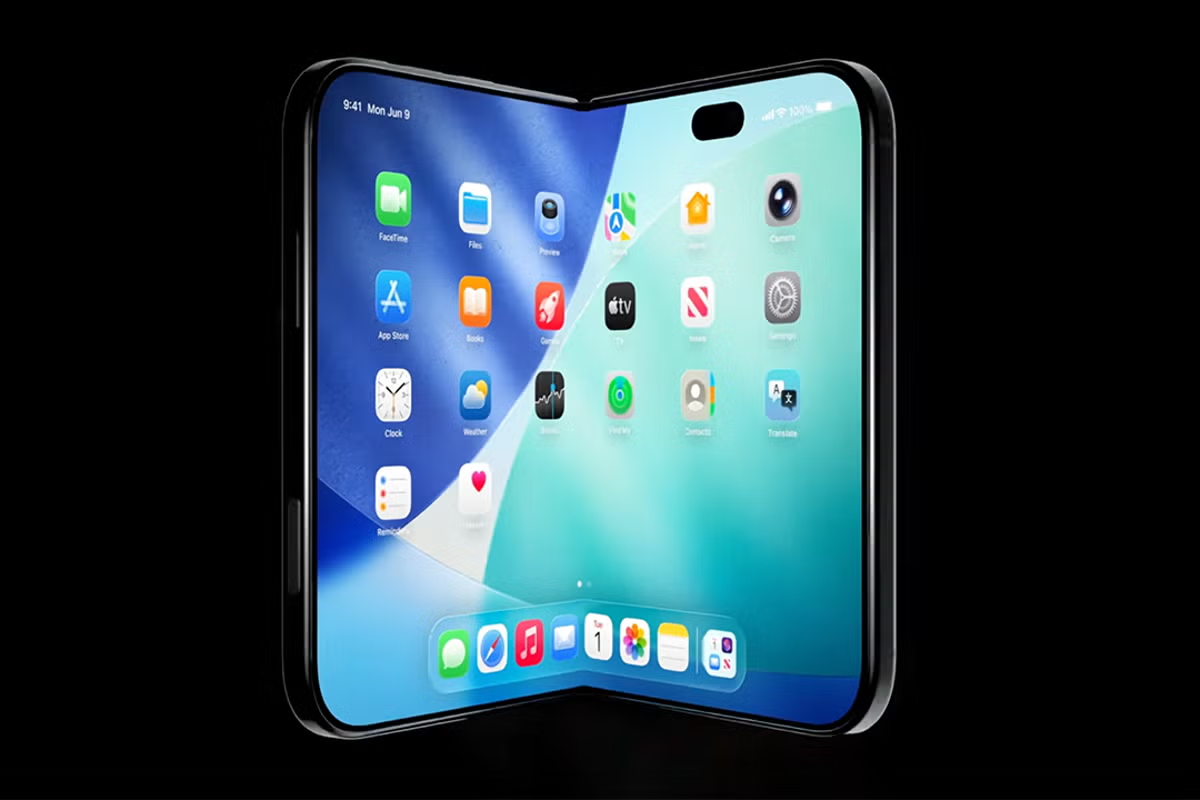
Apple's first foldable iPhone is reported to launch in September 2026 at a price above $2,000, and the most interesting number attached to it belongs to nobody's spec sheet. Supply-chain forecasts for the device have been revised upward to approximately 10 million units for 2026 and as high as 20 to 25 million across 2027, per analyst Ming-Chi Kuo and reporting from Nikkei Asia — trajectories that, if accurate, mean the component orders now outrun what Apple itself is understood to have planned for.Sit with that for a second. The company famous for knowing what you want before you do may have underestimated the appetite for its own product. That is the story. The hinge is merely the hardware it swings on.One flag before the fun begins, because this publication deals in verified things: every figure in this piece comes from analysts, supply-chain reports and outlets with named track records, and each carries its attribution like a number plate. Apple, as is tradition, has confirmed nothing, announced nothing, and would sooner reveal its executives' salaries than a roadmap. Treat everything below as the best available reporting on 4 July 2026, and expect details to shift before any keynote.Key TakeawaysApple's first foldable iPhone — reported under names including "iPhone Fold" and "iPhone Ultra" in coverage — is expected in September 2026 alongside the iPhone 18 Pro models, per multiple supply-chain reports.Shipment forecasts have moved up, toward approximately 10 million units for 2026 and 20 to 25 million for 2027, per Kuo's notes and Nikkei Asia's supply-chain reporting. Early projections were meaningfully lower.Reported hardware: a book-style fold, roughly 7.8-inch inner and 5.5-inch outer displays, a crease-minimising hinge, Touch ID instead of Face ID, titanium in the build, and Samsung Display as the reported panel supplier.Price expectations sit above $2,000 in most analyst notes, which conditional arithmetic puts near Rs 1.9 to 2.3 lakh for India before Apple's actual pricing decisions.The wider reported roadmap: a split iPhone 18 launch (Pro and Fold in autumn 2026; standard 18 and 18e shifted to spring 2027), under-display Face ID on the Pro, the A20 on TSMC's 2nm process, and a 20th-anniversary "Glasswing" iPhone whispered for 2027.India context: Samsung dominates the local foldable segment, iPhone assembly in India keeps scaling, and the Fold's India price will decide whether this is a product or a poster here.What is Apple actually planning for September 2026?Picture the launch calendar as a setlist, because Apple has reportedly torn up the old one. For nearly a decade the September show followed the same running order: four iPhones, one stage, every tier from budget to bragging rights served in a single evening. The reported plan for the iPhone 18 cycle splits the album across two releases. September 2026 gets the headliners — iPhone 18 Pro, 18 Pro Max, and the Fold — while the standard iPhone 18 and the cheaper 18e are reported to move to spring 2027, a staggered strategy first surfaced by supply-chain reporting and repeated across outlets since.Why split? Follow the incentives, as a certain podcasting interrogator of tech power would insist. A foldable priced above $2,000 needs oxygen. Sharing a stage with a $799 sibling invites the entire audience to do unhelpful arithmetic in real time. Separate the launches and each product gets its own news cycle, its own quarter, and its own chance to headline. It also, conveniently, smooths Apple's shipping calendar across the year, which the operations people love and the accountants adore.So the September 2026 bill, per current reporting: two Pro phones carrying the biggest camera and identity-tech changes in years, and one folding debutante wearing the highest iPhone price ever attached to a mainstream launch. Apple has confirmed none of it. The supply chain, which has to build the things, keeps saying it anyway.How did the shipment forecasts overtake Apple's own plan?Here is the heart of the story, and it deserves the slow retelling.When credible reporting on the foldable programme thickened through 2025, the early shipment projections were modest by Apple standards. Initial supply-chain estimates circulated in the single-digit millions for the first year — cautious numbers befitting a $2,000-plus experiment in a category that has managed, worldwide, to remain a niche. Foldables have hovered around a low single-digit share of the global smartphone market for years, per the tracking firms, and even Samsung, seven generations deep, sells them in quantities a single iPhone colour variant would sneer at.Then the orders started talking. Component commitments, panel volumes and hiring patterns are the industry's tell, the way engine orders once revealed a carmaker's real production plans long before any press release. Through late 2025 and into 2026, the reported forecasts stepped up: Kuo's notes moved toward approximately 10 million foldable iPhones for 2026, and Nikkei Asia's supply-chain reporting pointed to 20 to 25 million units across 2027 as suppliers geared for a second-year ramp. Set that against the earliest circulated figures and the revision is the news: the people paid to build this phone are provisioning for demand beyond what the initial plan assumed.A grain of salt, offered honestly: analyst forecasts are forecasts, supply-chain tea leaves have scalded readers before, and initial-versus-revised comparisons depend on which early number you accept as the baseline — the reporting varies, and this piece refuses to average conflicting figures into fake precision. What can be said with confidence is directional and multi-sourced: the trajectory of expectations has gone one way, upward, and the beneficiaries named in the reporting — Samsung Display on panels, hinge suppliers, Foxconn on assembly — are provisioning accordingly.For scale, consider what 20-odd million units would mean. The entire global foldable market has been running at roughly 20 million units a year, per the tracking firms' published estimates. The reported 2027 forecast for Apple's single model approaches the size of the whole category today. That is either analyst exuberance or the sound of a market about to double. Possibly both.What will the iPhone Fold actually be?Assemble the consensus from Kuo's notes, Bloomberg's reporting and the Korean supply-chain press, and a remarkably consistent machine emerges. Book-style fold, opening like a hardback rather than flipping like a compact. A roughly 7.8-inch inner display and a 5.5-inch outer one, which in practice means an iPad mini that lives in your pocket and a slightly narrow iPhone when shut. Reported thickness figures hover in the astonishing range: something like 4. 5mm to 4. 8mm unfolded per Kuo's circulated notes, which would make each half thinner than anything Apple currently sells. Titanium features in the build reports. Samsung Display is repeatedly named as the panel supplier, on claims of a crease-suppression engineering effort that has become the programme's obsession.Two reported decisions will start arguments, and both are worth understanding rather than mocking.First, Touch ID returns, per multiple reports, because Face ID's module refuses to fit the thinness budget. The fingerprint reader moves to the side button, exactly as on the iPad Air. Purists will howl. Engineers will nod. A folding phone lives and dies by its z-height, and every millimetre spent on a TrueDepth array is a millimetre added to the brick in your pocket. This is the same trade a sports-car maker makes when it deletes the back seats: you mourn the feature until you feel the result.Second, the camera array is reported as restrained — a dual rear system rather than the Pro's triple stack, again in service of thinness. The Fold, in every reported decision, is a machine engineered around one idea: the fold must feel inevitable, and everything else queues behind it.Now, the honest caveat that separates journalism from fan fiction: every specification above is reported rather than confirmed, several details are single-source at the edges, and prototype programmes change. The consistent core — book-style, big inner screen, Touch ID, Samsung panels, north of $2,000 — has multi-source support. The decimals do not. Hold the decimals loosely.Why did Apple wait seven years?Because waiting is the entire Apple playbook, and the history says so with embarrassing consistency.Rewind the tape. The iPod arrived in 2001, years after the first MP3 players, and buried them. The iPhone showed up in 2007 into a world already carpeted with smartphones, and redefined the word. The Watch was late to wearables, the AirPods late to wireless audio, and each one now owns its category's profit pool. Apple's strategy has never been arriving first. It is arriving after everyone else has published their mistakes, then shipping the version normal humans actually want. In music terms, Apple lets the garage bands invent the genre, then walks in and cuts the definitive record.Samsung, meanwhile, has spent seven generations doing the expensive pioneering: the folding screens that scratched, the hinges that gritted, the creases that caught the light at dinner parties, and then, credit where due, the steady annual grind that fixed most of it. The Galaxy Z Fold line matured into a genuinely good product line. What it never became is a mainstream one. Foldables stayed a low single-digit sliver of world smartphone shipments, per every tracking firm's published data, a category adored by its owners and ignored by everyone else.That is the door Apple walks through. The engineering risk has been de-risked by a rival's seven-year apprenticeship, the supply chain has matured to the point where the pioneer's own display division reportedly supplies the newcomer, and the remaining problem — convincing a hundred million normal people that a folding phone is a normal thing to buy — happens to be the one problem Apple is better at than any company alive. The car industry has a name for this manoeuvre: let the privateers develop the category, then enter the works team.And savour the irony at the centre of it, because it is exquisite. Samsung Display is reported to be the exclusive panel supplier for the device built to end Samsung Mobile's foldable monopoly. One half of the chaebol profits from every unit of the phone that attacks the other half. Somewhere in Suwon, a spreadsheet is having an identity crisis.What happens to Samsung and the foldable market?Short version, per the forecasting firms: the market stops being a niche or the thesis collapses, and there is limited middle ground.IDC and Counterpoint's published foldable outlooks have described a category growing from roughly 20 million annual units toward meaningful multiples of that by the late 2020s, with Apple's entry cited in the reporting as the single biggest accelerant. The logic is brutally simple. Foldables' problem was never desire; store demos have charmed people for years. The problem was permission. A folding phone read as an enthusiast's gamble, a first-generation risk perpetually in its first generation. Apple's entry, at whatever price, functions as the industry's permission slip. It declares the category finished cooking.For Samsung this cuts both ways, and both edges are sharp. The painful edge: its most differentiated product line inherits a competitor with a brand gravity Samsung's marketing budget cannot buy. The profitable edge: its display division reportedly sells the screens, its foldable category doubles in cultural relevance overnight, and its next Fold gets to compete on seven generations of learning against a rookie. Watch the Z Fold 8's pricing and positioning through late July's Unpacked for Samsung's real answer; the timing of this rumour cycle, weeks before that event, is its own subplot.The rest of the field reads the same weather. Chinese foldable makers get a category legitimised for free. Component suppliers get a second anchor customer. And every analyst gets to publish the easiest chart of the decade: foldable market, before Apple and after.What else sits in Apple's reported pipeline?The Fold headlines, but the reported 2026-2027 roadmap around it is dense, so here is the tour at speed, attribution intact and hedges on.The iPhone 18 Pro and Pro Max carry the biggest reported changes: under-display Face ID (the notch's long-promised funeral, per supply-chain reports), a variable-aperture main camera, and the A20 chip on TSMC's 2nm process — a node jump that matters for the on-device AI arms race more than any spec-sheet vanity. The standard iPhone 18 and 18e are reported to shift to spring 2027 in the split-launch plan. The iPhone 17e, the budget entry, already shipped this year and became quiet volume gold in markets like this one.Beyond phones, the reporting sketches a 2027 crescendo: a 20th-anniversary iPhone under the reported codename "Glasswing," described in coverage as pursuing an all-glass, curved design — the kind of object Apple builds when it wants a museum piece rather than a product. Treat that one as the rumour cycle's furthest satellite: single-thread sourcing, distant date, maximum romance. Around the edges sit the routine cadences — M5-generation Macs continuing to roll, Watch and AirPods refreshes on their annual drumbeat, and continued reporting on smart-home ambitions — none of which needs more than this sentence until the reporting hardens.Say it again, because repetition is honesty here: confirmed by Apple, all of this amounts to precisely nothing. The company's official 2026 roadmap is a blank page with a logo on it.What does the iPhone Fold mean for India?Now the part your correspondent's readers will actually feel: the rupee maths, and it stings.Start with the reported dollar figure, above $2,000 in most analyst notes, some stretching toward $2,400. Apple prices India from its own duty-inflated table rather than any currency converter, and its flagship conversions historically land heavy. Run the conditional arithmetic — clearly labelled as this author's inference rather than anything reported — and a Fold in India plausibly opens between approximately Rs 1.9 lakh and Rs 2.3 lakh, with the ceiling higher if storage tiers climb. For calibration, the iPhone 17 Pro Max already crosses Rs 1.5 lakh here, and Samsung's Galaxy Z Fold 7 established that Indian buyers will pay Rs 1.7 lakh-plus for a fold with the right badge. A two-lakh iPhone would be the most expensive mainstream phone ever sold in this country, and the queue outside Apple BKC would form anyway. Some markets buy phones. India's premium tier buys arrival announcements.The manufacturing question carries the more durable India story. iPhone assembly in India, across Foxconn and Tata's operations, has scaled year on year into an export machine, a shift this publication has tracked closely. Whether the Fold joins the India lines early, late or at all remains unreported in anything credible this correspondent has seen — first-generation, tolerance-critical Apple products have historically started in China, and the hinge's assembly demands will decide the rest. Zero verified reporting currently places Fold production in India, and any claim otherwise deserves your suspicion. The realistic India stake in year one is the demand side plus the 18 Pro production ramp; the Fold's "Assembled in India" moment, if it comes, is a later chapter.And the local competitive frame writes itself: Samsung has owned India's small, devoted foldable segment for years, with the premium market growing as financing schemes swallow ever-larger stickers. Apple's entry converts India's foldable conversation from a Samsung monologue into an actual contest, at exactly the moment India became one of Apple's fastest-growing markets. The collision is scheduled, pending one keynote.So is this Apple's next epoch or its most expensive experiment?Both cases deserve their strongest telling, and a columnist owes you a lean before the end.The bear case is respectable. Foldables have promised a mainstream breakout for seven straight years and delivered a niche seven straight times. A $2,000-plus price restricts year one to the devoted. Creases, durability anxiety and the sheer adequacy of the flat iPhone are real gravity. Forecasts of 20-plus million units rest on supply-chain enthusiasm, and supply chains have over-provisioned for Apple products before. Every one of those objections is fair.The bull case rests on one pattern with a two-decade record: Apple, arriving late, has an unbeaten streak at turning enthusiast categories into default ones, and the shipment revisions suggest the people with actual purchase orders — the panel makers, the hinge machinists, the assembly planners — are betting on the pattern repeating. Money talks quietest and truest in component orders, and the component orders keep saying bigger.The lean, stated as opinion and owned as one: the revision story convinces me more than any render ever could. Companies guess wrong about demand in both directions, but supply chains rarely tool up for phantom volume at this scale, and Apple rarely lets a category-defining stage moment slip once the machinery starts moving. September 2026 will answer everything. Until a keynote makes it real, this remains the industry's most confident rumour, reported here with every attribution intact and the crease of doubt kept, deliberately, unironed.Frequently Asked QuestionsWhen will the foldable iPhone launch?September 2026 is the timing across current supply-chain reporting and analyst notes, expected alongside the iPhone 18 Pro models. Apple has confirmed nothing, and dates in rumour cycles slip.How much will the iPhone Fold cost?Analyst notes place it above $2,000, with some estimates toward $2,400. For India, conditional arithmetic based on Apple's historical pricing suggests approximately Rs 1.9 to 2.3 lakh, a figure to treat as inference rather than fact until Apple prices it.Why are shipment forecasts rising?Component orders, reported panel volumes from Samsung Display, and assembly preparations have pushed analyst forecasts to approximately 10 million units for 2026 and 20 to 25 million for 2027, per Ming-Chi Kuo's notes and Nikkei Asia's reporting — figures above the programme's earliest circulated projections.What specs are reported for the foldable iPhone?The multi-source consensus: a book-style fold with a roughly 7.8-inch inner display and 5.5-inch cover screen, extreme thinness, titanium construction, Touch ID in the side button in place of Face ID, a dual rear camera, and Samsung Display panels engineered to suppress the crease. All reported, none confirmed.What is happening with the regular iPhone 18?Reporting describes a split launch: iPhone 18 Pro, Pro Max and the Fold in September 2026, with the standard iPhone 18 and 18e moved to spring 2027.Will the foldable iPhone be made in India?Nothing credible currently reports India production for the Fold. iPhone assembly in India keeps scaling through Foxconn and Tata, and the 18-series ramp is India-relevant, but first-generation Apple hardware has historically begun production in China. Verify against fresh reporting closer to launch.end of article
Apple's 10-Million Unit Gamble: Why the Foldable 'iPhone Ultra' is Dominating 2027 Forecasts
Analyst forecasts have climbed toward approximately 10 million foldable iPhones for 2026 and 20 to 25 million for 2027, per Ming-Chi Kuo and Nikkei Asia reporting — figures that would rewrite a market Samsung has owned for seven years. Here is the full reported pipeline, the shipment story behind it, the engineering, the risks, and what it all costs in rupees. A necessary disclaimer sits over every word: Apple has confirmed none of it.
3,015 words~14 min read