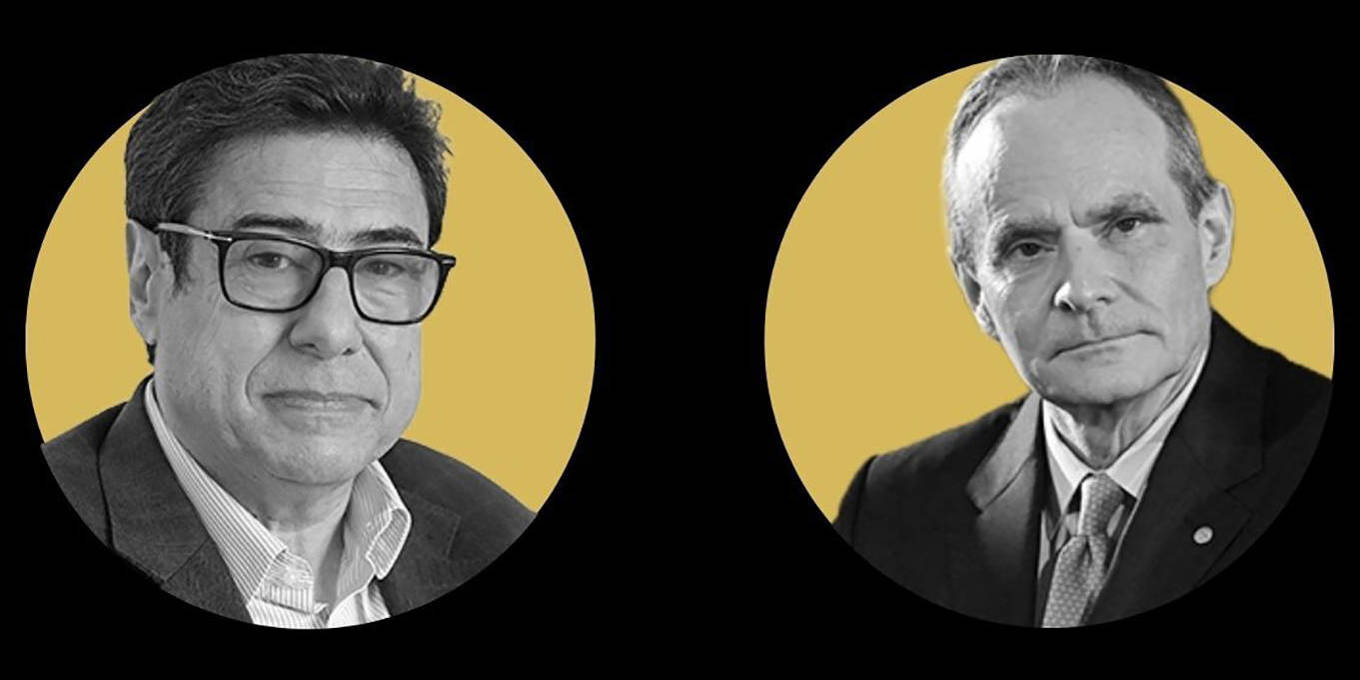
What is Europe to do? With most of its software now coming from the United States and most hardware from China, there’s the risk Europe could lose large parts of its industrial base and still not be at the races in advancing new technologies. Worse, America and China both seem to think they can make their countries great again at the expense of Europe. There is talk of a new G2 world order, in which both countries are willing to let the other have hegemony over their own hemisphere. Europe’s biggest security risk will come from not having the best AI capability to defend itself from cyber attack. We will still rely on the US for defence in this sphere, when it is undermining every multilateral institution and threatening Europe at every turn. The bigger economic risk comes from China, which vows support for international co-operation while maintaining high fiscal deficits, an undervalued currency and a massive trade surplus in a macro economic strategy which undermines any stable economic order.The debate about what to do in response to these threats is ongoing. A collective approach, including involving the UK, has to be decided during an Irish EU presidency. Much of the focus will be on new trade barriers to counter cheap Chinese imports, especially in the supply of solar or PV panels and electric batteries, where they have dominance and a cost and innovation advantage. However, putting up the price of such imports carries the risk of increasing the cost of electricity here, which is the last thing we should do. Clean energy technologies offer many advantages over imported fossil fuels, including that - once installed - they can provide power for years to come, giving us real sovereignty in deciding how best we use that energy.There may be a case for putting tariffs on products from China which Europe still manufactures, such as in electric vehicles, heat pumps and wind turbines. However, a “fortress Europe” approach will do nothing to protect our exports to the rest of the world, which we still need to scale up production on while bringing our own costs down. Meanwhile, the trade deal with America is largely based on us buying more oil and liquefied natural gas, which creates an even more expensive, insecure and unsustainable dependency. Many people underestimate the ability of Europe to find a way forward from here. The best strategy is to scale up and innovate in those clean technology areas where we still have an advantage. We must also build up our digital independence, by being best at regulating how data is shared and used and by getting the most out of AI, while defending ourselves from all the risks that it also brings. Such a strategy was set out in the reports by Enrico Letta and Mario Draghi to the European Commission. They got the diagnosis right by calling for a large investment in digital skills and in a clean electricity grid, which are the cornerstones of the new industrial revolution. We have several advantages over both the US and China on the grids issue. The US is investing in highly speculative space missions, while its terrestrial grid is falling behind. Its electricity system is clinging on to high-carbon solutions, is poorly interconnected, inflexible, insecure and badly in need of investment. China, for all its engineering excellence, is also running into grid problems. It is paying increasing costs for curtailing wind and solar power, due to a lack of demand flexibility, transparent markets and good regulation, which Europe has a lot of experience in developing.We should start any trade negotiations by collaborating first with countries from the Global South. These countries are being priced out of clean-technology investment by high interest rates, set by a very conservative assessment of the risks involved. We can help solve that problem by insisting on new transparency rules, which openly track the extraction, production, distribution and investment in new clean technologies, including rare-earth minerals. That would reduce every country’s cost of capital by bringing greater certainty and transparency to each market. At the same time, we could stitch in some trade safeguards, so we have more diverse supply chains and no one country can threaten to cut off another from a vital supply.The European electricity industry is ready to invest €1.2 trillion in a grid upgrade that would allow it to lead this new clean industrial revolution. It would create a lot of well-paid jobs and could be financed by long-term, low-cost loans, raised from the €34 trillion in savings Europe currently holds. We need to pull back some of that money from the over-valued US stock market and start investing more closer to home.
Eamon Ryan: Europe is caught between China and the US - but there are solutions
The best strategy is to scale up and innovate in clean technology areas with a European advantage
783 words~4 min read