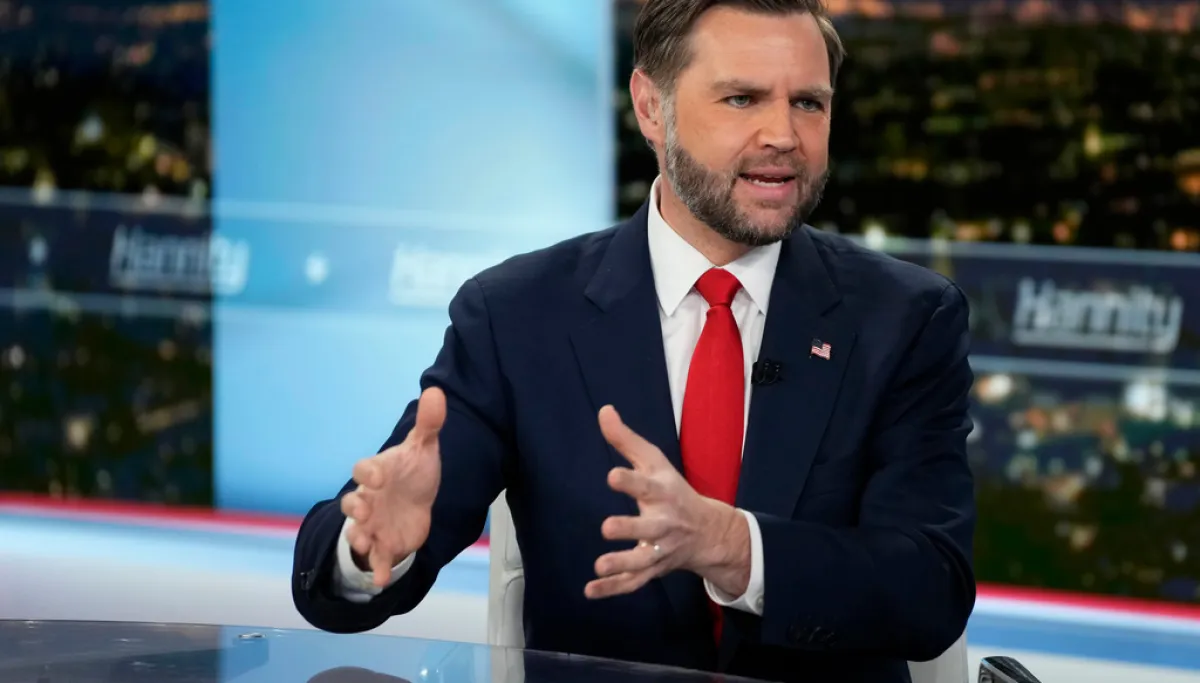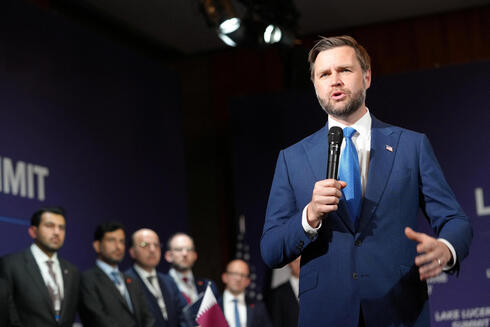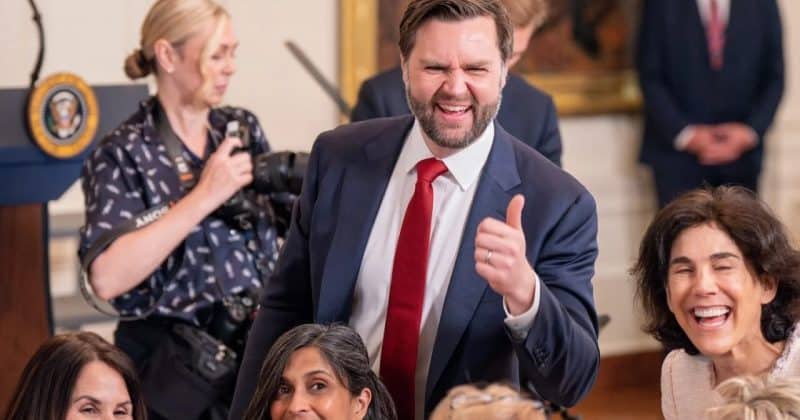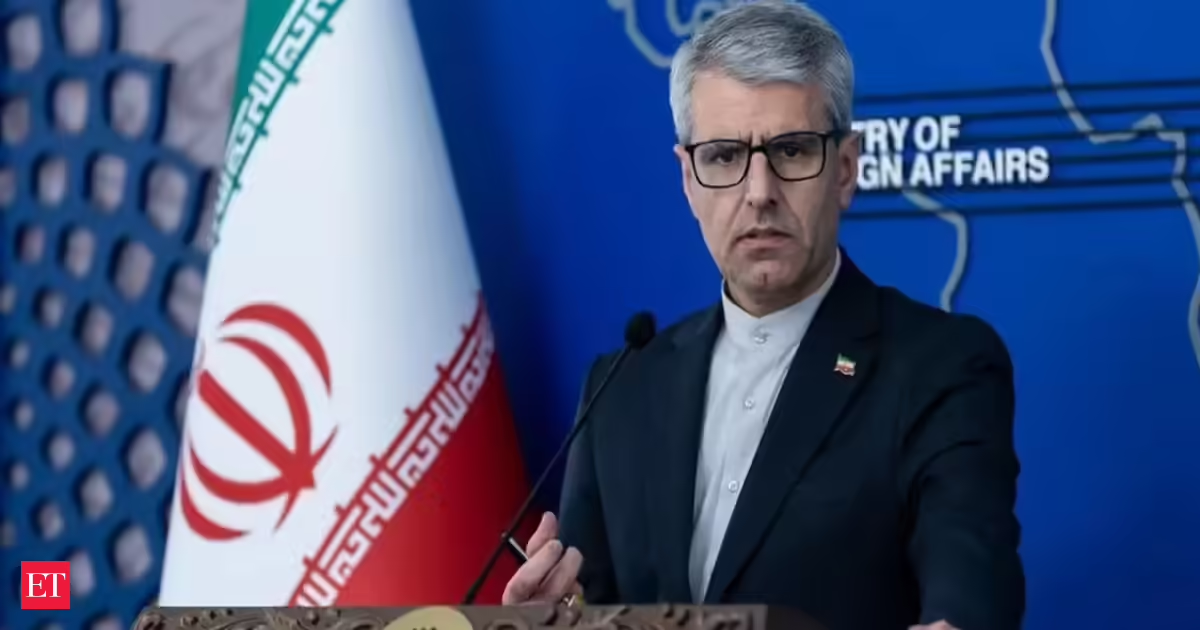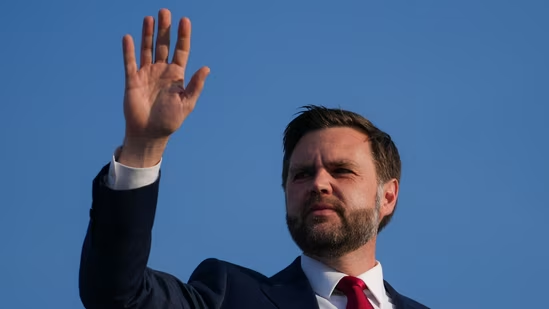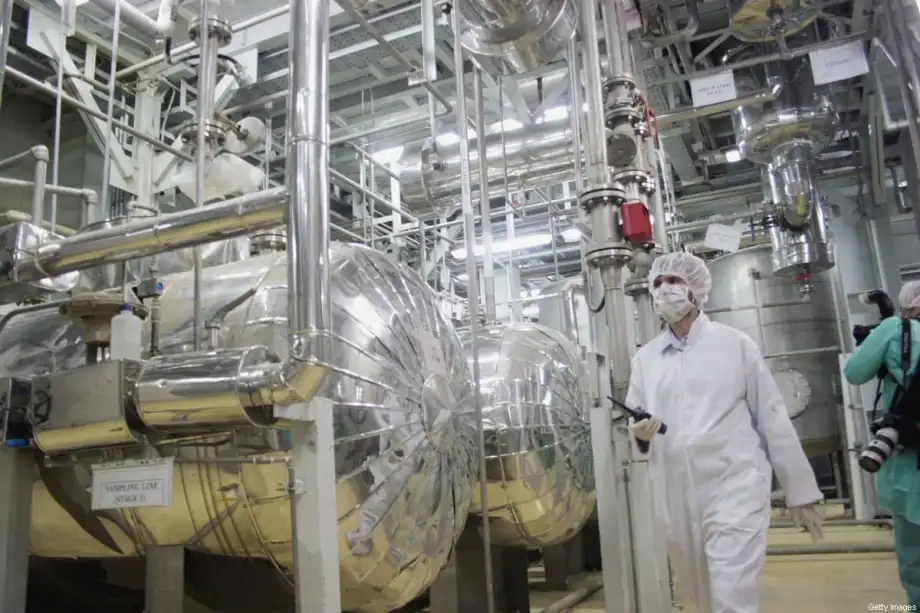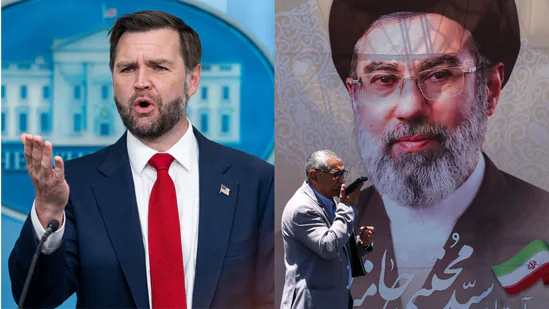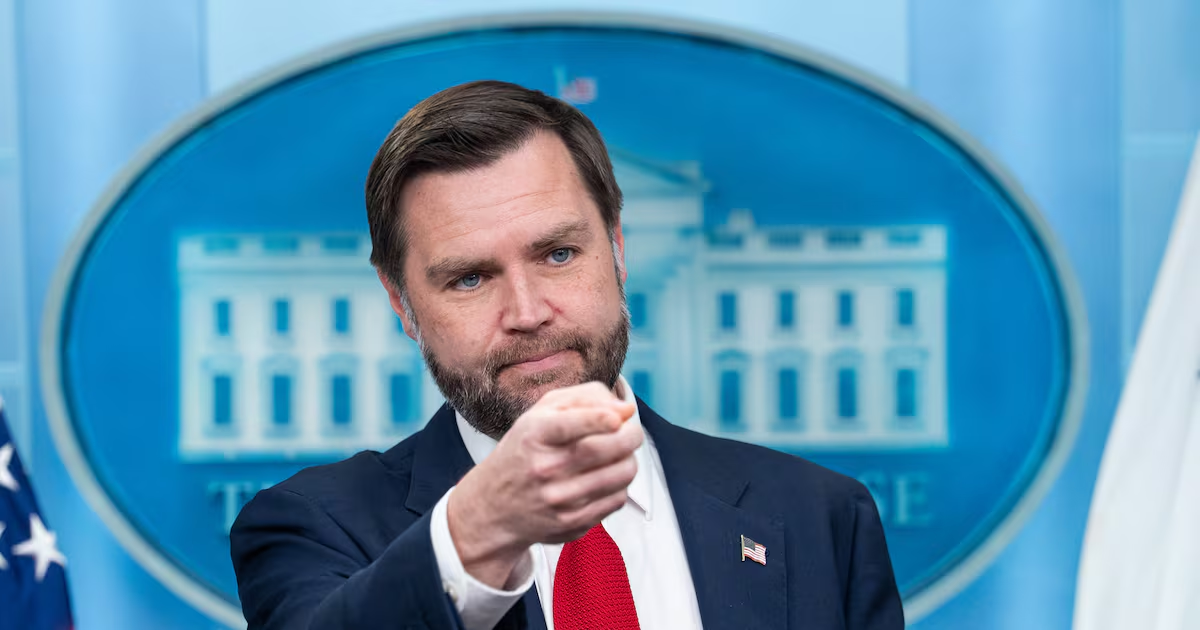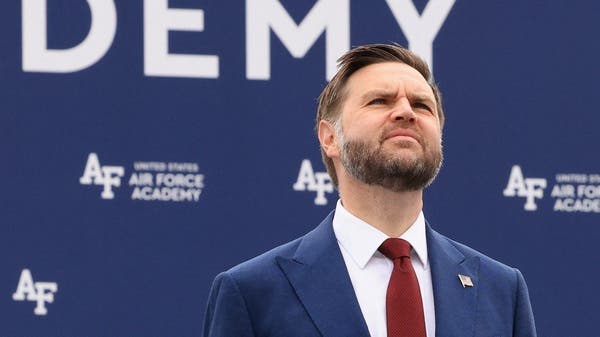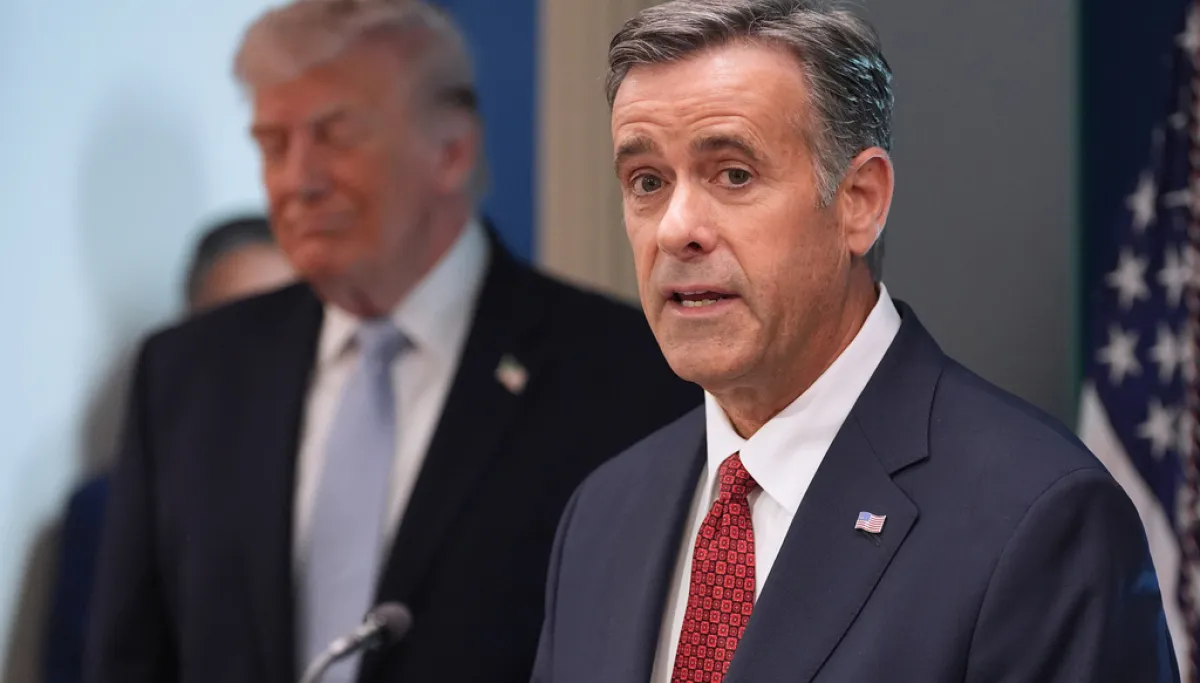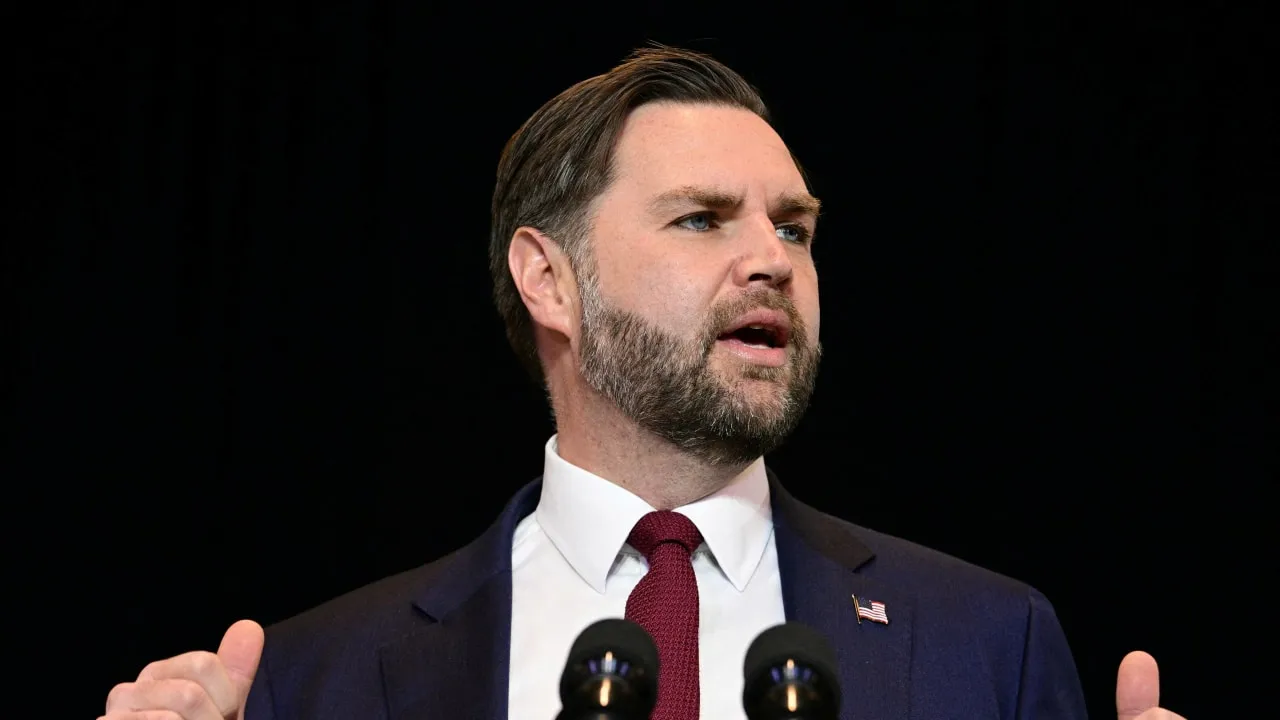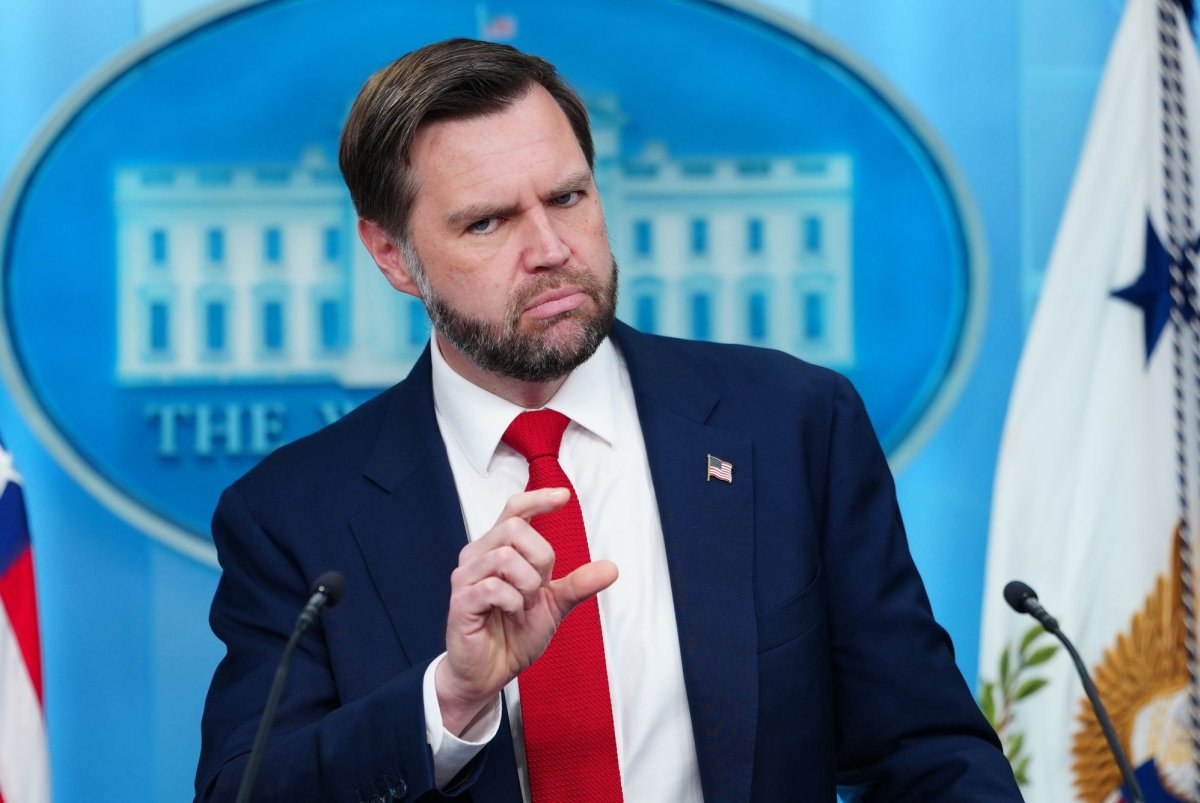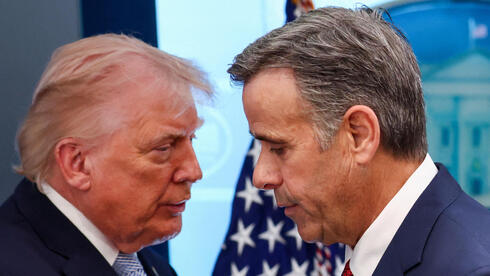
Intelligence assessments raised doubts about Tehran's willingness to make key nuclear concessions, even as the administration moves toward a formal agreement; Vance: 'What we know is this agreement is going to make Israel safer'ynet|U.S. Vice President JD Vance said early Tuesday that international nuclear inspectors would be allowed back into Iran under a memorandum of understanding between Washington and Tehran aimed at ending the war between the two countries.In an interview with NBC News, Vance said the return of inspectors was "one of the core parts" of the agreement and that the International Atomic Energy Agency, together with the United States, would help Iran eliminate its stockpile of enriched uranium.5 View gallery US Vice President JD Vance (Photo: Heather Diehl/Getty Images)According to Vance, the memorandum of understanding agreed to by both sides as a framework for ending the conflict will be released after a formal signing ceremony scheduled for Friday in Switzerland.Vance said the text has not yet been published because technical details regarding implementation still need to be finalized, rather than the language of the agreement itself. However, in a separate interview with Fox News, he said President Donald Trump could decide to release the agreement before Friday's ceremony.The agreement has already been electronically signed by U.S. and Iranian leaders, Vance said, adding that Qatar and Pakistan played significant roles in mediating between the two sides.In another interview with CNN, Vance described the memorandum as a short and relatively general document — "about a page and a half" — intended to establish broad principles, with practical details to be negotiated later during technical talks. "[T]he Iranians get the benefits of the bargain by meeting their obligations under the bargain," Vance said.Meanwhile, Axios reported that despite the administration's public presentation of the agreement as a diplomatic success, sharp disagreements emerged behind the scenes among senior U.S. officials.According to the report, CIA Director John Ratcliffe told Trump and other top officials that intelligence collected by U.S. agencies raised serious doubts about Iran's willingness to make the nuclear concessions Washington seeks in a final agreement.5 View gallery US Secretary of State Marco Rubio, Trump and Secretary of War Pete Hegseth (Photo: Brendan SMIALOWSKI / AFP)Three sources familiar with the discussions told Axios that Ratcliffe was not alone in expressing concerns. Secretary of State Marco Rubio and Secretary of War Pete Hegseth also raised questions during internal deliberations, while Vance and special envoys Steve Witkoff and Jared Kushner pushed to advance the agreement.Ahead of Trump's announcement Sunday night, a series of high-level meetings were held to review intelligence gathered by multiple U.S. agencies, Axios reported. According to sources cited by the outlet, the intelligence indicated a gap between how Iranian officials discussed the agreement privately and the messages they conveyed to mediators and the United States.Ratcliffe and Rubio argued that the intelligence cast doubt on whether Iran would ultimately accept the nuclear steps demanded by Washington. "The intelligence reflects that the Iranian intentions are not in line with their commitments under the deal," one source familiar with the matter told Axios.The White House rejected suggestions that Trump ignored the concerns. "President Trump listens to all opinions on any given issue — but everyone understands he is the final decision-maker," an administration official told Axios.The official said the memorandum meets all of the administration's red lines: preventing Iran from obtaining nuclear weapons, denying Tehran the ability to retain highly enriched uranium and ensuring that Iran cannot "hold the world's energy supply hostage."The CIA and State Department declined to comment on the report, while the Pentagon did not respond.5 View gallery US President Donald Trump and CIA Director John Ratcliffe (Photo: REUTERS/Kevin Lamarque)According to Axios, the nuclear provisions in the memorandum depend on reaching a more detailed agreement within the next 60 days.Vance, Witkoff and Kushner are expected to meet Friday with Iranian Parliament Speaker Mohammad Bagher Ghalibaf and Foreign Minister Abbas Araghchi, together with mediators from Qatar and Pakistan, to discuss the next phase of negotiations.A source familiar with the document said the initial agreement contains 14 articles, though it has not been released in full.According to the source, the memorandum is intended to extend the ceasefire and launch 60 days of negotiations that could be prolonged by mutual agreement.During those talks, Iran would reaffirm its previous commitment not to acquire or develop nuclear weapons. The United States and Iran would also commit to resolving the issue of enriched material stockpiles and discussing future enrichment and other agreed-upon matters related to Iran's civilian nuclear needs under a framework to be established in the final agreement.The text says Iran will maintain the status quo of its nuclear program so long as negotiations continue. For its part, the U.S. won't impose new sanctions or deploy additional forces to the region.If a final nuclear agreement is reached, the United States would withdraw forces mobilized during the war within 30 days and lift all sanctions on Iran according to an agreed timetable, the source said.Critics of the interim arrangement inside the administration argue that Iran stands to gain more than the United States during the transitional period without committing to the nuclear concessions Washington is seeking.Administration officials, however, said any benefits granted to Iran would depend on concrete actions by Tehran and that within two to three weeks the United States would know whether Iran is serious about the proposed nuclear concessions. If not, they said, the process could be halted before Iran receives significant benefits.The agreement also drew questions from congressional Republicans. Sen. Lindsey Graham, a close Trump ally, told Axios he was “somewhat concerned” that Iran’s view of the agreement appeared to differ from that of the U.S. negotiating team, and called for the document to be released immediately.5 View gallery Sen. Lindsey Graham (Photo: Ido Erez)Vance told CNN that the first paragraph of the memorandum commits Iran, along with the United States, to “regional peace and stability.” He said that means Tehran would be required to stop funding organizations the United States designates as terrorist groups and to stop financing activities that destabilize the region. “Part of that is that the Iranians have to stop funding violent terrorist organizations, they have to stop funding regional instability,” Vance said.One of the central provisions of the agreement concerns renewed monitoring of Iran’s nuclear program. Vance said the date for renewed visits by nuclear inspectors could be set as soon as Friday, and that Washington expects inspections to resume relatively quickly because, he said, there is broad agreement on the issue.“The Iranian nuclear program has been completely destroyed, and what we’re saying is: make the long-term commitment to not rebuild it, and you will get the benefits that come with that,” Vance told CBS. “We want them to behave like a normal country. We want them to have a successful country, but only if they do what's necessary to commit long-term to not building a nuclear weapon.”Vance also rejected criticism from former president Barack Obama, who questioned whether a new agreement with Iran would be substantially different or better than the 2015 nuclear deal reached during his administration. Trump withdrew from that agreement during his first term and has repeatedly attacked it.Vance argued that the situation is now entirely different. He said the 2015 agreement “bribed” Iran to halt its nuclear program, while the current administration contends Iran’s nuclear program has already been “completely destroyed” and the demand now is that it not be rebuilt.Meanwhile, the Financial Times reported that the Trump administration is prepared to allow the creation of a $300 billion investment fund for Iran if Tehran agrees to a final arrangement that includes a nuclear deal. A senior U.S. official said Washington was discussing sanctions relief and a large fund to help rebuild the country, but stressed that incentives would be tied to Iran’s performance and compliance with the memorandum.Trump denied reports on Truth Social that Washington would pay Tehran “300 million Dollars,” calling the claim “Fake News” spread by Democrats. The Financial Times report referred to $300 billion, not $300 million. Trump also wrote: “Iran has agreed to never have a Nuclear Weapon!”According to the Financial Times, the fund would be conditioned on a final agreement, a 60-day extension of the ceasefire, the opening of the Strait of Hormuz and further negotiations on a nuclear accord. The fund would not be financed by governments, the report said, but would be established for companies seeking to invest in Iran, a country of about 90 million people with extensive energy resources.The report said there was potential interest from companies in Europe, Asia — including South Korea and Japan — and from U.S. companies if sanctions are lifted.Axios also reported that the memorandum includes a commitment to a final agreement that would contain an agreed plan to establish a $300 billion fund for Iran’s “reconstruction and economic development,” as well as a mechanism for implementing it.Supporters of the agreement say the proposal is a long-term incentive that would become reality only if Iran dismantles its nuclear program and carries out significant internal reforms. Vance told CBS that such a reconstruction fund is the kind of benefit Iran could gain access to as long as it meets its obligations.At the same time, the Trump administration is stressing that no money has been transferred to Tehran. A senior official said “zero” dollars have flowed to Iran since the document was signed remotely by Trump, Vance and Ghalibaf.Any sanctions relief, including the release of frozen Iranian assets abroad, would be carried out in stages and depend on progress in the nuclear talks and the achievement of a final agreement, according to reports. Administration officials said, however, that the United States could offer “small gestures” of economic relief early in the process to build trust.One of the most sensitive issues in the talks is the release of frozen Iranian funds and assets. According to Axios, the wording leaves broad room for interpretation, saying the United States will work to make the funds available for use “upon the implementation of this MOU.”U.S. officials say the model will be “pay for performance,” meaning a gradual release of funds in exchange for positive steps by Iran.Another key issue is enriched uranium. According to a person briefed on the talks, Tehran and Washington agreed in the memorandum to resolve the removal or neutralization of Iran’s enriched uranium stockpile through an agreed mechanism. The minimum commitment is to dilute all uranium at Iran’s nuclear sites under IAEA supervision.Iran is estimated to have more than 9,000 kilograms of enriched uranium, most of it at low levels, but about 440 kilograms enriched to 60% — a short technical step away from the 90% level needed for a nuclear weapon.The Strait of Hormuz is also under discussion. Vance sought to downplay reports that Iran plans to charge transit fees for ships passing through the waterway, saying the agreement provides for toll-free passage to and from the strait during the 60-day negotiations on a final arrangement.According to Axios, the memorandum says Iran will make its “best efforts” to ensure the safe, toll-free passage of commercial vessels for 60 days, while the United States gradually lifts its blockade, with a full removal within 30 days.Iran will also hold a dialogue with Oman on “future administration and maritime services” in the Strait of Hormuz, with the participation of other Gulf states, in an effort to reach a solution consistent with international law and the sovereign rights of regional states, Axios reported. Iranian state media has already reported on the possibility that Tehran could impose transit fees after the 60-day period ends.5 View gallery Iranian President Masoud Pezeshkian (Photo: AP Photo/Angelina Katsanis)Iranian President Masoud Pezeshkian also addressed the framework, writing on X that it was “an important step toward stopping the war and beginning negotiations.” He stressed, however, that a final agreement had not yet been reached.The talks are taking place against the backdrop of tensions between Washington and Jerusalem. Vance said the Trump administration believes Israel will eventually support the new agreement with Iran, though he acknowledged differences between the United States and Prime Minister Benjamin Netanyahu over how to end the war.“What we know is this agreement is going to make Israel safer,” Vance said. “We believe quite firmly that when the Israeli people understand what’s in this agreement, they’re going to see this as a pathway to a new Middle East, to peace and prosperity in that region.”Vance acknowledged that the United States and Israel are not always fully aligned. “Israel is often a good partner, we also have aligned interests, but also sometimes we’re going to disagree on issues from time to time,” he said. “That’s totally reasonable, even our closest allies, from the United Kingdom to Israel, we sometimes have disagreements.”
CIA questions Iran’s commitment to Trump deal
Intelligence assessments raised doubts about Tehran's willingness to make key nuclear concessions, even as the administration moves toward a formal agreement; Vance: 'What we know is this agreement is going to make Israel safer'
2,123 words~10 min read