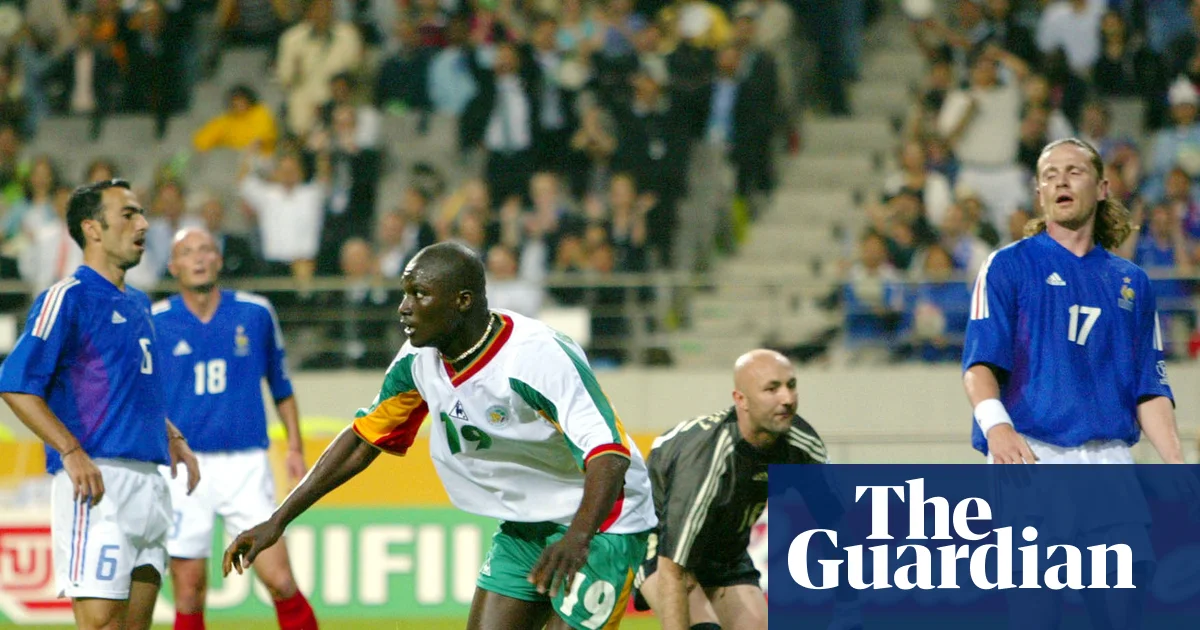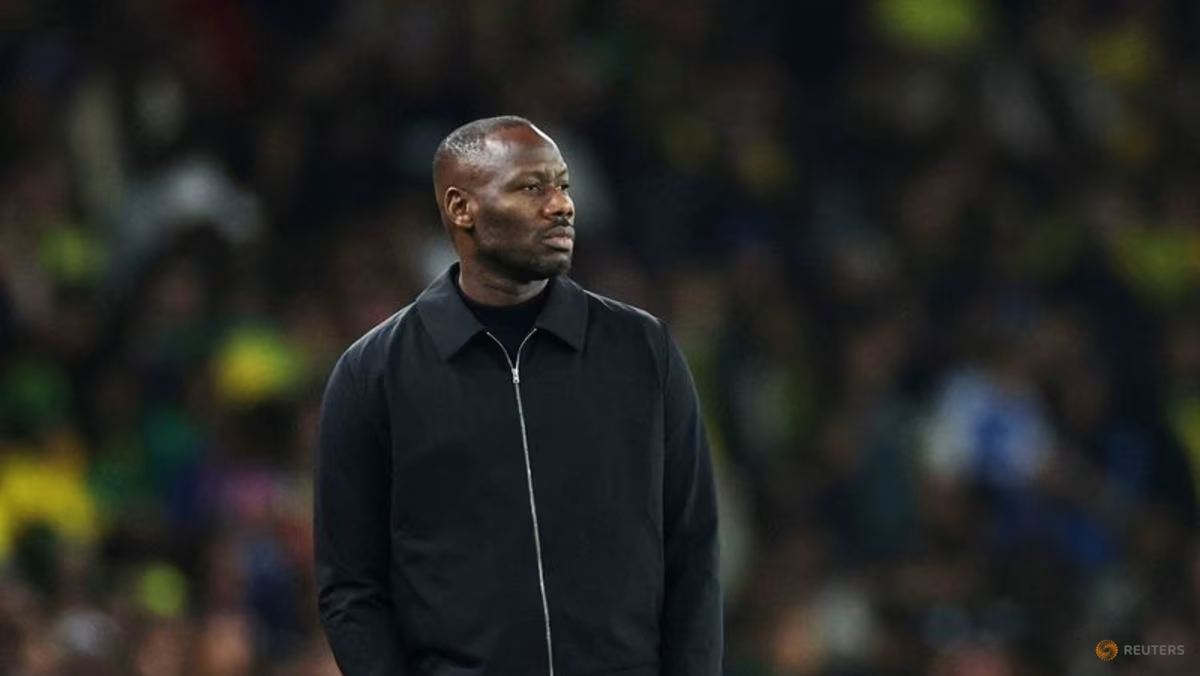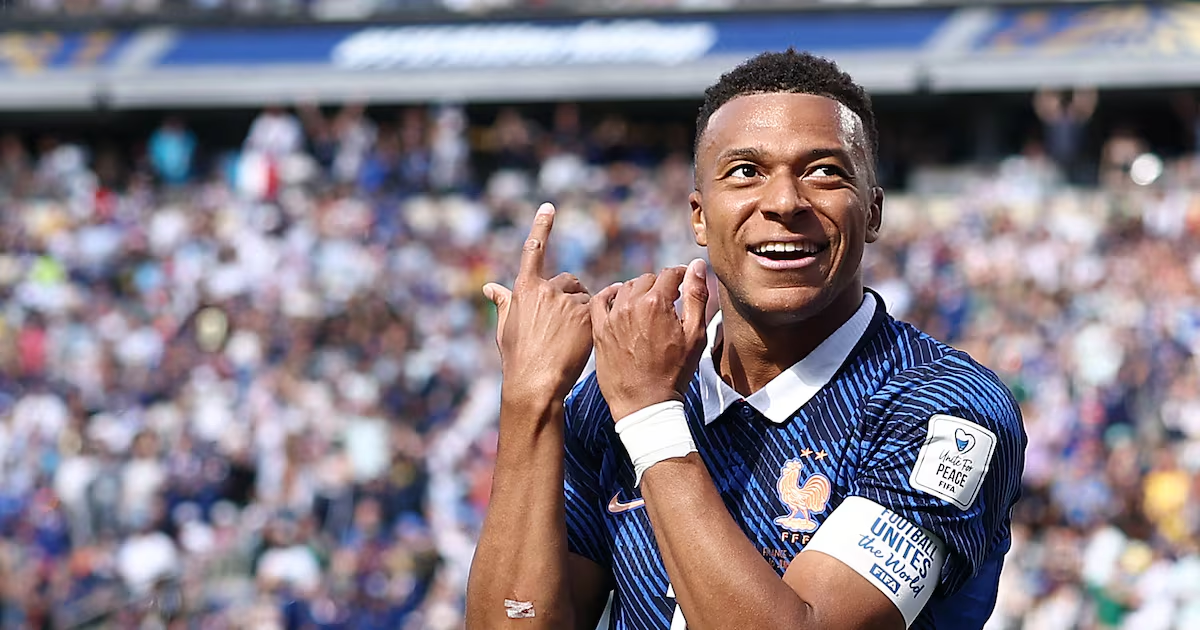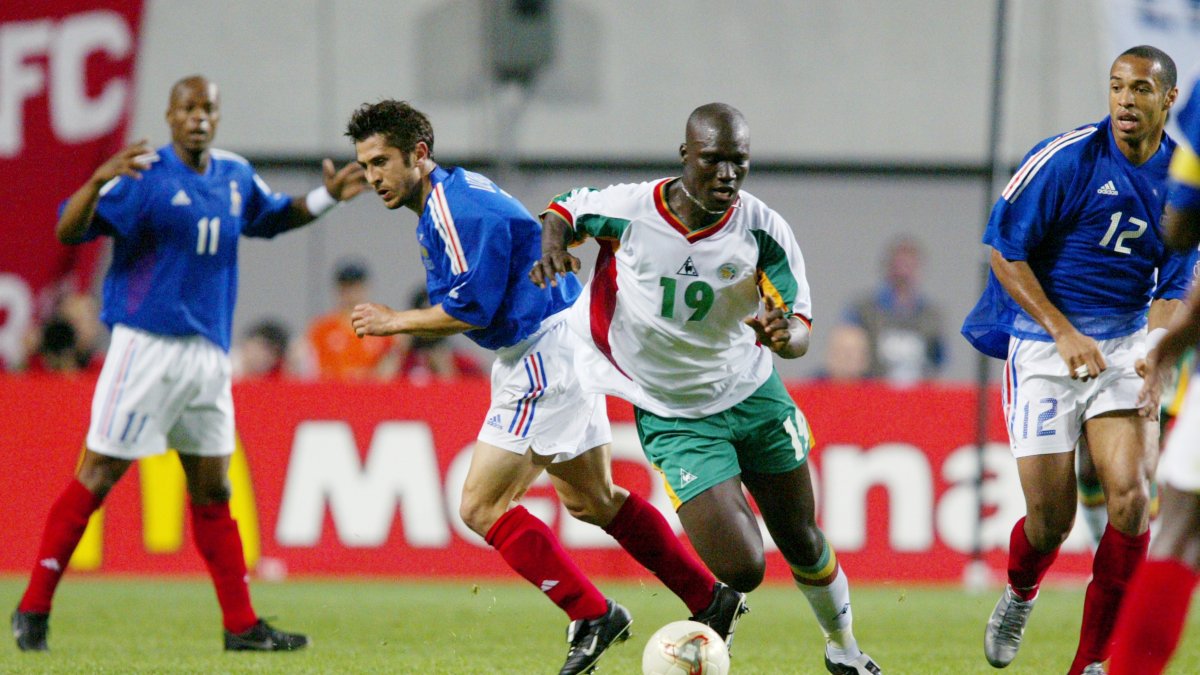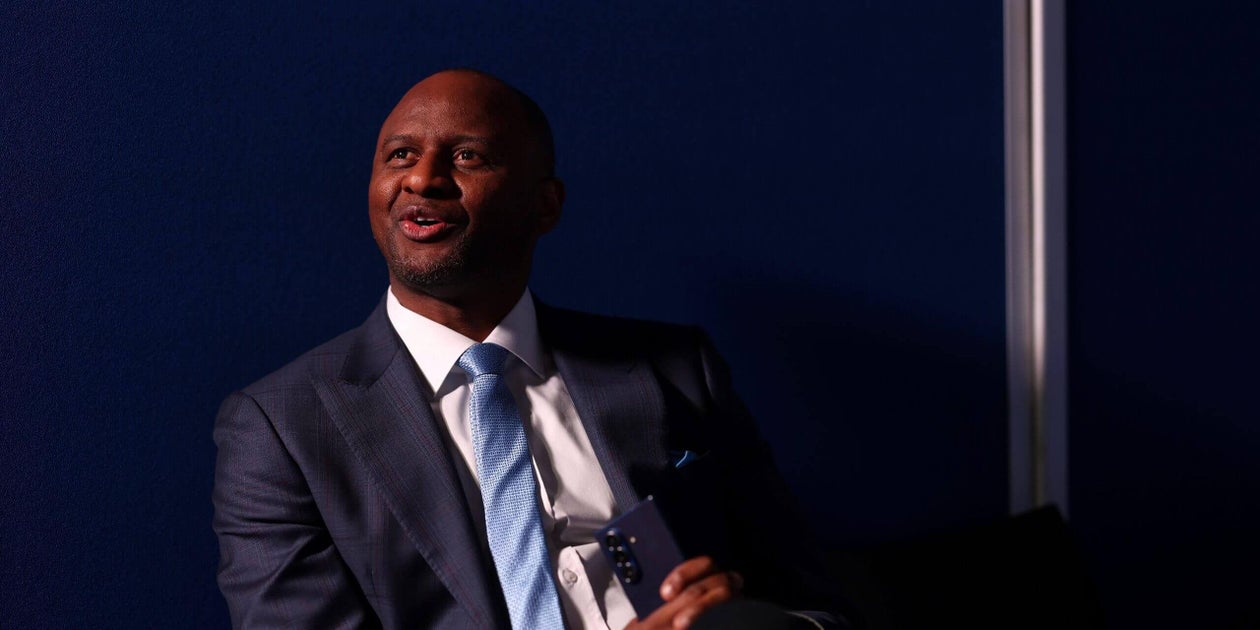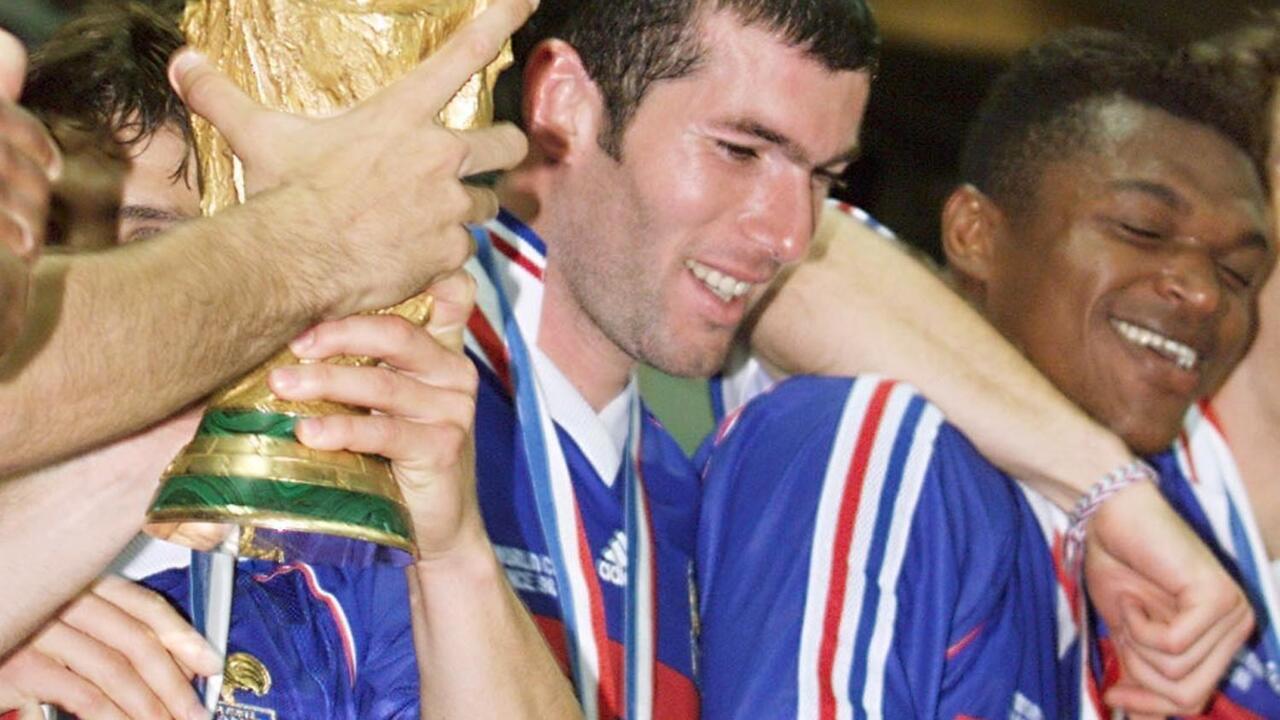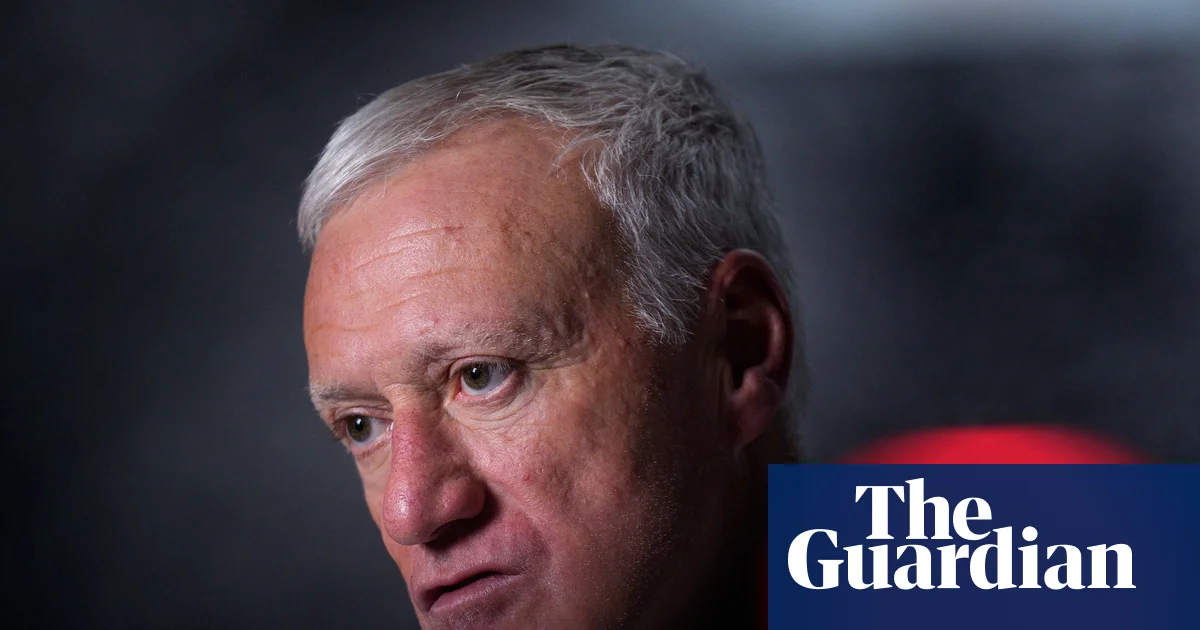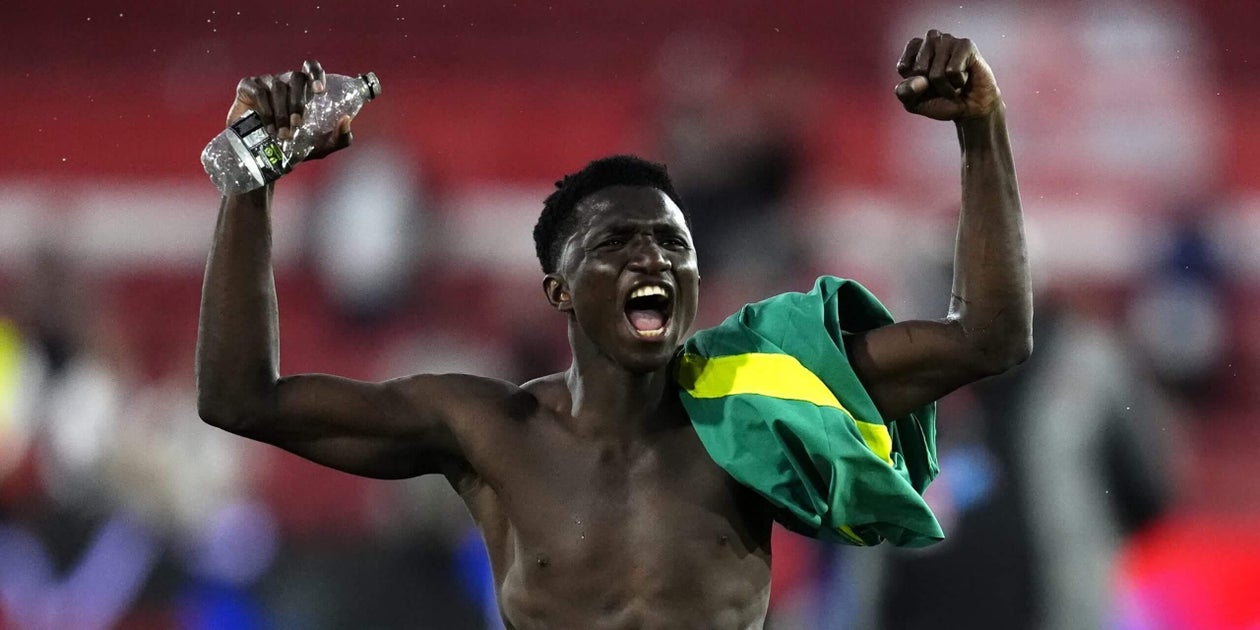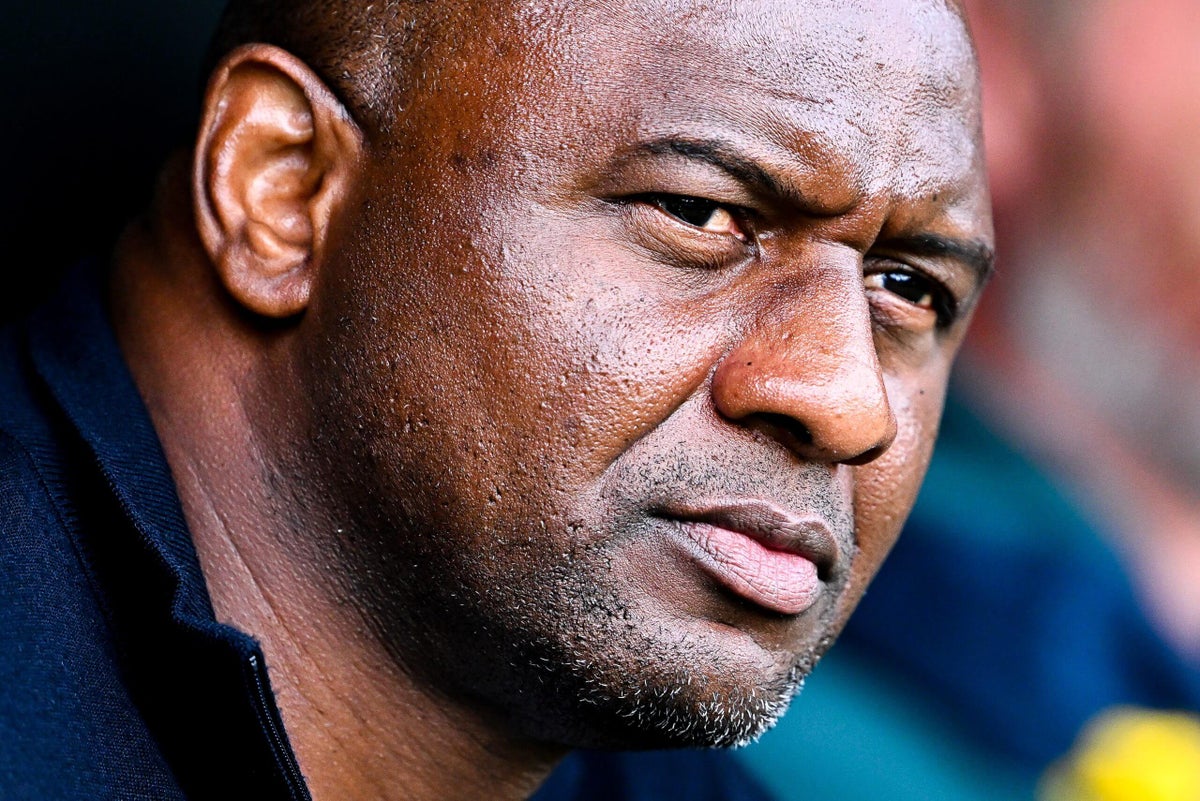
Patrick Vieira was 24 years old and totally immersed in his career, a midfield colossus with Arsenal and a World Cup winner with France, when the call of Africa became overwhelming.He was chatting with some of his France team-mates at their hotel in South Korea at the Confederations Cup tournament in the summer of 2001. Marcel Desailly spoke in depth about his background in Ghana, as did Robert Pires about his family’s Portuguese and Spanish heritage. Christian Karemebeu was born in the French overseas territory of New Caledonia. Youri Djorkaeff’s mother was Armenian.Vieira told his team-mates he felt proud of his Senegalese heritage, but said he knew relatively little about it. His father, whom he never knew, was from Gabon and his mother, who raised him, was born and brought up on Cape Verde. He had spent the first eight years of his life in Dakar, but his memories were hazy beyond playing football in the streets under a scorching sun. At that point, in 2001, he had never been back.Even as he was explaining this, he could feel something pulling him back towards Senegal.He began looking into setting up an academy in Senegal, a venture that would allow him to give something back and help youngsters in one of the world’s poorest countries.But before he could return, fate intervened. France were drawn to play Senegal in the 2002 World Cup — in the opening game, no less.What followed in Seoul on May 31, 2002 was one of the great World Cup upsets, the reigning champions beaten by Papa Bouba Diop’s goal. It was an untidy goal, scrambled home by Bouba Diop after his first attempt struck goalkeeper Fabien Barthez, but, for Senegal, it was beautiful.Patrick Vieira and Papa Bouba Diop battle for the battle during the 2002 World Cup opening game (JIMIN LAI/AFP via Getty Images)“Of course that was one of the best moments in Senegal history, I will say, because of the relationship between the two countries,” Vieira tells The Athletic on a video call from his home in Strasbourg. “I’m friends with (former Senegal forward) El Hadji Diouf and he’s still talking about it now.”As the two nations prepare to face each other on the World Cup stage again in East Rutherford, New Jersey, on Tuesday, Vieira considers his own sense of national identity, the legacy of his academy, how much and how little has changed in French society and whether Senegal could shock Les Bleus once more.The World Cup offers a perfect illustration of how nationality has become a fluid concept. Of the 1,248 players at this tournament, just under a quarter are representing a team other than their country of birth. No fewer than 76 French-born players are representing other nations, which in the majority of cases involves their former colonies, such as Senegal, DR Congo, Ivory Coast and Haiti.Many of the France squad, likewise, reflect immigration patterns. To cite just three examples, N’Golo Kante’s parents are Malian, Kylian Mbappe is of Algerian and Cameroonian descent and Ballon d’Or winner Ousmane Dembele’s heritage is Malian, Senegalese and Mauritanian. Kalidou Koulibaly, who will line up against them on Tuesday, was born in the French town of Saint-Die-des-Vosges and represented France at under-20 level before switching to Senegal.For Vieira and for that generation of players raised in the 1970s and 1980s, questions of nationality felt less fluid — at least when it came to football.“From a young age, I knew who I was and I never had a doubt about who I was going to represent,” he says. “I was born in Senegal and I’m telling you I have never been so proud as to wear the French shirt for those 107 times. I was so proud to be part of a French squad who were successful. I love that shirt.”The World Cup success in 1998 was achieved with a core of players who represented France’s increasing ethnic diversity: not just those born abroad, such as Vieira and Desailly, and those born in French overseas territories, like Lilian Thuram and Christian Karembeu but others whose families had moved from the French West Indies (Thierry Henry), North Africa (Zinedine Zidane), and elsewhere in Western Europe (Fabien Barthez, Bixente Lizarazu and Pires) or, in Djorkaeff’s case, Armenia.(L-R) Youri Djorkaeff, Zinedine Zidane, Marcel Desailly, Lilian Thuram and Bixente Lizarazu (PASCAL GEORGE / AFP via Getty Images)“Winning the World Cup, I think, was bigger than ‘just’ winning the World Cup,” Vieira says. “Politically, France was going through a difficult period, with racism, so winning the World Cup was to send a message around to show what France is all about. It was good to see Zidane, Barthez, Thuram, Lizarazu, Djorkaeff with different cultures, different colours of skin. That picture was what France was about. And I think that brought everybody together — even if only for a lapse of time.“At that moment when you hear the songs and the celebration, people forget about the colour of the skin, forget about the religion, forget about poverty, whether you are rich or poor, where you come from. People came together to celebrate the success of the French team.”Not everyone was happy. Jean-Marie Le Pen, the leader of the Front National party (which has since rebranded as the National Rally (RN) under his daughter Marie), called this huge national celebration “only a detail of history”. He had previously said it was “a bit artificial to bring players from abroad and call it the French team” and accused some of them of “not singing or not knowing La Marseillaise”, the national anthem.Vieira was among those who didn’t sing the anthem. “I never asked myself why,” he says. “It was just to concentrate, to focus and prepare for my game. I didn’t have any other reason. I don’t think I need to say it, but I like to think that the way I was playing, I showed how proud I was to wear the shirt. I didn’t sing the French anthem, but it doesn’t mean I’m not proud to wear the French shirt. Lilian Thuram, who wore the French shirt 142 times, was singing the anthem proudly. Everyone is different. It doesn’t mean you care less.“When the French team win, it brings people together. And then when the French team loses, people are quite critical, talking about how players are not proud to wear the French shirt. Talking about our players, why they don’t sing in the French anthems. There is always the political side who try to manipulate opinion and use negativity towards the French team when things are not doing well.”Between 1998 and 2001 France won it all: the World Cup, the European Championship, even the Confederations Cup. Going into the 2002 World Cup in Japan and South Korea, they were on top of the world. And perhaps that is a dangerous place to be.“After the success, there was maybe a lack of mental preparation,” Vieira says. “There was maybe a little bit too much certainty, a bit too much, ‘We’re going to go there and win’. When you win two big competitions like that, maybe you can experience a drop in intensity, a lack of hard work, a lack of sacrifice as a group. We were maybe a little bit too easy-going. I think we didn’t put in enough hard work, enough sacrifice, enough commitment. And when that happens in a big competition like that, when you’re not prepared well, you pay for it straight away.”What does he remember of the game against Senegal? “I remember the Senegalese team being really competitive, really aggressive,” he says. “We had a couple of chances early on that we didn’t take (… and then) you start to feel like the other team are believing a little bit more, a little bit more, then coming out of the half, into our half, then starting to create a little bit more.“And then they managed to score. And I don’t know if you remember the goal they scored, but it was like aggressive determination (from Bouba Diop). When it comes to the level of competitiveness in that game, I think they wanted it more than us.”Is that a warning to the France team in 2026, that Senegal’s players will be desperate to beat them?“Yes. They will be,” he says. “The date of the game has been there (in the players’ minds) for a while. For Senegal, of course, for different reasons. Because of the colonisation of Senegal. Because in Senegal, the first language is French. Because the majority of the Senegalese players went to the academy in France and grew up in football in France. So it’s a big game for them. They will have a point to make. They will be motivated. There is no doubt about it.”Further motivation for Senegal comes from their recent experience in the Africa Cup of Nations, in which they beat Morocco 1-0 in the final in January, only to be stripped of the title two months later as a punishment for their players leaving the field in protest at various refereeing controversies. The Senegal Football Federation has submitted an appeal to the Court of Arbitration for Sport (CAS) in the hope of being reinstated as champions.“I sometimes think the improvement in African football has been a little too quick for the organisation of the African leadership,” Vieira says. “It doesn’t look good for the African organisation (the Confederation of African Football). It’s a mess. It looks ridiculous. For me there is only one winner. It’s Senegal and that’s it. When they managed to finish the game and Senegal managed to win, that was over. To change the result, it is one of the most ridiculous decisions I’ve ever seen.”It was 2003 — a summer without an international tournament, a year on from that crushing defeat in Seoul — when Vieira made it back to Senegal with a group of friends that included former France goalkeeper Bernard Lama.“And this was when we decided to build the Institute Diambars in Saly (south of Dakar),” he says.“Our aim is really using football to promote education. We built an academy for players to stay as long as they can in Senegal. We have 150 kids that we take care of, seven days a week, and they stay there, they study there, they train there, they eat there, and we give them the tools to develop themselves. Some of the best ones will come to Europe to try to be professionals. The others, who want to continue their studies, we give them the support, maybe to do a degree or to find a job.”Four players in Senegal’s World Cup squad — Abdoulaye Seck, Idrissa Gueye, Pathe Ciss and forward Bamba Dieng — are former students at the Institut Diambars. Everton midfielder Gueye, 36, was among the first intake.“Amazing, one of the best examples on the field,” Vieira says of Gueye. “But we had others who didn’t make it as a football but became an engineer, for example, so it has been a really good mix of football and education.”Patrick Vieira is proud of his academy work in Senegal (Simone Arveda/Getty Images)As for education, Vieira, who will turn 50 later this month, has learned more about football, about life, about the world — and about his place in it.“When I played for France against Senegal in the World Cup, it was a privilege,” he says. “Of course I wanted to win the game because I was playing for France. It was important to win the game. I was so proud to play for France and to wear that shirt 107 times.“But Senegal is also part of who I am. In my head, I’m really clear who I am as a person, as a human being. I was born and grew up in Senegal. My education, my family, the Senegalese culture, the African culture, that is all part of me as well and it is always going to be a part of me. I still have family there. I have the academy there. I was there three months ago and I try to go as much as I can because it’s part of my culture. That is who I am.”
Patrick Vieira interview: ‘I was so proud to play for France…but Senegal is also part of who I am’
The great France midfielder on the shock of losing to Senegal in 2002 and his evolving relationship to his own sense of identity
2,031 words~9 min read