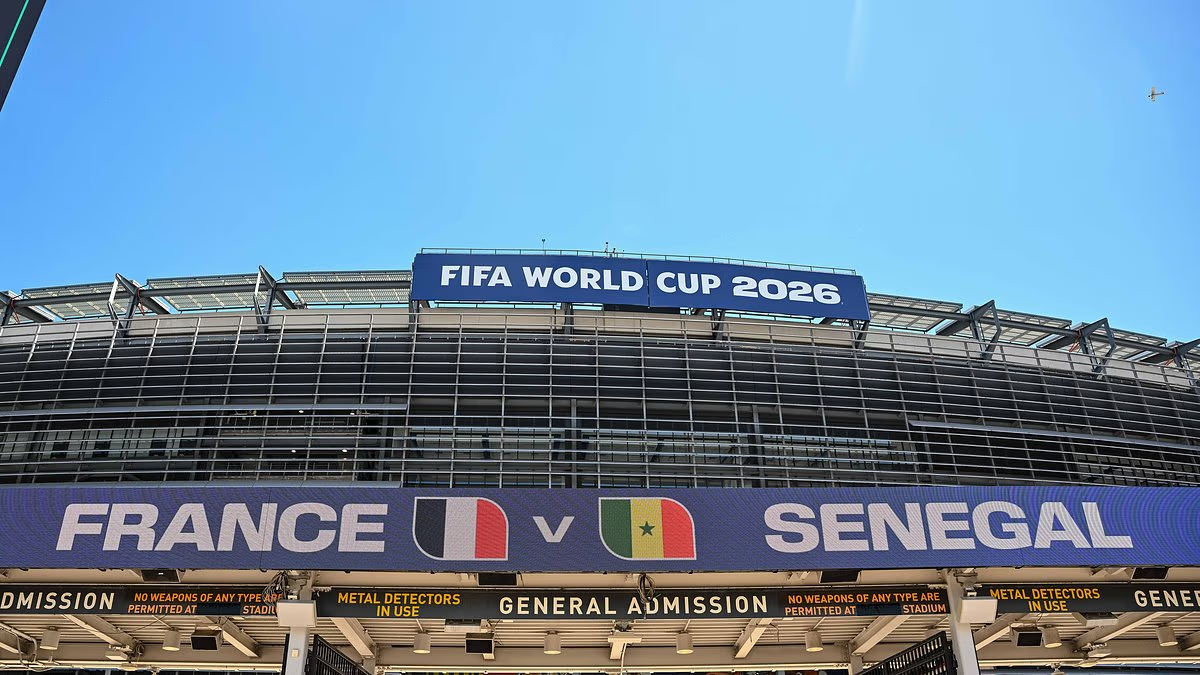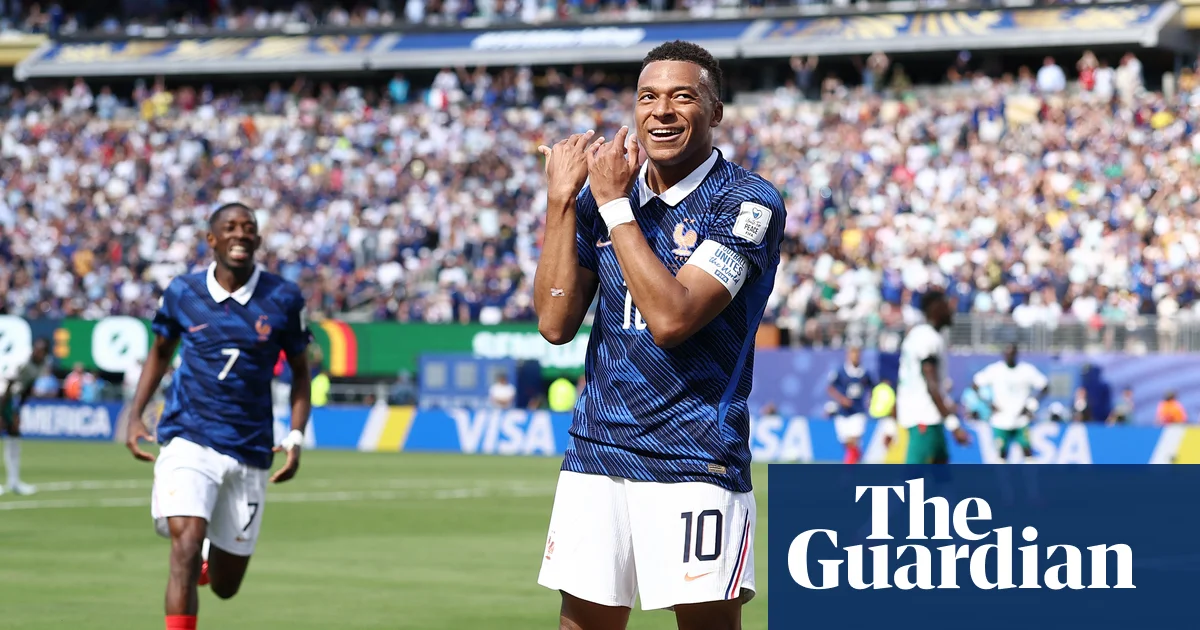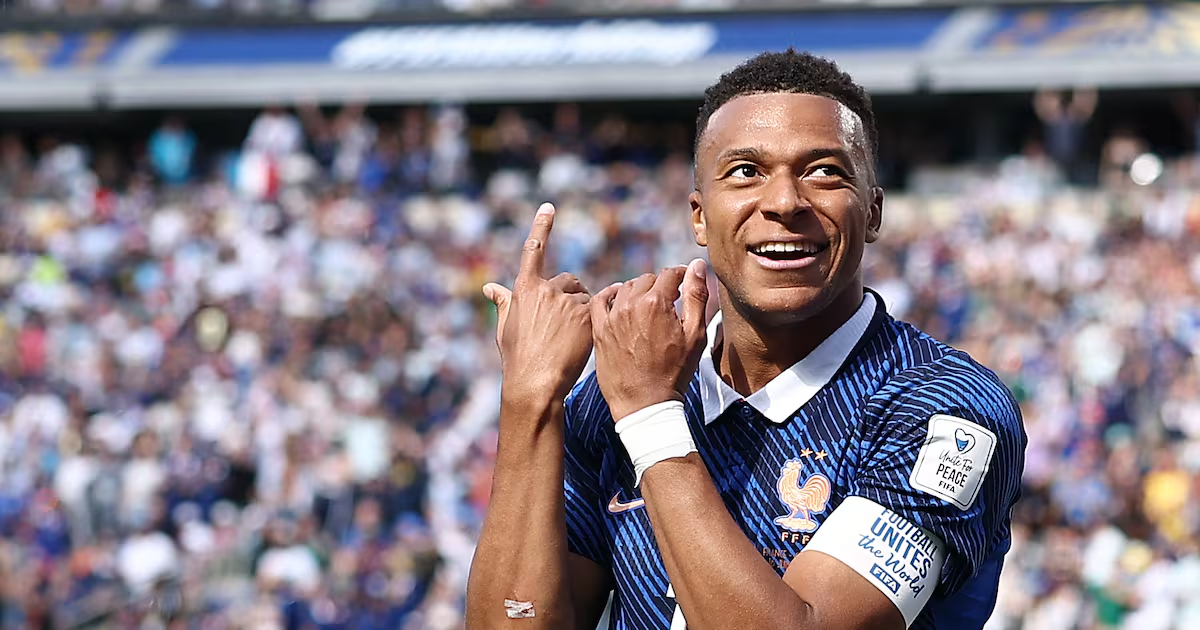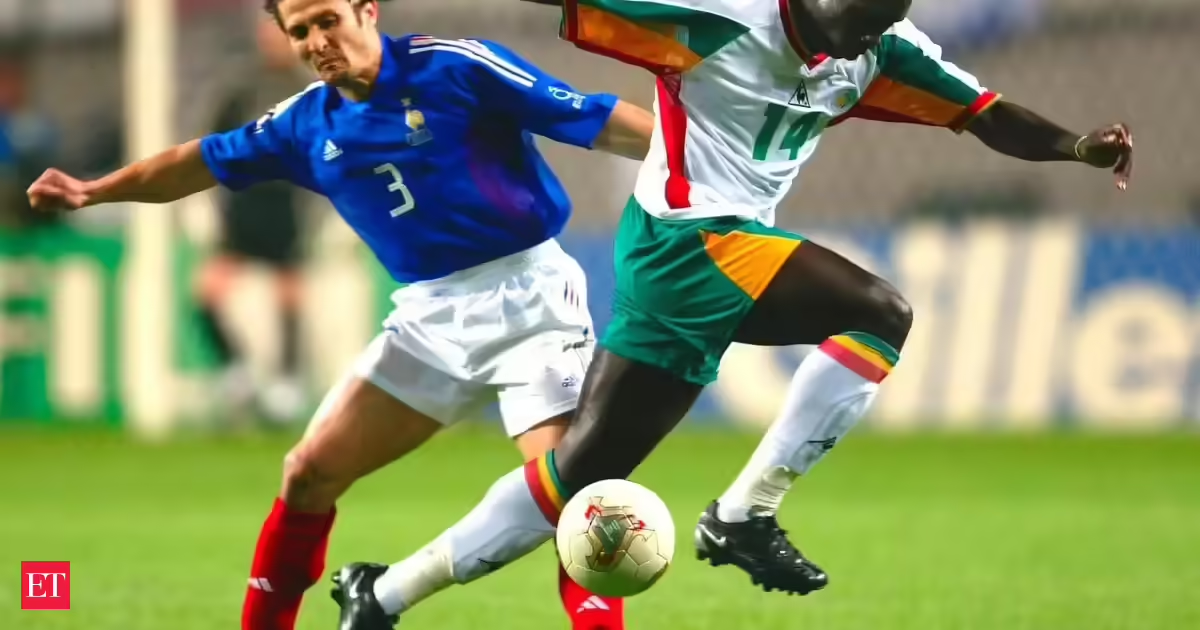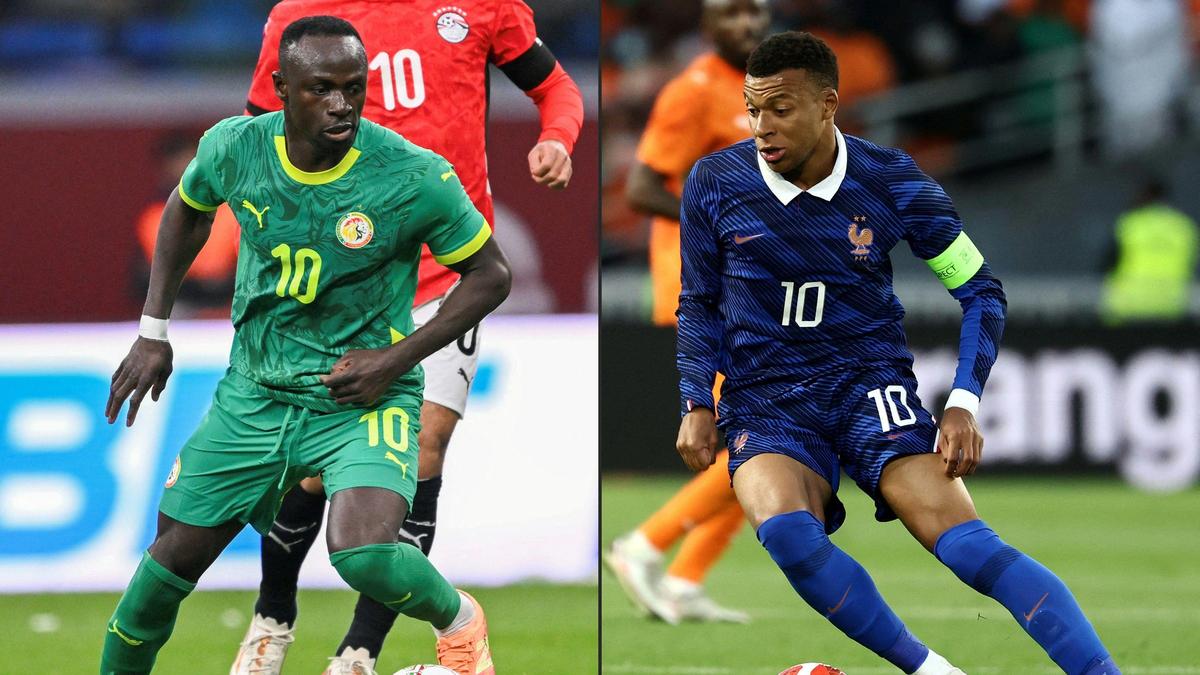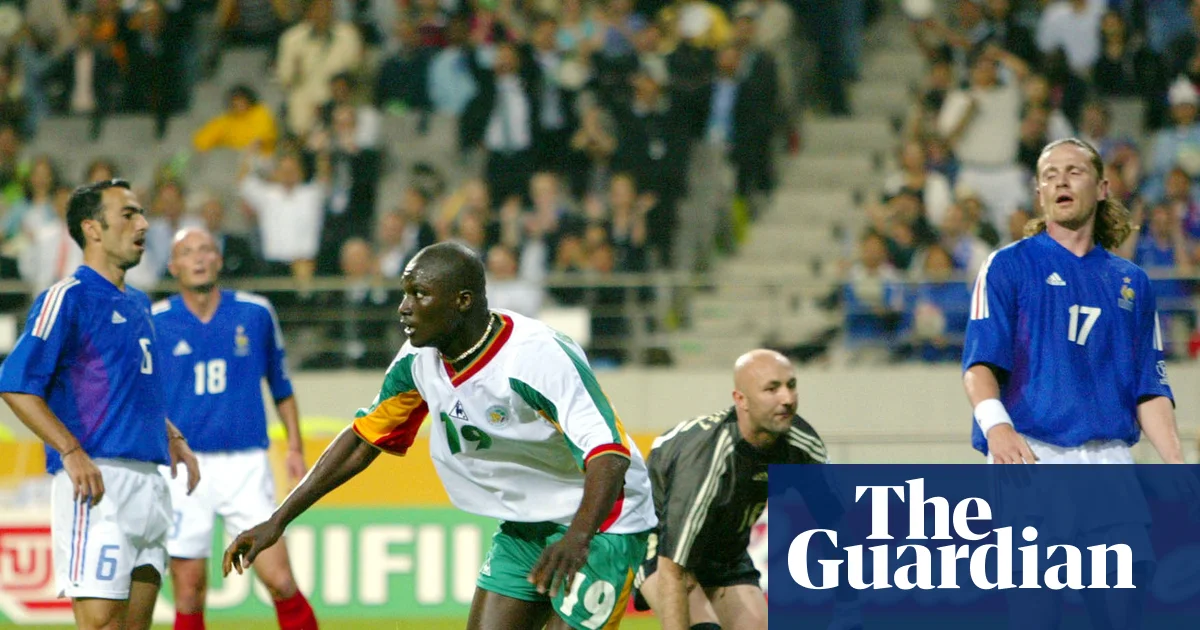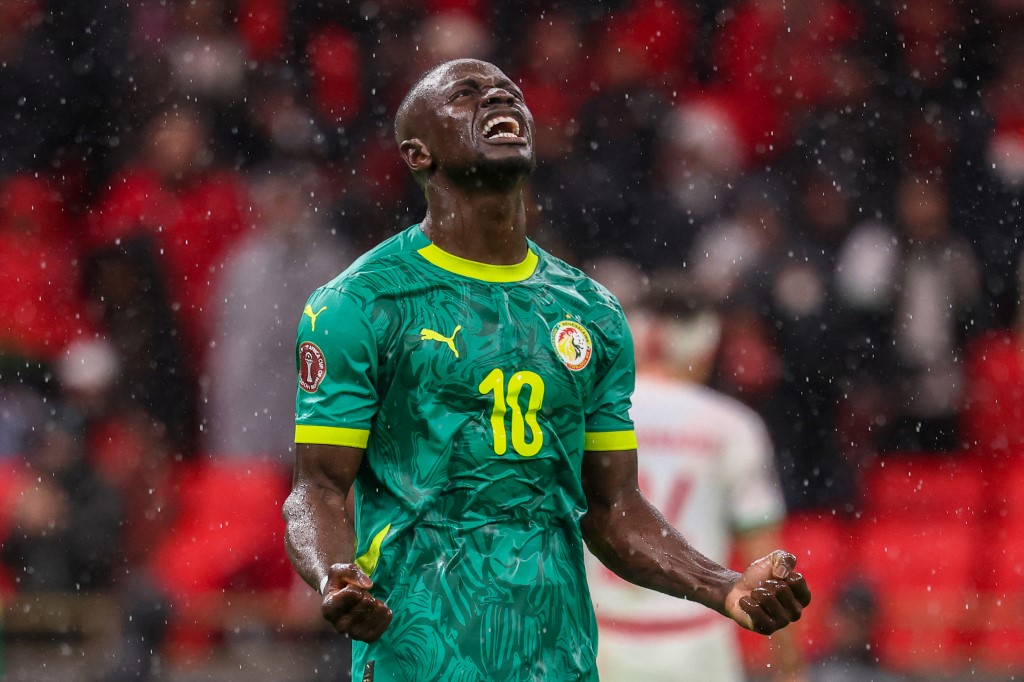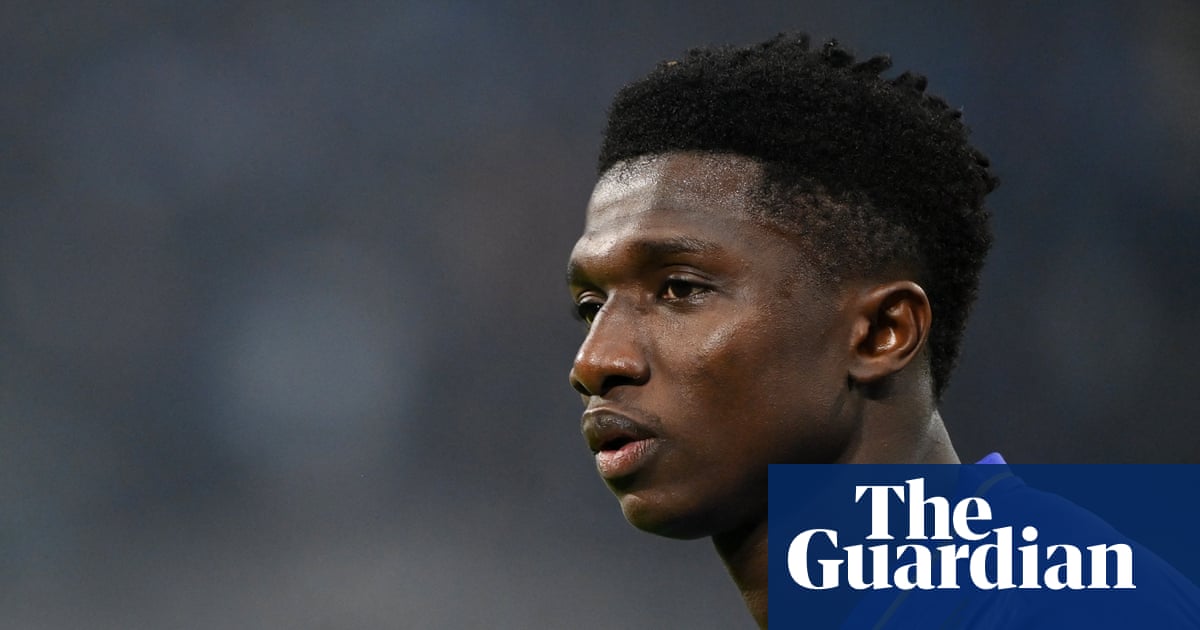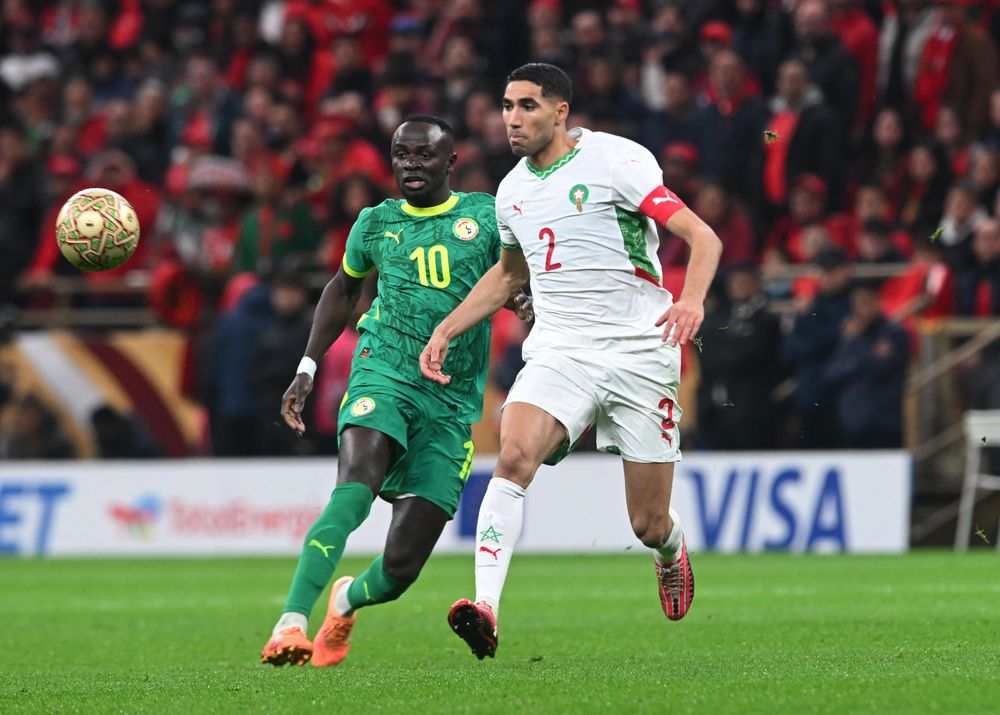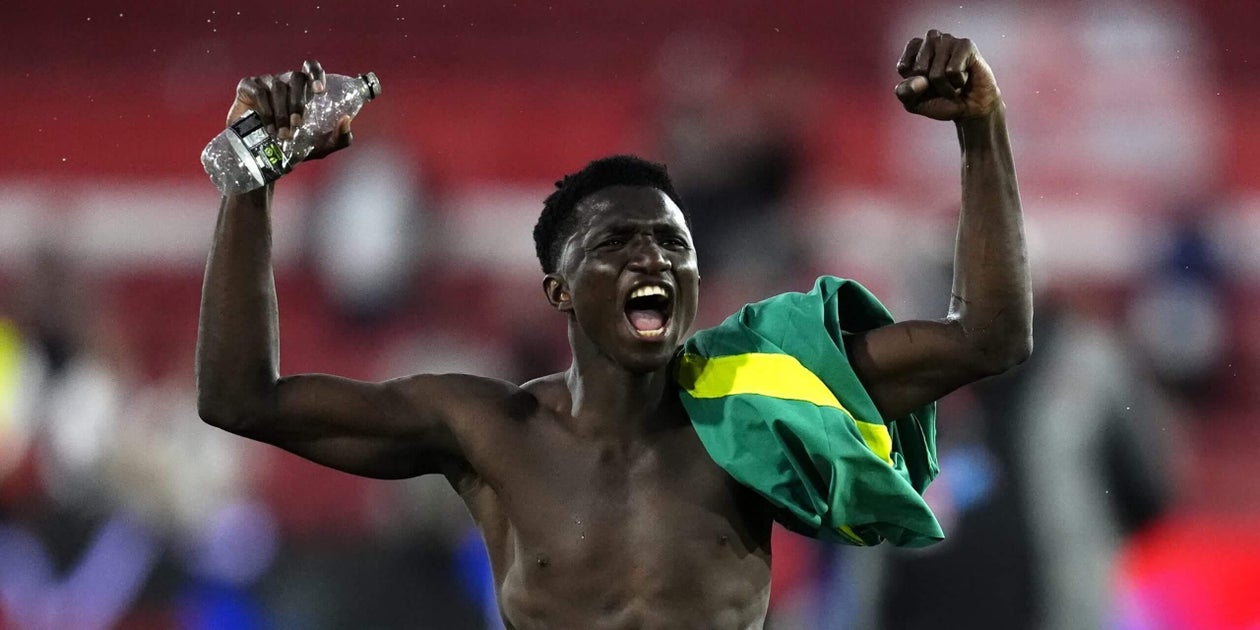
When Lamine Camara and his Senegal team-mates walk out to face France at MetLife Stadium in both sides’ opening group game of this World Cup, they will have multiple motivations in mind.Proving, first of all, that they have not been knocked off course by the deeply contentious decision to strip them of the Africa Cup of Nations title and hand it to Morocco, who they beat in that final back in January.Demonstrating that they can go even further at this World Cup than their round-of-16 showing at the previous edition four years ago.Emulating the achievements of the Senegal team that upset defending champions France 1-0 in the opening fixture of the 2002 World Cup.And getting El-Hadji Diouf off their backs at long last.As one of the standout players in the side that stunned the French that day en route to reaching the quarter-finals in Japan and South Korea, Diouf has long held legendary status in his homeland.Befitting his reputation as one of the most provocative players to have graced the Premier League, the former Liverpool, Bolton Wanderers, Blackburn Rovers and Leeds United forward is not shy about letting that be known to his successors in the West African country’s national team.“Everything I know about this game comes from what El-Hadji Diouf has told me,” midfielder Camara tells The Athletic in an interview at the training ground of his club, Monaco of France’s top-flight Ligue 1. “He never stops winding me up about it.“He reminds us all the time that he won the (African) ‘Ballon d’Or’ (African Footballer of the Year, in 2002) and that that will be the case forever. I push back by telling him that I won the youth ‘Ballon d’Or’ (African Young Player of the Year, in 2023 and 2024). Then he’ll say, ‘You’re a little Ballon d’Or, a baby Ballon d’Or. You’ve not had your moment yet’.“He’s always talking to me about the famous France-Senegal match. He’s shared all his memories — but I tell him that since we’ve got a chance to play against France, why not create our own memories?“It’s an opportunity for us to write our own story. And maybe then he’ll finally stop talking to me about 2002!”Lamine Camara is a mainstay of the Senegal side (Ulrik Pedersen/NurPhoto via Getty Images)By the time France and Senegal lock horns again in New Jersey tomorrow (Tuesday), 24 years will have passed since that encounter in Seoul, which immediately went down as one of the most extraordinary upsets in World Cup history.The fact that Papa Bouba Diop, who bundled home Senegal’s winner, died in 2020 following a long illness will only heighten the sense of poignancy.Although it occurred 18 months before Camara was born, on New Year’s Day 2004, he knows all about the match.As in 2002, France go into this year’s tournament boasting a mouth-watering array of attacking talent and with a status as many observers’ pre-competition favourites, but he believes he and his team-mates can cause them problems.“Playing France will be a really great match,” he says. “We all have the memory of the famous 2002 game in mind.“It’s exciting to go up against these players. They have a real team with world-class players, and it won’t be easy. But we have everything in this Senegal team to go up against any other team.”Camara has been playing in France since February 2023, initially with Metz before joining Monaco 18 months later. An industrious box-to-box player with a booming right foot, he has developed a reputation as one of the most promising central midfielders in Ligue 1.As a Senegal international playing in France, Tuesday’s game inevitably holds special significance. And as his Monaco team-mate Maghnes Akliouche, who is in the French squad for this tournament, has been finding out, the 22-year-old does not intend to take any prisoners.“I haven’t been holding back against Maghnes,” Camara says with a grin. “When I put in a tackle in training, I tell him, ‘Get ready — that’s what you can expect at the World Cup’. So the trash-talking has already started.”Papa Bouba Diop celebrates scoring for Senegal against France at the 2002 World Cup (Patrick Hertzog/AFP via Getty Images)Like in 2002, Senegal approach this World Cup having recently finished as runners-up at the Africa Cup of Nations. But whereas their penalty shootout defeat against Cameroon in the final back then left behind only keen disappointment, the fallout from the 2026 edition has been bitter.Like many people, Camara was watching television coverage of the Champions League last-16 second leg between Chelsea and Paris Saint-Germain on March 17 when he learned that Senegal’s 1-0 extra-time victory over hosts Morocco two months earlier had been overturned by the Confederation of African Football (CAF).The decision, against which the Senegalese Football Federation has appealed to the Court of Arbitration for Sport (CAS), was punishment for several Senegal players leaving the pitch for 15 minutes in protest at a late penalty awarded to Morocco.But having experienced the remarkable chaos of that game, the joyous delirium of the final whistle and the heady celebrations of the days that followed, Camara is in no mood to hand his winner’s medal back.“The final was fantastic, the best moment of my career,” he says. “Playing in a big stadium like that in Morocco with all the people whistling, it was the greatest thing I’ve ever experienced. It was the first trophy I’d won with the national team at senior level.“I heard the commentators from the PSG-Chelsea game talking about the AFCON and saying that Senegal had lost the title.“But it didn’t bother me — I played that final on the pitch, and I won it. So nothing has changed for me.”Camara was born and raised in Diouloulou, a small town of around 5,000 inhabitants in Casamance, the region of south-west Senegal that stretches towards the Atlantic Ocean below the long, snake-shaped promontory formed by The Gambia.Celebrated international team-mate Sadio Mane hails from the same part of the world, having grown up down the road in Bambali. And the similarities do not end there.Like Mane, Camara had to overcome resistance from his father before being allowed to pursue a football career. Like Mane, he cut his teeth at Dakar’s celebrated Generation Foot academy before, like Mane, making the leap to European football with Generation Foot’s French partner club Metz.When Camara talks about what it is like to play alongside the former Liverpool man, his eyes shine.“It’s a source of pride to share a pitch and a changing room with Sadio Mane,” says the softly-spoken midfielder. “He’s a legend for us.“We come from the same region and speak the same language. I have an excellent relationship with him. He always gives me advice. I always try to be close to him and to watch how he behaves, how he lives and how he speaks to people. He’s a role model. For us young players, it’s important to have the same kind of lifestyle as Sadio Mane and to follow his example.“And then he got married recently, and I got married too. In Senegal, people say that I’m following in his footsteps, and that makes me proud. It shows that I’m on the right path.”This news of Camara’s recent nuptials comes as a surprise to Monaco’s communications team.He had popped home to Senegal to tie the knot with his fiancee the previous weekend, and none of them were any the wiser.Sadio Mane holds up the AFCON trophy that now has an asterisk attached (Abdel Majid Bziouat/AFP via Getty Images)The eldest of six siblings, Camara has two brothers and three sisters. Although he acknowledges that his childhood was “difficult”, he treasures the memories of his formative steps as a footballer.“You don’t have nice synthetic pitches in Casamance — you just play football in the street with your mates in front of the house,” he says. “We’d practise penalty kicks, and sometimes I’d go in goal. That’s where everything started for me, just playing in the street.“Everyone knows that it’s very hard to succeed in Senegal and become a professional footballer. Particularly when you come from where I come from. I had to work at Casamance (regional club Casa Sports) to get to Dakar. In Dakar, you have to work to get into a club. And then you have to work at that club to get into a club in Europe. It’s not easy. It requires a lot of effort and sacrifices.“My father didn’t have the means for me to go to Dakar to play football. He wasn’t OK with me playing football and wanted me to continue with my studies. But I was sure of myself, I had faith in my qualities and I knew I could succeed in football. I managed to convince him to let me go to Dakar, to discover the world and play football. When I got to Dakar, Generation Foot saw me and recruited me.”Lamine Camara, playing for Metz, slides in on Clermont’s Jim Allevinah in August 2023 (Olivier Chassignole/AFP via Getty Images)Camara’s rise in the years since has made him the pride of Diouloulou.“Everyone there loves football,” he says. “When you come from a village like that and you succeed, everyone feels proud of you. I feel the support they’ve always given me and continue to give me today. They never stop supporting me, wherever I go.”Every time he is asked about his footballing role models, Camara cites the same four players: Toni Kroos, Federico Valverde, Kevin De Bruyne and Senegal team-mate Idrissa Gana Gueye. All, like him, are/were right-footed central midfielders renowned for the quality of their ball-striking.“I try to look at how I play and my qualities relating to them,” he explains. “If I take Gana Gueye, it’s his rigorous side. Valverde, it’s the fact he always gives everything for the team and puts in a lot of effort. Kroos, it’s his precision at set pieces. De Bruyne, it’s his passes and his long-range shooting.”Camara signed by Metz at the age of 19 in February 2023, in between a pair of tournaments where he helped propel Senegal to glory — first at the African Nations Championship (a now-defunct event reserved for players based in the respective countries’ domestic leagues) and then at the Under-20 Africa Cup of Nations, where he was named player of the tournament.Despite being thrust from the sultry stadiums of Egypt, where the latter competition was played, into the depths of winter in north-eastern France, the youngster quickly found his feet. He helped Metz achieve promotion to Ligue 1 and although they were relegated again 12 months later, he was named Gem of the Season — an award handed to the top flight’s outstanding newcomer.His breezy adaptation did not go unnoticed.It did not harm Camara’s chances of one day playing for Monaco that, the first time he ever set foot on the pitch at their Stade Louis II in October 2023, he scored an exquisite lob from 64 yards in the fourth minute of the game.“I knew their goalkeeper came off his line a lot, so I already had that in mind,” he explained matter-of-factly to reporters afterwards.
Lamine Camara interview: ‘France have world-class players, but Senegal can write our own story’
The Monaco midfielder talks exclusively about emulating Sadio Mane, annoying his club-mates and seeking to silence El-Hadji Diouf
2,487 words~11 min read