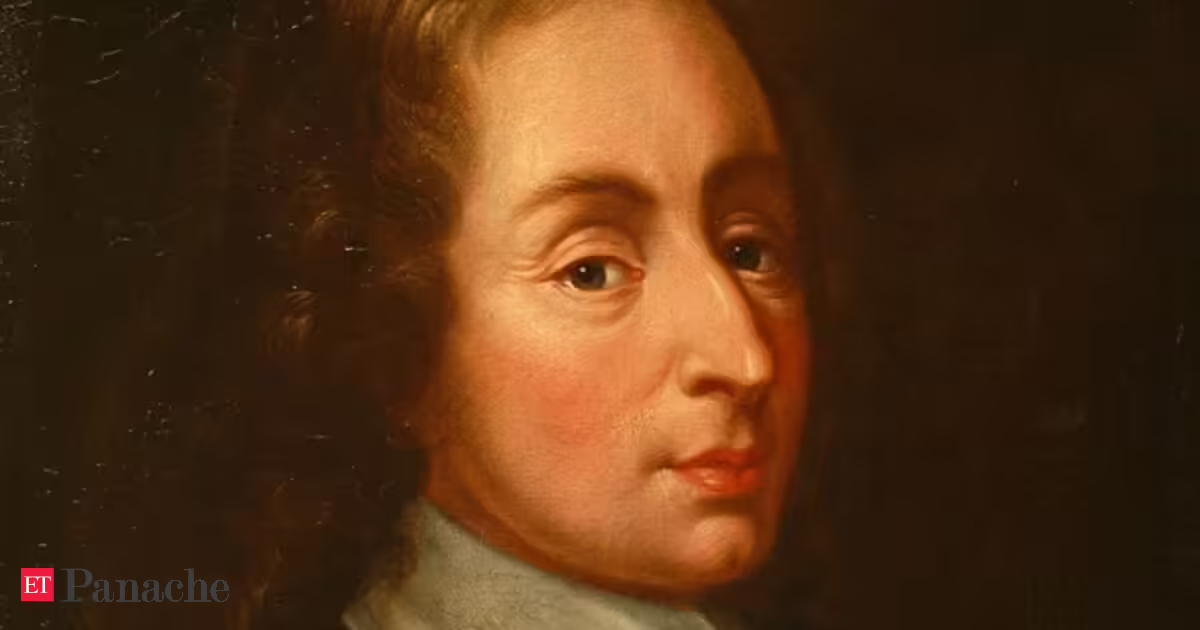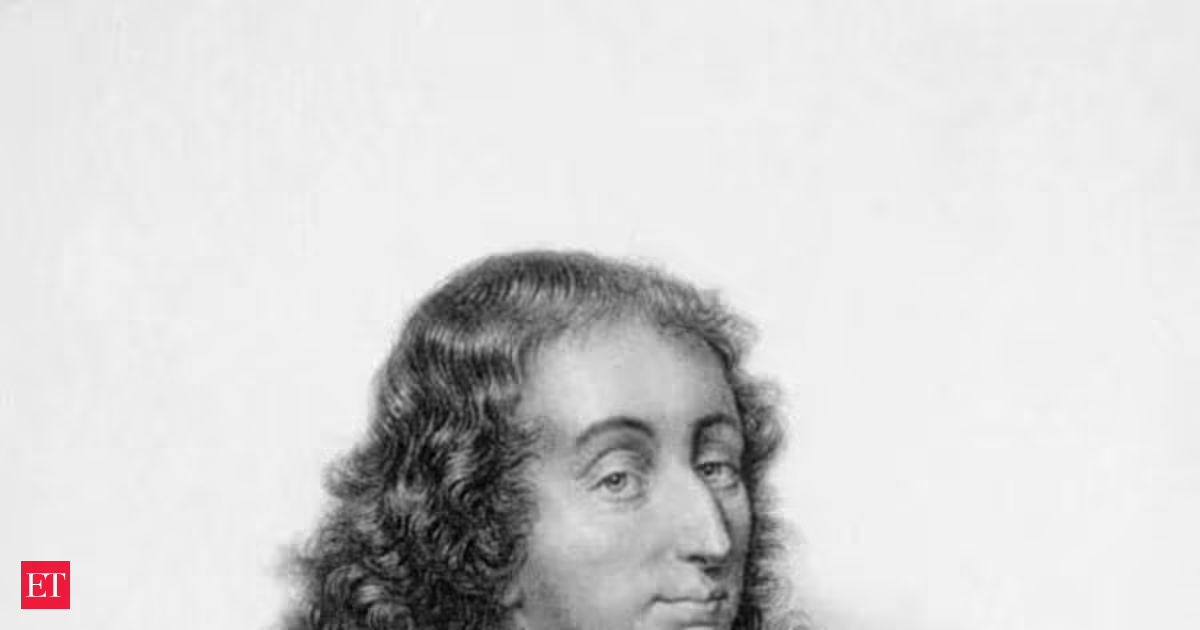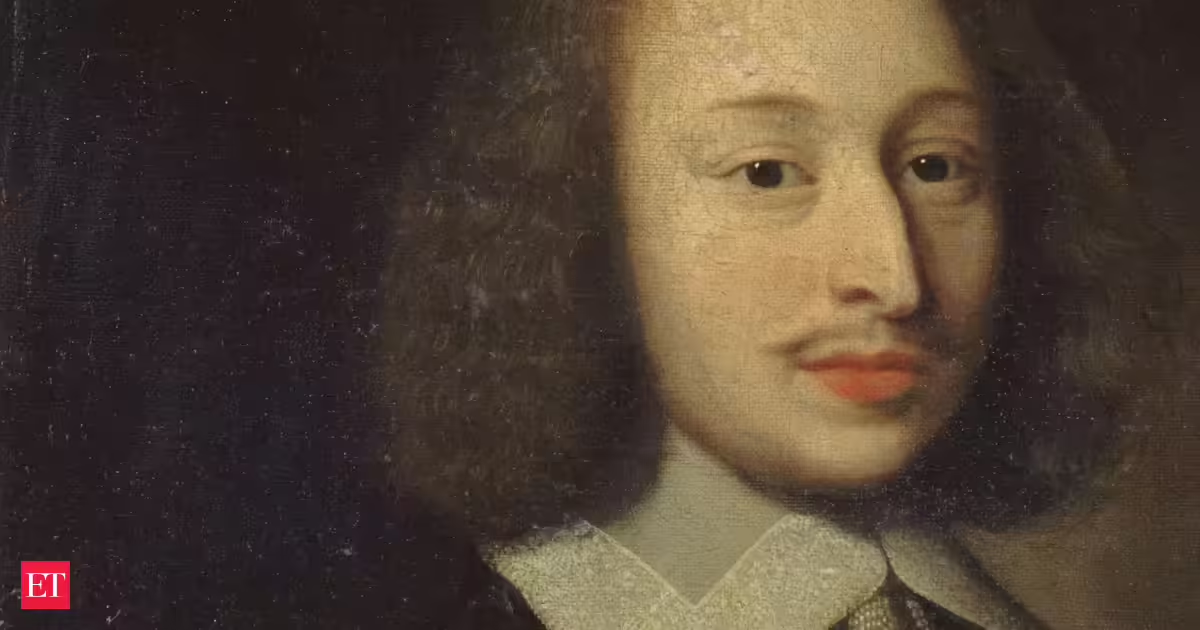
Quote of the Day by French philosopher Blaise Pascal: In a world driven by constant alerts, endless scrolling, and the pressure to stay mentally occupied, Blaise Pascal’s famous reflection feels less like a 17th-century philosophical remark and more like a diagnosis of modern life. The idea of simply staying quietly in a room without distraction now feels uncomfortable for many people. Not because silence is harmful, but because it removes everything that usually keeps the mind busy. In that absence, thoughts begin to surface that are often ignored during daily noise. This is where Pascal’s observation becomes powerful again, especially in today’s digital age where attention is constantly fragmented.Modern psychology and behavioral research now echo what Pascal hinted at centuries ago. Studies on attention, mindfulness, and digital dependency suggest that the human brain struggles when stripped of stimulation. Yet, paradoxically, that same lack of stimulation is where clarity, emotional processing, and creativity begin to form. When a person is not consuming content, replying to messages, or chasing updates, the mind slowly turns inward. It begins to reorganize thoughts that were previously scattered. In this sense, staying quietly in a room is not emptiness—it is mental recalibration.Blaise Pascal quote on unhappiness and modern digital distractionBlaise Pascal, a French mathematician, physicist, and philosopher, lived during a time when distraction looked very different. There were no screens, no digital feeds, and no algorithmic content streams competing for attention. Yet his observation about human restlessness remains surprisingly accurate in the 21st century. His central argument was simple: people often avoid being alone with their thoughts because it forces them to confront uncomfortable truths.Today, that idea extends into digital behavior. The modern mind rarely experiences true silence. Even moments of rest are filled with background noise—music, videos, or social media updates. The brain becomes conditioned to expect constant input. As a result, when that input stops, even briefly, discomfort arises. This is where Pascal’s philosophy intersects with neuroscience and behavioral psychology.Researchers studying attention restoration theory suggest that the mind actually performs better after periods of low stimulation. Natural environments, slow walks, and quiet spaces help restore cognitive balance. This supports the idea that silence is not passive—it is restorative. It gives the brain space to reorganize thoughts and reduce mental fatigue caused by continuous input.Why staying quietly in a room feels difficult in modern lifeThe challenge with staying quietly in a room today is not physical—it is psychological. Many people associate silence with boredom, but boredom is often just the beginning of deeper thinking. When external stimulation fades, internal thoughts become more audible. This can include unresolved emotions, decisions, or reflections that are usually pushed aside during busy routines.Digital culture has also redefined productivity. Many people feel guilty when they are not actively doing something visible or measurable. Sitting in silence may feel unproductive, even though it can be one of the most mentally productive states. In fact, some of the most creative breakthroughs in history have come during periods of rest rather than intense effort.For example, scientific and artistic thinkers like Albert Einstein often emphasized the importance of mental space. Einstein himself was known for taking long walks, allowing ideas to form without forced effort. These moments of quiet reflection often contributed to his deeper insights into physics and reality. It is not silence alone that creates genius, but silence combined with a mind free from constant interruption.The psychology of silence, creativity, and mind-wanderingModern cognitive science supports the idea that the brain remains active even in rest. During quiet moments, a network called the “default mode network” becomes more active. This system is associated with memory, imagination, and self-reflection. It helps the mind connect past experiences with present understanding, often leading to creative insights.When Blaise Pascal spoke about unhappiness, he was indirectly pointing toward this inner landscape. A mind that never pauses rarely integrates its experiences fully. Instead, it moves from one input to another without processing depth. Over time, this creates emotional fatigue.Creative professionals often describe their best ideas emerging during non-working moments—walking, showering, or sitting alone. These are not structured thinking periods. They are mental spaces where the mind is allowed to drift. This drifting is not wasted time; it is cognitive processing in a natural form.What Blaise Pascal teaches about happiness in a distracted worldPascal’s reflection is not a call for isolation but for balance. It does not suggest abandoning the world, but rather learning how to exist without constant escape from oneself. Happiness, in this interpretation, is not found in endless stimulation but in the ability to sit with one’s own thoughts without discomfort.In today’s environment, this lesson becomes even more relevant. People are surrounded by tools designed to capture attention. Yet attention is also where meaning is formed. Without moments of silence, experiences remain fragmented. With silence, they begin to connect.Ultimately, the idea of staying quietly in a room is symbolic. It represents the ability to be present without distraction. It is a reminder that not every moment needs to be filled, optimized, or consumed. Sometimes, the most meaningful progress happens when nothing external is happening at all.And in that quiet space, the mind slowly returns to itself—clearer, steadier, and more aware than before.
Quote of the Day by French philosopher Blaise Pascal: “The sole cause of man’s unhappiness is that he does not know how to...” — Life lessons on why learning to sit quietly with your own thoughts may be the hidden path to true happiness and inner peace
Quote of the Day by Blaise Pascal: Modern happiness research keeps confirming what Blaise Pascal understood centuries ago. Constant noise, endless scrolling, and digital distraction weaken inner peace. Silence creates mental clarity. Solitude strengthens self-awareness. A quiet room becomes a powerful space for reflection, emotional balance, personal growth, mindfulness, and lasting happiness that external success alone cannot provide.
865 words~4 min read