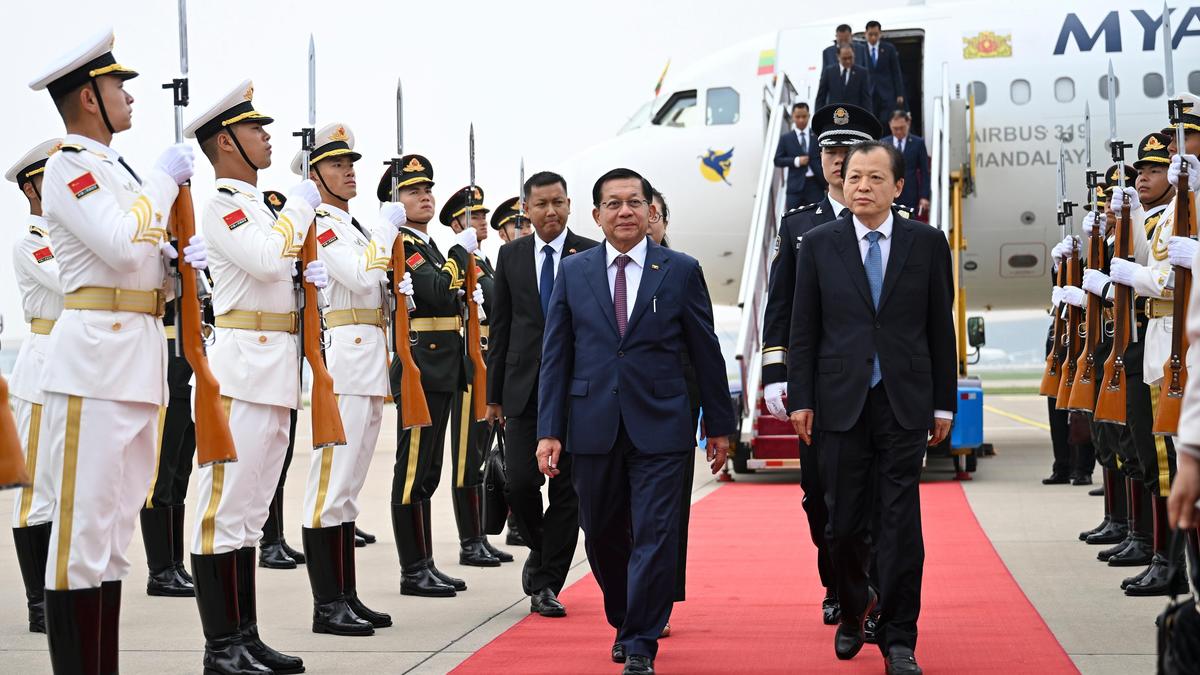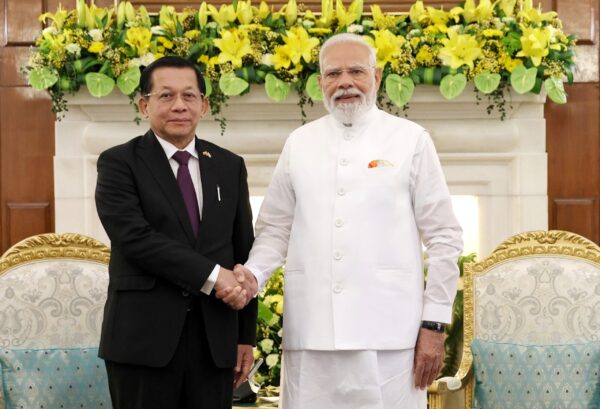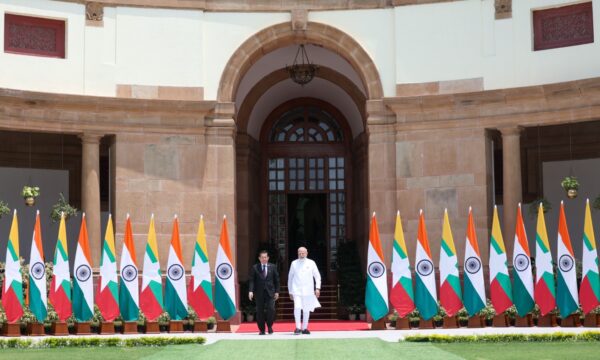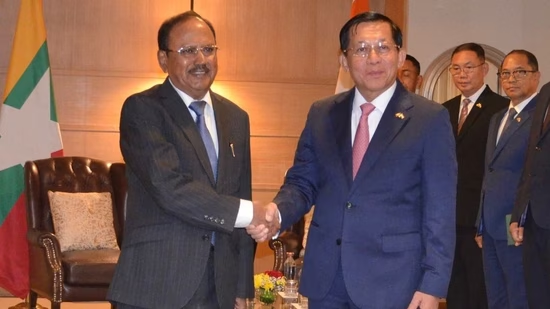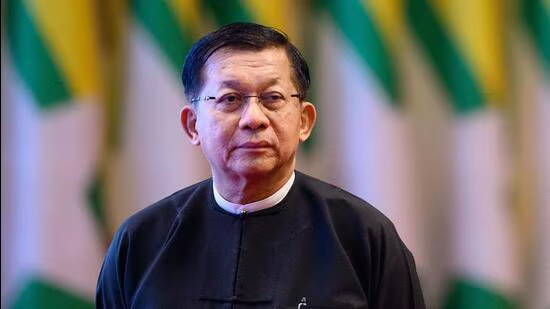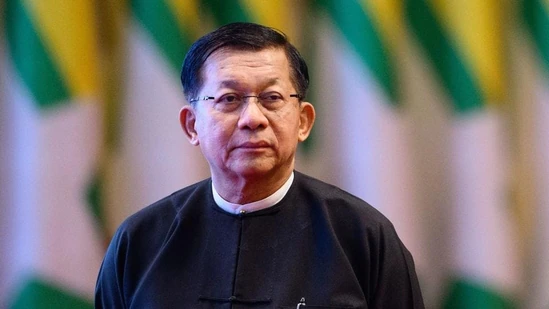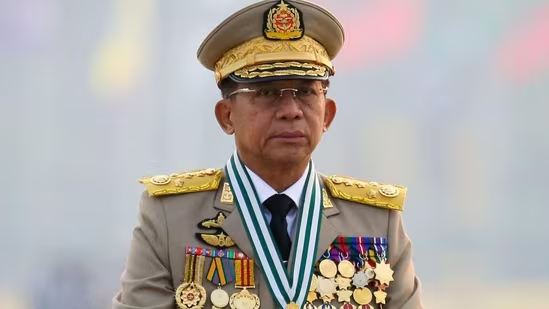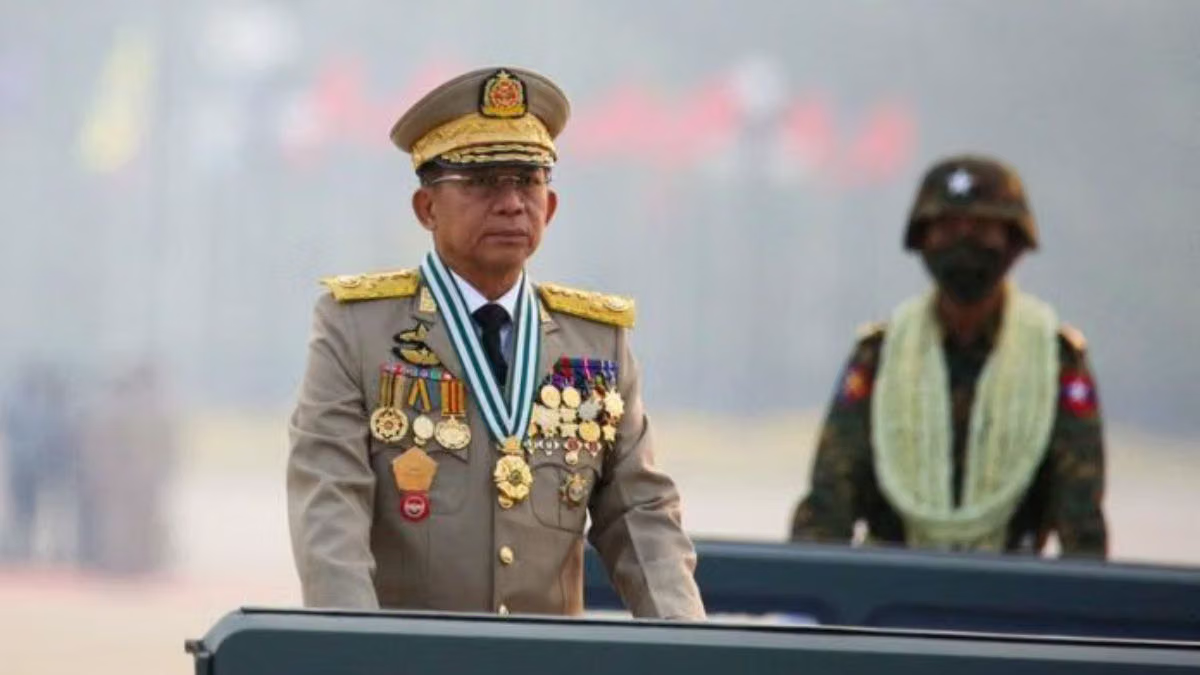
Myanmar President Min Aung Hlaing’s visit to India from 30 May to 3 June 2026 seemed a routine diplomatic engagement at first glance. It wasn’t supposed to be a bilateral event; Min Aung Hlaing was visiting primarily to attend the International Big Cat Alliance Summit scheduled for 1 June. But the summit was postponed after an Ebola outbreak in parts of Africa. New Delhi and Naypyidaw decided not to cancel the trip and make it a full-fledged bilateral visit.
For Myanmar, the visit carried particular symbolism. It was Min Aung Hlaing’s first overseas trip since assuming the presidency in April 2026. This is at a time when Western governments remain critical of Myanmar’s political transition and continue to limit high-level engagement. India visit provided Naypyidaw with an opportunity to demonstrate that it is not diplomatically isolated. Choosing India as the first destination also signalled Myanmar’s desire to diversify its external partnerships and avoid excessive dependence on China.For India, the rationale was driven foremost by the importance it accords to its neighbourhood. The stability and prosperity of Myanmar concerns India because the two countries have had civilisational ties. Cultural affinities continue to shape bilateral relations today. India’s approach toward Myanmar therefore extends beyond immediate political developments. New Delhi’s diplomatic efforts here are also part of the Act East Policy. Moreover, sharing a 1,643 km of porous borders and serving as the only land bridge connecting India to Southeast Asia are strategic realities that have a bearing on India’s northeastern borders.