Dual targeted reminders significantly increased serious illness conversations (SICs) between oncology providers and patients with poor-prognosis cancers.Clinician prompts had the greatest impact on initiation of SICs.Conversation rates remained low overall, emphasizing the need for better strategies to encourage SICs.
Reminders, or "nudges," to both oncology clinicians and patients led to a significant increase in difficult conversations about poor-prognosis cancers, a large randomized study showed.
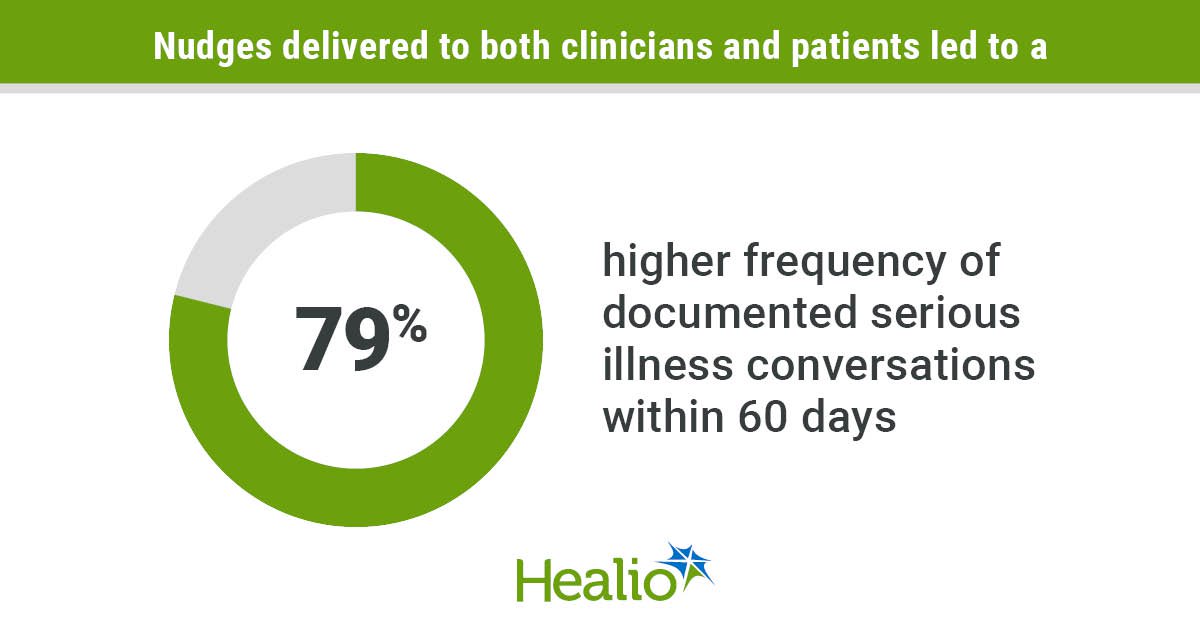
Involving more than 1,000 patients and their oncology providers, the study showed that patients who received a nudge along with their clinicians were 79% more likely to have serious illness conversations (SICs) within 60 days as compared with the no-nudge group. A nudge to only one or the other led to small, nonsignificant increases in conversations versus no nudge. SIC rates were low in all the groups, even after including clinician notes found in patient records, emphasizing the need for better strategies to encourage SICs.
The study revolved around the all-too-common issue of a patient dying without a documented SIC, reported Christopher R. Manz, MD, of Dana-Farber Cancer Institute (DFCI) in Boston, and colleagues in the Journal of the National Comprehensive Cancer Network (JNCCN).