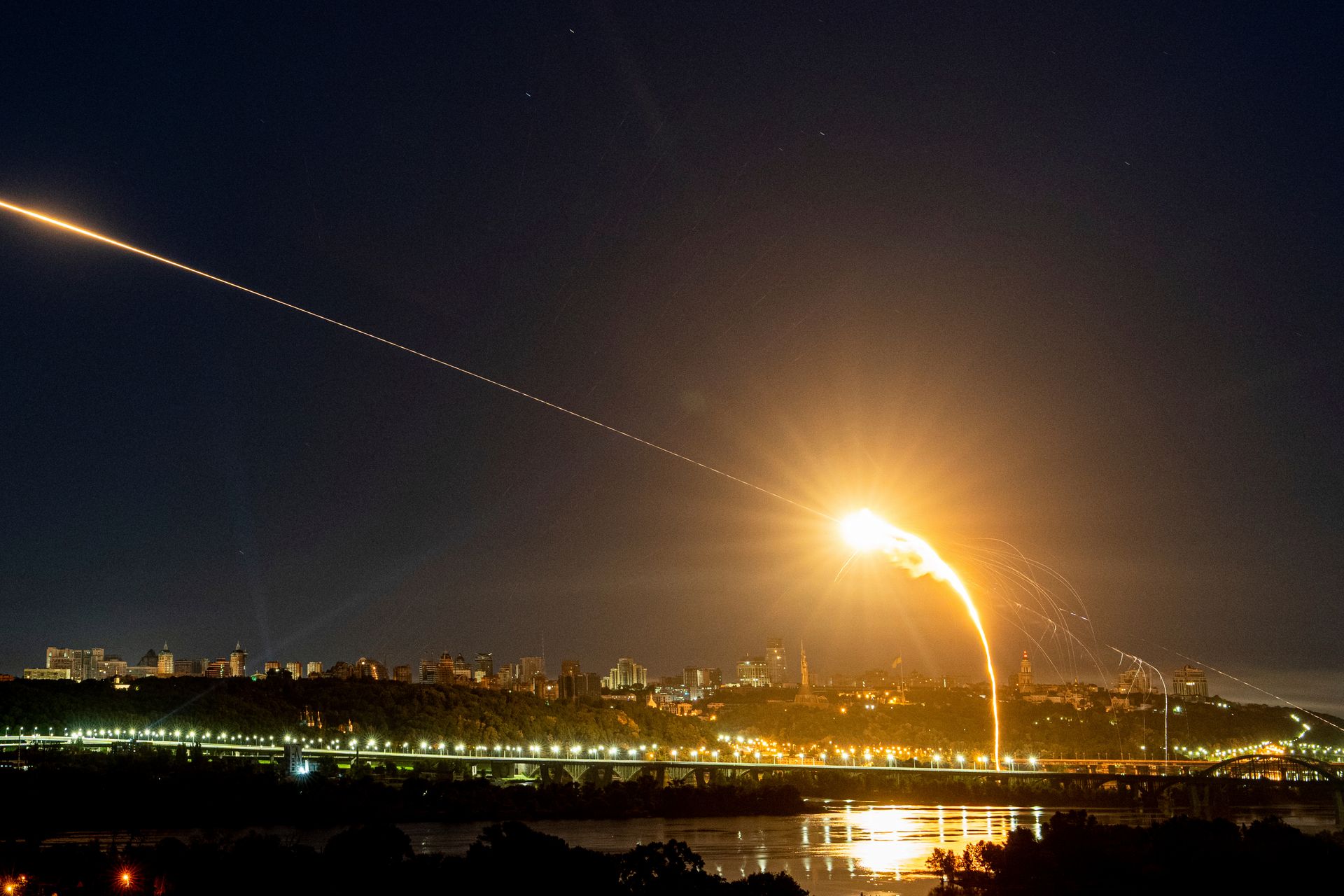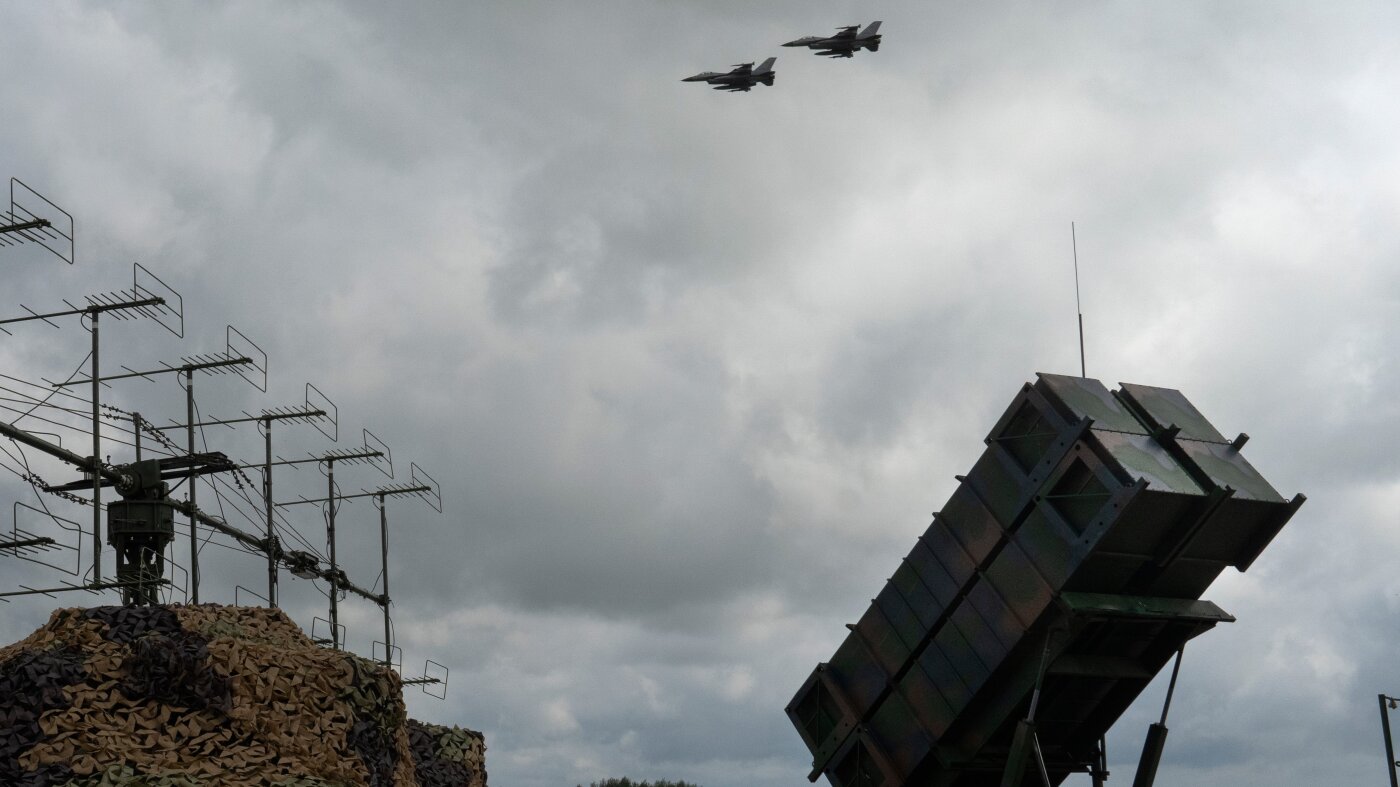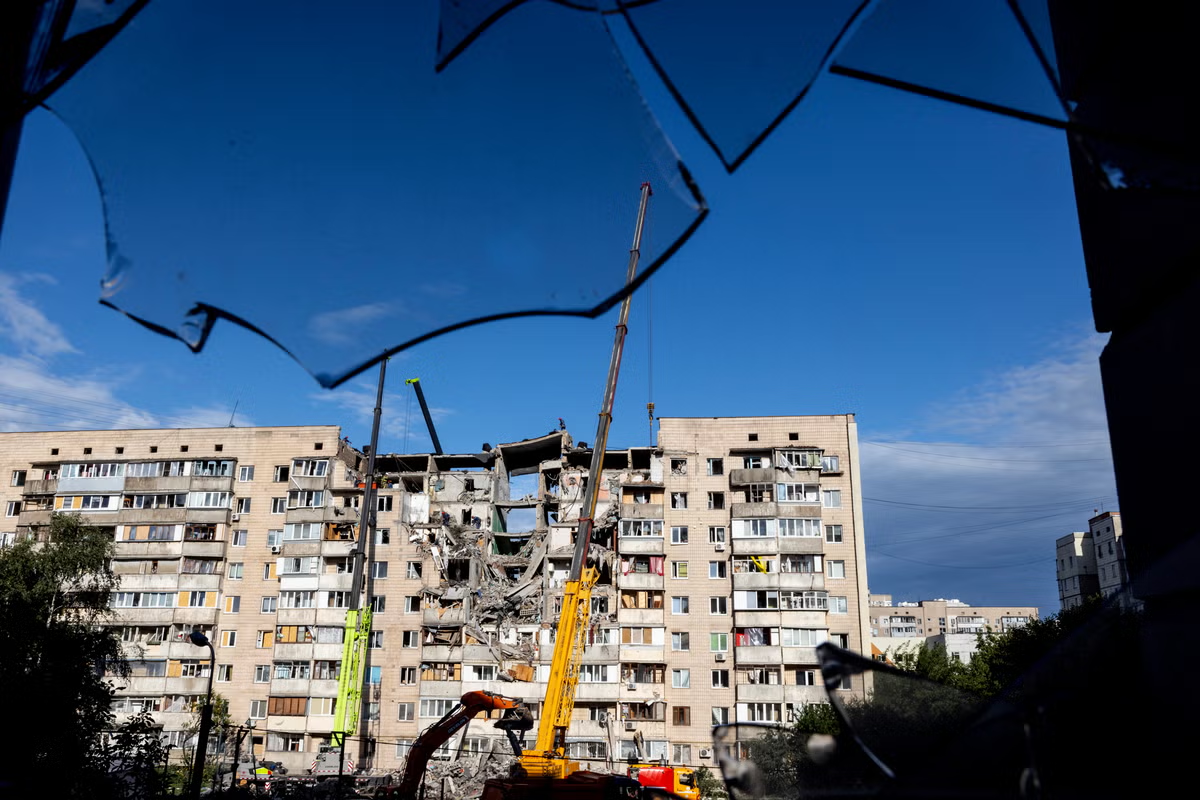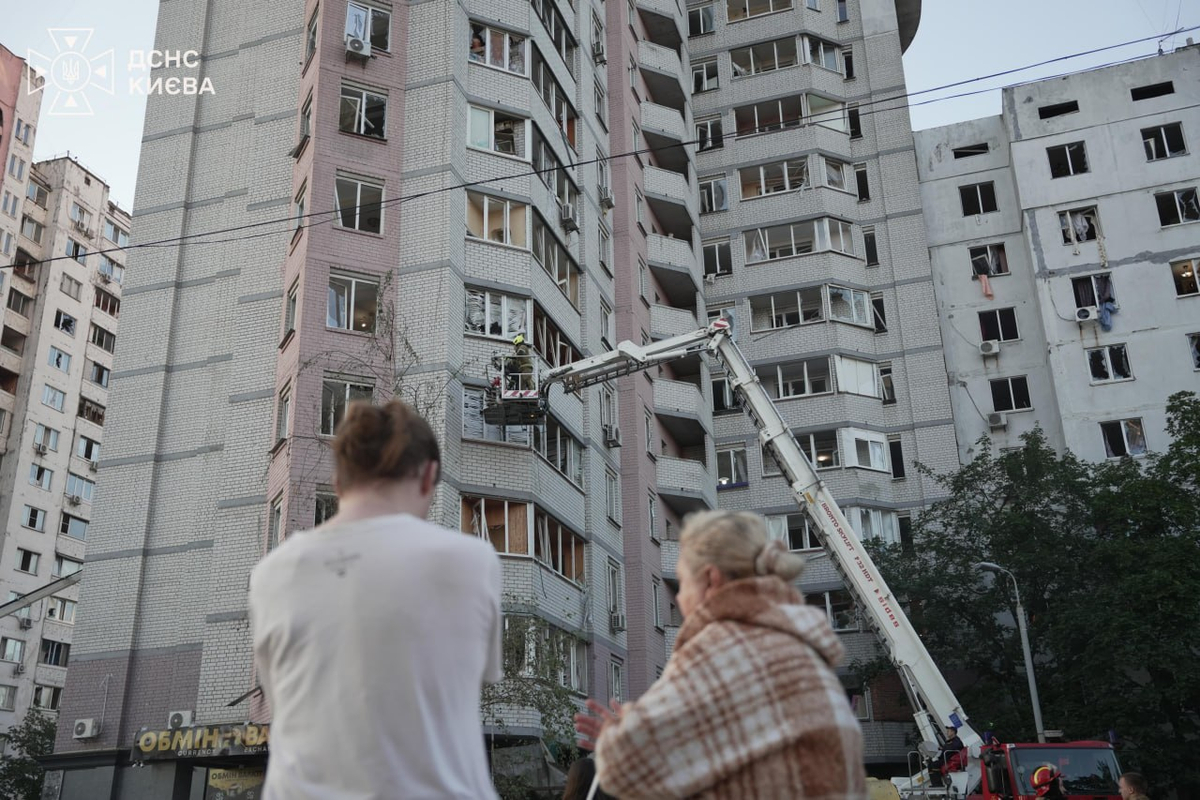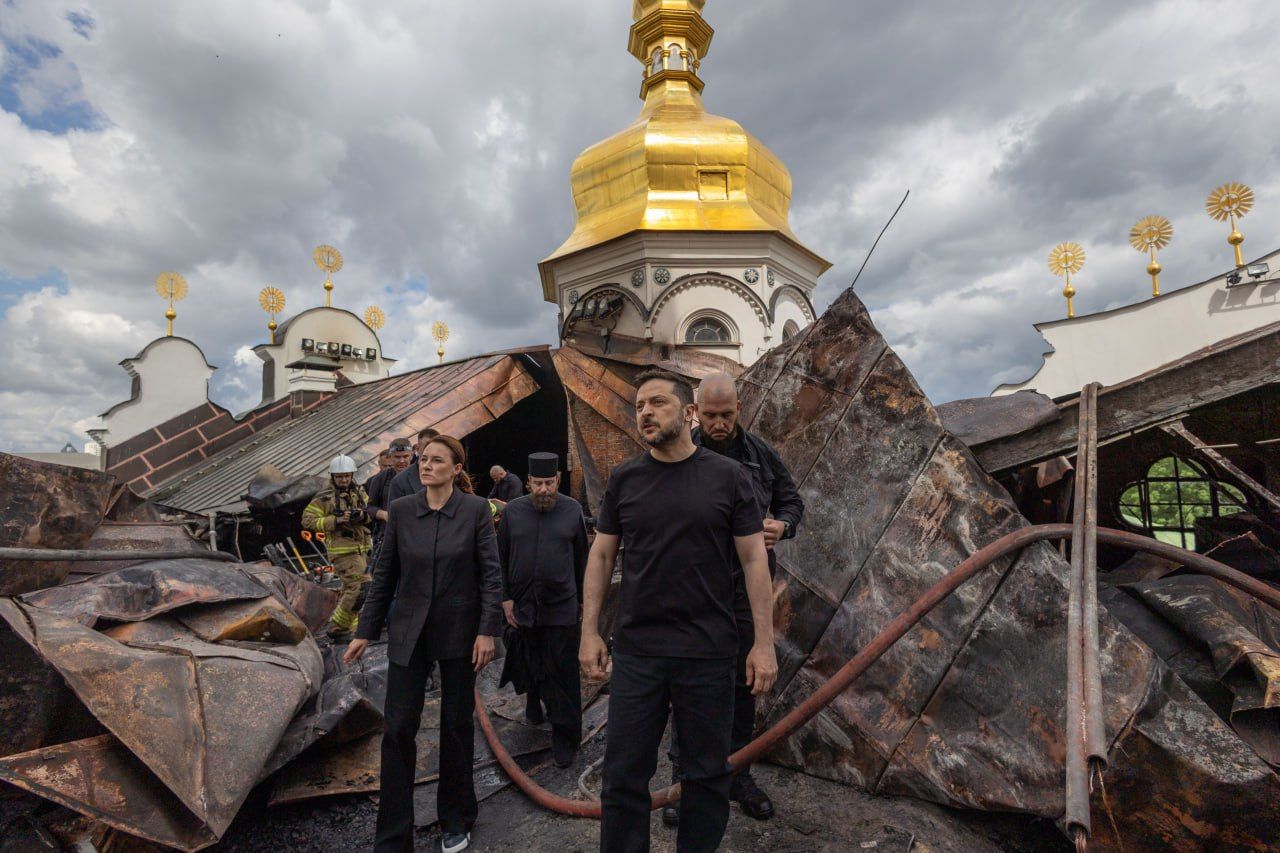
Ukrainian president Volodymyr Zelensky and Prime Minister Yuliia Svyrydenko on the roof of the Dormition Cathedral of the Kyiv Pechersk Lavra in the Ukrainian capital after the roof was struck by a Russian drone on June 15, 2026. (Volodymyr Zelensky / Telegram)Russia fired 34 ballistic missiles at Ukraine during the June 15 overnight attack that set part of Kyiv's historic Pechersk Lavra compound aflame. Kyiv's Patriot batteries shot down 15 of the 19 ballistic missiles fired at the capital, along with five out of six 3M22 "Zirkon" hypersonic cruise missiles, according to local monitors.The attack laid bare the problem now driving Ukraine's air defense scramble: Patriot remains the only proven Western-supplied system Kyiv has against Russian ballistic missiles, and the missiles it needs to fire from those batteries are scarce, expensive, and increasingly in demand elsewhere."We had a package of missiles for Patriot," President Volodymyr Zelensky told a Kyiv Independent journalist in the Pechersk Lavra compound, as firefighters continued to douse the still smoldering roof of the Dormition Cathedral. "It was recently delivered to Ukraine; thank God."With Russia pressing its ballistic missile advantage, Ukraine is responding by chasing three imperfect options at once: finding aging PAC-2 and PAC-3 interceptors abroad, trading its expertise against Iranian-designed drones for Patriot missiles, and trying to build its own anti-ballistic missile defense system.A critical shortageEven before the U.S-Israeli war with Iran diverted interceptors previously earmarked for Ukraine to America's Gulf allies, Kyiv was struggling to keep its Patriot batteries supplied.Lockheed Martin currently manufactures only 650 PAC-3 interceptors per year, which the company plans to boost to 2,000 by 2033. However, even if the entire production line were dedicated to producing interceptors solely for Ukraine, it still wouldn't be sufficient. Ukrainian intelligence assesses Russia can manufacture "about 120 ballistic missiles per month," Zelensky told the NATO-Ukraine Council meeting in Kyiv on June 3. That amounts to a a production rate of 1,440 per year. That imbalance is increasingly being felt during Russia's large-scale missile attacks.
As Patriot missiles run low, Ukraine scrambles for alternatives under Russian missile fire
Russia fired 34 ballistic missiles at Ukraine during the June 15 overnight attack that set part of Kyiv's historic Pechersk Lavra compound aflame. Kyiv's Patriot batteries shot down 15 of the 19 ballistic missiles fired at the capital, along with five out of six 3M22 "Zirkon" hypersonic cruise missiles, according to local monitors. The attack laid bare the problem now driving Ukraine's air defense scramble: Patriot remains the only proven Western-supplied system Kyiv has against Russian ballist
1,126 words~5 min read