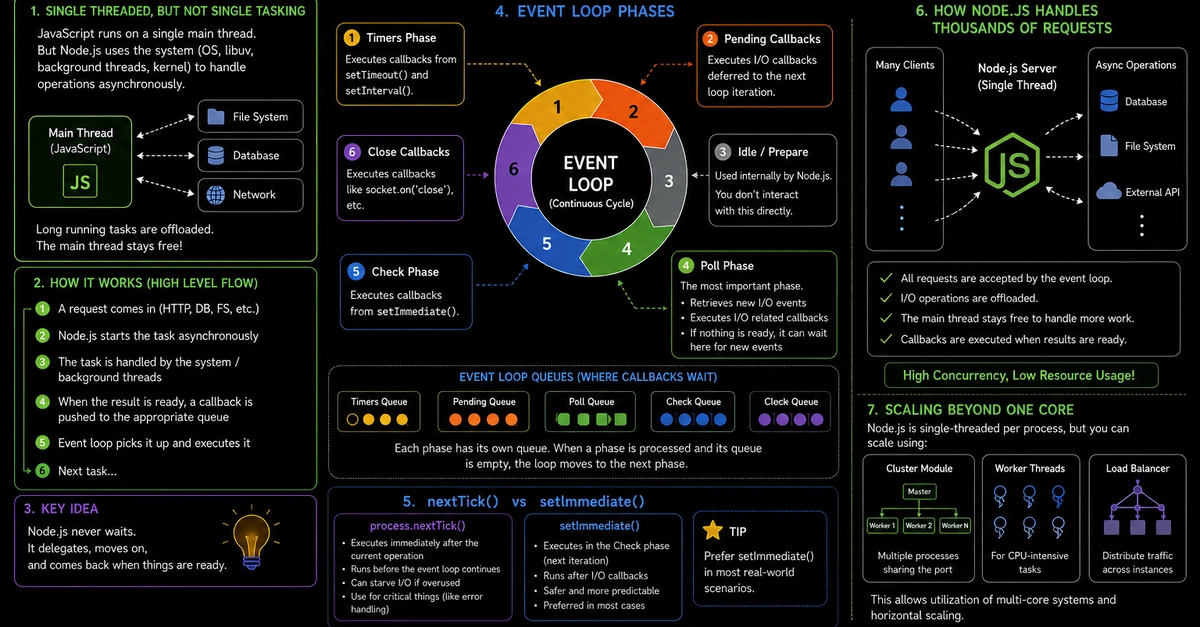
When building high-concurrency backend services, two ecosystems dominate the conversation: Node.js and Go (Golang).
If you ask the internet how they handle concurrency, you’ll get the standard textbook answers:
"Node.js is asynchronous and single-threaded, using an Event Loop."
"Go is synchronous and multi-threaded, using lightweight Goroutines."
But what do these statements actually mean under the hood? How do they look to your computer's CPU and RAM? To build bulletproof systems, we must stop memorizing these taglines and look at the low-level mechanical reality of how these two runtimes schedule execution.