Handling concurrency is one of the most critical decisions in modern software architecture. When applications need to handle thousands of simultaneous tasks—like serving HTTP requests, streaming data, or background processing. The design of a language’s concurrency model dictates how easily developers can write fast, safe, and maintainable code.
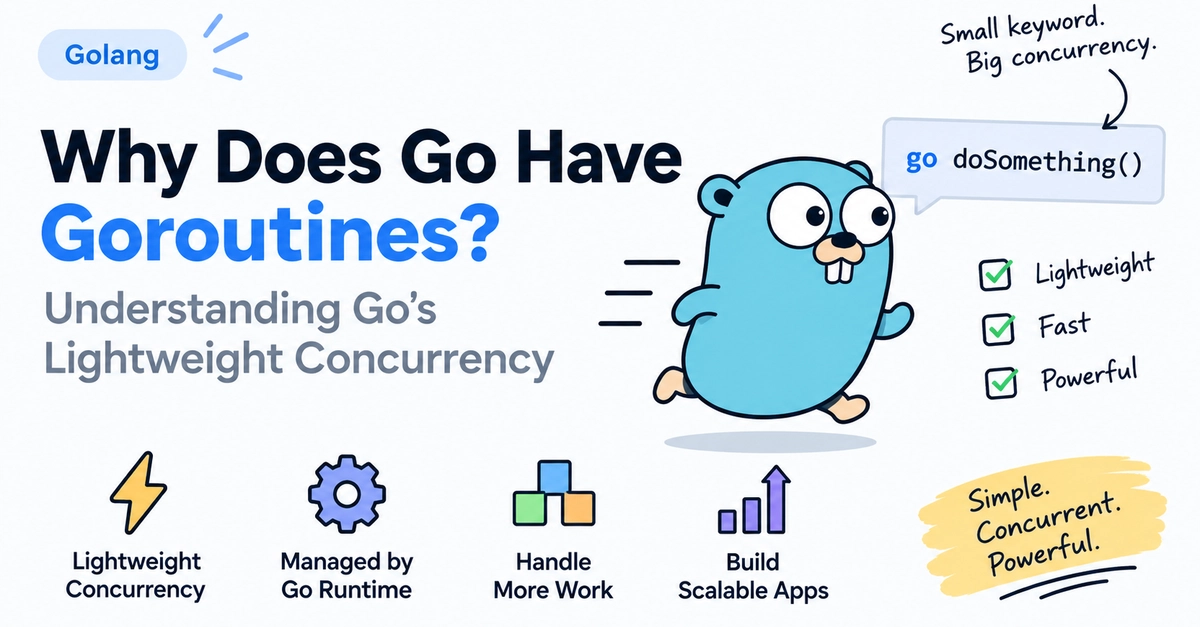
Go is famous for making concurrency a native, deeply integrated primitive through goroutines and channels. To truly appreciate Go's design, it helps to contrast it with JavaScript, which handles concurrency using a completely different philosophy: a single-threaded Event Loop fueled by asynchronous non-blocking I/O.
Here is an architectural deep dive into Go's multi-threaded concurrency engine and how it measures up against JavaScript's single-threaded asynchronous model.
Part 1: The Foundations of Go Concurrency
Go’s concurrency model is based on a paper by C.A.R. Hoare called Communicating Sequential Processes (CSP). The core philosophy of CSP in Go can be summarized by its most famous mantra: