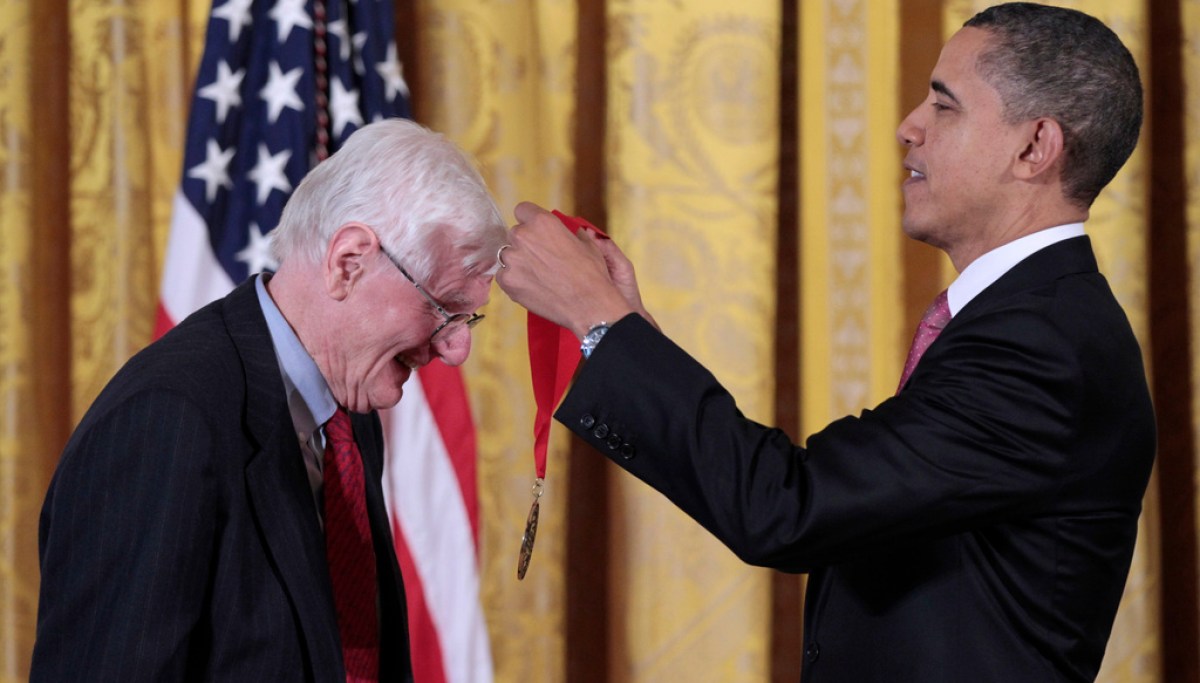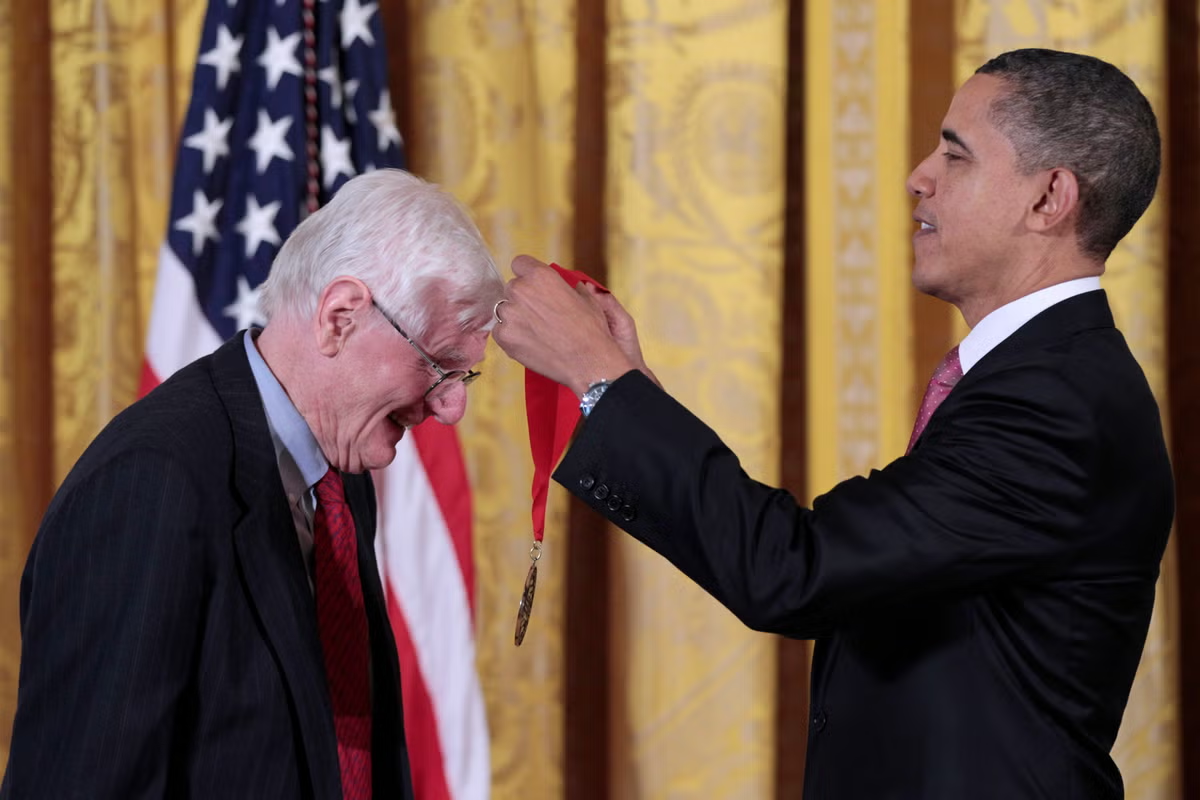
Gordon Wood didn’t just tell readers about the Revolution. Like no other historian, he helped them feel it.
“What Gordon did was to capture the liveliness — the electricity — of these opening debates in 1775 and 1776, when Americans were about to write new constitutions of government, and they were going to be able to apply their aspirations and inspirations in this process,” said Jack Rakove, Ph.D. ’75, a Stanford historian.
Wood, a Brown University professor emeritus who received his Ph.D. in history from Harvard in 1964, died June 7 at age 92 after being hit by a car in Providence, R.I. His contributions as a researcher and author won’t soon be surpassed, according to fellow scholars and former students.
“His work on the Revolution and the founding period has shaped the way we teach it, and no one knew the founding or the characters involved better than he did,” said Robert Allison, Ph.D. ’92, a Suffolk University historian who also teaches at Harvard Extension School. “Wood’s first book is still the place to start to understand how states formed new governments after independence.”
That book, “The Creation of the American Republic,” published in 1969, won the Bancroft Prize and was praised as a landmark in the study of the Revolution. He would dig deeper into the birth of the nation in the nine books that followed, one of which, “The Radicalism of the American Revolution” (1991), won a Pulitzer Prize. His most recent book, “Power and Liberty: Constitutionalism in the American Revolution,” was published in 2021.