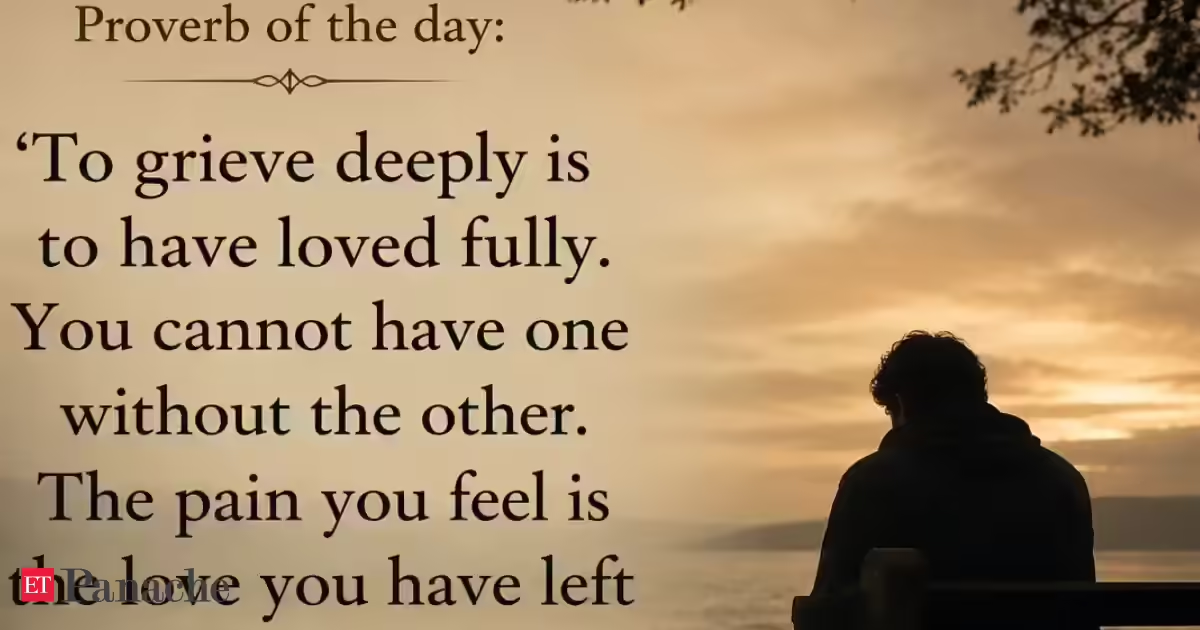
Grief is one of the most universal human experiences, yet it remains one of the hardest emotions to put into words. Across cultures and generations, people have searched for ways to understand the pain that follows loss. Proverbs, quotes, and traditional sayings often help explain feelings that seem too complex to describe directly.The proverb of the day, "To grieve deeply is to have loved fully. You cannot have one without the other. The pain you feel now is just the love you have left over with nowhere to go," offers a perspective that many people find comforting during difficult times. Rather than viewing grief as something separate from love, the saying presents the two as deeply connected experiences.The message suggests that sorrow after loss is not a sign of weakness. Instead, it reflects the depth of the bond that once existed. The stronger the connection, the greater the sense of absence when that connection is gone. In this way, grief becomes evidence of the love that came before it.Many people turn to proverbs and reflective sayings because they simplify complicated emotions into ideas that are easier to understand. These expressions often survive for years because they speak to experiences that remain relevant regardless of age, culture, or background.Proverb of the Day: Understanding why grief and love are inseparable"To grieve deeply is to have loved fully. You cannot have one without the other. The pain you feel now is just the love you have left over with nowhere to go."The proverb highlights the close relationship between love and loss. It suggests that grief does not exist independently. Rather, it emerges because a meaningful relationship, connection, or attachment existed in the first place.The first part of the saying, "To grieve deeply is to have loved fully," points to the idea that intense grief is often a reflection of deep emotional investment. When people lose someone important, the sadness they experience can reveal just how much that person meant to them. The proverb reframes grief as a measure of love rather than simply a reaction to absence.The second part, "You cannot have one without the other," emphasizes that love and grief are often connected. Loving someone creates vulnerability because loss is an inevitable part of life. While people naturally focus on the joy that love brings, the proverb reminds readers that sorrow can be part of the same journey.The final line, "The pain you feel now is just the love you have left over with nowhere to go," offers a different way of looking at heartbreak. Instead of seeing grief as something negative, it suggests that the emotion is simply love continuing to exist after the person or relationship is no longer present in the same way.Taken together, the proverb encourages people to view grief not as an enemy but as a continuation of love. It reminds readers that pain after loss often reflects the value of what was once shared.Why Grief Often Feels Like Love Looking for a Place to GoMany people describe grief as more than sadness. It can appear as longing, memories, unfinished conversations, or a desire to share moments with someone who is no longer there. This is one reason why grief can last much longer than people expect.The proverb captures this experience by suggesting that love does not disappear when loss occurs. The feelings remain, but the usual ways of expressing them are no longer available. What remains is the emotional energy that once flowed toward a person, relationship, or connection.This idea has been echoed by several writers over the years. The quote is widely attributed to author Jamie Anderson, whose reflections on grief have often focused on the enduring presence of love after loss. Anderson is also known for writing, "Grief, I've learned, is really just love. It's all the love you want to give, but cannot... Grief is just love with no place to go."Similar thoughts have been expressed by author C.S. Lewis, who wrote, "The price of love is loss. The greater the love, the deeper the grief. You don't get one without the other." Writer Donna Ashworth has also explored the same theme, noting that "Grief came to you my friend because love came first."Life Lessons From the ProverbThe proverb offers several practical lessons that apply to everyday life and emotional well-being.Love and grief are connectedThe saying reminds people that grief exists because love existed first. One experience often reflects the depth of the other.Pain can reflect something meaningfulNot all emotional pain is meaningless. Sometimes it is evidence of important relationships and shared experiences that mattered deeply.Healing does not erase loveMoving forward after loss does not require forgetting. People can continue carrying love while gradually learning to live with grief.Loss is part of the human experienceThe proverb acknowledges a reality that affects everyone. Relationships bring joy, but they also bring vulnerability because loss cannot always be avoided.Why This Proverb MattersIn a world where people are often encouraged to move on quickly, this proverb offers a different perspective. It does not treat grief as a problem that needs to be fixed immediately. Instead, it recognizes grief as a natural response to meaningful human connection.The message remains relevant in modern life because loss takes many forms. People may grieve family members, friends, relationships, opportunities, or major life changes. While the circumstances differ, the emotions often share common roots.The proverb also encourages empathy. Understanding that grief is connected to love can help people become more patient with themselves and others during difficult periods. It shifts attention away from how long grief lasts and toward why it exists in the first place.Ultimately, the saying continues to resonate because it presents a simple but powerful truth. Love leaves an impact, and when someone or something important is gone, that impact does not disappear overnight. What remains is often grief, carrying the shape of the love that came before it.
Proverb of the day: 'To grieve deeply is to have loved fully. You cannot have one without the other. The pain you feel is the love you have left with nowhere to go...' A timeless lesson about love, loss, and the pain of goodbyes
The proverb of the day, "To grieve deeply is to have loved fully. You cannot have one without the other. The pain you feel now is just the love you have left over with nowhere to go," explores the close connection between love and loss. Widely attributed to Jamie Anderson, the saying suggests that grief is not separate from love but a reflection of it. The proverb highlights how the pain of loss often reveals the depth of the bond that once existed and offers a comforting perspective on why grief remains such a powerful part of the human experience.
980 words~4 min read