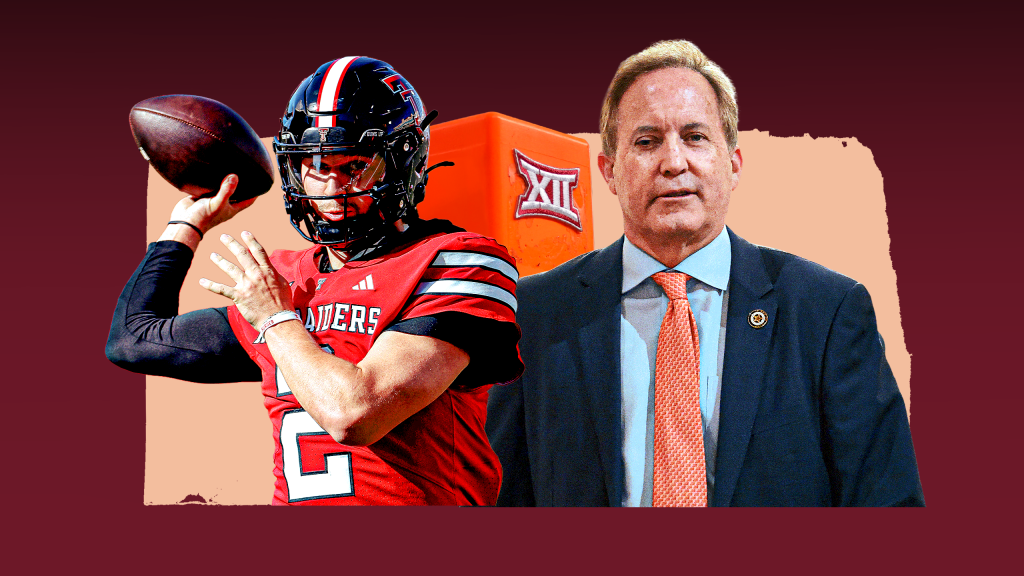
The Big 12 on Sunday sued Texas Attorney General Ken Paxton, Texas Tech University and several Texas Tech officials, arguing that Paxton and Texas Tech’s threats to sue the conference if it punishes the university for playing quarterback Brendan Sorsby violate the First Amendment and federal antitrust law.
Paxton last week threatened to sue the Big 12 for more than $200 million, asserting that the conference punishing Texas Tech could violate a court order that allows Sorsby to play. Paxton claims the Big 12 would breach its membership contract with Texas Tech by canceling, forfeiting or altering Texas Tech’s scheduled games and tortiously interfere with the university’s sponsorship arrangements, ticket commitments and other contracts.
Big 12 v. Paxton et al. is a major test of the evolving relationship between power conferences, member schools and the NCAA in the increasingly divisive world of college sports in this NIL and House settlement era. While conferences have sued member schools in the past, those disputes have usually related to conference realignment, namely member schools trying to jump to another conference and accompanying breach of contract and antitrust issues.
That’s not the case here. This dispute is about a conference seeking to sanction a member institution for playing an athlete whom the conference considers ineligible without the threat of facing a lawsuit brought by a prominent state attorney general and current U.S. Senate candidate.