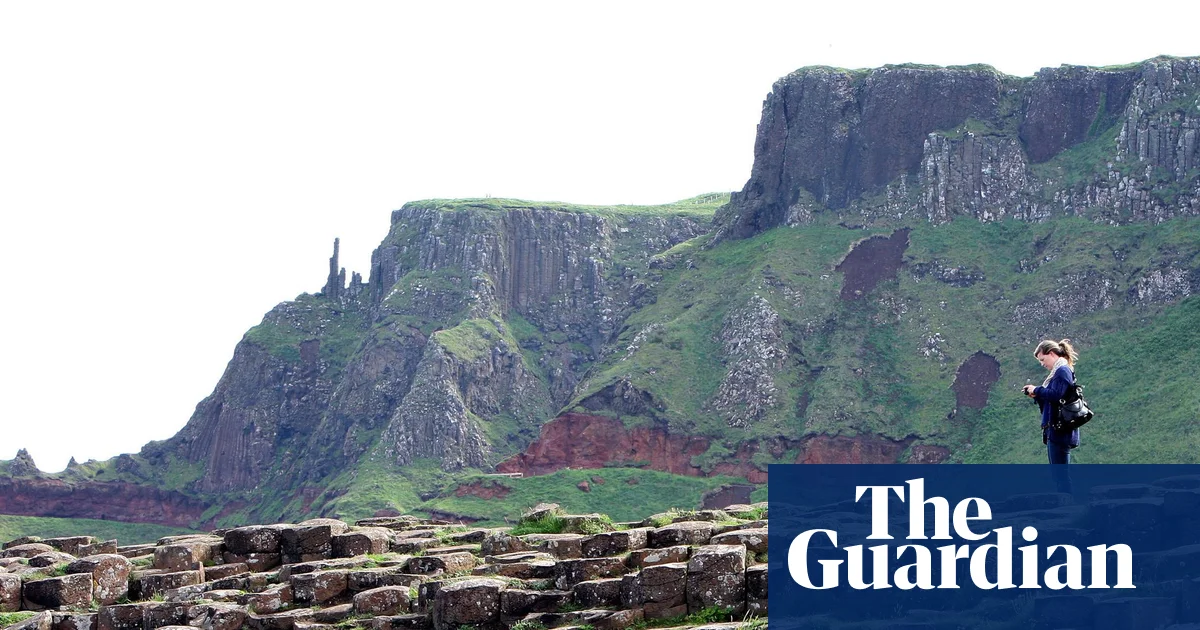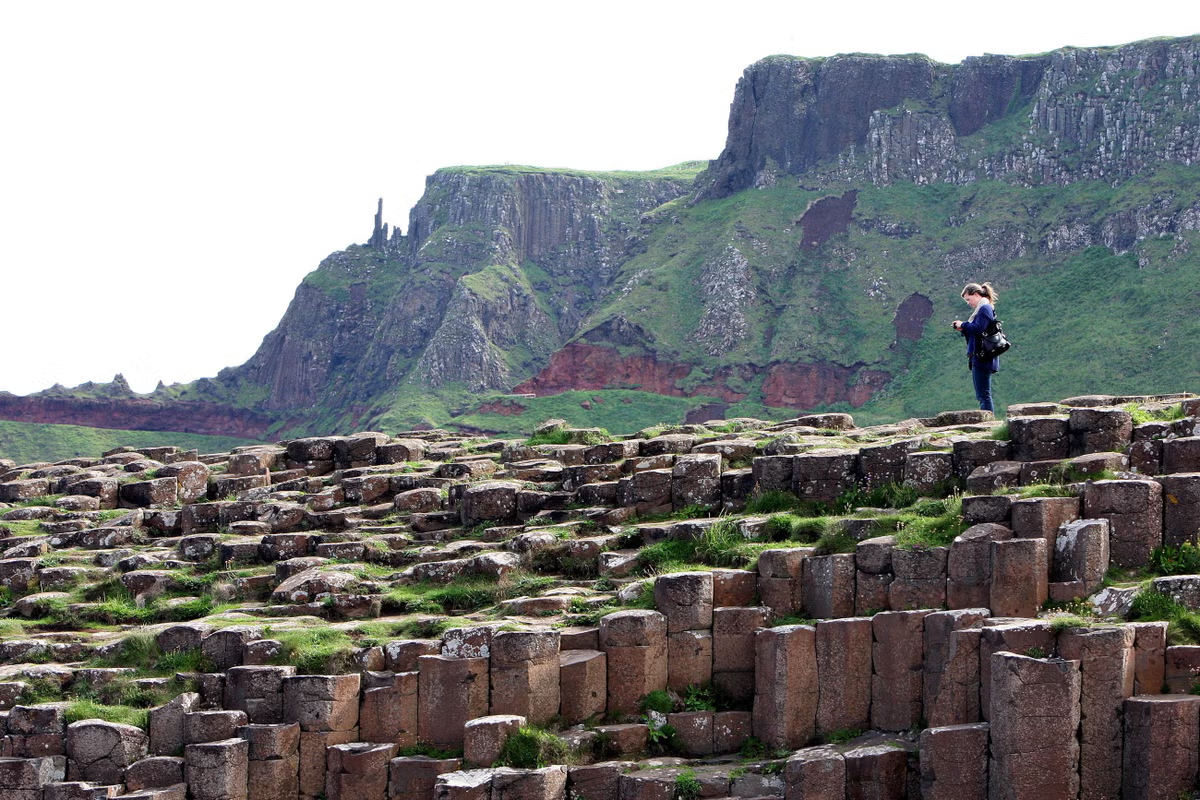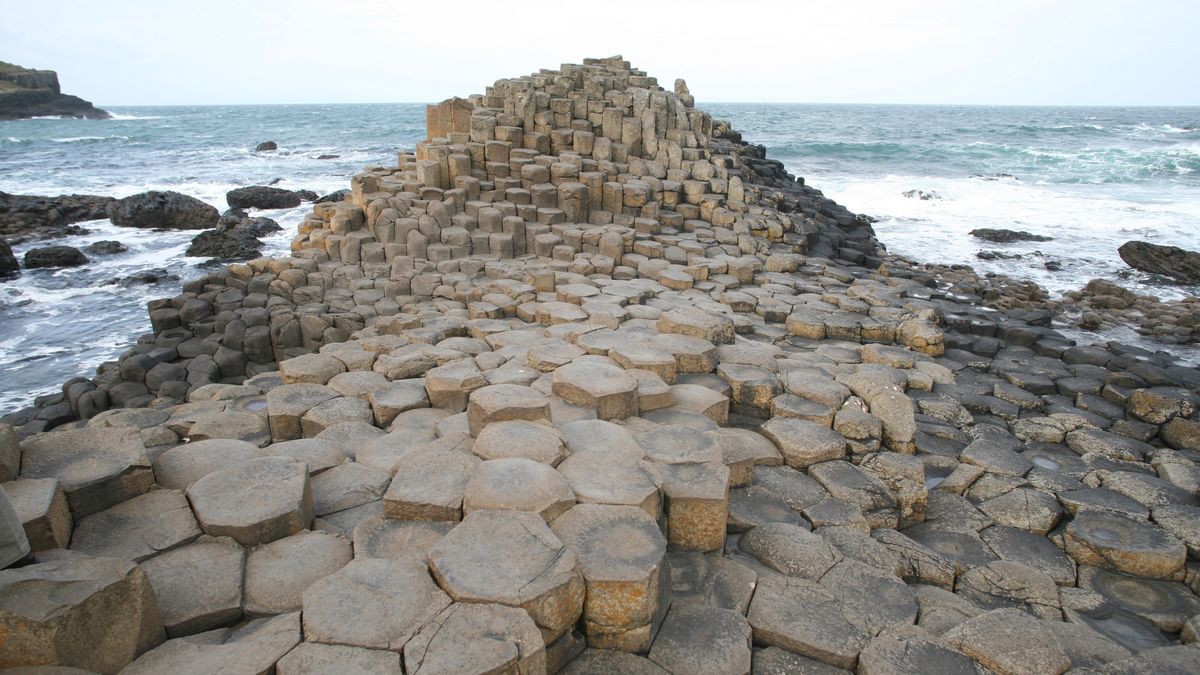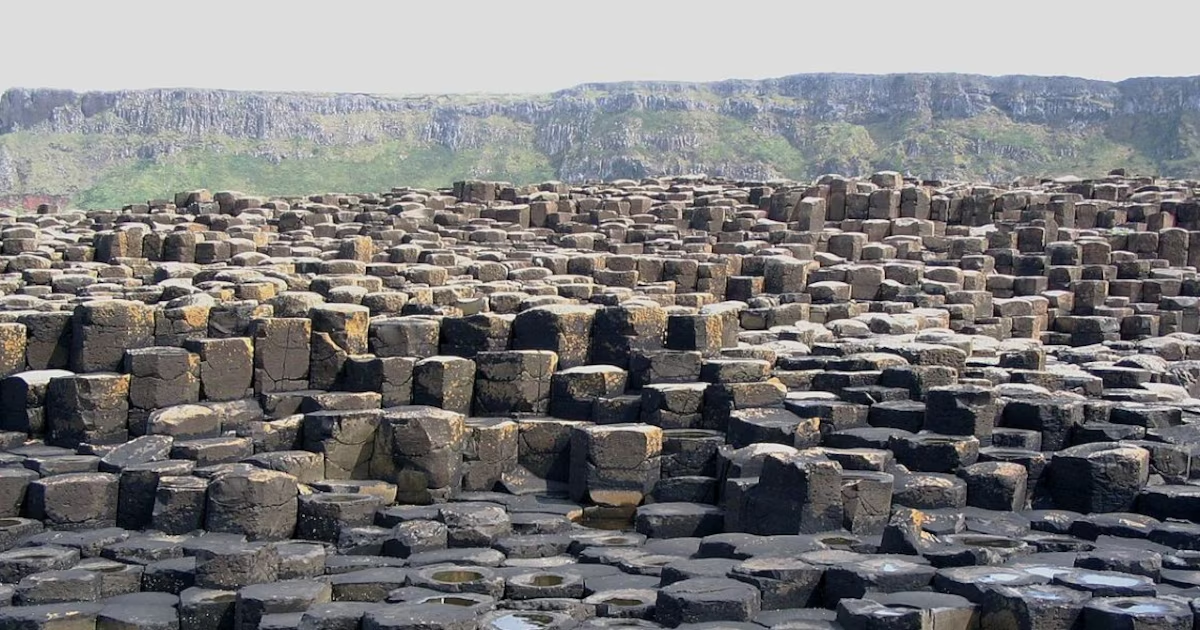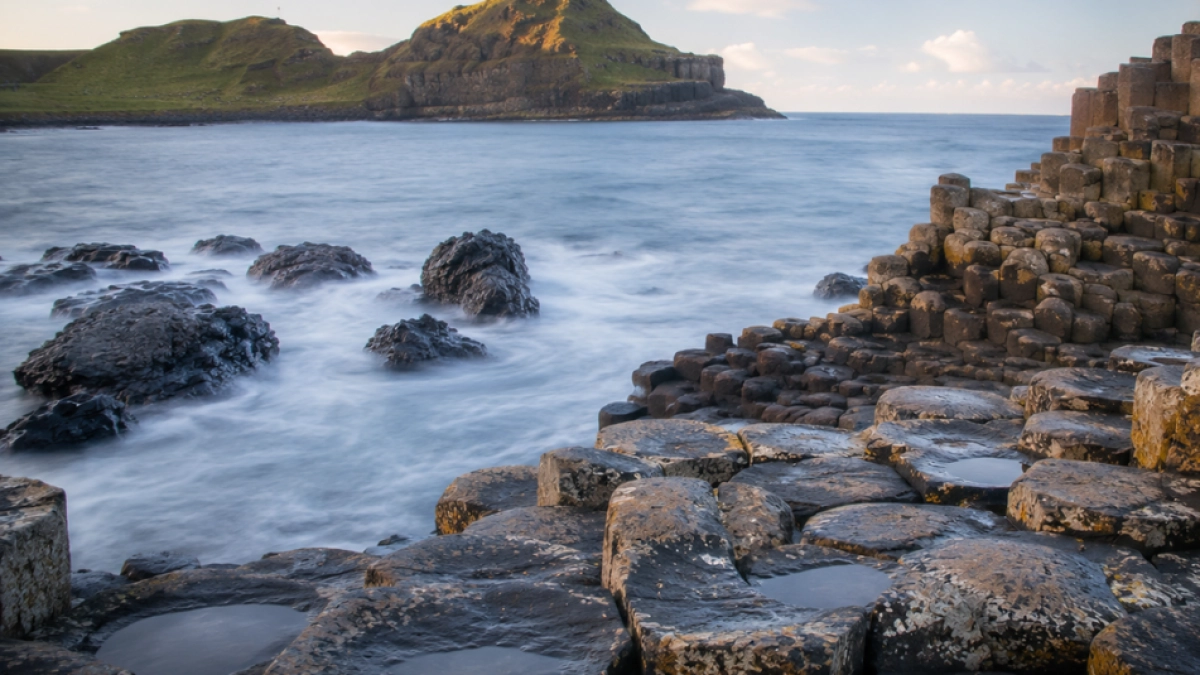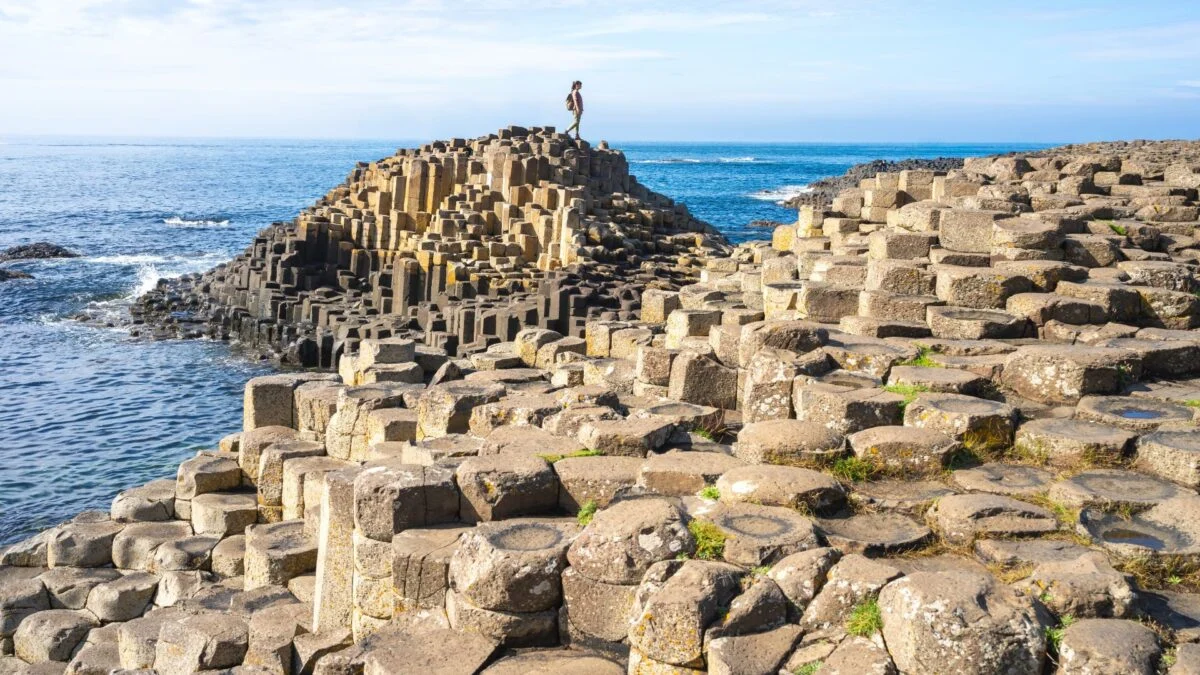
According to Irish mythology, Northern Ireland was once home to a great giant named Finn McCool. When a Scottish giant, Benandonner, crossed the Irish Sea and threatened Finn’s homeland, he retaliated by tearing up huge chunks of the Antrim coastline and hurling them into the water, constructing a pathway of hexagonal pillars to reach Benandonner and fight him off. This, as legend has it, is how the Giant’s Causeway was created. It’s a fantastic story, but science offers a different explanation. After studying this unique geological site for centuries, researchers believe its 40,000 black basalt columns formed during intense volcanic activity that forced magma up through cracks in Earth’s surface. They thought this activity took place over the course of about 13.5 million years, but new research suggests Giant’s Causeway actually formed much faster, taking shape over just 5.5 million years. The study, published in the journal Geology in March, links the formation of the Giant’s Causeway and the greater Anterim Plateau area, as well as Mourne Mountains and Slieve Gullion, to a globally significant volcanic event recorded in rocks as far away as Greenland. This allowed the authors to construct a new timeline for volcanic activity across Northern Ireland and more precisely determine when and how the Giant’s Causeway formed.
Scientists Have a New Origin Story for Giant's Causeway
New research suggests this unique geological site was formed by a "globally significant volcanic event."
635 words~3 min read