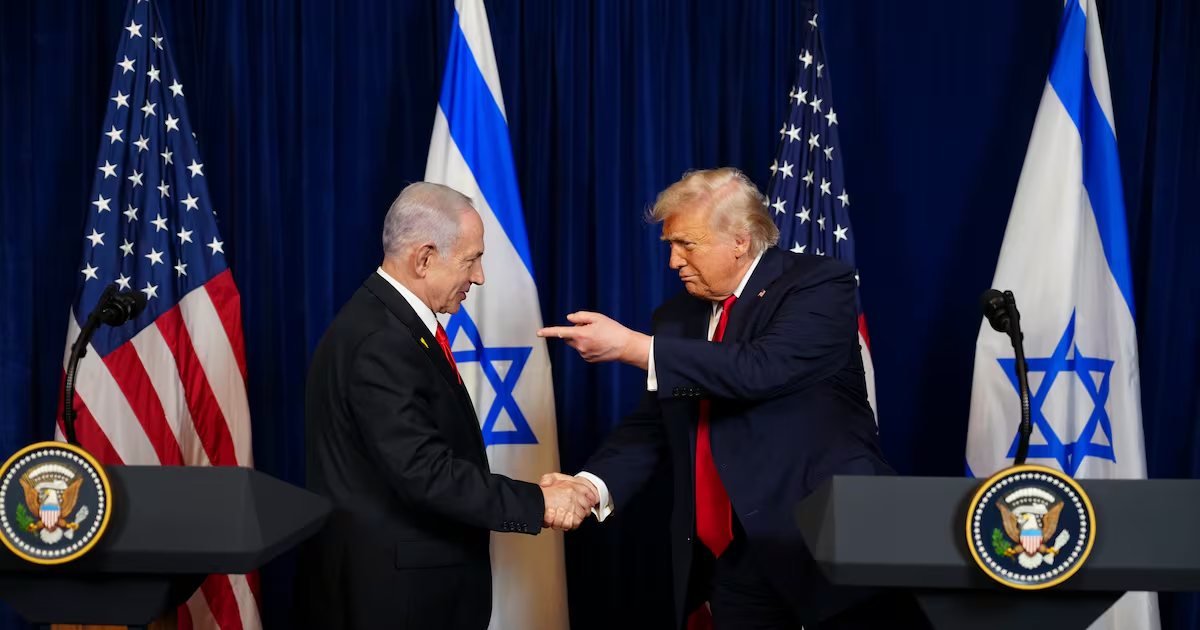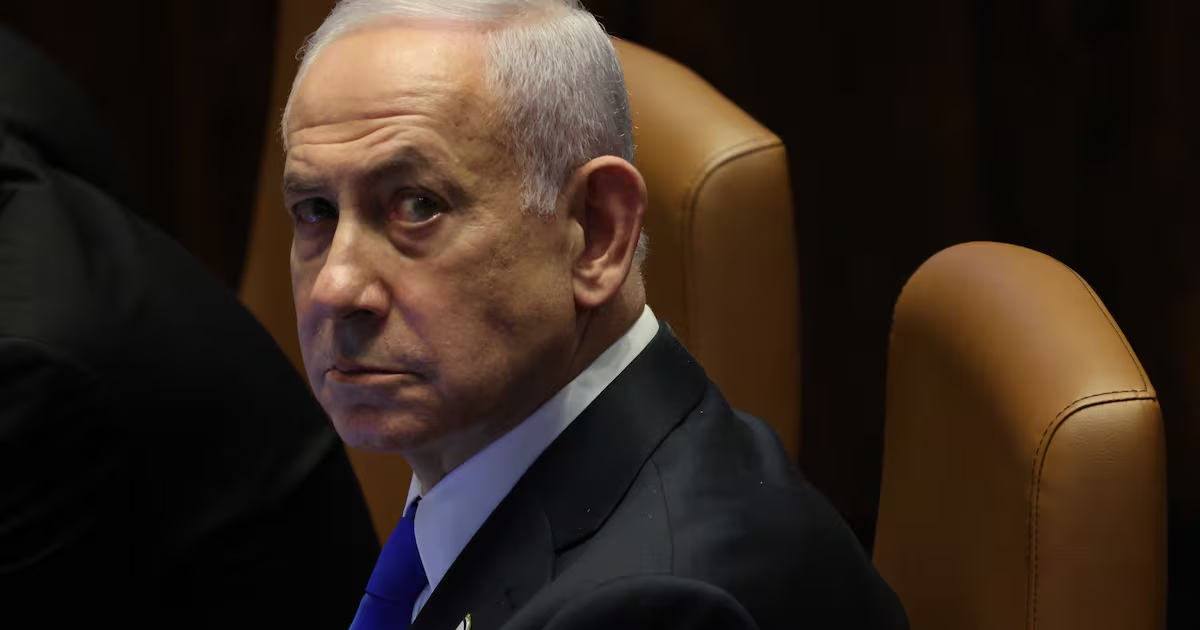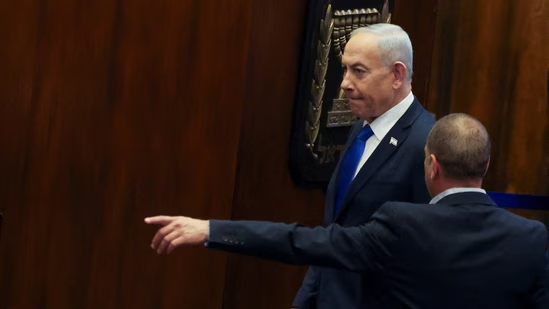
The emerging memorandum of understanding between the US and Iran, expected to be signed on Friday, has produced a rare moment of consensus in Israel: opposition to the deal came from across the political spectrum.Even before the agreement was made public it was clear that it had not met any of Israel’s war aims. As recently as last week prime minister Binyamin Netanyahu outlined four elements Israel wanted to be included in the deal: removal of enriched uranium; dismantling of enrichment infrastructure; limits on missile production; and an end to Iranian support for regional proxies. None of the four will be included in the agreement.Not only that, but the Iranian regime remains in place, controlled by the hardline revolutionary guards and is about to receive a much-needed financial boost with the expected easing of sanctions and the release of impounded assets.Even more worrying for Israel, in the short term, is the fact that Iran has successfully linked the ceasefire in the Gulf to the Lebanese front and limits will be imposed by Washington on the ability of the Israel Defense Forces (IDF) to operate against the Iranian-backed Hizbullah, although the exact details are still unclear.Tehran has created a new equation in which any Israeli attack on Beirut will bring an Iranian attack on Israel. Israel was bracing for another Iranian missile strike on Sunday night after attacking Beirut’s Dahiyeh quarter and the security cabinet meeting was moved to an underground bunker, before US president Donald Trump reportedly persuaded the Iranians to call off the strike at the last minute.Sunday’s attack on Beirut (in response to drones landing in northern Israel) led to the second angry phone call between Trump and Netanyahu in a week. Trump told news website Axios that Netanyahu “has no f*****g judgment. I let him know that”.An Israeli military vehicle moves past sheep belonging to Israeli settlers east of the Palestinian village of Beitin, northeast of Ramallah in the occupied West Bank, on June 14th. Photograph: Zain Jaafar/AFP via Getty Israel can no longer rely on automatic support from the White House. and there is a feeling that it is Trump who is now dictating Israeli foreign and defence policy at critical junctures.After the agreement was announced, Israeli defence minister Israel Katz said “the IDF will remain in the security zones in Lebanon, Syria and Gaza – indefinitely – to defend the border and Israeli communities against jihadist elements.”[ Denis Staunton's Global Briefing: Agreement will not restore pre-war status quo in Strait of HormuzOpens in new window ]But these comments were seen as an attempt at damage control and far-right national security minister Itamar Ben-Gvir said that Israel is not bound by the agreement.Finance minister Bezalel Smotrich said the agreement was “bad for Israel and the entire free world”.“We will have to continue the campaign to topple the regime ourselves,” he said.Opposition head Yair Lapid said “Israel won the battle but Netanyahu lost the war.”
Iran-US deal is opposed across Israel’s political spectrum
‘Israel won the battle but Netanyahu lost the war’, head of Knesset opposition says
488 words~2 min read