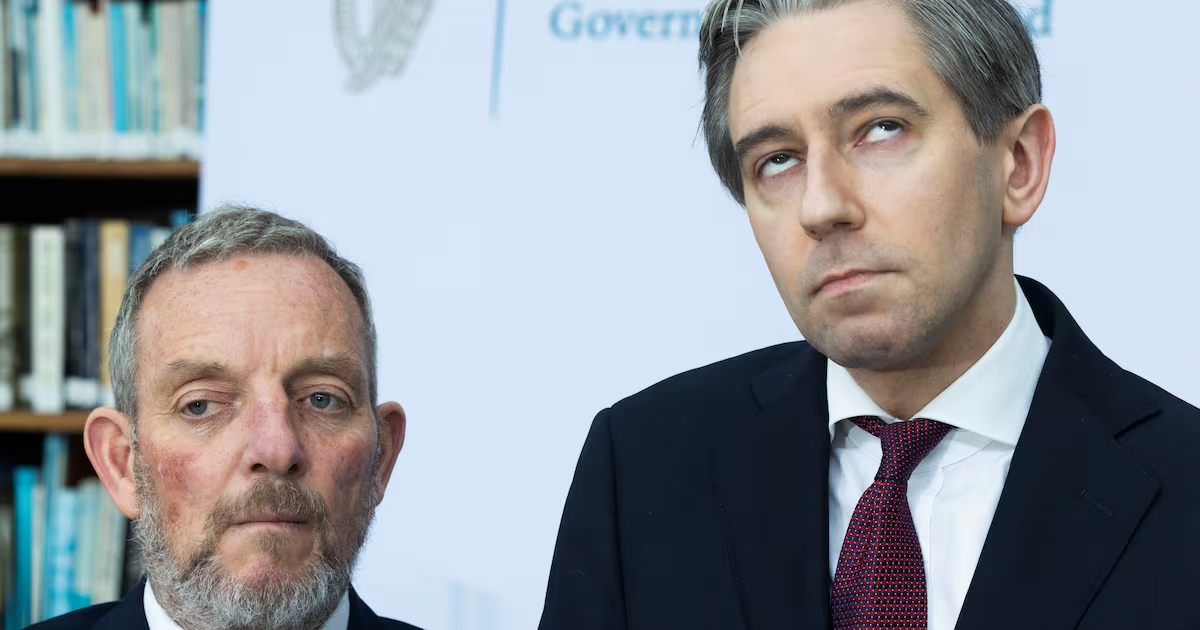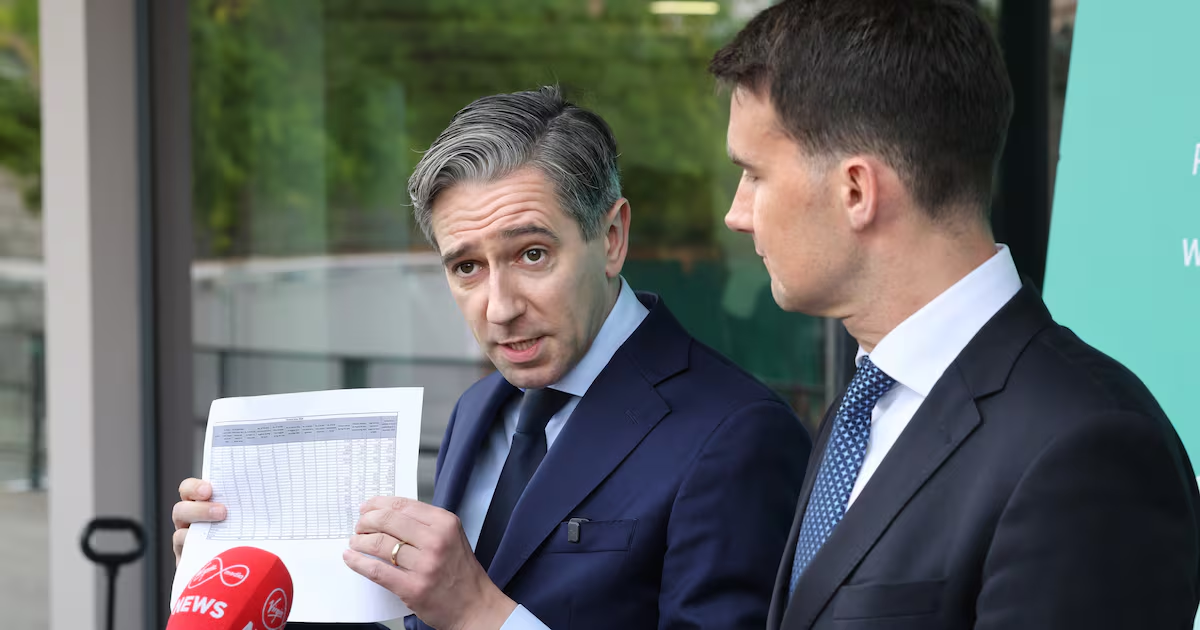
Tax relief and childcare initiatives will be central to the Government’s thinking in Budget 2027, Tánaiste Simon Harris and other senior Ministers have indicated. With 113 days until the budget is announced, the National Economic Dialogue took place on Monday in Dublin Castle, bringing together unions, employers and other representative bodies.Last year’s budget resulted in significant criticism of the Coalition for not changing tax rates or tax bands to ease pressures on workers. The Government appears eager to avoid a repeat of that, with Ministers already making clear that a key theme of Budget 2027 will be ensuring that work pays.In his address to the National Economic Dialogue, Harris, the Minister for Finance, said “economic progress must be felt not only in headline statistics, but in people’s pay packets and in their daily lives”.“Successive budgets have increased the point at which workers enter the higher rate of income tax, helping people keep more of what they earn. But we do need to do more,” he said. “As we prepare Budget 2027, we will consider further increases in that threshold as a practical way of ensuring wage growth translates into higher take-home pay.”Taoiseach Micheál Martin stressed that the State “cannot mitigate every increase in cost” and “must retain resources to ensure we can deal with any further deterioration in the global economy”. Taoiseach Micheál Martin speaks to reporters at the National Economic Dialogue in Dublin Castle on Monday. Photograph: Dara Mac Dónaill Rather than delivering short-term measures to cut energy costs, Martin said the Government wanted to focus “on getting long-term prices down with secure, sustainable and affordable energy supplies”.Harris said the Coalition would look again in about a fortnight at the temporary reduction in excise duties on petrol and diesel, introduced after prices spiked following the US-Israeli strikes on Iran and scheduled to expire at the end of July.The Tánaiste also said the cost of childcare “remains one of the largest monthly expenses” many families face.“When childcare is expensive, parents – particularly mothers – can face difficult choices between remaining in work and providing care at home,” he said. “Since 2020, we have more than doubled funding to the National Childcare Scheme, reducing out-of-pocket childcare costs for parents. But we know more must be done. Women in Ireland continue to have lower labour force participation than many leading EU and OECD countries. “Women are also far more likely to work part-time, in part because the cost of childcare can make full-time employment financially unattractive.”Harris again indicated there would be a new initiative to encourage saving and investment as part of the budget.“Too many people save responsibly, and regularly, but feel locked out of investing and wealth creation,” he said. “For many households, economic security is not simply about income today. It is also about building resilience and opportunity for the future. As part of Budget 2027, we will make saving and investing more accessible and more attractive for ordinary households.”[ The ‘two good salaries but still broke’ problem: What’s behind it and what can you do?Opens in new window ]The Tánaiste also said the Government would give powers to the Revenue Commissioners to take action in relation to derelict sites and properties. He said the Government had given local authorities powers and staff to tackle dereliction and while some had done a great job, others had not.“In the budget we will legislate to give Revenue power on this because, quite frankly, we just cannot depend on local authorities,” he said.Minister for Public Expenditure Jack Chambers indicated that the budget would grow by about 6 per cent annually in the years to 2030. While this would be significant compared with elsewhere in Europe, he said it would represent a moderation of the growth seen in recent years.“This means that delivering our medium-term expenditure plan will necessitate a real focus on reform, efficiency and value for money,” he said.“In practice, this means continually assessing the sustainability of all expenditure proposals, asking, what can we afford? What do we want to prioritise? Where can we innovate and what can we do better – now and into the future?”
Budget 2027: Simon Harris signals focus on tax relief and childcare measures
Government eager to avoid criticism of last year’s budget with a key theme of ensuring work pays
685 words~3 min read