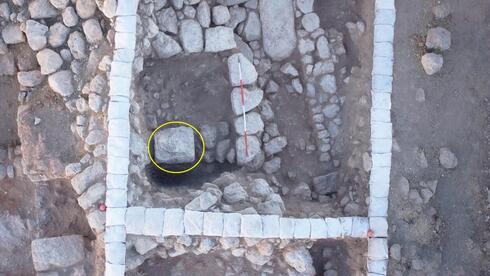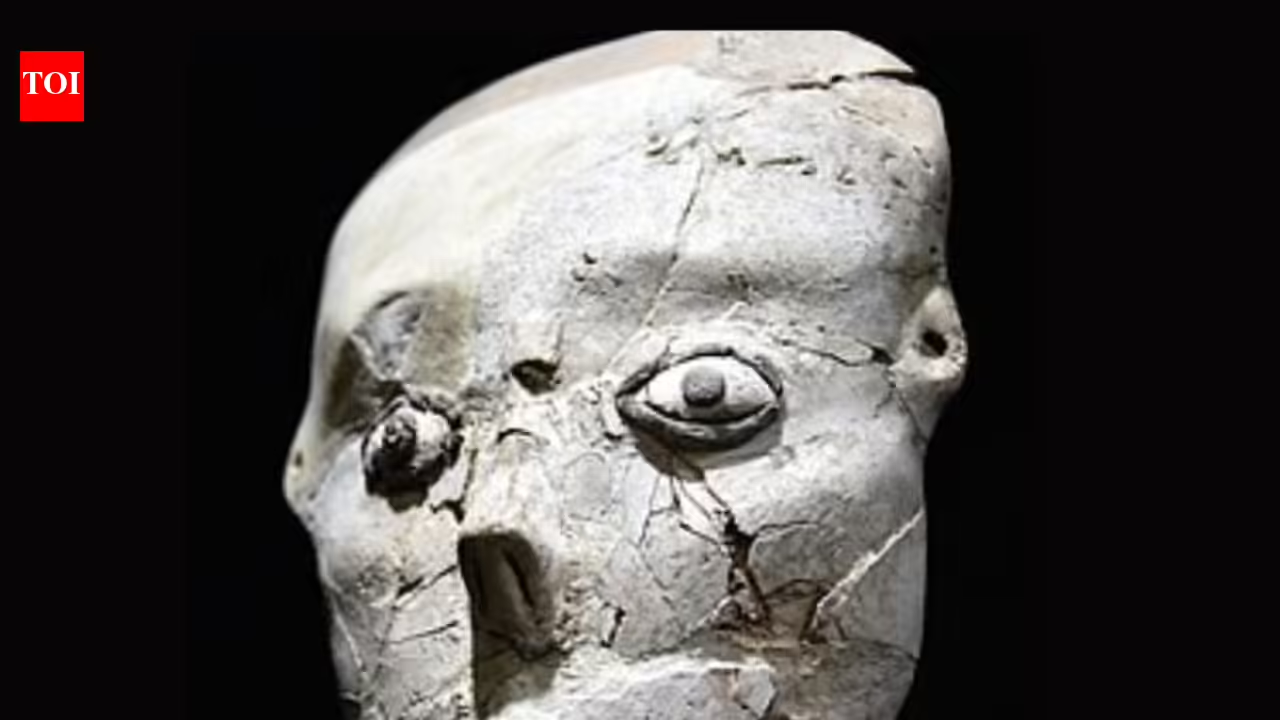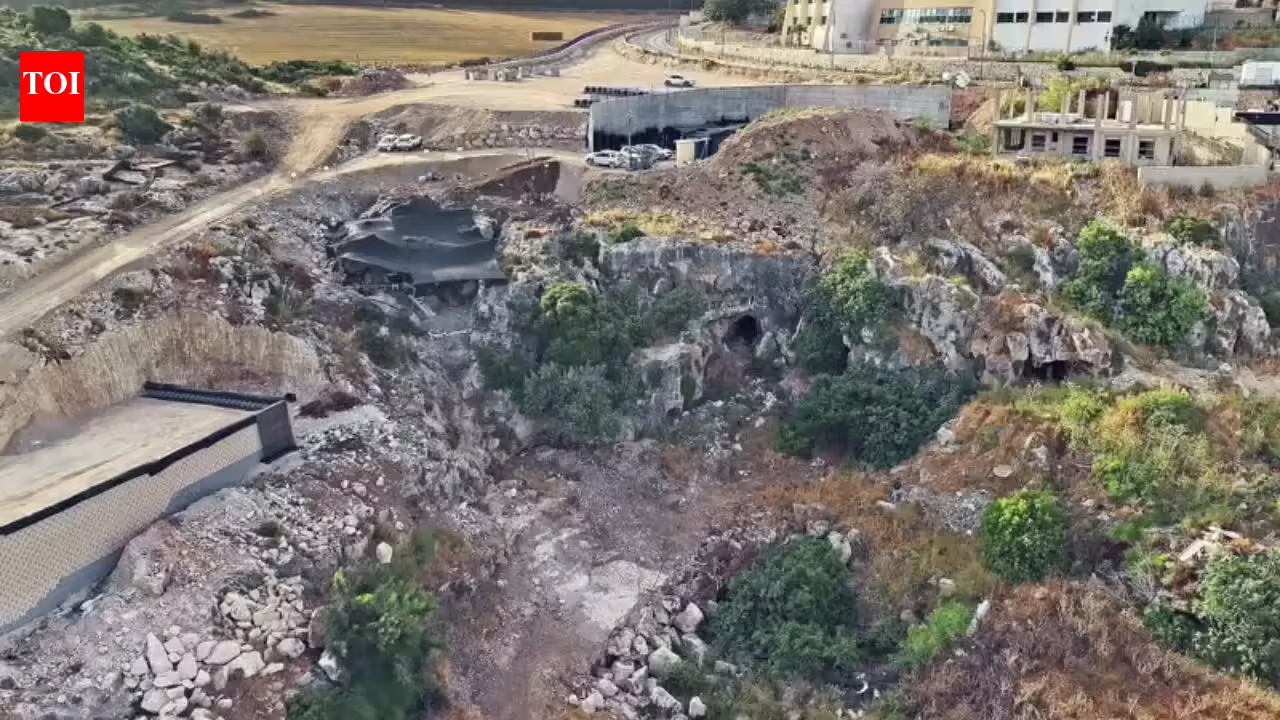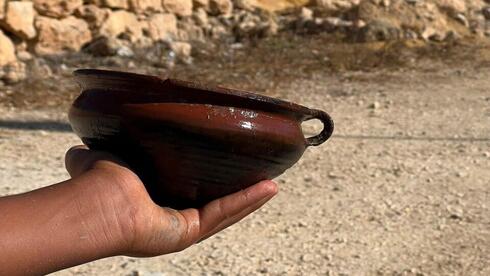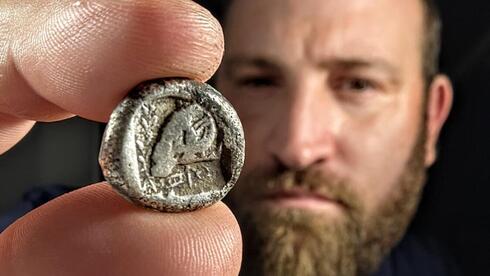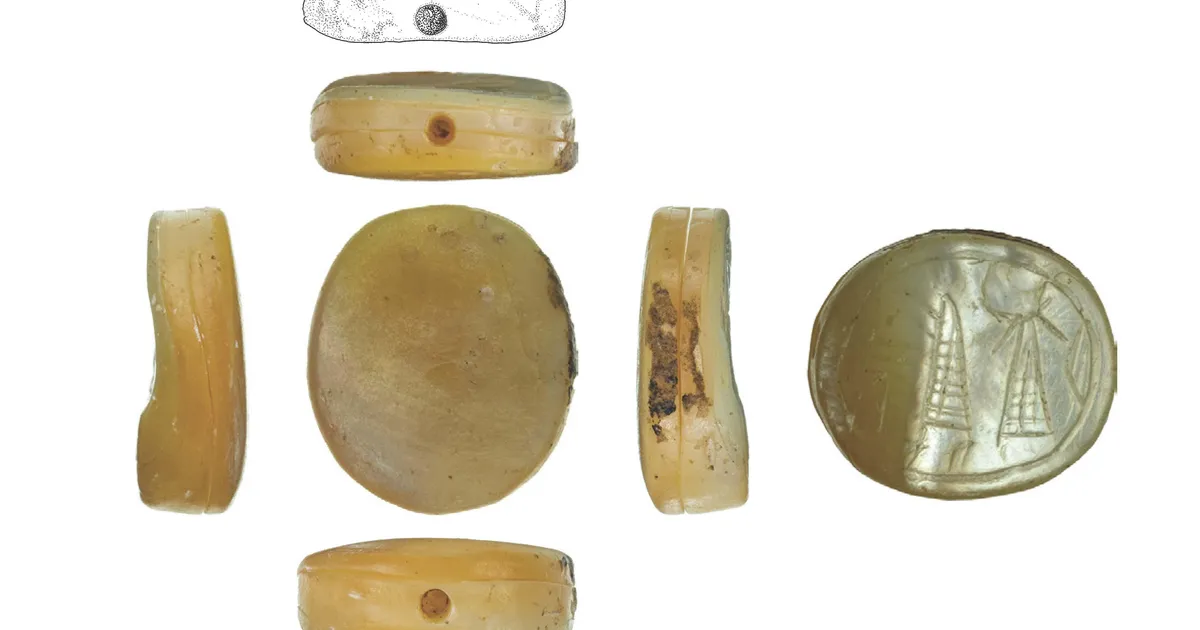
Unusually, the engraved stamp seal from Tel Hadid was made with mother of pearl, and may be linked to deportees who replaced part of the local Israelite population, archaeologists sayStamp seals were a common object in the ancient Levant. Usually made of stone, these thumbnail-sized artifacts were often exquisitely engraved and were used in daily life to sign documents and as protective amulets. But one seal recently uncovered amidst the ruins of Tel Hadid, an ancient town in modern-day central Israel, stands out. The tiny, 2,700-year-old artifact was not made of stone or other commonly available resource, but of mother of pearl.The nacreous material came from a mollusk that lived in a distant sea, archaeologists report. This is the only known stamp seal from the Southern Levant produced with mother of pearl, Prof. Ido Koch of Tel Aviv University and colleagues reported last month in the journal Levant. Additionally, nacreous shell was only rarely used to make stamp seals across the whole of Western Asia and neighboring regions, the researchers note. And for good reason. The material is so brittle that cutting it into a small oval shape and then engraving it would have been "almost impossible" with the tools and known-how of the Iron Age, Koch says.Almost, but clearly not entirely impossible. The rare find tells us a story of the fall of the ancient Kingdom of Israel and its incorporation into the Assyrian Empire, which brought to the region trade with faraway lands, colonial practices, new beliefs and a cultural melting pot, researchers say.Aerial view of Tel Hadid looking northeast Credit: Omer Ze’evi-Berger, Tel Hadid Archaeological ProjectAerial view of Tel Hadid looking northeast Credit: Omer Ze’evi-Berger, Tel Hadid Archaeological ProjectWorshipping SinLike all the tels found across the Levant, Tel Hadid is a stratified mound formed by superimposed layers of construction over thousands of years of human habitation. Located midway between Tel Aviv and Jerusalem, it has yielded remains going back to the Bronze Age, some 4,000 years ago, all the way to a modern Palestinian village abandoned in Israel's 1948 War of Independence. Hadid is perhaps best known, archaeologically speaking, for its Iron Age incarnation. In the 8th century B.C.E., the town was part of the Kingdom of Israel, the northern Israelite polity with its capital in Samaria, which was felled by the Assyrian Empire. At Hadid, archaeologists have found cuneiform tablets recording commercial transactions in the early 7th century B.C.E, containing both Akkadian and Hebrew names. This is seen as tangible evidence of the Assyrian Empire's policy of cross-deportations of parts of its conquered peoples.Such a practice, which gave rise to the biblical tradition of the Ten Lost Tribes of Israel, transformed the area into a melting pot of indigenous Israelite and other Levantine populations.Other examples of the "crescent on standard" emblem associated with the moon god Sin Credit: Stamp Seals from the Southern Levant (www.levantineseals.org) Other examples of the "crescent on standard" emblem associated with the moon god Sin Credit: Stamp Seals from the Southern Levant (www.levantineseals.org) The newly-published stamp seal belongs to this same world of Assyrian rule. It was found, in 2019, in a refuse pit in a rural domestic neighborhood made up of small houses and olive presses – the same area where those cuneiform tablets were unearthed. The broken pottery found in the garbage pit was also a mix of local and non-local forms, typical of the Assyrian colonial network, Koch says. Those living at Hadid during this period were likely a mix of locals, displaced people brought there from another Assyrian province, as well as new migrants attracted by the economic opportunities created by history's first multi-cultural empire.Aerial view of the garbage pit and domestic area where the stamp seal was found Credit: Omer Ze’evi-Berger, Tel Hadid Archaeological ProjectAerial view of the garbage pit and domestic area where the stamp seal was found Credit: Omer Ze’evi-Berger, Tel Hadid Archaeological ProjectThe seal had been painstakingly perforated with a drill, so it was probably worn as a pendant. In fact, the incisions on its face were so shallow that they probably would not have left much of an impression, suggesting the artifact was more of a protective amulet than a practical seal, Koch says.The very schematic scene engraved on the tiny disk shows a crescent moon mounted on a triangular standard and a human stick figure in the apparent act of worshipping it with raised arms. This iconography is recognizable as a variant of the crescent-on-standard emblem linked to Sin, the moon god of Harran, an ancient city today near Turkey's border with Syria.While it came from Northern Mesopotamia, this motif became very common in the empire's provinces west of the Euphrates, showing the spread of Assyrian religious and cultural beliefs in their conquered territories, Koch and colleagues say. On the other hand, the mother of pearl didn't come from anywhere nearby Hadid, or Northern Mesopotamia for that matter. Ceramics found in the garbage pit with the seal Credit: Sasha Flit, Tel Aviv UniversityCeramics found in the garbage pit with the seal Credit: Sasha Flit, Tel Aviv UniversityA pearly shineAnalysis conducted by Daria Leibin-Graiver and Dr. Daniella Bar-Yosef Mayer of Tel Aviv University identified the shell as belonging to a Pinctada margaritifera, a pearl oyster common in the Indo-Pacific. This means that the mother of pearl must have come, at the closest, from the Persian Gulf or the Red Sea. While it may be surprising that such a rare object was found in a fairly rural and lower-class neighborhood, we must remember that, in order to eliminate all possibilities of resistance, the Assyrians tended to deport mainly the elites of conquered populations, Koch notes. A small quantity of mother of pearl may have therefore been an easily transportable asset for a high-placed but down-on-its-luck family that found itself forcibly relocated into this new provincial reality. The stamp seal made with mother of pearl found at Tel Hadid
Archaeologists uncover rare Assyrian artifact in central Israel
Unusually, the Engraved Stamp Seal From Tel Hadid Was Made With Mother of Pearl, and May Be Linked to Deportees Who Replaced Part of the Local Israelite Population, Archaeologists Say
1,099 words~5 min read