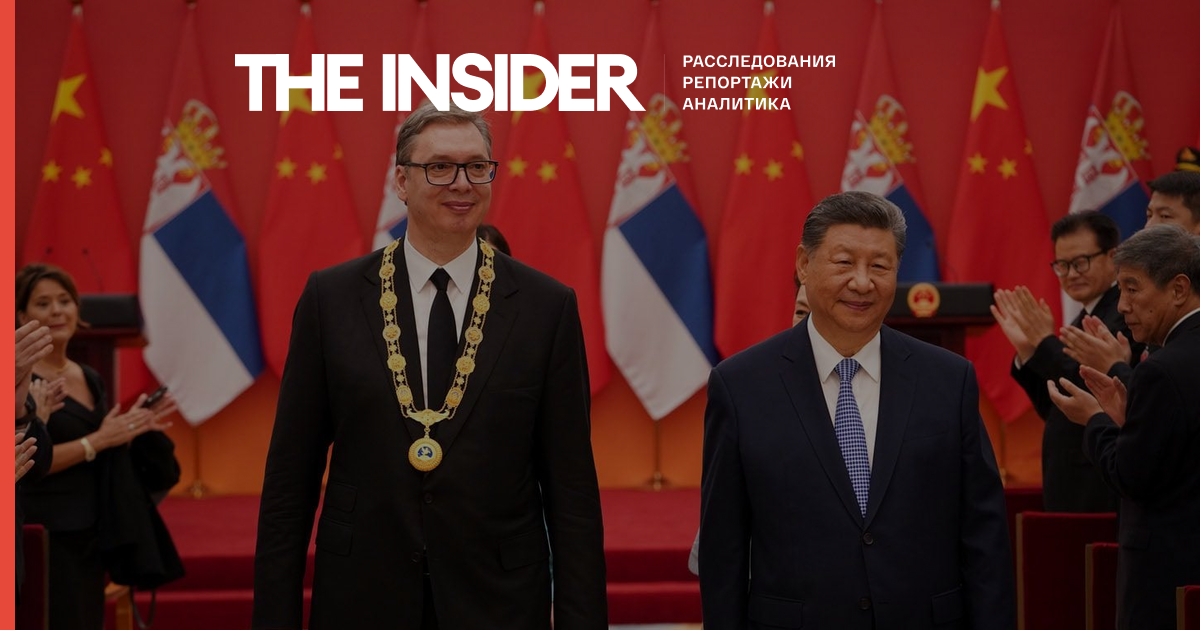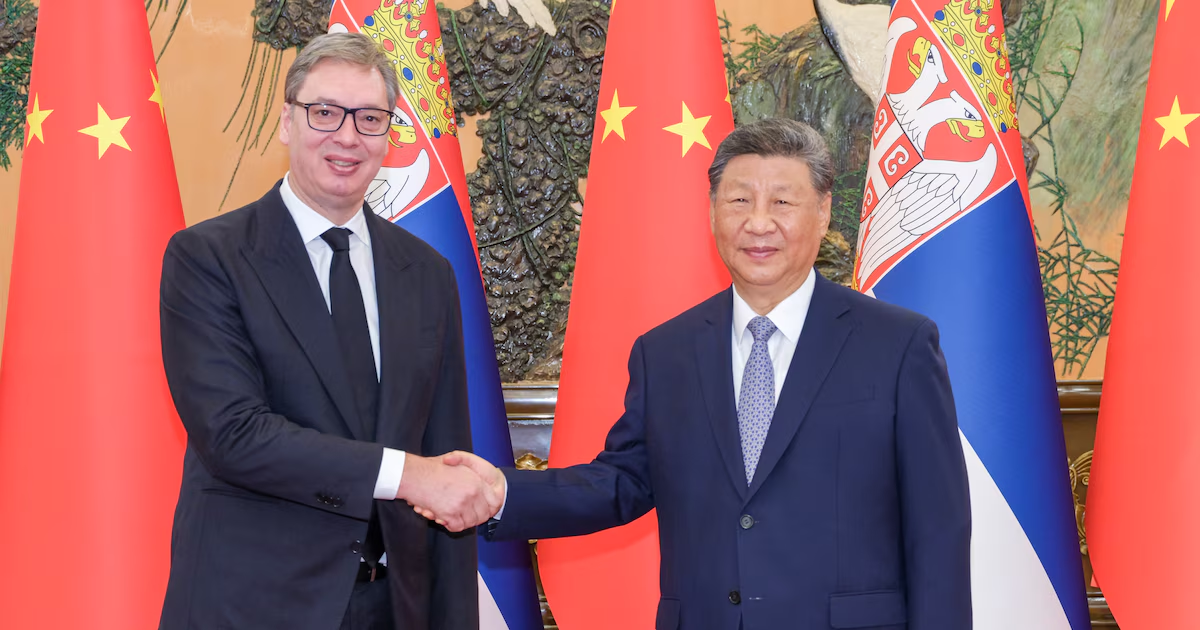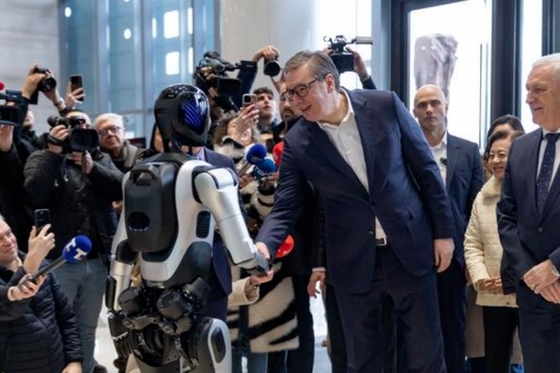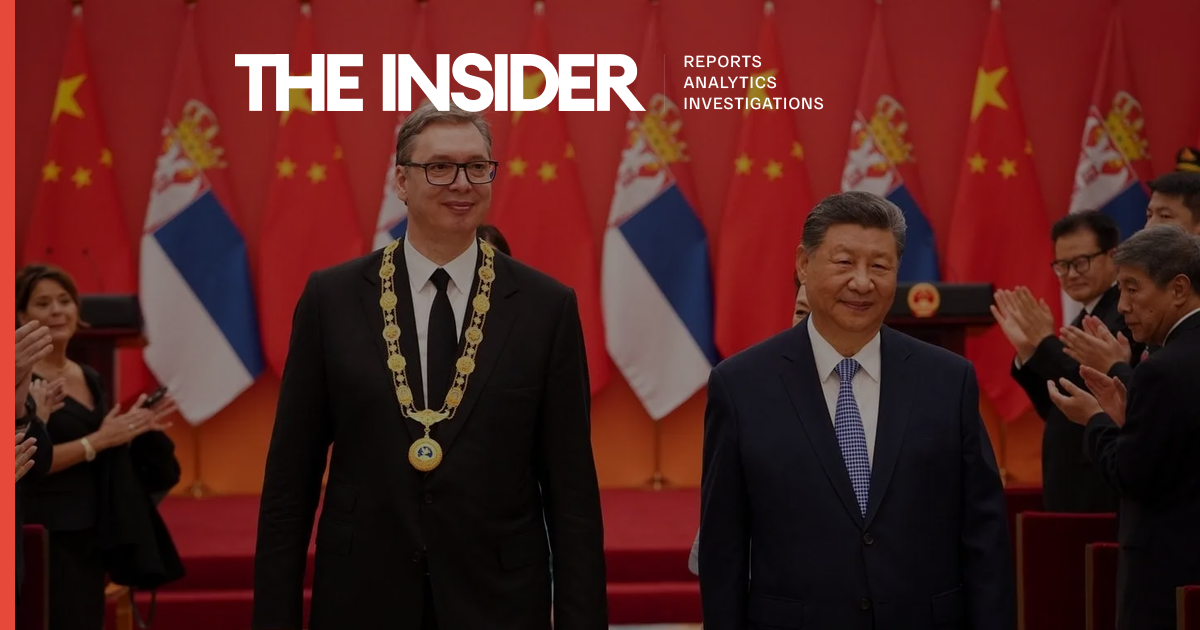
Last month both Donald Trump (May 13-15) and Vladimir Putin (May 19-20) made highly publicized trips to China. Notably, Serbian President Aleksandar Vučić made a similar visit (May 24-28), returning home with a package of signed agreements and a golden Medal of Friendship. Belgrade’s rapprochement with Beijing and the rapid growth of Chinese investment in the Balkans further highlight the limits of Russia’s influence in Serbia, especially as cooperation with Moscow becomes increasingly toxic. A more neutral Beijing, which does not require Serbia to abandon European integration in order to achieve its aims in the region, is easily taking over Moscow’s former role as Serbia’s key partner in the East. Contents1.The main event of his political career2.Four pillars3.No. 577 and a “shared future” in a new era4.From roads and factories to dancing robots5.Who Russia negotiates with in Serbia6.No NIS and no strategic partnershipOn May 25, Serbian President Aleksandar Vučić appeared to tear up slightly as Chinese leader Xi Jinping presented him with a gold Medal of Friendship, Beijing’s highest award for foreign citizens, given for outstanding contributions to China’s modernization, the development of ties with other countries, and the strengthening of world peace. Vladimir Putin was its first recipient, and since his ceremony in 2018, only 14 others have enjoyed the honor. In Europe, the only other holder of the Chinese order is former French Prime Minister Jean-Pierre Raffarin.Judging by the multitude of joint projects involving Chinese capital investment in Serbia, Vučić’s task is to help Beijing open a window into Europe. His warm reception by Xi suggests he is performing that role reasonably well. Serbia is among China’s main European partners in the Belt and Road Initiative, which Beijing is using to expand control over sea and land routes in Asia, Africa, and Europe. Meanwhile, observers in Beijing noted that Vučić appeared emphatically confident, demonstrating independence in his choice of foreign policy partners.The main event of his political careerIn recent years, China has crowded out Belgrade’s longtime economic partners, moving closer to Germany, which still leads the list. According to Serbian data, overall trade with China grew by a factor of 6.7 from 2012 to 2025, while Serbian exports to China increased by a factor of 333. In dollar terms, bilateral trade in 2025 reached $9.36 billion, while exports from Serbia amounted to only $2.1 billion.Serbia’s trade volume with China rose by a factor of 6.7 from 2012 to 2025, while Serbian exports to China went up by a factor of 333
The “ironclad friendship”: How Russia lost out to China in the competition to be Serbia’s key eastern partner
Last month both Donald Trump (May 13-15) and Vladimir Putin (May 19-20) made highly publicized trips to China. Notably, Serbian President Aleksandar Vučić made…
2,036 words~9 min read