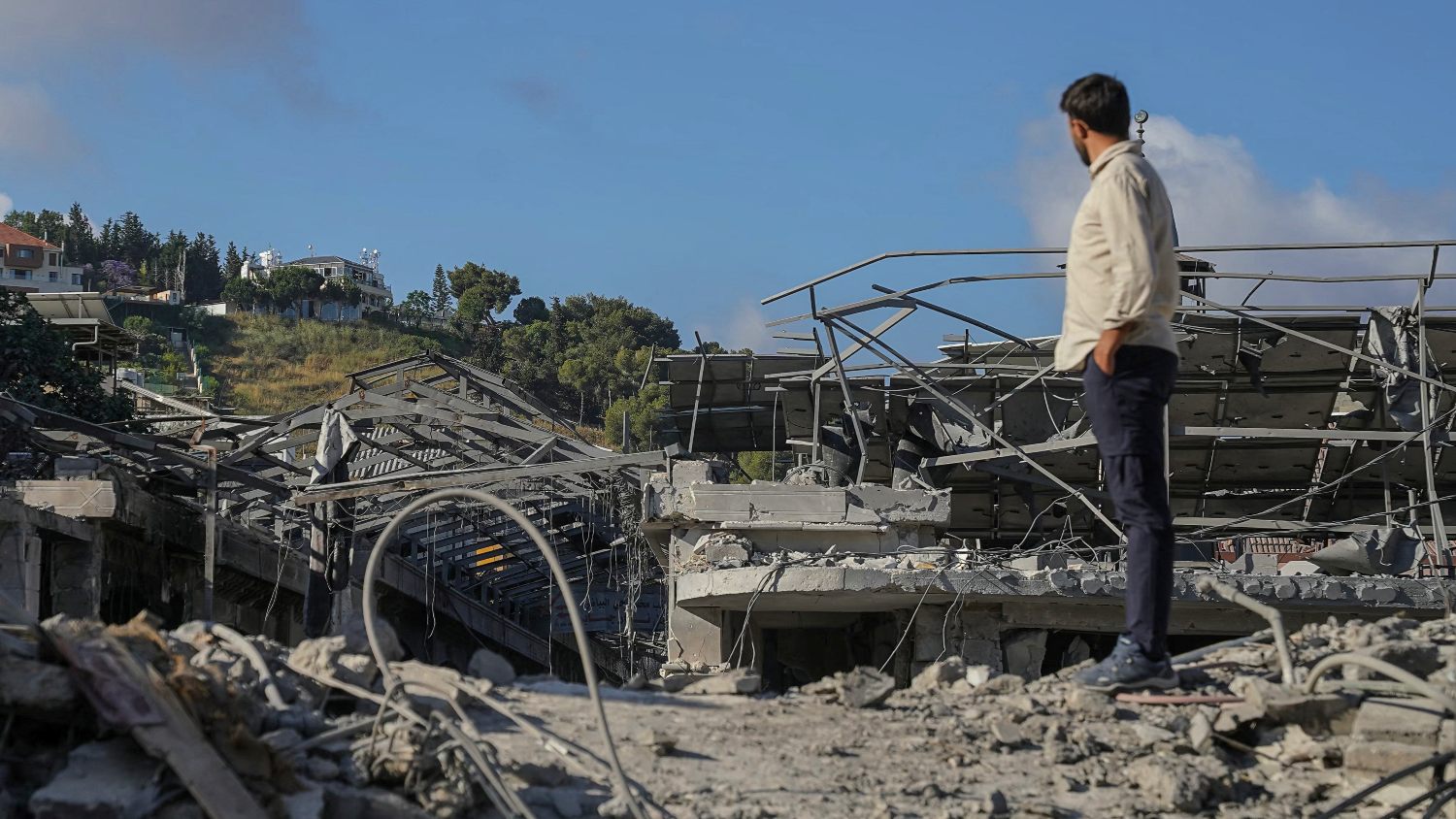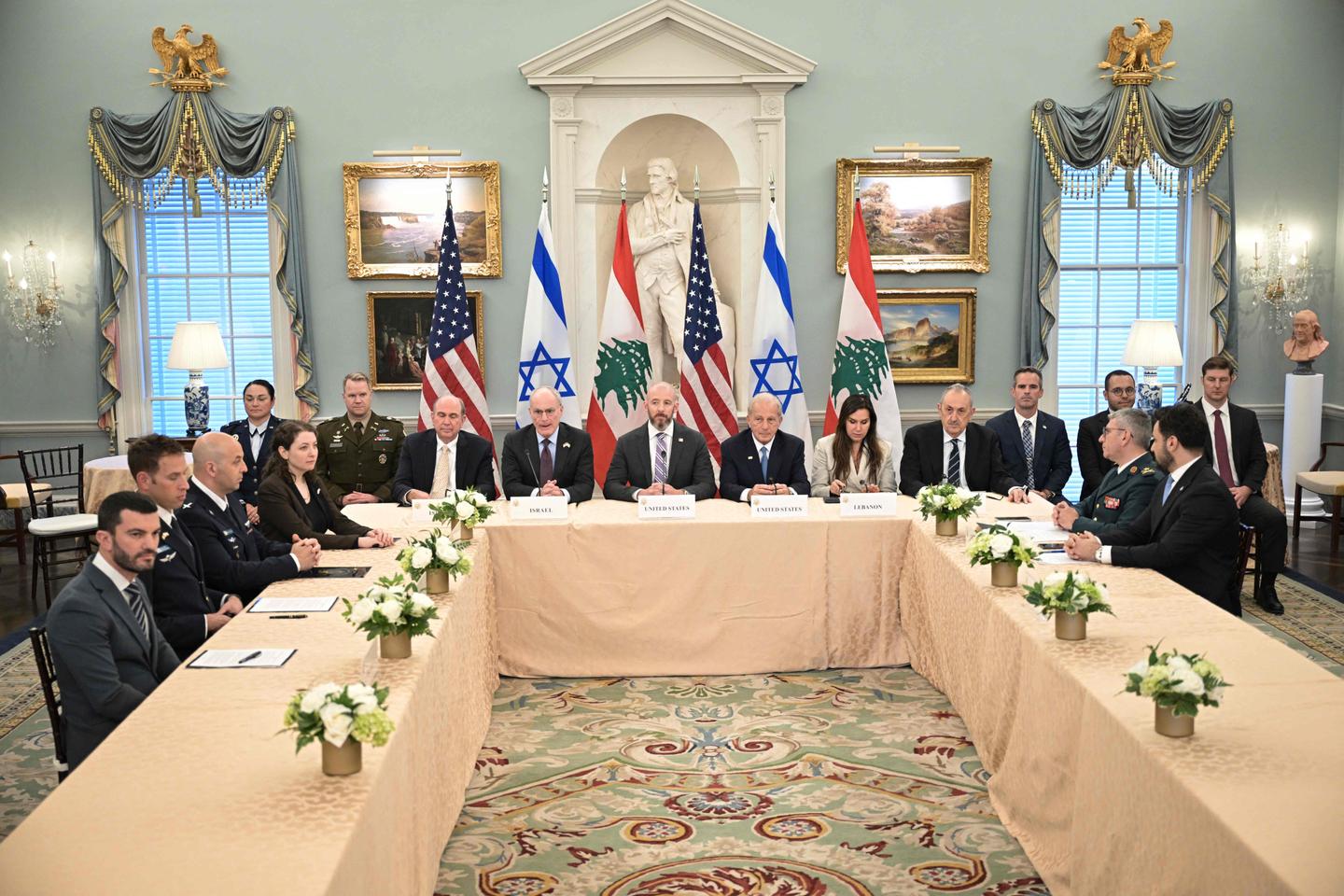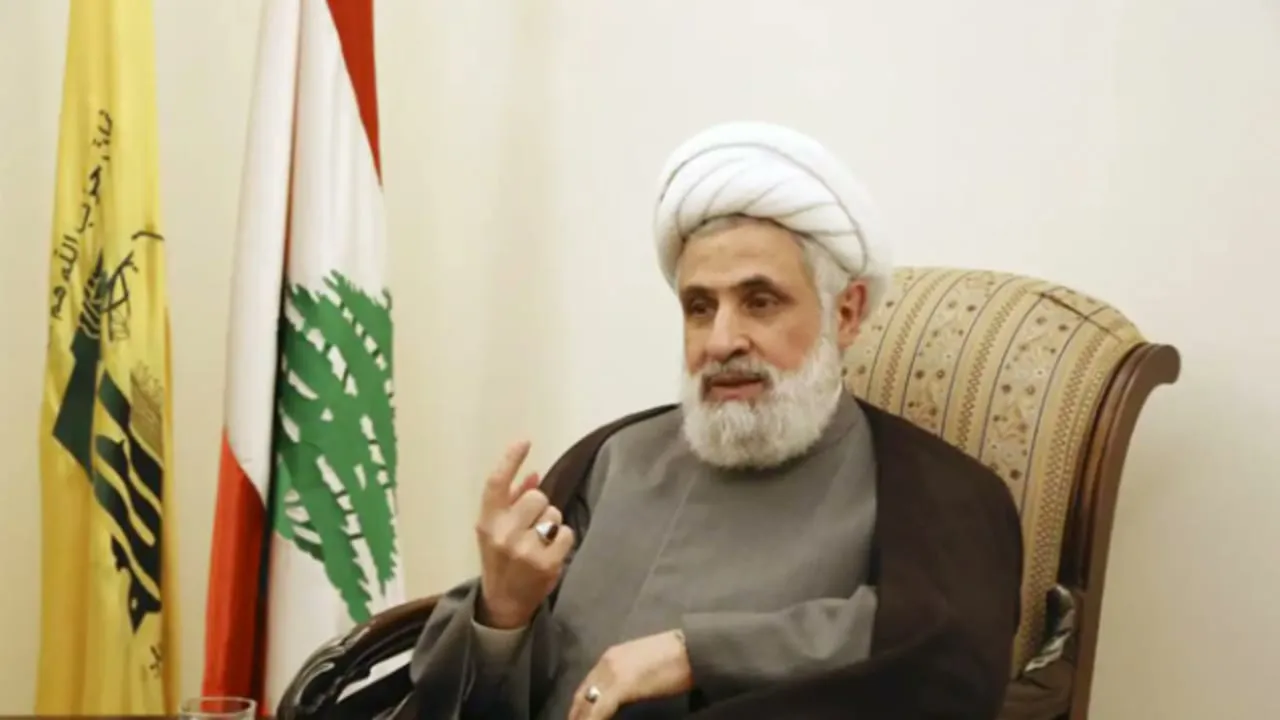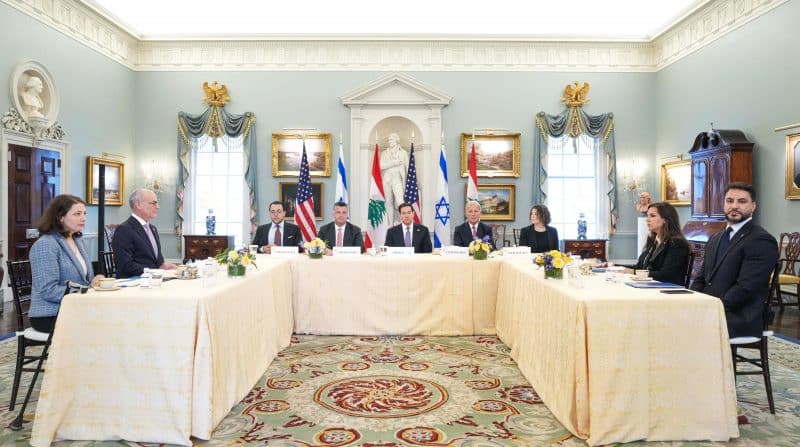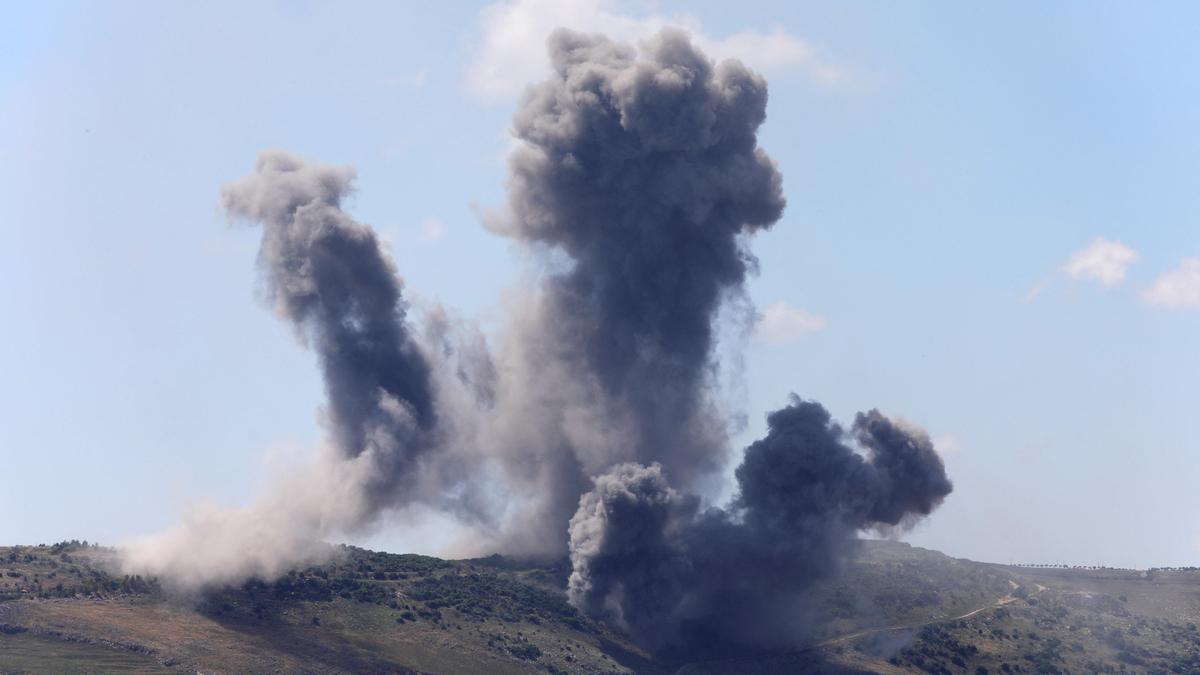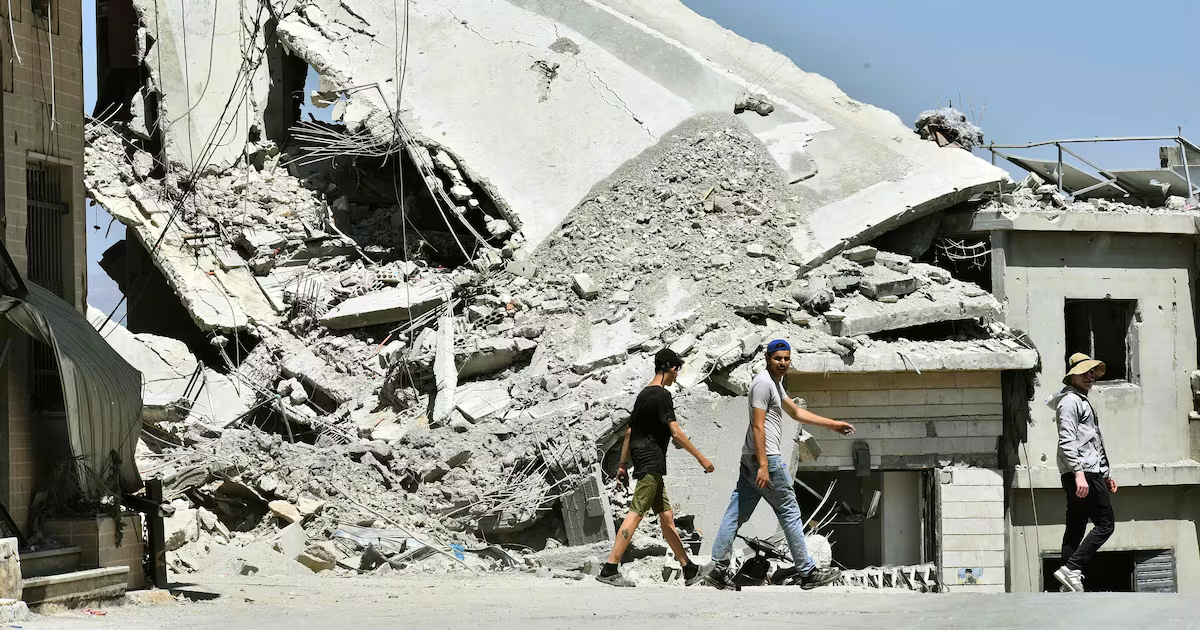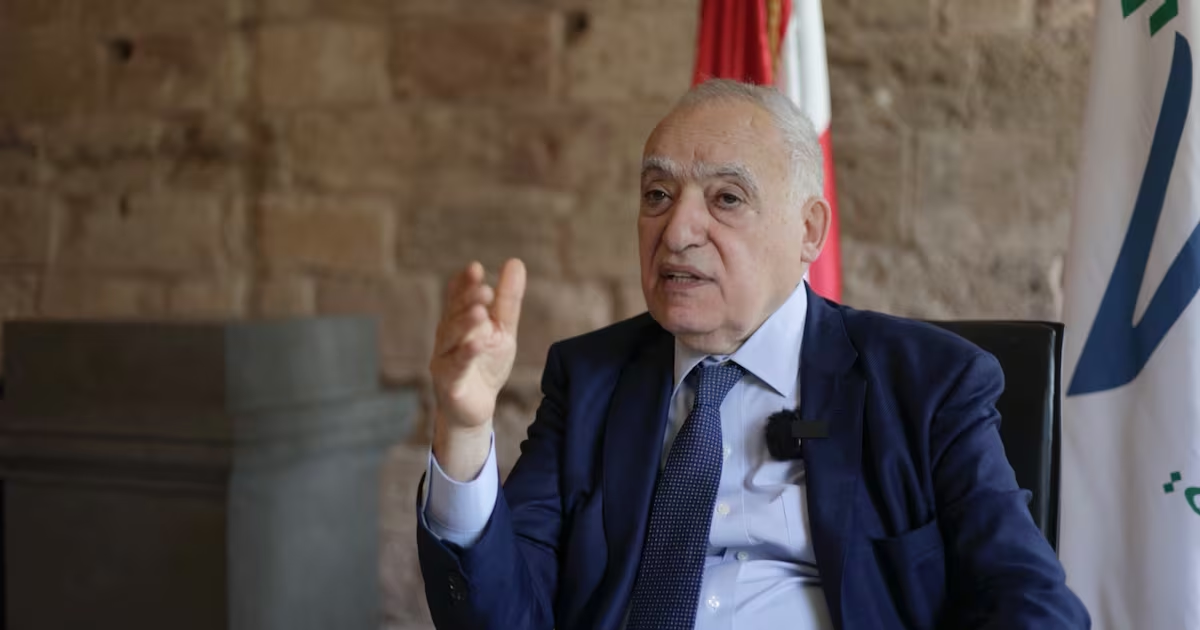
The Israeli army must withdraw from the areas it occupies in southern Lebanon for a ceasefire to succeed, a senior Lebanese minister told The National on Monday, after the announcement of a peace deal between Iran and the US that includes the Lebanese front. Ghassan Salameh, Lebanon’s Minister of Culture, who is also close to Prime Minister Nawaf Salam, denounced Israel’s “yellow line”, a belt of roughly 55 villages where Israeli troops have deployed since mid-April, as “unacceptable.”Presented by Israeli officials as a “security zone”, the occupied areas cover around seven per cent of Lebanon, most of which has been razed by Israeli troops. “We want this new and very destructive concept of a security zone to stop, but for the negotiations to succeed we don’t want only a ceasefire and an end to these activities, we also need a clear calendar of withdrawal.”His comment comes after Defence Minister Israel Katz said his country’s forces will not pull out of southern Lebanon, despite the announcement of a deal between the US and Iran, which Tehran said would include all fronts of the conflict. Mr Katz said that he and Prime Minister Benjamin Netanyahu are “leading a clear policy” that the country’s forces will remain in currently occupied areas of Lebanon, Syria and Gaza “indefinitely”. Israel occupied southern Lebanon from 1978 to 2000, establishing a similar security zone, which it said was needed to protect its northern communities. But since Hamas’s unprecedented attack on southern Israel on October 7, 2023, Israel's approach to buffer zones has changed, Mr Salameh argued. While civilians were allowed to stay in occupied areas in the past, Israel has banned anyone from accessing villages within the “yellow line”. It has wreaked widespread destruction which legal experts have said may amount to the war crime of wanton destruction – the sweeping destruction of civilian infrastructure with no clear military objectives. “We are horrified by the new concept that basically destroys villages,” Mr Salameh said of the multi-pronged military campaign involving aeroplanes and drones, private security contractors and commandos destroying or imploding “whatever buildings are still standing”. On Monday, Mr Katz repeated that “security zones” will be “cleared of local residents, and all terror infrastructure, above and below ground, including the houses in the contact-line villages that served as terror outposts, will be destroyed”.The aftermath of an Israeli air strike on the southern Lebanese city of Tyre. AFPInfoPilot zonesThe US, and in particular President Donald Trump, has seemingly taken a more active role in Lebanon talks, which in April led to the first direct talks with Israel in decades. But despite several rounds of talks, and repeated announcements of ceasefires, the direct negotiations have not been able to stop the fighting.The inclusion of Lebanon in the latest ceasefire is the result of wider talks between the US and Iran through Pakistani mediators – unrelated to the Washington process between Israel and Lebanon. Where Lebanon stands as of Monday remains deeply unclear. Sporadic Israeli strikes and heavy artillery shelling in the south continued on Monday. Lebanese authorities urged the more than 1.2 million displaced people not to return home immediately. Israeli drones were still flying noisily in the Beirut skies throughout Monday. Mr Salameh said he will attend a Council of Ministers session on Monday afternoon, where Lebanon’s position will be clarified. But there is little that the government can do beyond what has already been done. He said that as of Sunday evening, there had not been any official communication to the Lebanese state regarding the ceasefire. Following the latest rounds of negotiations in the US, Lebanon and Israel agreed on June 4 to establish “pilot zones” in which the Lebanese army would assume exclusive control of the territory, excluding all non-state forces. Mr Salameh said these negotiations must lead to more concrete steps, including a timeframe for Israeli withdrawal. “We believe that the pilot zones should be explained as a commitment, as the beginning of a full withdrawal; they are part of the story, and must not remain part of an incomplete story,” he said. Lebanese and Israeli delegations are set to meet in Washington for another round of talks from June 22 to June 25. These meetings, which will include political and military representatives, have slowly increased in size and representation despite not bringing much progress on the ground.Mr Salameh conceded Lebanon had almost no leverage over Israel, pointing to its vastly superior military and the support it receives from some of the most powerful countries in the world, including the US.“On paper we have very little leverage,” he said, referring to Lebanon's ability to force the Israelis to withdraw. He pointed to a deeply uneven “balance of military power”, of which authorities were well aware. “What do you do when you are in this situation? Either you sustain the [im]balance of power, or try to remind people of international law, to remind people that occupation is not sustainable because it will necessarily entice resistance and you call upon friendly countries in the world to put pressure on the other side to withdraw and find a way to live peacefully with its neighbours,” he said.
Israel must withdraw from Lebanon for sustainable peace, Lebanese minister says | The National
Ghassan Salameh admits Lebanon has 'little leverage' in negotiations
859 words~4 min read