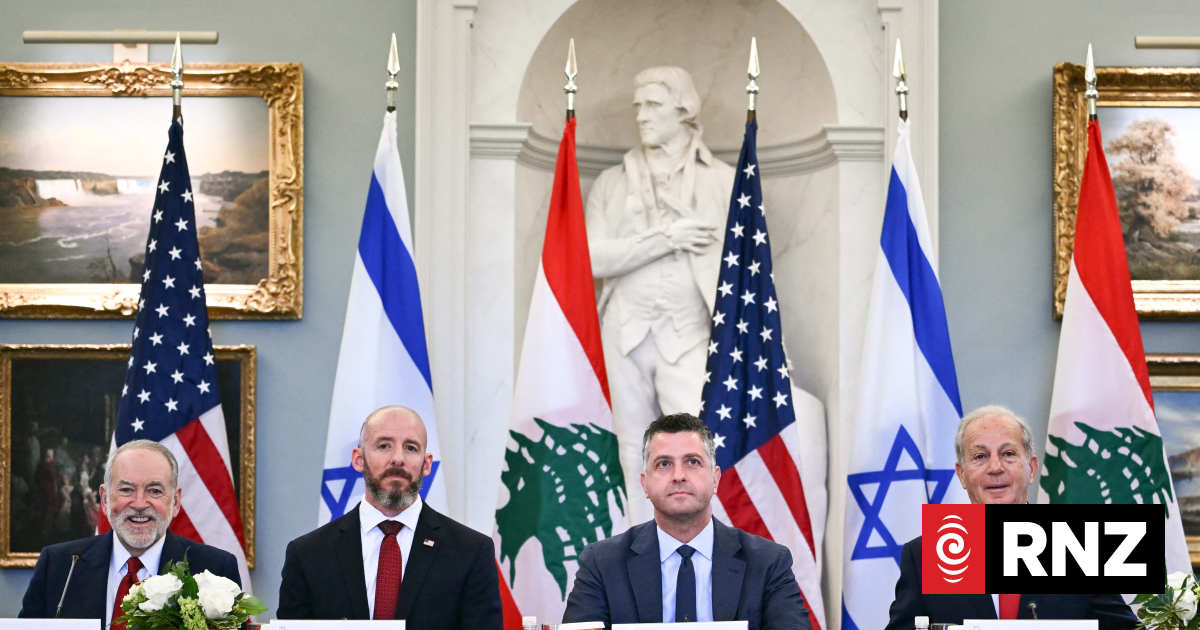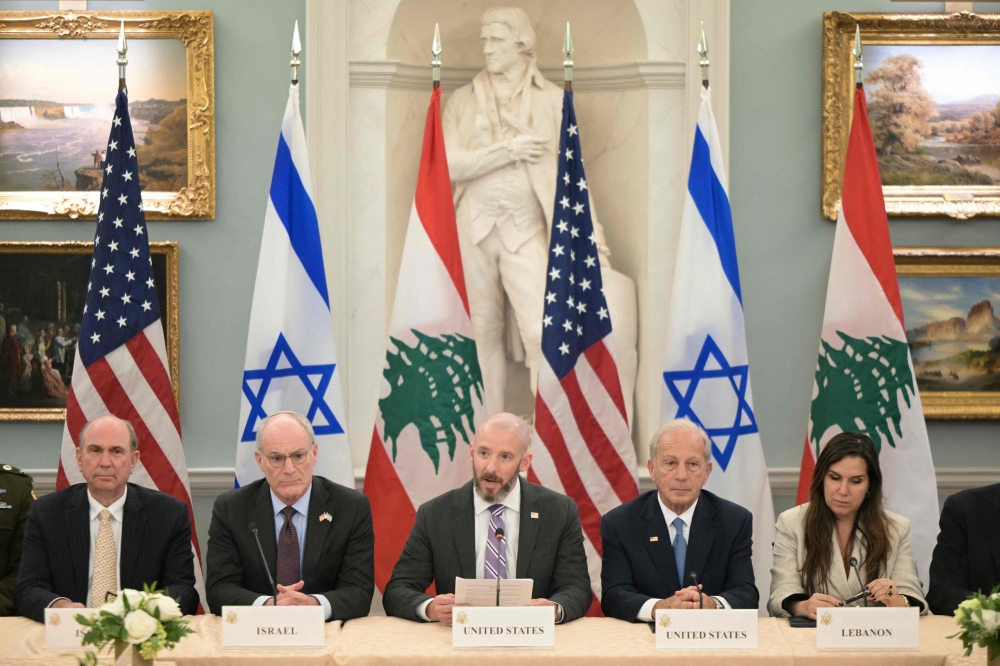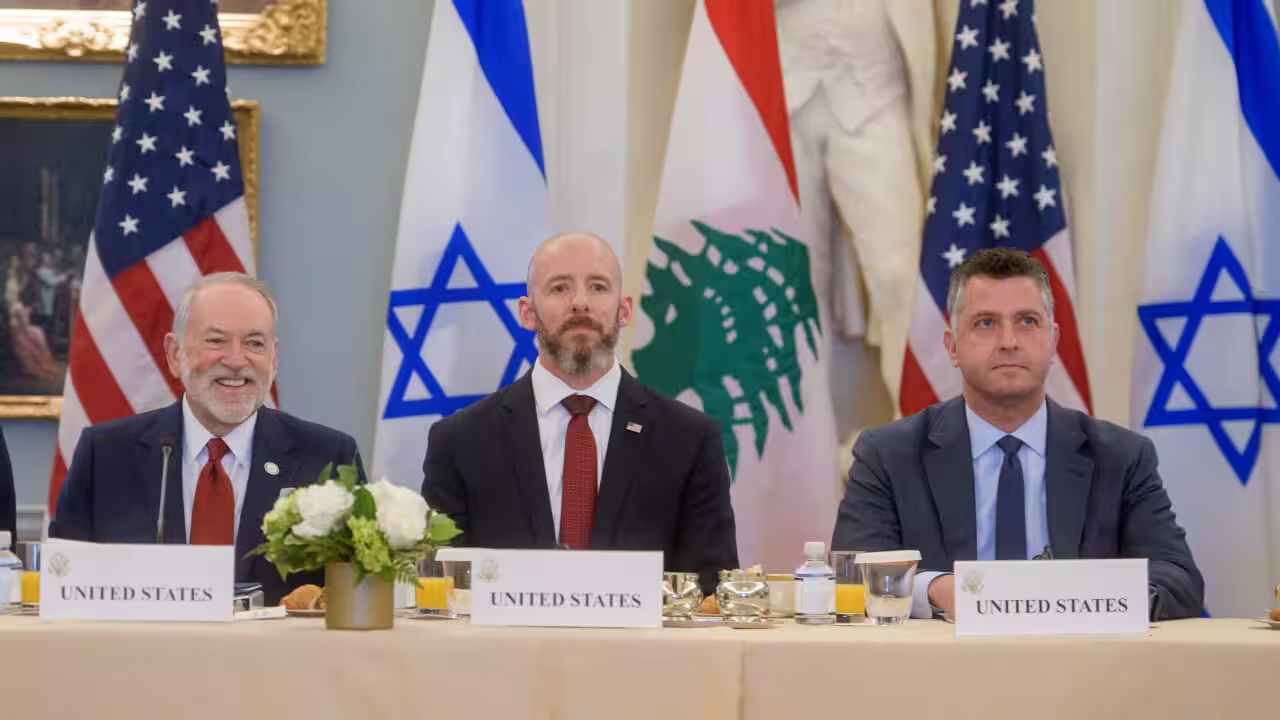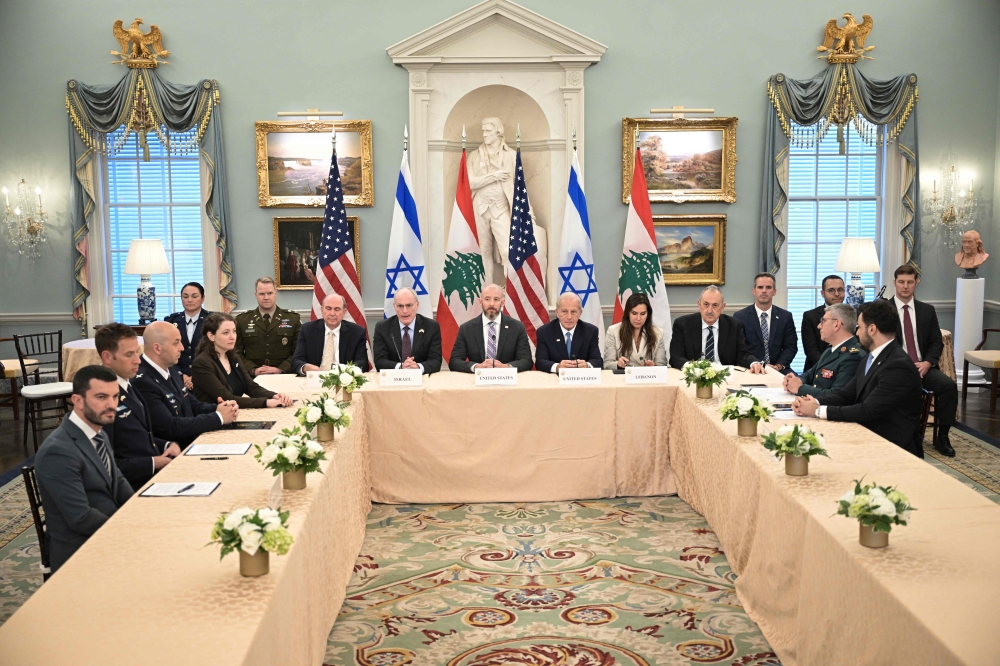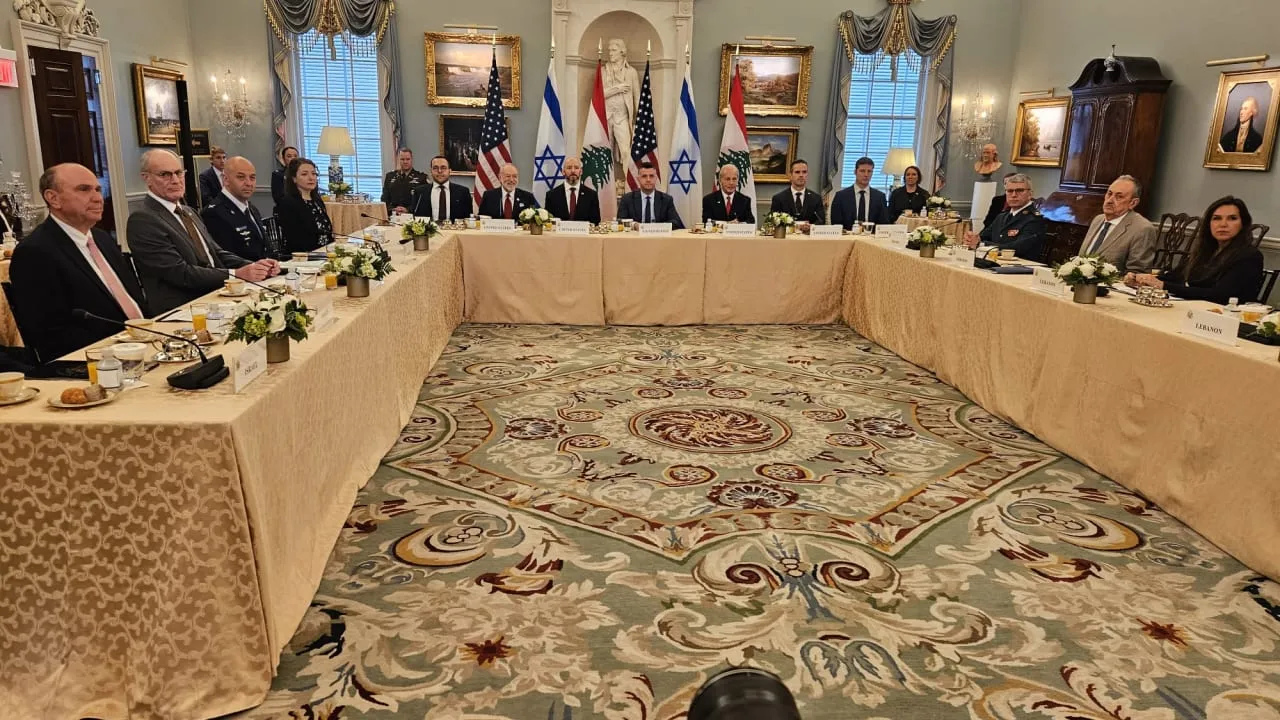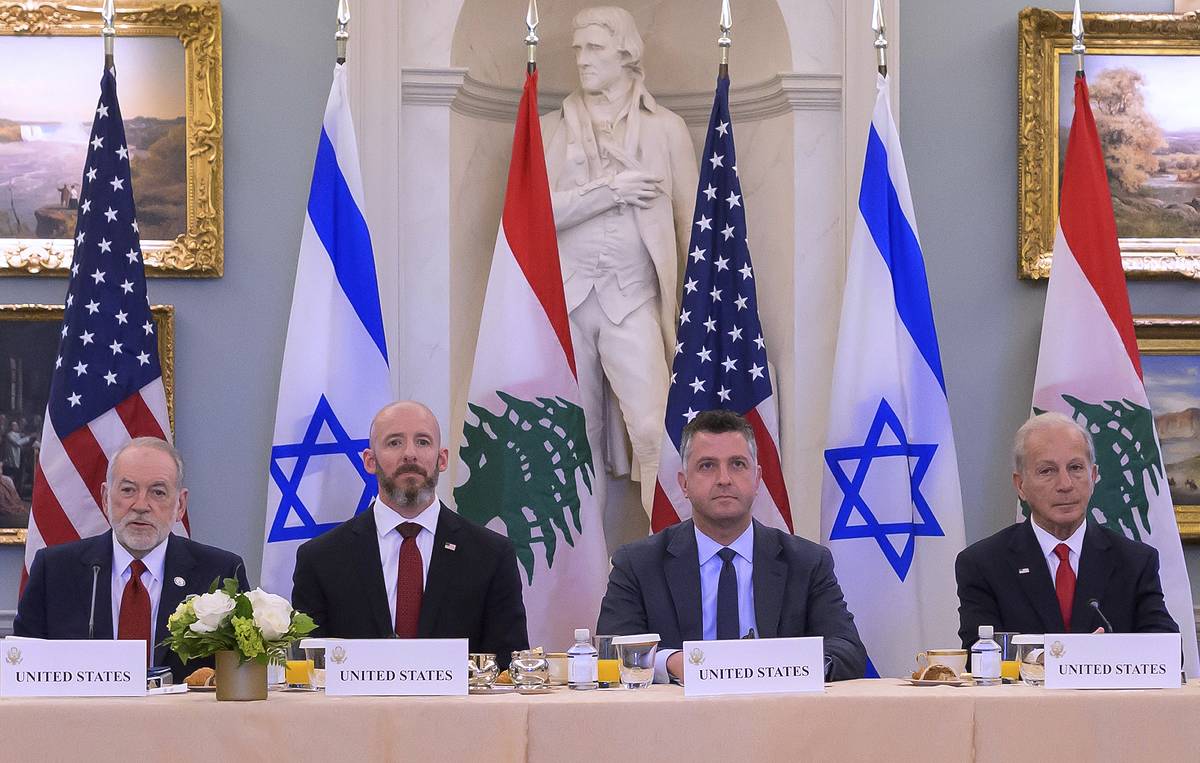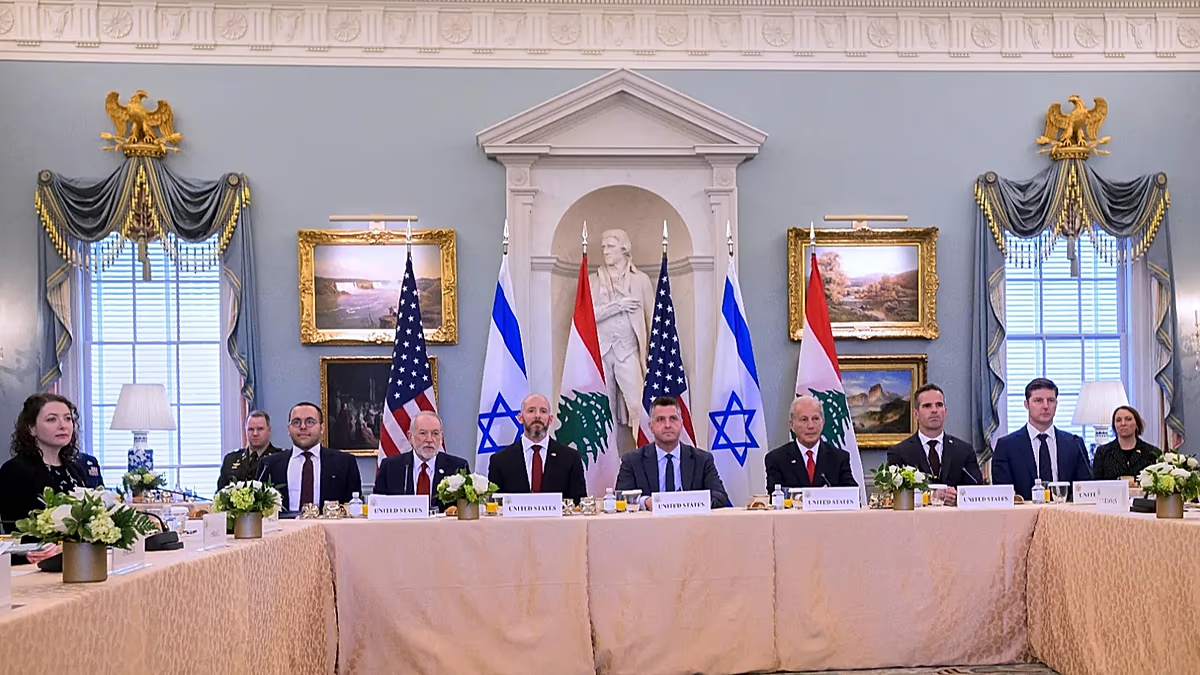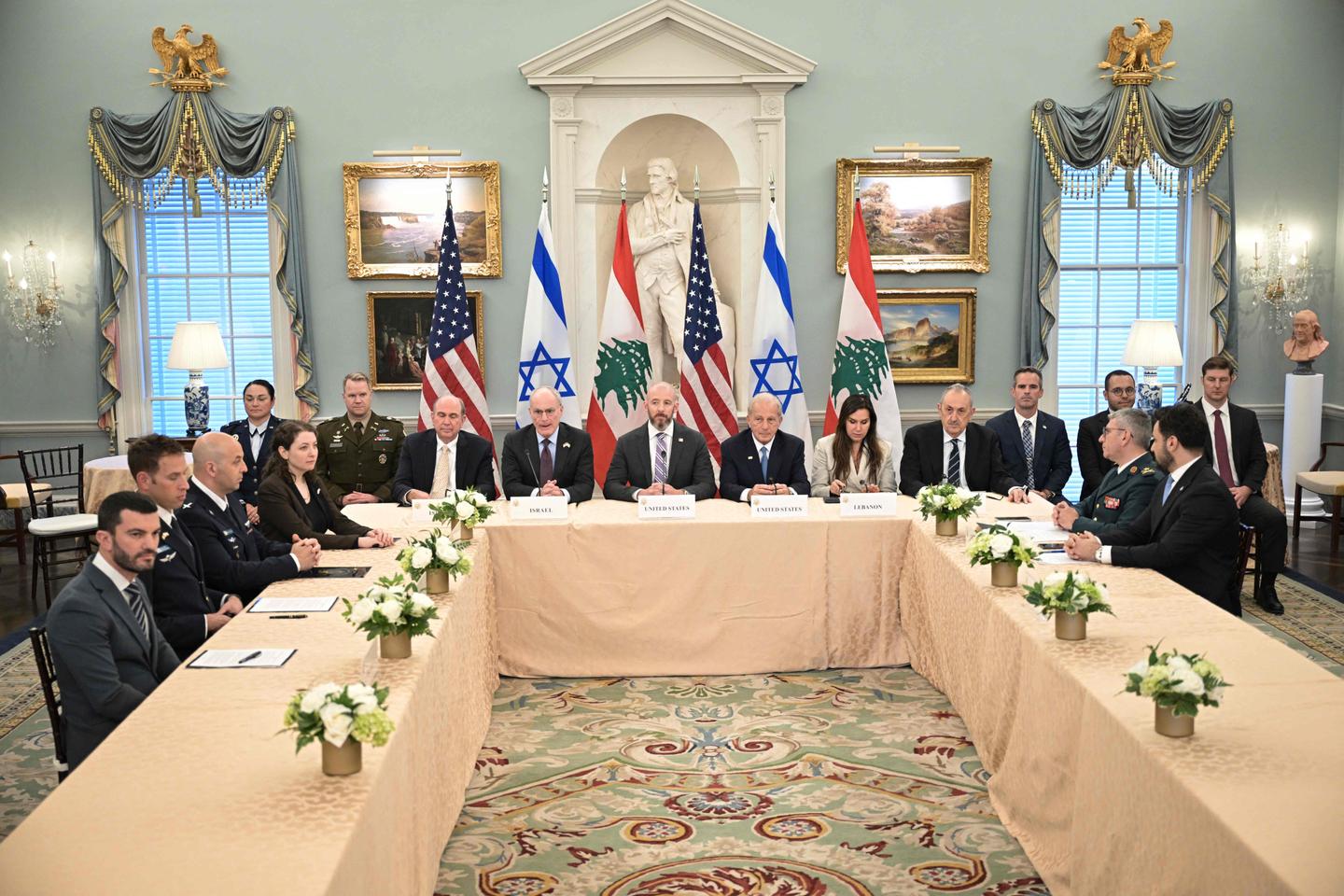
Israel's ambassador to the US, Yechiel Leiter; State Department chief of staff, Daniel Holler; US ambassador to Lebanon, Michel Issa; and Lebanon's ambassador to the US, Nada Hamadeh, during a meeting between Israeli and Lebanese delegations organized by the United States at the State Department in Washington, June 3, 2026. OLIVER CONTRERAS / AFP
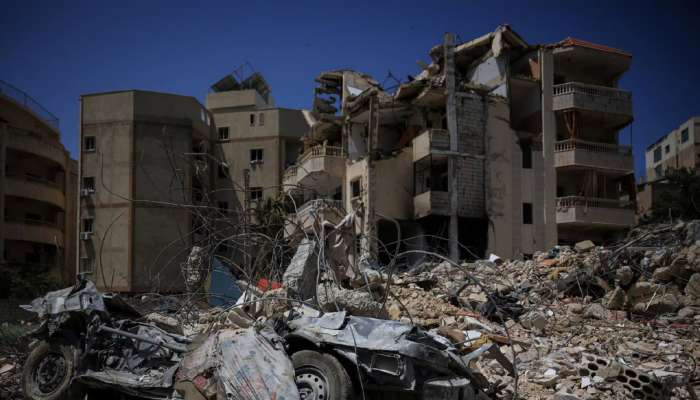
A ceasefire in Lebanon remains a distant prospect. The intensification of fighting between the two belligerents and the Israeli army's advances on the ground in southern Lebanon have shown the failure of the truce established on April 17. The Israeli and Lebanese delegations concluded another round of direct talks in Washington on Tuesday, June 2, and Wednesday, June 3, without substantial progress so far. New political and security discussions are scheduled for the week of June 22.
According to the joint statement released by the United States, Israel and Lebanon, the end of hostilities is "contingent on a complete cessation of Hezbollah fire and the evacuation of all Hezbollah operatives from the South Litani Sector." The statement does not mention any requirement for Israel to stop its airstrikes and ground operations beyond the buffer zone it occupies, which extends five to 10 kilometers deep. However, it does provide for a gradual withdrawal of Israeli forces from southern Lebanon, with the establishment of "pilot zones" to be placed under the exclusive control of the Lebanese Armed Forces (LAF), from which Hezbollah would be excluded. The US has pledged to strengthen the LAF's capabilities to support them in this mission.