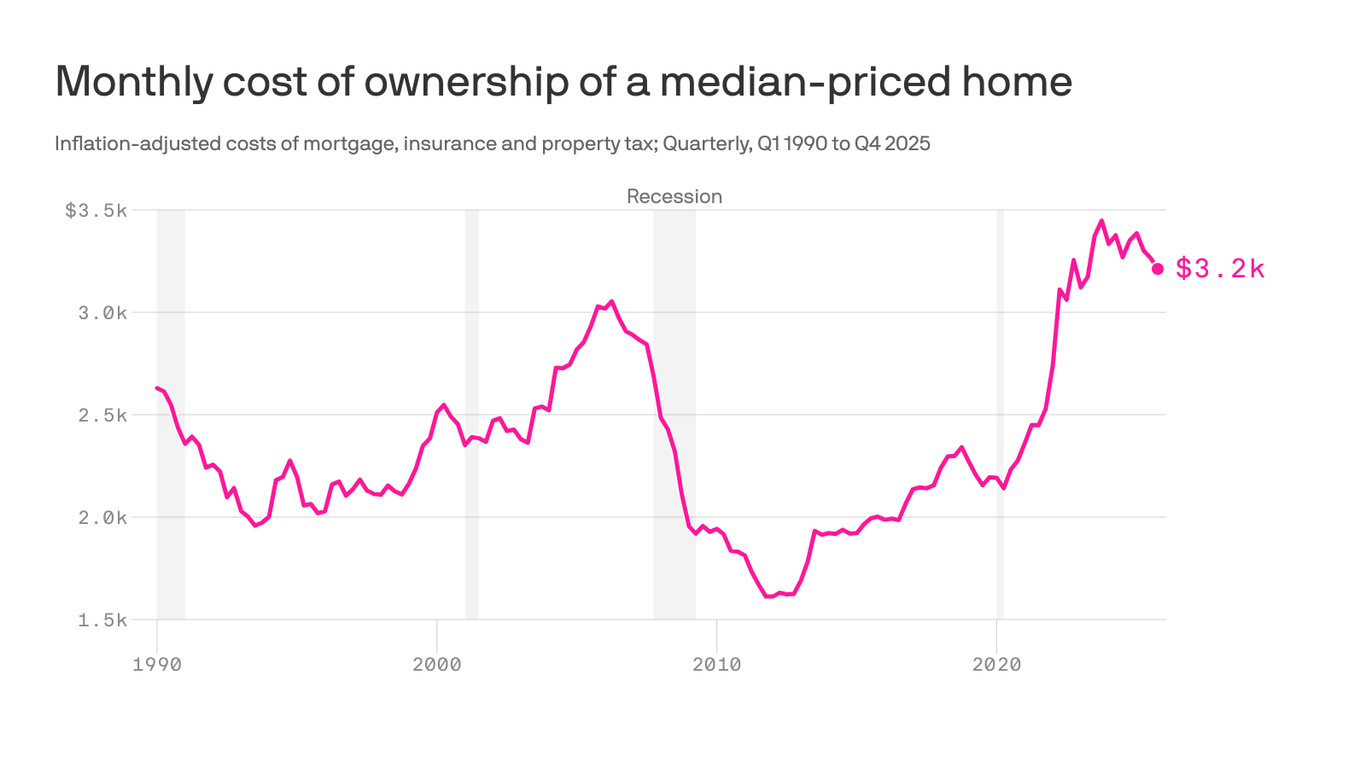
Homeownership had been a thing for the middle-aged before that, but no more. Soldiers returning from World War II and their wives, who had developed professional skills during the war, drove the increase. Homeownership was rising before the Great Depression hit, but the uptick was an irreversible force. And then it stopped. The homeownership rate was at 65.2% in 2025 — it’s barely budged in nearly 70 years. Politicians from both parties have sought to break the deadlock and make housing more affordable for more families, but efforts have largely failed.
Beginning in the early 1990s, Fannie Mae and Freddie Mac, the two federal taxpayer-backed mortgage loan giants, not only offered government-backed loans, which meant lower interest rates, but they also changed the rules to allow less qualified borrowers to receive more loans.
The results were predictable — massive corruption, as lenders who realized they enjoyed essentially endless government backing grew extremely careless. This went on throughout the Clinton and George W. Bush administrations until 2008, when Congress had to bail out the financial sector to the tune of $850 billion, which was real money back then.
So, we learned our lesson, right? No more goosing the system to try to jack up the homeownership rate, right? No more ill-considered rule changes to cut corners and smooth the process, right?