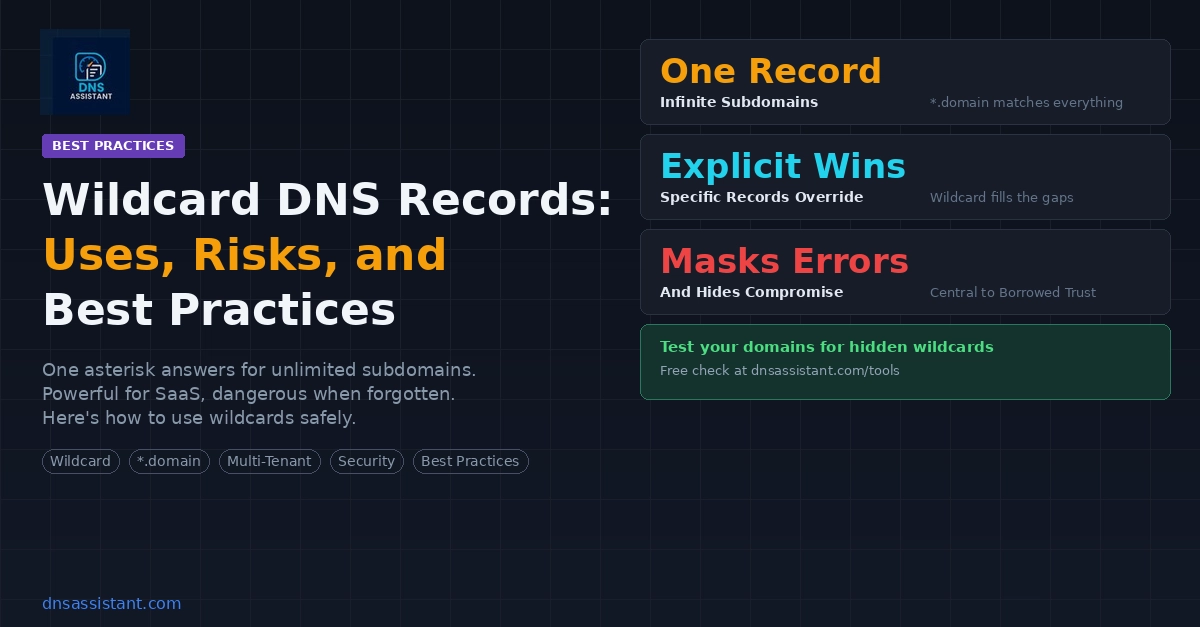
A single DNS record can answer for an unlimited number of subdomains. Add one wildcard entry, and suddenly anything.yourcompany.com, literally-anything.yourcompany.com, and every other name you never explicitly created all resolve to the same place. Wildcard DNS records are powerful, convenient, and genuinely necessary for certain architectures. They're also a frequent source of security problems and confusing misconfigurations.
Understanding when wildcards help, when they hurt, and how they interact with the rest of your DNS is essential for using them safely. This guide covers what wildcard records are, their legitimate uses, the real risks they introduce, and best practices for managing them.
What Is a Wildcard DNS Record?
A wildcard DNS record uses an asterisk (*) as the leftmost label to match any subdomain that doesn't have its own explicit record. It looks like this:
*.yourcompany.com. 3600 IN A 203.0.113.50