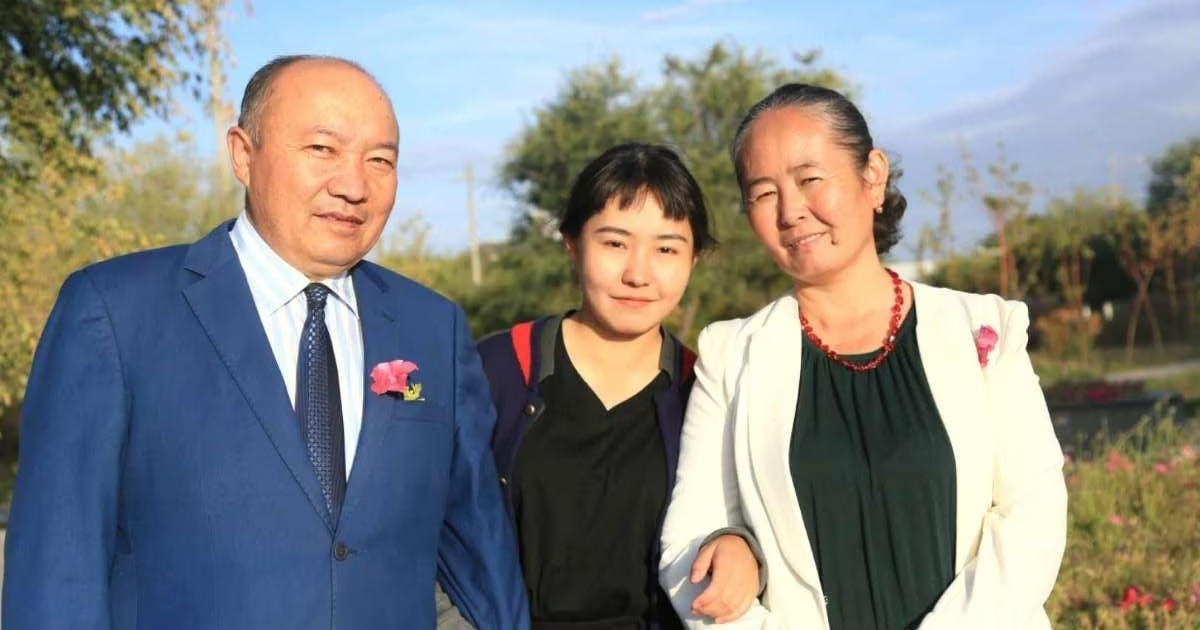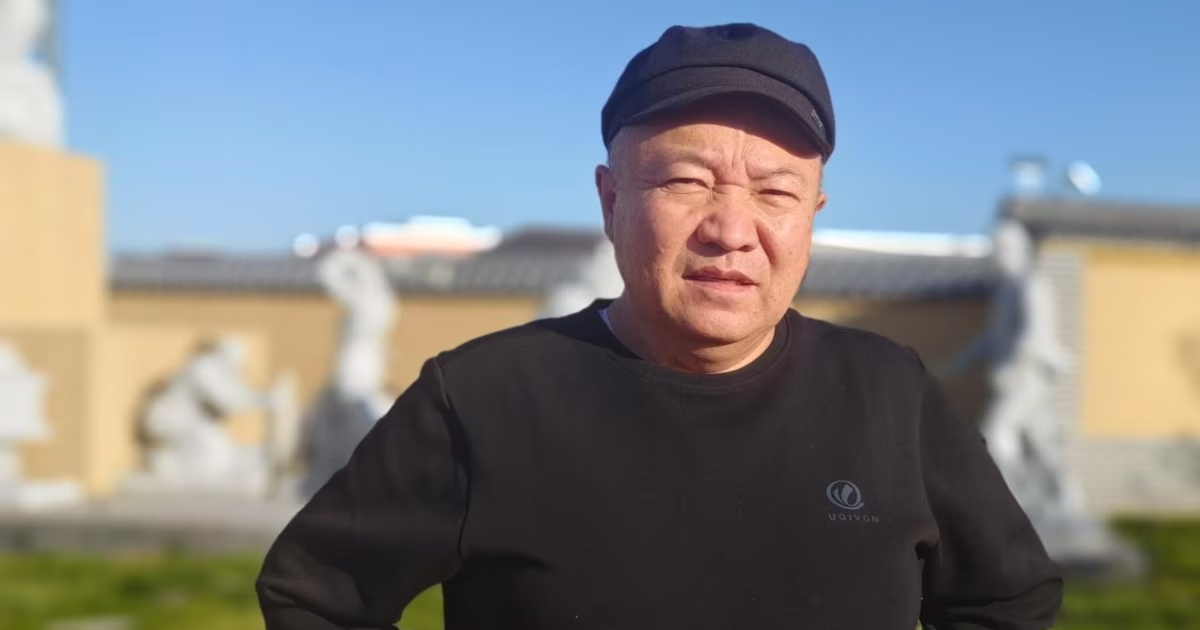
For nearly three months, Nartai Zhengis, who lives in Kazakhstan, has not heard directly from his father, Zhengis Reskhan a prominent ethnic Kazakh writer and satirist from China’s Xinjiang region.The last word came through Nartai's mother in Xinjiang, who told him that local police had taken Reskhan away without providing any official detention notice or disclosing any charges. Since then, the family has been unable to obtain any formal explanation from Chinese authorities.The case has renewed concerns about the treatment of ethnic Kazakhs in Xinjiang, where rights groups, researchers, and relatives have for years documented detentions, disappearances, and restrictions targeting Uyghurs, Kazakhs, and other Turkic Muslim minorities.
In 2018, a UN human rights panel cited credible reports that as many as 1 million Uyghurs and members of other predominantly Muslim minority groups were being held in camps and other detention facilities across the region.Beijing has described the facilities as vocational training centers designed to combat extremism and terrorism and has repeatedly denied allegations of widespread abuses.However, human rights organizations, former detainees, UN experts, and several Western governments have disputed those explanations, while a 2022 UN human rights office report said allegations of arbitrary detention and other abuses in Xinjiang were credible and could constitute crimes against humanity.In Reskhan's case, relatives say authorities have provided little official information."They never showed any legal documents," Nartai said in an interview with RFE/RL’s Kazakh Service. "No search warrants, no detention papers, no explanation of the reasons."According to the family’s account, pressure on Reskhan began months before his disappearance. Starting in December 2025, local authorities repeatedly summoned and detained him for what they described as "investigations." Sometimes he would disappear for a day, sometimes several days, occasionally for a week, before returning home."He always came back," Nartai recalled. "Then after March 2026, I completely lost contact with my father."The family's understanding of what happened afterward comes entirely through unofficial channels. Relatives in Xinjiang reportedly heard that the writer had been transferred from his hometown in Barkol Kazakh Autonomous County to the city of Hami and was being held there. Authorities have neither confirmed nor denied the information.The only explanation relatives say they received was verbal. According to Nartai, local officials told family members that Reskhan allegedly possessed "radical ideas" and had engaged in speech or activities that could affect state stability. No written accusation was ever produced.Nartai rejects the allegation outright."It is a complete lie," he said. "My father is simply a writer and satirist."Giving A Voice To The VoicelessBased in the Hami region of eastern Xinjiang, home to a large ethnic Kazakh community and part of the historic homeland of the Uyghurs and other Turkic-Muslim peoples, Reskhan became one of the most recognizable voices in Kazakh-language literature and culture.Over the years, he worked as a teacher, editor, cultural administrator, and literary organizer. He directed a county song-and-dance ensemble, edited the Kazakh-language section of the magazine Hami Valley, and chaired the Hami Regional Writers' Union.