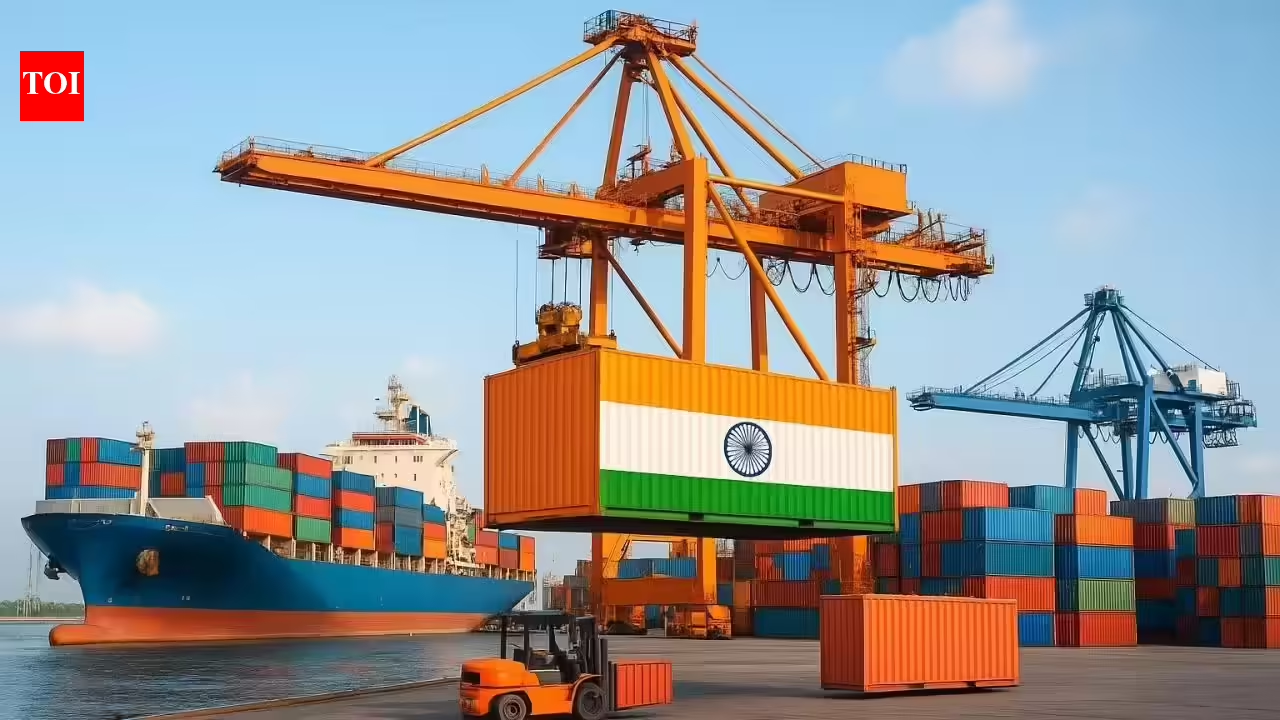
India's merchandise trade deficit narrowed marginally to $28.21 billion in May, as a windfall from higher petroleum exports helped offset the strain of elevated energy-driven imports amid turmoil in the Middle East.The country had reported a widened trade deficit of $28.38 billion in April.Government data showed merchandise exports increased to $45.2 billion in May from $43.56 billion a month earlier, even as imports rose further to $73.41 billion after touching a six-month high of $71.94 billion in April.Exports of petroleum products increased by 54.89% year-on-year in May, reaching $8.42 billion, reflecting strong export momentum.In the services sector, exports were estimated at $36.76 billion against imports of $19.06 billion, leaving India with a trade surplus of $17.7 billion.The commerce ministry attributed the performance to sustained global appetite for Indian products and services."The strong export performance reflects resilient trade momentum, growing global demand for Indian goods and services, and India’s expanding role in the global economy," the trade ministry said in a statement on X.It added that India's total exports — comprising merchandise and services — rose 14.66% year-on-year to $162.69 billion during April-May 2026-27, underscoring the resilience of the country's external sector despite a challenging global environment.Iran conflict continues to biteThe conflict in West Asia for which US and Iran agreed for a deal earlier today has been upending shipping through the Strait of Hormuz.The prolonged Iran conflict has been upending shipping through the Strait of Hormuz and had driven global crude prices to peaks of $120 a barrel since late February, raising fresh concerns over inflationary pressures, economic growth and the health of India's external accounts.For India, the U.S.-Iran agreement offers immediate economic relief after four months of conflict disrupted trade routes, drove crude prices above $100 a barrel and exposed the country's dependence on energy supplies from West Asia.The reopening of the Strait of Hormuz — a critical artery for global oil shipments — is expected to ease pressure on India's import bill, stabilise the rupee and moderate inflation risks that intensified during the conflict. India sources roughly 50% of its crude oil imports, around 70% of its LPG supplies and nearly 90% of its LNG imports from the region."The agreement brings immediate economic relief as the conflict has exposed India's dependence on West Asia," GTRI Founder Ajay Srivastava said, adding that the disruption had raised India's energy import bill, weakened the rupee and forced refiners to seek costlier alternative supplies from distant markets.Exporters also expect a rebound in trade with the Gulf, one of India's most important export destinations. India's shipments to West Asia had fallen sharply during the conflict, with exports to the region dropping nearly 58% in March to $3.5 billion as higher freight costs, insurance premiums and shipping disruptions hit trade flows.
India's trade deficit narrows slightly to $28.21 billion in May as petroleum exports cushion energy import blow
India's trade deficit saw a slight reduction in May. A recent US-Iran agreement is bringing welcome relief. This deal is expected to stabilize shipping through the Strait of Hormuz. Consequently, global crude oil prices should moderate. This will ease pressure on India's import bill and help control inflation. Exporters anticipate a trade rebound with the Gulf region.
TL;DRAI
India's trade deficit narrowed to $28.21B in May as petroleum exports surged 55% YoY and services exports reached $36.76B. The US-Iran accord stabilizes Middle East energy supply, critical for India's IT outsourcing cost structure and rupee stability.
457 words~2 min read