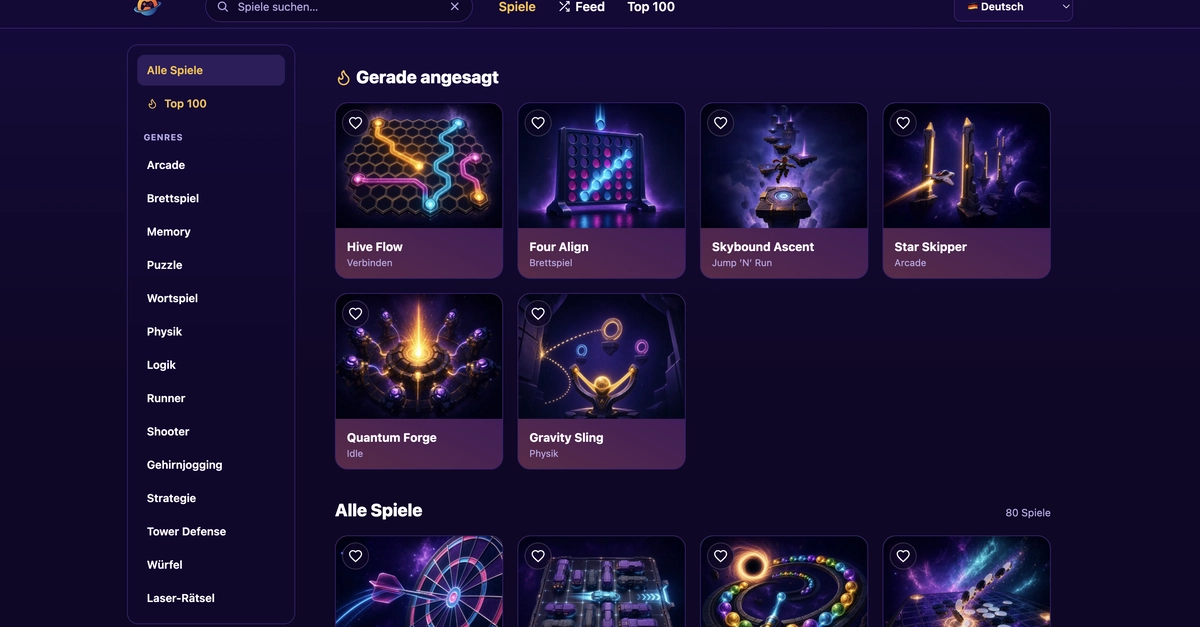
Picture this: You want to build a gaming portal. You need to find the games, playtest them, categorize them, write descriptions, extract thumbnails, and publish them. It is a massive bottleneck.
When I set out to build minigames.world earlier this month, I didn’t want to build just another directory. I wanted to build a system that manages itself.
Instead of a traditional CRUD application where I do all the data entry, I built an agentic architecture where AI analyzes, curates, and manages the entire game portfolio autonomously. Here is a breakdown of how the architecture works, the tech stack I chose, and why AI agents are fundamentally changing system design.The Problem: AI as a Feature vs. AI as an OrchestratorMost applications treat AI as an API call—you send text, you get text back.
To build an autonomous platform, the AI cannot just be a feature; it needs to be the orchestrator. The agent needs to be able to fetch a game, analyze its mechanics, determine its genre, decide if it meets quality standards, and execute the database updates to publish it.
The Architecture: Context, Control, and Concurrency